
 By admin
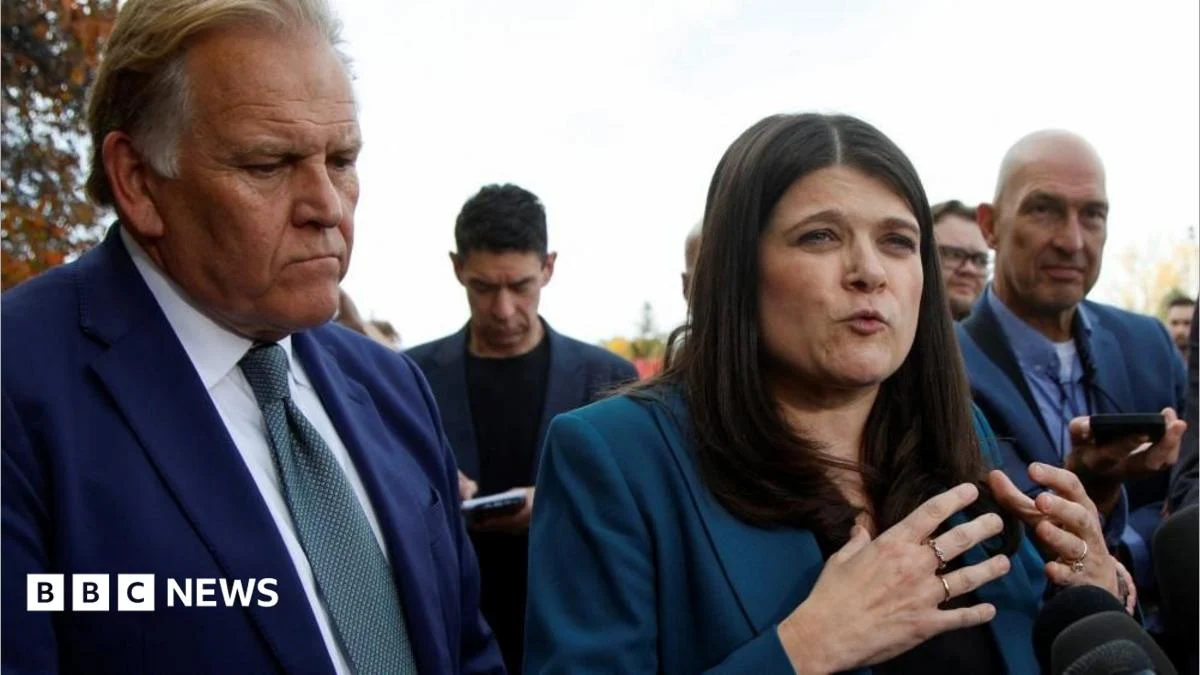
In a stunning development just days before a pivotal US Senate election in Michigan, sitting Democratic Congresswoman Haley Stevens has publicly endorsed the Republican candidate, Mike Rogers, marking a dramatic break with her own party and escalating a bitter spat with the Democratic nominee, Abdul El-Sayed. The unprecedented move, revealed on Sunday, has sent shockwaves through the Michigan Democratic Party and ignited intense debate about the state of political allegiances and the party’s internal divisions.
Stevens, who narrowly lost the Democratic Senate nomination to El-Sayed in a hard-fought primary, made a surprise appearance alongside Rogers at a church service in Oakland County on Sunday. Her decision to publicly align with the Republican challenger, rather than support her party’s chosen candidate, underscores the deep chasm that has opened between her centrist wing of the Democratic Party and El-Sayed’s more progressive platform. In a video statement posted to X shortly after the joint appearance, Stevens declared, "I don’t belong in Abdul’s campaign." She elaborated on her dissent, stating, "Who we are as Michiganders is not hate and is not what we are getting out from our Democratic nominee right now." Her unequivocal declaration of support for Rogers signaled a definitive repudiation of El-Sayed and his campaign.
The endorsement has been met with widespread condemnation from fellow Democrats, many of whom expressed dismay and disbelief at Stevens’ decision to abandon party loyalty so close to the election. The public feud between Stevens and El-Sayed, which has simmered for weeks, reached a boiling point over a controversial campaign advertisement funded by an outside liberal group that drew a direct link between Israel’s actions and rising food prices. El-Sayed, while acknowledging the advert’s existence, publicly distanced himself from its content, asserting he had no involvement in its creation. Stevens, however, seized on the incident as a further illustration of what she perceives as the detrimental direction of El-Sayed’s campaign.
The animosity between the two Democrats was further highlighted when Stevens was initially scheduled to attend a campaign event with El-Sayed on Sunday, an appearance intended to project party unity. However, reports indicate that El-Sayed requested Stevens not to attend, leading her to choose instead to join Rogers at a local church service. Standing alongside the Republican candidate, Stevens articulated her rationale to reporters, stating, "This is a very close election, we all know that, but Abdul made clear that I was not welcome in his campaign, that he didn’t need me there, that he didn’t want me there." Her words painted a picture of a fractured campaign, where personal animosity had superseded the need for unified Democratic support.
When pressed for a response to Stevens’ endorsement, El-Sayed maintained a focus on the broader issues facing Michigan residents. "At the end of the day, I don’t think about Haley Stevens," he told reporters. "None of this matters." His statement, while ostensibly projecting an outward-looking perspective, was interpreted by many as dismissive of Stevens’ concerns and a failure to address the internal party discord.
The sentiment among some Democratic voters in downtown Detroit, where the BBC spoke with several individuals, reflected a deep disappointment with Stevens’ defection. "I just genuinely don’t understand it," one voter, who wished to remain anonymous, stated. "I do think it’s a betrayal of the party because the things she stands for are not the same things that he stands for as a Republican." Another voter, Matthew Barera, speculated about the underlying causes of Stevens’ actions, suggesting, "Maybe she had frustrations with the party."
Conversely, Republican supporters of Mike Rogers expressed skepticism about the impact of Stevens’ endorsement on the election outcome. Marissa Lee, a vocal Rogers supporter, told the BBC, "People can see right through her actions, you know? She’s just angry. She is not going to make anybody change their mind." Her sentiment reflects a common Republican perspective that Stevens’ endorsement, driven by personal grievance, would be perceived as opportunistic and ultimately ineffective in swaying undecided voters.
The weekend witnessed an escalating chorus of Democratic voices attempting to quell the burgeoning conflict. A number of Michigan Democratic politicians publicly urged Stevens to mend fences and rally behind the party’s nominees. However, these appeals fell on deaf ears. The gravity of Stevens’ stance was underscored by a strong denunciation from Democratic Senator Chuck Schumer, who labeled her endorsement of Rogers "a despicable betrayal" of her political party.
The US Senate race in Michigan has been characterized by a bruising and often acrimonious campaign, which began with the Democratic primary. El-Sayed, a progressive outsider, emerged victorious over Stevens, a more established congresswoman who enjoyed the backing of key party figures, including Michigan Governor Gretchen Whitmer. The primary contest and the subsequent fallout have served as a stark illustration of the ideological divisions within the Democratic Party, providing a preview of potential future battles over the party’s direction in the lead-up to the 2028 presidential election.
Abdul El-Sayed, a former public health official and the son of Egyptian immigrants, has successfully tapped into a vein of grassroots discontent with established political norms in Washington and has been a vocal critic of US foreign policy, particularly its ties to Israel. His campaign narrative has resonated with a segment of the electorate disillusioned with traditional political establishments.
In contrast, Haley Stevens represents a more centrist faction of the Democratic Party. Her policy positions and political approach have historically aligned more closely with the party’s mainstream. Her primary support during the nomination race came from prominent Democrats, including Governor Whitmer, who represent the party’s more moderate wing. The divergence between El-Sayed’s progressive agenda and Stevens’ centrist stance highlights a significant ideological fault line within the Michigan Democratic Party.
The endorsement of a Republican by a sitting Democratic congresswoman is a rare and significant event in American politics, particularly in a closely contested Senate race. It raises questions about the long-term implications for party unity and the ability of Democrats to coalesce around common goals. Political analysts suggest that this event could embolden other disaffected Democrats to consider similar actions, especially in districts or states where internal party conflicts are particularly pronounced. The outcome of this election, and the ripple effects of Stevens’ unprecedented endorsement, will undoubtedly be closely watched as the Democratic Party navigates its internal ideological landscape and prepares for future electoral battles. The focus now shifts to the final days of the campaign, with both parties seeking to capitalize on or mitigate the fallout from this extraordinary political maneuver. The ability of El-Sayed to unify the fractured Democratic base in the wake of this betrayal will be a critical factor in determining the election’s outcome. Meanwhile, Republicans will likely seek to leverage this division to their advantage, portraying the Democratic Party as internally chaotic and unable to present a united front. The coming days will reveal whether Stevens’ gamble will significantly alter the electoral landscape or become a footnote in a broader political narrative of ideological struggle within the Democratic Party.
