
 By Lina Irawan
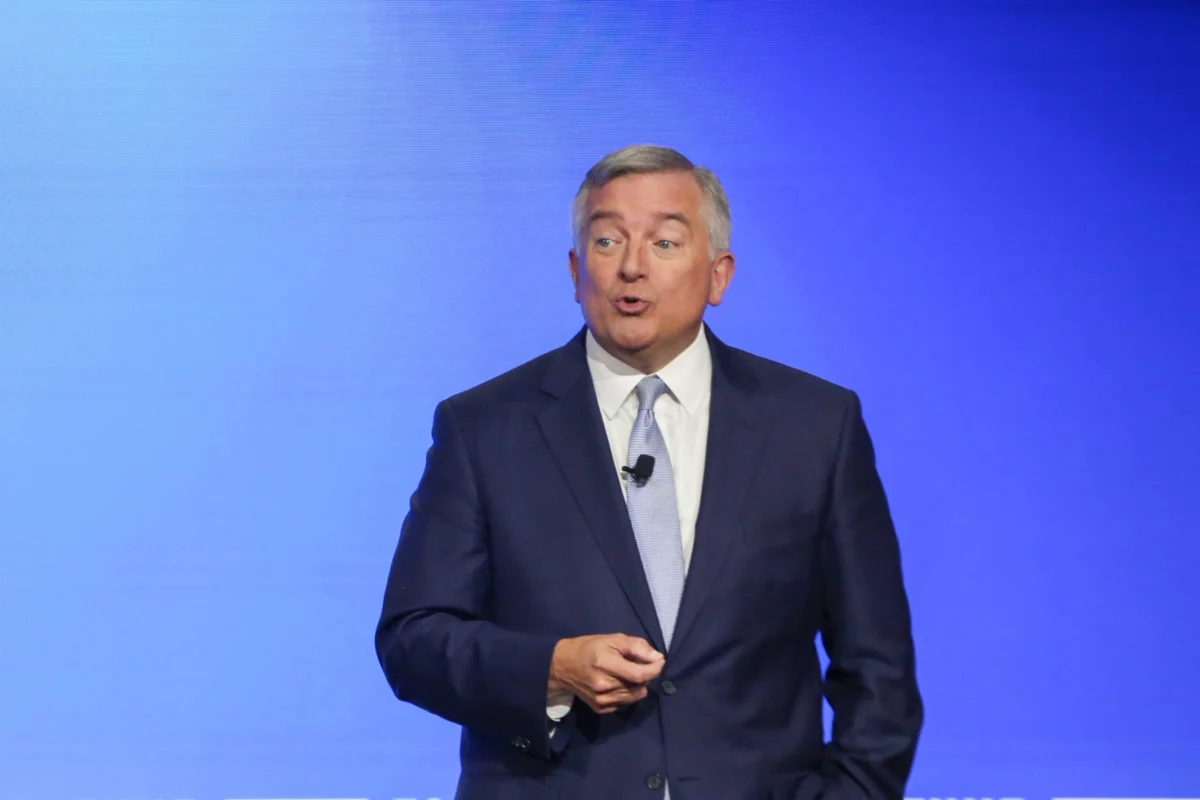
Less than two weeks after voters handed Democrats both chambers of Congress in an election defined by palpable frustration over the soaring cost of living and perceived corruption, the U.S. Chamber of Commerce’s top policy official issued a stark warning to a room of business executives: Washington might already be misinterpreting the profound message sent by the electorate. The recent 2026 election, a seismic shift in the political landscape, saw public discontent coalesce around everyday economic hardships, signaling a desperate plea for change that, according to the Chamber, risks being addressed with superficial solutions.
Speaking on Monday at the prestigious Fortune 500 Innovation Forum in Detroit, Neil Bradley, the Chamber’s executive vice president, chief policy officer, and head of strategic advocacy, underscored the undeniable reality of widespread anger over affordability. However, Bradley posited that this immediate frustration, while legitimate, is merely the tip of a much larger and more insidious iceberg. Beneath the surface, he argued, lies a deep-seated economic malaise that voters have been signaling for two decades but which "no one has been paying attention to": a persistent and troubling slowdown in real GDP growth. For the past 20 years, the U.S. economy has plodded along at roughly 2% real GDP growth annually, a stark contrast to the robust 3% or more that characterized the preceding 60 years. This seemingly small numerical difference, Bradley emphasized, carries monumental implications for the fabric of American society and the cherished ideal of upward mobility.
The chasm between 2% and 3% growth represents more than just abstract economic statistics; it embodies the fundamental difference between a generation of children poised to grow up richer than their parents and one that faces a future of economic stagnation or even decline. This decline in intergenerational mobility, often referred to as the fading American Dream, has been rigorously documented by leading economists. Harvard economist Raj Chetty and his co-authors, in a seminal 2017 paper, provided compelling evidence of this trend. Their research revealed that the share of Americans earning more than their parents plummeted from approximately 90% for children born in 1940 – a generation that benefited from post-war boom and broadly shared prosperity – to a mere 50% for children born in the 1980s. This dramatic shift highlights a profound challenge to the nation’s core promise of opportunity.
“The concept of the American dream isn’t 3% growth, but it’s highly correlated to it,” Bradley asserted, drawing a direct line between sustained economic expansion and the ability of individuals and families to improve their lot. Without the robust growth that historically fueled upward mobility, the pathways to a better life become narrower, and the perception of a rigged system intensifies. This long-term slowdown, he suggested, is the root cause of the very frustrations that drove voters to the polls in 2026, compelling them to seek radical changes in leadership.
The Temptation of the "Easy Button"
Bradley’s primary concern, however, was not just the diagnosis of the problem but Washington’s likely approach to a cure. He warned against the “real temptation to hit the easy button,” referring to a suite of populist policy proposals that offer immediate, politically palatable solutions without addressing the underlying structural issues. These "easy buttons," often championed across the political spectrum, include capping credit card interest rates, imposing price controls on pharmaceuticals, and limiting stock buybacks and dividends. These measures, Bradley conceded, might temporarily ease voters’ angst and offer a visible sign of congressional action “for a brief period of time,” but he stressed unequivocally, “they won’t solve our long-term challenges.”
The bipartisan appeal of these policies, which Bradley aptly described as "both ends of the political horseshoes are coming together on," underscores the depth of public frustration. For instance, former President Trump, in January of the election year, called for a one-year, 10% cap on credit card rates, a proposal that finds common ground with progressive stalwarts like Senator Bernie Sanders and conservative populists like Senator Josh Hawley, who have co-sponsored legislation to enact such limits. Similarly, the Senate’s version of the defense bill for the current year includes new restrictions on buybacks and dividends by defense contractors, reflecting a broader skepticism about corporate financial engineering and its impact on workers and long-term investment.
While these proposals resonate with a public eager for immediate relief and a sense of accountability from large corporations, they often clash with the Chamber’s pro-business agenda. The list of “easy buttons” directly targets sectors vital to the Chamber’s membership: card issuers, pharmaceutical companies, and any public company engaged in buyback programs. From the Chamber’s perspective, such interventions risk distorting markets, stifling innovation, and discouraging investment, ultimately hindering the very growth needed to address the core problem. Bradley’s alternative vision, therefore, is a fundamental pivot towards policies that genuinely foster growth: expanding supply chains, promoting free trade, and strategically expanding the labor force “through legal immigration reform.” This approach emphasizes market-driven solutions over regulatory mandates, aiming to increase the overall economic pie rather than merely re-slicing a shrinking one.
The Unassailable Math of Growth
Bradley’s assertions regarding the historical trajectory of economic growth are robustly supported by official government data. Analysis of real GDP figures from the Bureau of Economic Analysis, meticulously compiled by the St. Louis Federal Reserve, confirms his timeline. From 1950 to 2005, the U.S. economy indeed grew at a compound annual rate of approximately 3.5%. However, from 2005 to 2025, this rate decelerated sharply to about 2% per year. This slowdown is not merely an academic point; it has tangible consequences for everyday life and future prosperity. At a 3% growth rate, an economy effectively doubles in size in roughly 23 years – a period that aligns with the time it takes for a child to be born, grow up, and enter the workforce. In contrast, at a 2% growth rate, the doubling time stretches to approximately 35 years. This extended timeline means that each successive generation faces a significantly longer wait, and greater effort, to achieve the same level of economic advancement their predecessors might have taken for granted.
The political volatility linked to this economic stagnation is also evident. Bradley’s observation that voters have consistently ousted the party in power from control of either the House, the Senate, or the White House in 10 out of the 11 national elections since 2006 (with 2012 being the sole exception) underscores a deep-seated and persistent voter dissatisfaction. This pattern suggests that regardless of which party is in power, the electorate is quick to punish perceived economic mismanagement or a failure to deliver tangible improvements in living standards. The 2026 election, in this context, is not an anomaly but another manifestation of this long-term trend, driven by the grinding frustration of slow growth and diminishing opportunities.
The Nuance of Distribution: A Complication for the Remedy
However, Bradley’s argument for growth as the primary remedy is complicated by further insights from Chetty’s research. While acknowledging the critical role of overall economic expansion, Chetty’s 2017 paper explicitly found that “increasing GDP growth rates alone cannot restore absolute mobility” to the levels enjoyed by the 1940s cohort. The study revealed that a significant portion of the decline in upward mobility – more than 70% – could be reversed by “shifting the distribution of growth back to the more equal pattern that cohort saw.” This finding introduces a crucial nuance: it’s not just about the size of the economic pie, but how that pie is divided.
Bradley, to his credit, acknowledged this complex reality. “Of course,” he conceded, “a doubling in pie doesn’t guarantee that anyone’s individual slice will be bigger.” This admission highlights a central tension in modern economic policy debates: whether the focus should primarily be on generating overall wealth or on ensuring its more equitable distribution. While the Chamber typically advocates for policies that stimulate broad economic activity, the insights from Chetty’s work suggest that without concurrent attention to issues of inequality, even robust growth might not fully alleviate the anxieties that fueled the 2026 electoral discontent. Policies aimed at improving educational opportunities, strengthening social safety nets, or reforming tax structures could also play a significant role in fostering upward mobility, even if they fall outside the Chamber’s typical growth-centric policy prescriptions.
Entrepreneurship: A Record with an Asterisk
Amidst these somber economic analyses, Bradley offered a glimmer of optimism, citing what he called “a little-known record”: 5.68 million new business starts last year. “No one’s an entrepreneur if they’re pessimistic about the future,” he reasoned, presenting this figure as evidence of an underlying resilience and belief in economic opportunity. This surge in entrepreneurial spirit, he suggested, could be a powerful engine for future growth.
However, a closer look at the data from the U.S. Census Bureau, which tracks these figures as "business applications," reveals a more complex picture. These applications represent requests to the IRS for an employer identification number (EIN), not necessarily businesses that have actually opened their doors or hired employees. While the raw number of applications did indeed reach approximately 5.67 million in 2025 before seasonal adjustment – marking the most for any full year since the series began in 2004 – the underlying quality of these applications tells a different story.
The Census Bureau categorizes a subset of these applications as "high-propensity" applications – those deemed most likely to become businesses with payroll. This more selective metric offers a clearer indication of future job creation and economic dynamism. In 2025, these high-propensity applications totaled about 1.69 million on a seasonally adjusted basis. Crucially, this figure represents a decline from 1.86 million in 2023 and marks a second consecutive year of decrease. This discrepancy suggests that while more Americans are filing to start something – perhaps solo ventures, gig-economy enterprises, or small passion projects – fewer of these filings are translating into the types of businesses that traditionally become employers and significant drivers of economic growth. This trend raises concerns about the long-term potential for job creation and the broader health of the entrepreneurial ecosystem, tempering Bradley’s otherwise optimistic assessment.
Voter Sentiment and the Road Ahead for Congress
The recent election results clearly underscore the urgency of addressing economic concerns. The AP Voter Poll, conducted in the wake of the 2026 midterms, found that an overwhelming nine out of ten voters considered the cost of living to be a crucial or major factor in their decision-making for Congress. This widespread sentiment leaves little room for ambiguity regarding the mandate handed to the newly empowered Democratic Congress, which is slated to be sworn in in January.
The challenge for this new legislative body will be immense. They must navigate the immediate pressures to deliver visible relief to struggling households while also confronting the deeper, structural economic issues highlighted by Bradley and Chetty. Will they succumb to the temptation of the “easy button” policies that offer quick, albeit temporary, political wins? Or will they embrace a more challenging, long-term strategy focused on fostering sustainable economic growth and addressing the nuances of wealth distribution? The Congressional Budget Office’s latest January outlook casts a long shadow over these deliberations, projecting real GDP to grow at a modest 1.8% a year in both 2027 and 2028. This forecast reinforces the U.S. Chamber of Commerce’s central message: without a fundamental shift in policy toward genuine growth-oriented strategies, the economic frustrations that defined the 2026 election are likely to persist, leaving the American Dream increasingly out of reach for future generations. The coming months will reveal whether Washington has truly heard the message, or if it remains intent on misreading the most critical economic signals of our time.
