
 By admin
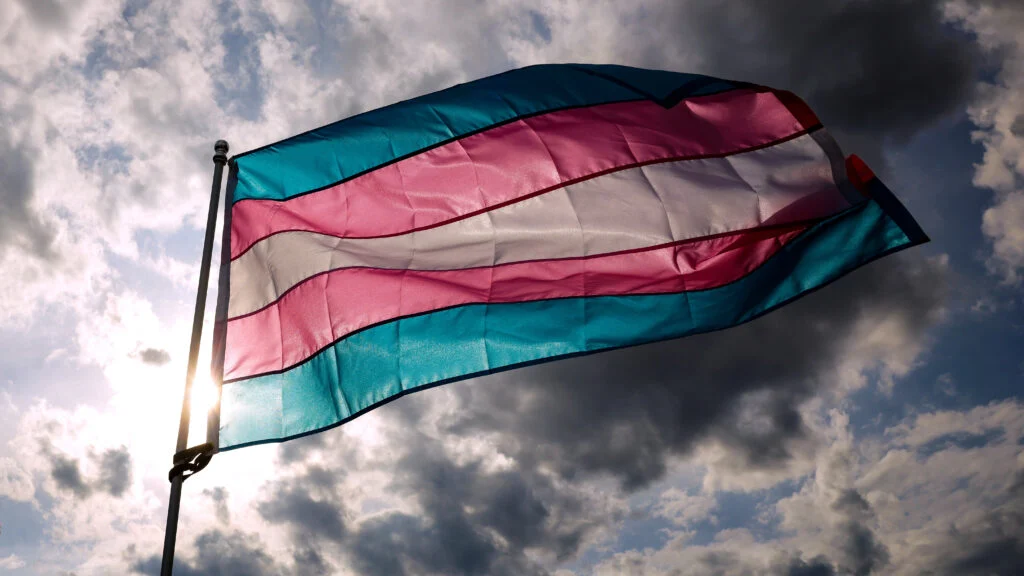
The 2026 midterm elections delivered a definitive "blue wave" that granted Democrats control over both the House of Representatives and the Senate, yet the legislative victory did not translate into a uniform progressive sweep across state-level ballot measures. While national sentiment appeared to tilt toward liberal priorities on issues like abortion access, marijuana legalization, and Medicaid expansion, a significant and contradictory trend emerged regarding the rights of transgender youth. This divergence highlights a complex American electorate that is increasingly willing to separate candidate affiliation from specific cultural and social grievances, creating a fragmented policy landscape for the 119th Congress and state legislatures to navigate.
In a striking departure from the broader Democratic surge, voters in several states approved measures that restrict the rights of transgender minors, particularly in the realms of athletics and medical care. In Arizona, Colorado, and Washington, ballot initiatives to prohibit transgender youth from participating on school sports teams aligned with their gender identity either passed or held commanding leads as final tallies were processed. The most significant shift occurred in Colorado, where voters were on track to approve a new ban on gender-affirming surgery for minors. This outcome was particularly surprising given the state’s political climate; Colorado Democrats secured the Senate, the majority of House seats, and retained the governor and attorney general offices. The results suggest that "gender politics" has become a decoupled issue, where even voters who support Democratic economic and environmental platforms harbor reservations about evolving social norms regarding gender identity.
Critics and civil rights advocates have characterized these measures as "ballot candy"—strategic initiatives placed on the ballot by Republican operatives to drive conservative turnout. However, the 2026 data suggests a more nuanced reality: there was no clear correlation between the success of these measures and the success of the candidates who championed them. The disconnect indicates that while voters may be concerned about "fairness" in sports, these concerns may be disproportionate to the actual number of individuals affected. National data indicates that approximately 300,000 youth aged 13 to 17 identify as transgender, with only about 40% participating in organized sports. Furthermore, late 2024 data from the NCAA revealed that out of more than 500,000 student-athletes, fewer than ten were transgender. An NCAA representative recently confirmed that currently, zero transgender athletes compete in women’s collegiate leagues.
The medical justifications for these bans are equally scrutinized. Research into the physical advantages of transgender women in athletics remains murky and limited, but existing evidence from groups like the BMJ does not suggest an inherent, across-the-board edge. Regarding medical interventions, top surgery (mastectomy) is rare among minors, and bottom surgery (genital reconstruction) is virtually nonexistent for those under 18. Despite these facts, the political rhetoric has been effective. The Trump administration’s relentless targeting of youth gender-affirming care over the past two years has created a chilling effect, leading many hospitals to preemptively cease providing puberty blockers and hormones even in jurisdictions where such care remains legal.
However, the political response has not been one-sided. Even as rights were stripped at the ballot box, transgender representation in government reached an all-time high. Six transgender candidates won seats in state legislatures that had never previously elected a transgender representative. Leaders like Abdul El-Sayed and James Talarico, who have been vocal supporters of LGBTQ+ rights, won their respective races handily. Chase Strangio, who leads the ACLU’s LGBT & HIV Project, noted that voters seem to reject anti-trans rhetoric when used as a weapon against specific candidates, even if they remain susceptible to the messaging of ballot measures. Strangio argued that these measures are often a "function of funding" rather than a true reflection of public consensus. In Colorado, the "blue wave" may actually provide a safety net; because the anti-trans measures were statutory changes rather than constitutional amendments, the Democratic-controlled legislature has the power to amend or delay them. Governor-elect Phil Weiser has already signaled that these restrictions will require a "long, hard look" before any implementation occurs.
The landscape of reproductive rights showed far more stability, as four states voted on abortion-related measures that largely preserved the status quo. The most watched battle took place in Missouri, a state that has become a crucible for the abortion debate since the overturning of Roe v. Wade. Two years ago, Missourians narrowly approved a measure to enshrine reproductive freedom in the state constitution. In 2026, the Republican-led legislature attempted to reverse this by tying an abortion ban to a popular proposal to constitutionally ban gender-affirming care for minors. Voters saw through the "logrolling" tactic, rejecting the reversal with 56% of the vote. Meanwhile, in Nevada and Virginia, voters moved to formally enshrine abortion rights in their state constitutions, bringing the total number of states with such protections to 26. Conversely, Idaho maintained its strict ban, proving that in deeply "red" territory, the appetite for reproductive deregulation remains low.
Drug policy also presented a split-screen reality. In Massachusetts, a high-stakes effort to repeal the state’s recreational marijuana law was defeated, with 76% of voters opting to keep legalization intact. This victory for the cannabis industry came despite a $3.7 million campaign funded by "Smart Approaches to Marijuana," a national nonprofit. While Massachusetts stayed the course, Idaho voters protected their future right to legalize psychoactive substances by rejecting a proposal that would have given the state legislature sole power over drug legalization.
Yet, the "blue wave" did not stop a shift toward more punitive measures regarding the fentanyl crisis. Reflecting the Trump administration’s stance—which famously declared fentanyl a "weapon of mass destruction"—voters in Arizona and Colorado approved measures aimed at escalating the drug war. Arizona designated drug cartels as terrorist organizations, while Colorado increased criminal penalties for the possession and sale of fentanyl. This shift suggests that even in states trending blue, the public remains fearful of the opioid epidemic and is increasingly receptive to "law and order" solutions, even if they conflict with harm-reduction philosophies.
In California, the passage of Proposition 38 signaled a massive, albeit controversial, investment in the future of medicine. The measure authorizes $8.4 billion in bonds to fund immunology and immunotherapy research, a move widely seen as a defense against federal science funding cuts. However, Prop 38 was dogged by allegations of "crony capitalism." The measure directs $4.2 billion—half of the total funding—to a single institute that meets a set of "oddly specific" criteria. Critics pointed out that only the California Institute for Immunology & Immunotherapy (CIII) fits the description. CIII was co-founded by billionaire Gary Michelson, who contributed over $40 million to the "Yes on 38" campaign. The American Association of Immunologists initially considered withdrawing its endorsement due to the earmark but ultimately stayed on board after meeting with Michelson. While proponents argue the $8.4 billion will accelerate cures for Alzheimer’s and cancer, the measure serves as a case study in how private wealth can shape public policy through the ballot box.
Finally, the 2026 midterms addressed the social safety net, with mixed results for affordability and healthcare access. In South Dakota, voters protected the state’s Medicaid expansion program. A proposed amendment would have allowed the state to scrap the program if the federal government’s funding share dropped below 90%. By rejecting this, voters ensured that tens of thousands of low-income residents would not face a sudden loss of coverage. In Arizona, voters tackled the rising cost of living by capping local grocery taxes at 2%, a move aimed at providing immediate relief to families. However, the push for universal social programs hit a wall in North Dakota, where a measure to provide free school breakfast and lunch to all students was narrowly defeated. Opponents cited the projected $134 million biennial cost, proving that even in a cycle defined by a "blue wave," fiscal conservatism still holds significant sway over local spending priorities.
As the dust settles on the 2026 midterms, the overarching narrative is one of selective progressivism. Voters across the United States are increasingly comfortable with a government that protects abortion and funds high-tech medical research, yet they remain deeply conflicted about the boundaries of gender identity and the most effective way to manage the drug crisis. For the newly empowered Democrats in Washington, these results serve as both a mandate for healthcare protection and a warning that cultural issues remain a potent tool for the opposition. The 2026 election proved that while a wave can change the face of the legislature, the underlying currents of the American electorate remain as complex and divided as ever.
