
 By admin
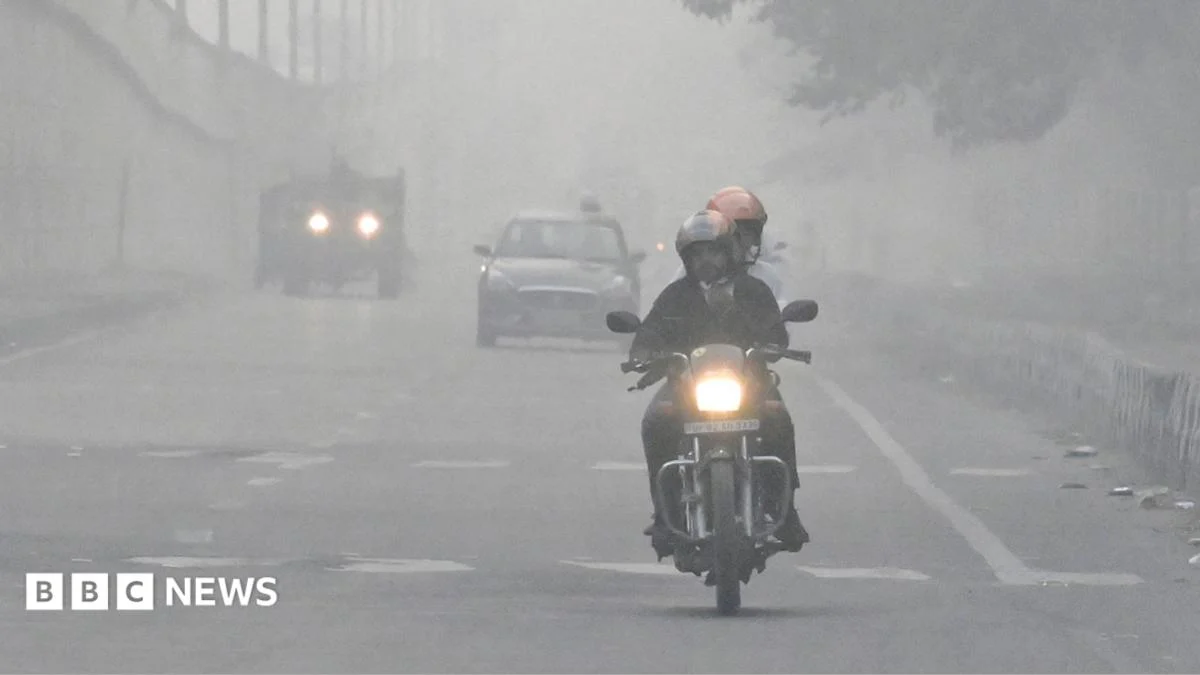
As the crisp mornings of Delhi begin to carry a discernible stuffiness, a sense of anxious anticipation settles over its residents. For Meenu Rana, a 43-year-old teacher in the bustling metropolis, this annual shift is marked not just by the festive glow of Diwali preparations, but by the stark reality of two cardboard boxes in her living room. One overflows with the vibrant decorations and twinkling lights synonymous with the festival of lights; the other, a stark contrast, is filled with air purifiers. "The mornings have already started feeling stuffy. It will get worse in the coming days, so it’s better to be prepared," she states, her words echoing the sentiment of millions.
This preparedness is a testament to the deeply entrenched annual challenge Delhi faces: months of breathing polluted air, a far less celebratory reality that descends with the winter chill and the festive season. Delhi and its surrounding satellite cities consistently rank among the most polluted urban areas globally. While pollution is a year-round concern, it intensifies dramatically as winter approaches, rendering the air often unbearable for its inhabitants. The meteorological conditions of winter play a crucial role: falling temperatures and diminished wind speeds conspire to trap pollutants close to the ground, preventing their natural dispersal. This stagnant air mass becomes a cauldron for a complex mix of emissions. Smoke billowing from the burning of agricultural residue in neighbouring states, a widespread practice that continues despite efforts to curb it, adds a significant layer of pollutants. This is compounded by the relentless emissions from the city’s vast vehicular fleet, industrial activities, and the omnipresent dust generated by ongoing construction projects. The celebratory exuberance of festivals, particularly Diwali, with its tradition of firecrackers, further exacerbates the problem, pushing air quality to dangerous thresholds. This recurring scenario prompts a familiar, yet often unanswered, question: why does this cycle of severe pollution persist year after year, and why have more effective, long-term solutions not been implemented?
In a notable departure from previous years, the Delhi government proactively unveiled its Winter Action Plan months before the onset of the worst smog episodes. This comprehensive plan, operational from November 1st to February 28th, specifically targets the period when pollution levels typically surge. Experts have largely lauded this early implementation as a positive step forward, acknowledging that in the past, mitigation strategies were often reactive, deployed only after the air quality had deteriorated to critical levels. However, a consensus among these experts is that while this proactive approach is commendable, it is insufficient on its own. They emphasize the urgent need for more holistic, sustainable, and deeply rooted measures to address the systemic causes of pollution.
The efficacy of these plans is often tested by the swift return of the familiar, grim reality. Just days after the Winter Action Plan came into effect, the city began to slip back into a depressingly familiar pattern. A palpable grey haze descended upon Delhi this week, accompanied by a distinct smoky aroma that residents have come to recognize with a sense of weary resignation. Complaints of eye irritation, breathing difficulties, and pervasive coughing and sneezing have become commonplace, painting a grim picture of the daily reality for many. For those who can afford it, air purifiers have transitioned from a luxury item to an essential household appliance, a testament to the compromised indoor air quality. Outdoors, the sight of individuals donning masks or covering their faces with cloth has become a ubiquitous, albeit disheartening, symbol of the struggle to shield oneself from the insidious effects of the polluted air.
Tackling air pollution was a cornerstone of the Bharatiya Janata Party’s (BJP) election campaign promises last year. The success of their Winter Action Plan now serves as a significant test of their commitment to this pledge. The plan encompasses a range of measures designed to curb emissions. These include restricting the entry of older, more polluting vehicles registered outside Delhi and enforcing fuel restrictions for vehicles lacking emission standard certificates. Furthermore, demolition and outdoor construction activities that generate substantial dust have been temporarily suspended. To mitigate vehicular pollution, the government is actively discouraging private vehicle usage. Offices have been urged to allow half of their employees to work from home, staggered office timings have been introduced for government staff, and parking charges have been doubled. The plan also outlines a commitment to strengthen pollution monitoring and enforcement mechanisms, alongside promoting public transport and the adoption of electric vehicles.
These measures operate independently of the Graded Response Action Plan (Grap), which is overseen by the federal Commission for Air Quality Management (CAQM). Grap employs a phased approach, introducing progressively stricter restrictions as pollution levels escalate. This week, the second stage of Grap is in effect, mandating restrictions on the use of diesel generators and the burning of coal and firewood. Experts acknowledge that, on paper, these collective actions provide a structured roadmap for responding to rising pollution levels. However, they underscore that the ultimate success hinges on rigorous and consistent enforcement.
Parthaa Bosu, a strategic advisor at the Environmental Defense Fund, a non-profit organization dedicated to climate solutions, observes, "There are a lot of positive changes as far as planning is concerned, but when it comes to execution, we probably still stand at the same level." This sentiment highlights a persistent gap between policy formulation and on-the-ground implementation, a recurring theme in environmental governance.
Others argue that the problem’s roots run much deeper than immediate mitigation strategies. Manoj Kumar, an analyst at the Centre for Research on Energy and Clean Air, contends, "If we want to reduce pollution, we need to set targets for every sector – including power generation, industry and transport – not just vehicle entry, construction and stubble burning." He elaborates, "We know how much each sector and each state contributes to pollution. We can set targets to reduce emissions from each of them over the next five years." This perspective advocates for a more comprehensive, sector-specific approach to emission reduction, moving beyond the current focus on visible sources.
Bosu further illuminates a critical, often overlooked aspect: secondary pollutants. These arise when gases in the atmosphere react with sunlight, water vapor, and other substances, forming harmful fine particles that contribute significantly to overall pollution. "Pollution is not just caused by biomass burning or vehicles," he asserts. "Dust being stirred up from the ground, coal and fly ash, materials burned at brick kilns and the large-scale burning of urban waste are also contributing to the problem. And much of this is still not being stopped." This highlights the need to address a wider spectrum of emission sources that are less visible but equally detrimental.
Delhi’s pollution conundrum is further complicated by factors originating beyond its geographical boundaries. Pollutants, carried by prevailing winds, infiltrate Delhi from neighbouring states and other regions of northern India, exacerbating the already dire situation, as Bosu explains. Consequently, the measures implemented solely within Delhi can only achieve a limited impact. A truly effective solution necessitates collaborative efforts and synchronized strategies among neighbouring states and the broader northern region.
In the interim, the daily toll of pollution on public health continues unabated. During the winter months, government monitoring stations in Delhi frequently register Air Quality Index (AQI) readings exceeding 300, a classification of "very poor." On particularly egregious days, these readings can soar to 500, the highest point on India’s domestic AQI scale, indicating that pollution levels may be even higher but are beyond the measurement capacity of local trackers. International monitoring systems, such as the Swiss-based IQAir, have recorded readings nearing 1,000 on certain days, painting a more alarming picture of the extreme pollution events.
The World Health Organization (WHO) recommends that average PM2.5 levels over a 24-hour period should not exceed 15 micrograms per cubic meter. In Delhi, during the peak pollution season, these levels frequently surpass this limit by more than 25 times. Dr. Manoj Goel, head of the pulmonology unit at Fortis Memorial Research Institute near Delhi, emphasizes the grave health implications: "These tiny particles ‘can penetrate deep into the lungs and enter the bloodstream, triggering inflammation and affecting multiple organs’." Even short-term exposure can induce immediate symptoms such as throat irritation, coughing, wheezing, and breathlessness. Moreover, it can significantly exacerbate pre-existing cardiac and respiratory conditions. The long-term consequences are even more alarming; a 2025 report by the Energy Policy Institute at the University of Chicago estimated that air pollution could reduce life expectancy in Delhi by as much as 8.2 years, a stark indicator of the silent epidemic gripping the city.
Beyond the immediate health concerns, the pollution-induced restrictions also disrupt the fabric of everyday life for Delhi’s residents. The city shares a close symbiotic relationship with its satellite towns, Noida and Gurugram, with thousands of commuters making daily journeys between these areas for work. The implementation of traffic restrictions and vehicle checks leads to the formation of lengthy queues at the city’s borders, trapping commuters in hours-long traffic jams. While the introduction of new rules offers a glimmer of hope for improved air quality, a palpable sense of frustration is growing among the populace.
The annual cycle of Delhi’s pollution is now inextricably linked with protests, political wrangling, and judicial interventions. Despite sustained public pressure and government initiatives, the persistent return of severe pollution each winter underscores the enormity of the challenge.
For residents like Meenu Rana, the daily routine involves a conscious effort to mitigate exposure. She keeps her windows tightly shut and curtains drawn, and has augmented her indoor environment with additional plants, hoping to improve air quality within her home. The arrival of another winter fills her family with a familiar sense of dread. However, unlike many who consider relocating, Rana and her family are not planning to move out of Delhi. "I would have left the city long ago had there been an option, but my son has his school, my husband and I have our jobs as well, which makes it practically impossible," she explains, articulating the complex web of factors that bind residents to the city. "What option do we have? It is unfair but we will have to live with it." This sentiment of reluctant acceptance, born out of necessity and a lack of viable alternatives, encapsulates the ongoing struggle of millions of Delhi’s residents facing the persistent challenge of polluted air.
