
 By Titik Puspa
The recent midterm elections have delivered a historic victory for Democrats, a triumph that could reverberate far beyond the halls of Congress and into the core of the technology industry. While the political landscape has dramatically shifted, the implications for tech are multifaceted, with a growing public and political backlash against the rapid expansion of data centers emerging as a significant concern. This sentiment was palpable in numerous local ballot measures, where voters decisively rejected proposals aimed at facilitating the construction of new data centers. Even in races where data centers weren’t the direct subject of a vote, the election of politicians like Texas’s governor-elect, Gina Hinojosa, who made restricting data center development a cornerstone of her campaign, signals a potentially challenging new era for the sector.
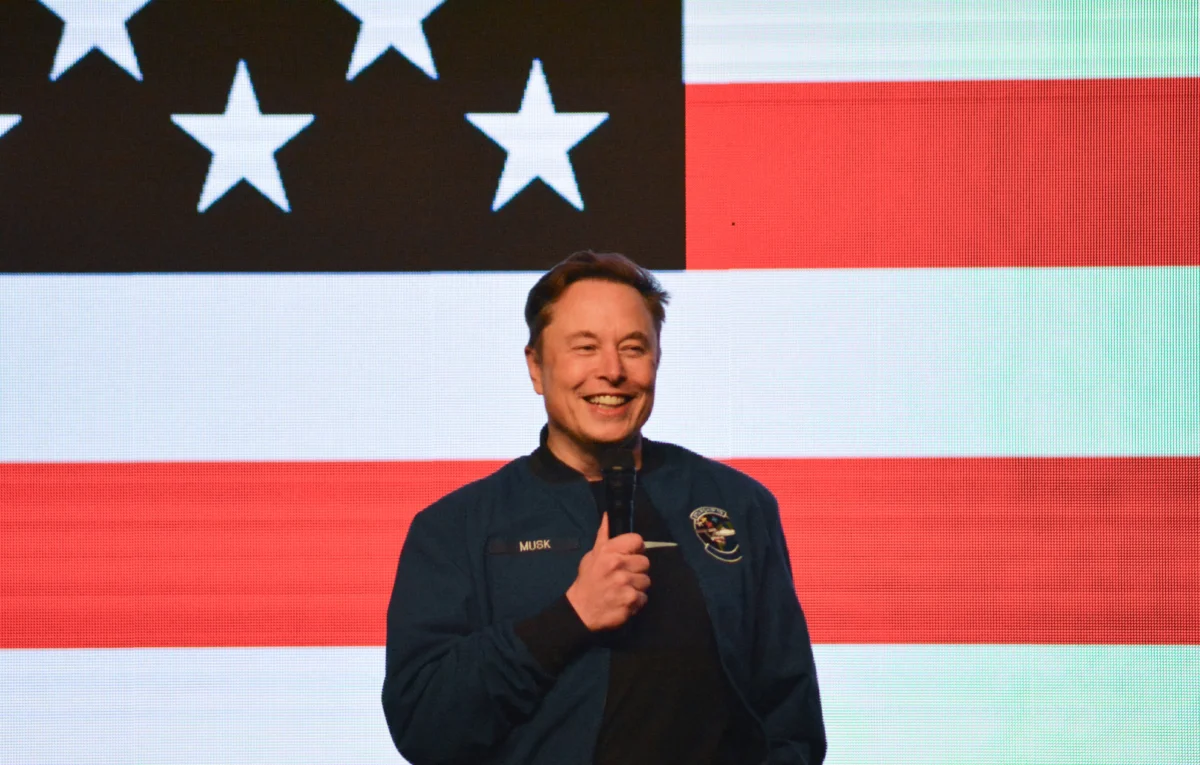
This seismic shift was a central theme in the latest episode of TechCrunch’s "Equity" podcast, where hosts Kirsten Korosec, Sean O’Kane, and Anthony Ha delved into the midterm election’s impact on the tech world. Sean O’Kane opened the discussion by highlighting the perplexing situation of Elon Musk, a significant donor to the Republican Party, who appears to have reaped little benefit from his substantial financial contributions. Musk’s companies, now headquartered in Texas, find themselves in a state that has, against historical trends, veered sharply towards Democratic control, a political realignment that could have profound implications for his businesses, especially those with significant infrastructure needs like data centers.
"Elon Musk seems to have gotten basically nothing out of donating half a billion dollars — maybe even more, by the time we see the final count — and in fact is now sitting there with all of his businesses in a state that has, remarkably, turned about as blue as it could possibly turn for the first time in a very long time, if ever," O’Kane observed, underscoring the potential disconnect between political spending and tangible outcomes.
O’Kane further elaborated on the widespread rejection of data center-related ballot measures across the country. "There were also a bunch of ballot measures up around the country that would have paved the way for data centers to get built faster. Almost all of them got shot down, or voted against," he stated. He then corrected himself, emphasizing a crucial nuance: "Actually, many of the ballot measures would have imposed restrictions or moratoriums on data centers, and almost all of those measures passed." This clarification highlights a clear public mandate against unchecked data center growth.
With Democrats now in a stronger position, O’Kane anticipates a more arduous path for data center development. "With [Democrats] in power, there is a consensus view, at least in the tech world, that this is going to mean we have a lot of roadblocks ahead for data centers, especially in places like Texas, where [you have] folks like the governor-elect [Gina] Hinojosa, who has spoken pretty openly about this being a campaign promise and something that she wants to focus on once she takes power, now that she’s beaten Greg Abbott." He questioned whether the tech industry might be overemphasizing this specific issue, inviting further discussion from his co-hosts.
Anthony Ha acknowledged the validity of the concern but suggested that the focus on data centers, while perhaps appearing disproportionate to some, reflects a genuine and growing grassroots movement. "I don’t necessarily think that they’re too focused on it, but I understand why it would feel a little bit disproportionate — the data center ballot measures, certainly there were a number of them, but it wasn’t something that was on the ballot everywhere." He pointed out the bipartisan nature of the sentiment, noting that the Democrats have been more effective in capitalizing on this emerging political force. "There was this undercurrent and sense that it seems to be an issue that reaches across the country, that is bipartisan in a lot of ways, but that the Democrats seem to have been more effective at harnessing that energy. And of course, there’s all kinds of reasons why the Democrats did so well on Tuesday, but it does seem like anti-AI and especially anti-data center sentiment was a big part of it. That seems like a pretty potent political force."
Ha projected a more challenging future for the tech sector, particularly for hyperscalers and data center companies. "The next two years, [and] potentially beyond that, are going to be more difficult for tech companies in general, and hyperscalers, data center companies in particular. I also imagine that they have to be a little bit worried about: Is this going to continue to be an issue, not just with the people who got elected this year, but potentially in 2028 and beyond?" This forward-looking perspective suggests that the current backlash is not a fleeting trend but a developing political reality.
Kirsten Korosec strongly concurred with Ha’s assessment, emphasizing that while data centers might not have been the sole driver of the "blue wave," they have undeniably become a significant grassroots issue. She attributed this rise in concern to the opaque and often secretive methods employed by hyperscalers and tech companies in securing approvals for their massive projects. "I don’t think that the data center issue is what brought everyone to the polls and led to the quote-unquote ‘blue wave.’ However, I will say that data centers have been an increasingly grassroots issue, in part because of how hyperscalers and companies have gone about getting these data centers [approved] — very secretive, oftentimes requiring NDAs of elected officials or appointed officials, not sharing information about the scale of a project in very environmentally sensitive areas, including in the Southwest, where there’s very much a water scarcity issue."
Korosec highlighted the broad-based appeal of this concern, noting that it resonated across the political spectrum. "So I think that a lot of folks — Republicans, independents, and Democrats — all saw this as wrong. They were motivated by it, but I don’t think it was a singular issue." This indicates a unified public concern over the environmental and community impacts of unchecked data center expansion.
A particularly intriguing development, according to Korosec, is the apparent shift in strategy by companies like OpenAI in response to mounting pressure. "Now, here’s the interesting thing. There was a lot of waving of hands about how [AI companies] can’t possibly operate under any other circumstances. And we’re already seeing companies like OpenAI all of a sudden go, ‘Actually, we can change our policies.’" She pointed to OpenAI’s recent release of a "compute campus policy blueprint," which notably abandons the requirement for non-disclosure agreements (NDAs) and promises greater transparency regarding project plans and operational practices. "They just released what they call a compute campus policy blueprint. And guess what? They’re not going to require NDAs anymore. They’re going to share their plans and supposedly operate in less secrecy."
Korosec interprets this as a clear demonstration of corporate responsiveness to regulatory signals. "I think what this shows is that when you put up either a regulatory certainty in the marketplace, or at least signals of going in that direction, then corporations will respond. If you don’t do that, they will not necessarily do the thing that we hope that they will do." This suggests that proactive policy-making and clear regulatory frameworks can indeed influence corporate behavior.
Anthony Ha then zeroed in on the strategic rebranding effort by companies like OpenAI, who are now referring to their data centers as "compute campuses." He questioned the efficacy of this linguistic shift. "One thing I want to emphasize is that they’re calling it this [their] ‘compute campus policy.’ And part of what that’s doing, beyond laying out these policy changes, is also an attempt to rebrand data centers, because they have become such a toxic phrase. So they’re not data centers anymore, they are compute campuses, and I’m curious, whether either of you think that’ll take."
Sean O’Kane expressed skepticism about the rebranding effort, dismissing it as a superficial attempt to obscure the underlying issues. "I mean, this is ridiculous. Come on. It’s not going to change anything. It’s going to cause them more effort. For a company that likes to say that it’s no longer focused on side quests, OpenAI still loves to go in different directions a lot. And this is just the latest kind of thing where it’s just like: Why are you spending time on this at all? It doesn’t really seem like it’s going to move the needle." O’Kane views this as a distraction from the core challenges of energy and water consumption associated with these facilities.
Kirsten Korosec offered a sarcastic suggestion for OpenAI, pushing the rebranding concept to its extreme. "I have a great idea for OpenAI. Because in the spirit of making threatening things seem cute, they should 100% create a compute campuses avatar, [a] cutesy thing, and then just present that instead of a power-, energy-sucking, water-sucking data center." This tongue-in-cheek remark highlights the public perception of data centers as environmentally taxing entities.
Anthony Ha added to the ironic commentary, suggesting that if these facilities are indeed "lovely compute campuses," then the companies should consider co-locating their own offices nearby to experience the benefits firsthand.
Beyond the political and public relations shifts, Ha introduced another critical factor influencing the data center industry: Wall Street’s evolving perspective. He posited that the recent election results might be part of a "one-two punch," with financial markets also re-evaluating their stance on hyperscalers and AI companies. "Something else that I’m wondering about is, to what extent the election is maybe the second part of a one-two punch. [We’ve just seen] a big shift in how Wall Street is reacting to a lot of these hyperscalers and AI companies and this sense that [investors] are not excited about the idea that they should be spending all this money building new data centers, spending all this money on compute." This suggests a growing investor concern about the financial sustainability and returns on investment associated with massive infrastructure build-outs.
Ha concluded by outlining the complex interplay of these factors. "I’m very curious how that’s going to play out. [From a regulatory standpoint,] it’s probably going to be harder to build data centers. Wall Street is probably not going to reward you for building data centers. But at the same time, to get to the scale that they want to get to, they are probably going to need to build data centers somewhere." This encapsulates the central challenge facing the tech industry: balancing the insatiable demand for computing power with increasing regulatory scrutiny, public opposition, and potentially less enthusiastic financial backing. The midterm election results have undoubtedly amplified these existing pressures, signaling a potential turning point in how the tech industry, particularly its data-hungry infrastructure, will operate in the years to come.
