
 By admin
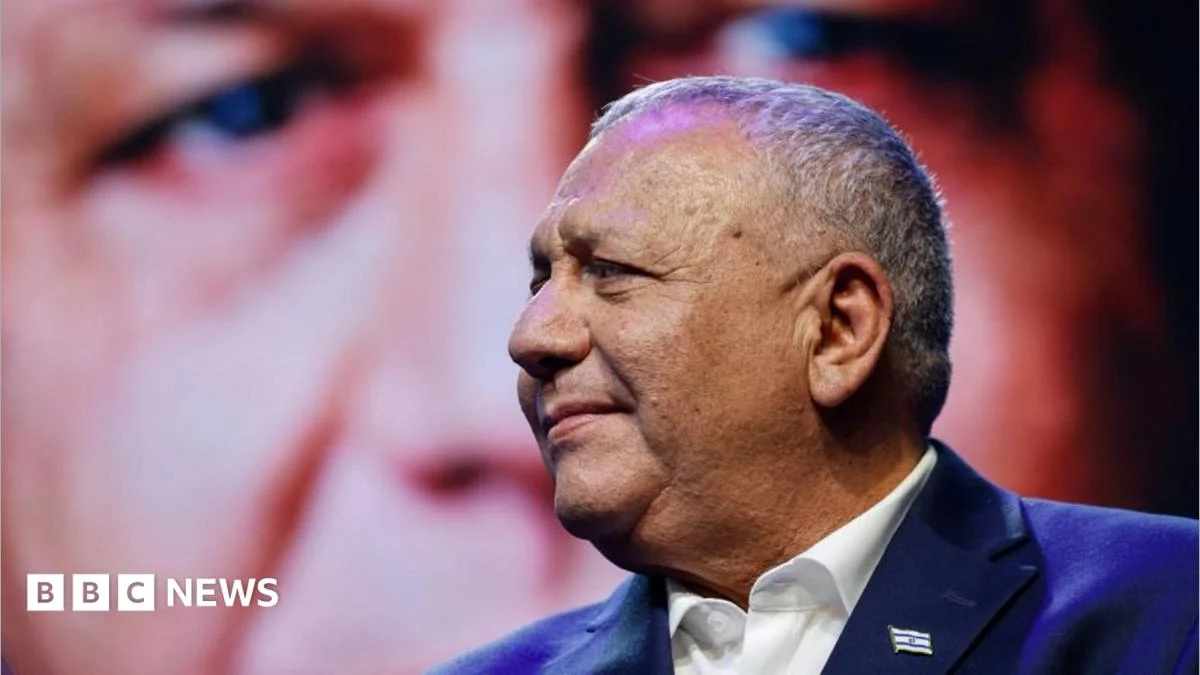
In a significant political development that underscores the intricate and often challenging landscape of Israeli coalition building, President Isaac Herzog has officially tasked opposition leader Gadi Eisenkot with the monumental task of forming a new government. This decision follows a week of intensive consultations with all political factions after the recent general election failed to yield a clear majority for either Prime Minister Benjamin Netanyahu’s bloc or Eisenkot’s centrist alliance. Eisenkot now faces a critical 28-day window, with a potential 14-day extension, to navigate the complex currents of Israeli politics and forge a stable governing coalition.
The election results, announced following a surge in voter turnout, particularly among the Arab population, painted a picture of a deeply divided Knesset. Netanyahu’s right-wing Likud party, bolstered by its far-right and ultra-Orthodox Jewish allies, secured 53 seats in the 120-member parliament. Conversely, Eisenkot’s centrist National Unity party, along with three other Jewish opposition parties aligned with him, garnered 48 seats. A notable and unprecedented development was the strong showing of two Arab-led alliances, the United Arab List and the Joint List, which collectively secured an impressive 19 seats. This surge in support for Arab parties positions them as potential kingmakers, a role that carries significant implications for the future political landscape. However, the path to coalition formation is further complicated by pre-election pledges from all but one of the Jewish parties, explicitly stating their refusal to cooperate with Arab parties in forming a government.
President Herzog’s decision to grant Eisenkot the first opportunity to form a government reflects the recommendations received from the incoming Knesset members. The President’s office confirmed that Eisenkot received 67 recommendations for the premiership, significantly more than the 46 garnered by Prime Minister Netanyahu. This recommendation count, while not binding, carries substantial weight, as the Israeli president possesses broad discretionary power to select the individual believed to have the highest probability of successfully assembling a coalition. This power acknowledges that in Israel’s fragmented political system, where no single party has ever achieved an outright majority, the art of coalition building is paramount, often transcending the simple tally of seats won by individual parties. All Israeli governments since the country’s inception have been coalitions, necessitating compromise and negotiation among diverse political ideologies.
The election outcome had initially suggested three primary avenues for government formation: a national unity administration encompassing both Netanyahu and Eisenkot, a right-wing coalition led by Netanyahu and potentially including defectors from Eisenkot’s bloc, or an Eisenkot-led government potentially reliant on the support of the Arab parties. The latter option, while theoretically possible, presents substantial ideological hurdles. Eisenkot and the vast majority of his bloc have historically maintained a firm stance against entering into government arrangements with Arab parties. Nevertheless, speculation persists that under the current exigencies, a pragmatic agreement could be reached, driven by the overarching goal of forming a stable government and avoiding another electoral cycle. Another potential, albeit challenging, avenue for Eisenkot would be to forge an agreement with the ultra-Orthodox parties, a move that would also necessitate significant concessions and ideological compromises.
The historical precedent for a unity government offers a potential blueprint for resolving the current impasse. In 2020, following three consecutive deadlocked elections, Prime Minister Netanyahu and his centrist rival Benny Gantz eventually agreed to a power-sharing deal. This agreement featured a rotating premiership, with Netanyahu initially serving as prime minister and Gantz set to take over after a predetermined period. Such an arrangement, while fraught with its own set of complexities and potential for friction, demonstrates that compromise between major political rivals is achievable in Israel’s political arena.
During his extensive consultations with party leaders and delegations, President Herzog emphasized the urgent need to prevent another round of elections and to establish a stable government. He articulated a clear expectation that "factions and their representatives to understand that, in the current reality, not every commitment and promise can be fulfilled." This statement underscored the president’s recognition of the extraordinary circumstances and the necessity for political flexibility and a willingness to set aside rigid ideological positions for the greater good of national stability. The period between 2019 and 2022 was particularly tumultuous for Israeli politics, marked by five separate elections as Netanyahu and his opponents repeatedly struggled to forge viable governing coalitions, highlighting the persistent challenges of political fragmentation.
The current political climate in Israel is a complex tapestry woven from deep-seated ideological divides, shifting alliances, and the perennial quest for a stable majority. Gadi Eisenkot, a former Chief of Staff of the Israel Defense Forces (IDF), brings a background of military leadership and a reputation for pragmatism to the forefront of this political maneuvering. His appointment to lead the coalition formation process signals a potential shift towards a more centrist or even a broad-based government, aiming to bridge the existing divides. However, the path ahead is far from assured. The entrenched positions of various parties, the deeply held animosities, and the sheer diversity of interests within the Knesset present a formidable challenge for Eisenkot.
The unprecedented success of the Arab parties in the recent election has undeniably altered the political calculus. Their 19 seats represent a significant bloc of power that can no longer be easily ignored. While historically, Jewish parties have been reluctant to form governments with Arab parties, the current arithmetic might force a re-evaluation of these stances. The potential for an Arab-Israeli bloc to play a decisive role in forming a government is a development that could reshape the future of Israeli politics, potentially leading to greater inclusion and representation for the Arab minority. However, the deep societal and political divisions that have historically hindered such cooperation cannot be underestimated.
The ultra-Orthodox parties, a consistent and influential force in Israeli coalition politics, represent another critical piece of the puzzle. Their demands for religious and financial concessions are often a significant hurdle in coalition negotiations. For Eisenkot, securing their support would likely involve substantial compromises that could alienate his secular and centrist base. Conversely, forming a government without their participation would necessitate finding an alternative majority, potentially through a more inclusive arrangement that embraces parties previously considered outside the mainstream of coalition building.
Prime Minister Netanyahu, a seasoned political veteran, is unlikely to relinquish his pursuit of power easily. His Likud party, despite not securing a majority on its own, remains a dominant force. The possibility of Netanyahu attempting to peel away members from Eisenkot’s bloc or forming a coalition with a narrow right-wing majority, even if it means relying on parties with more extreme ideologies, cannot be discounted. His political strategies have often been characterized by an ability to forge unlikely alliances and navigate complex political landscapes, making him a formidable opponent in any coalition negotiation.
The role of President Herzog in this process is crucial. As the head of state, he acts as a neutral arbiter, tasked with ensuring the stability and democratic functioning of the government. His decision to task Eisenkot, rather than Netanyahu, signals a preference for a potentially more inclusive and stable coalition, or at least a recognition of the recommendations received by the opposition leader. His calls for compromise and a willingness to set aside promises in the face of current realities highlight the gravity of the situation and the president’s commitment to preventing political paralysis.
The coming weeks will be a period of intense political drama and negotiation. Eisenkot will need to engage in delicate diplomacy, seeking common ground among parties with vastly different agendas. He will have to weigh the strategic advantages and disadvantages of various potential alliances, considering not only the immediate formation of a government but also its long-term stability and effectiveness. The success or failure of his mission will have profound implications for Israel’s domestic policy, its regional relations, and its standing on the international stage. The nation watches with bated breath as its political leaders grapple with the enduring challenge of governing in a deeply divided yet resilient democracy. The outcome of these negotiations will ultimately determine the direction of Israel for the foreseeable future, testing the very foundations of its coalition politics and the willingness of its leaders to compromise for the sake of national unity.
