
 By admin
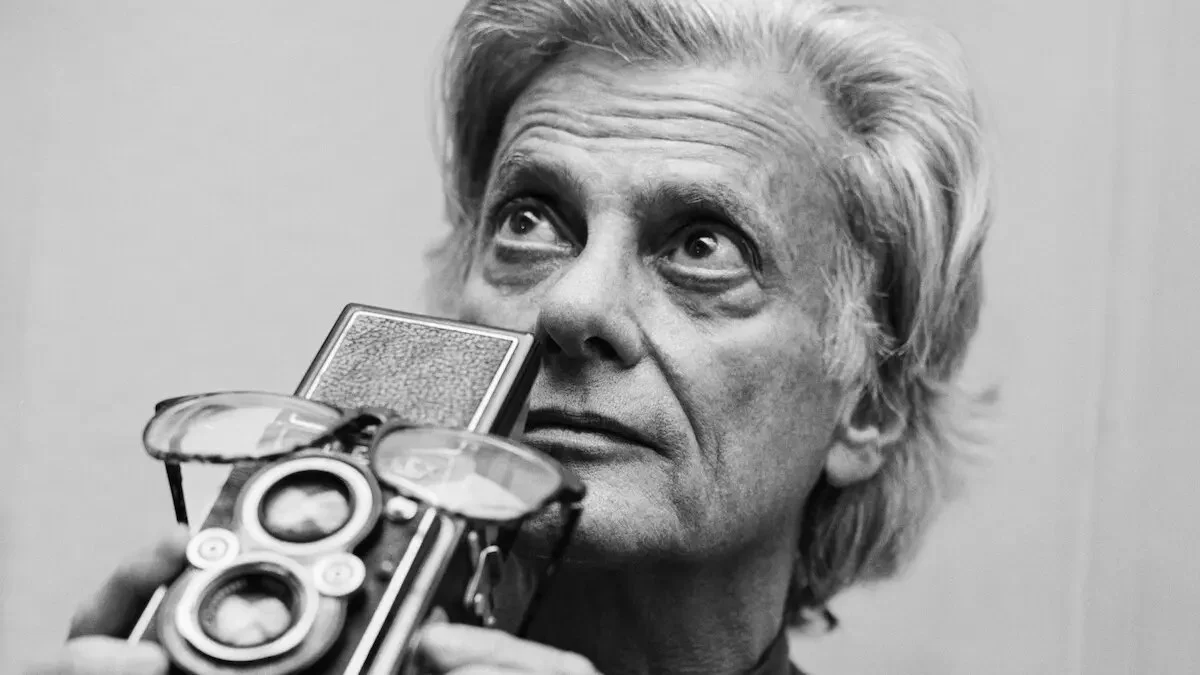
Hundreds of Avedon’s iconic photographs are woven seamlessly into the narrative, each image a testament to his unparalleled ability to capture the essence of his subjects. While the sheer power and beauty of these photographs are undeniable, it is the film’s sophisticated layering and integration of these images into the viewer’s consciousness that elevates the experience to an almost transcendental level. This masterful technique serves to illuminate the expansive and revolutionary scope of Avedon’s vision, charting his seismic impact on the very metaphysics of photography and, by extension, on how humanity perceives and understands the world.
At the core of Avedon’s oeuvre lies a compelling paradox, as epic and exhilarating as the 20th century it so vividly documented. He was an undisputed titan of high fashion, a navigator of the rarefied realms of glamour and unattainable beauty. Yet, as an image-maker, he was also the ultimate democratic humanist, possessing an uncanny ability to connect with and reveal the humanity in every individual he photographed. The brilliance of Howard’s "Avedon" lies in its ability to unravel this paradox, allowing Avedon’s seemingly disparate worlds to coalesce and his images to resonate with renewed vigor.
Howard expertly intersperses archival footage and insightful interviews, positioning Avedon himself, with his characteristic sleek command and piercing gaze, at the film’s pulsating heart. The documentary features a rich tapestry of voices from the worlds of fashion, media, art, and criticism, each offering invaluable perspectives on Avedon’s legacy. Among these luminaries are Tina Brown, the formidable former editor of Vanity Fair and The New Yorker; Larry Gagosian, the influential art dealer; John Lahr, the acclaimed biographer and critic; the iconic supermodel Twiggy; Adam Gopnik and Hilton Als, esteemed writers and cultural commentators; Calvin Klein, the visionary fashion designer; and Avedon’s devoted and insightful son, John Avedon. James Martin, the executive director of the Richard Avedon Foundation, provides crucial access to the photographer’s vast archives, a labyrinthine repository housing the monumental body of work produced across an astonishing 16,000 sittings that spanned from 1944 until Avedon’s death in 2004. This staggering output, averaging one sitting per weekday for six decades, underscores the relentless dedication and prolificacy of his artistic practice. Beyond the professional sphere, the film also bravely confronts the more personal and often tragic dimensions of Avedon’s life, including the profound influence of his mentally ill sister, whom he deeply revered, and the complexities of his troubled marriages.
The documentary opens with a disarmingly direct clip of Richard Avedon, his piercing, almost avian gaze fixed on the camera. With characteristic conviction, he declares, "I can say very little about photography. I follow no rules, no laws, and no advice." This declaration, delivered with absolute seriousness, sets the stage for a visual exploration of a singular artistic vision. What follows is a dynamic montage, set to the propulsive, martial rhythm of Spoon’s "I Turn My Camera On," showcasing a breathtaking array of Avedon’s portraits of the era’s most celebrated figures: John Lennon, Orson Welles, Michael Jordan, Elizabeth Taylor, Groucho Marx, Twiggy captured in mid-air, Anjelica Huston, Marilyn Monroe in a tender embrace with Arthur Miller, Truman Capote, and J. Robert Oppenheimer.
Each image, meticulously lit by Avedon, possesses an enduring quality, as if captured yesterday rather than decades ago. His subjects appear precisely as we imagine them, yet simultaneously distinct from any prior perception. They are presented with an unfiltered directness, an intimate self-possession that is unmistakably the "Avedon touch." The magic, however, lies in its apparent effortlessness; the technique is so sublimely invisible that it invites a naive, almost simplistic interpretation: "Just set up a camera, load it with black-and-white film, place a famous person in front of it, encourage them to relax and ‘be themselves,’ and voilà! I could be Richard Avedon."
Avedon himself would likely have found this assessment not entirely inaccurate, acknowledging the profound truth embedded within its simplicity. His true genius lay not in the technical intricacies of photography—discussions of f-stops would likely have met with a glazed-over expression—but in his revolutionary approach to the photographic session itself. As Isabella Rossellini observes in the film, while other photographers might engage in relentless shooting, Avedon operated with a different rhythm. He would capture an image, then prompt his subject to contemplate, to feel, before taking another shot, often resulting in a mere handful of exposures. Avedon himself articulated this philosophy: "If you’ve booked someone for an hour, you don’t have to shoot for an hour." He would famously dedicate a significant portion of the session to casual conversation and coffee, creating an atmosphere of relaxed intimacy. It was often in the final minutes, before the session concluded, that the true magic would unfold against the stark white paper backdrop.
The genesis of this iconic white paper backdrop is rooted in a remarkable anecdote. Born in New York in 1923, Avedon developed an early, almost photographic memory. As a child, he would sometimes blink while walking down the street, closing his eyes to hold onto the visual impressions he had just absorbed, a primitive form of image-making before he even possessed a camera. His formal photographic journey began at age 19 when he joined the U.S. Merchant Marines. Assigned to the photographic department, he was tasked with producing approximately 100,000 portraits of enlisted men and other personnel for identification cards.
This assignment, akin to the mundane duty of peeling potatoes on KP, proved to be a fertile ground for artistic discovery. Shooting these military mug shots against a stark white background, Avedon encountered "thousands of baffled faces looking into the camera." He observed with profound insight how these photographs, in their unadorned simplicity, revealed the individuals behind the uniforms. This phenomenon mirrors the startling honesty often found in police mug shots, a sentiment echoed by John Waters, who quipped, "Everybody looks better under arrest." The film showcases a selection of these early ID photos, and the nascent "Avedon style" is already palpable. He recognized that each face was inherently unique and required no embellishment to assert its individuality. Thus, from a thankless military assignment, Avedon forged a revolutionary artistic vision. The white background served as an equalizer, stripping away distractions and allowing each person to emerge as a distinct individual, unhindered by any extraneous elements.
This approach positioned him as a "head-on existential classicist," a practitioner whose eye for capturing the subtly "off" or unconventional aspect of a person resonated with the observational acuity of Diane Arbus. The famously composed shot of model Lauren Hutton, with her head thrown back and her breast prominently displayed, appears as perfectly sculpted as a Picasso statue, yet it was, by all accounts, a spontaneous moment. This element of serendipity, the capturing of seemingly unplanned yet iconic gazes, is a hallmark of Avedon’s portraiture. These potent looks were not rehearsed or directed; they emerged organically from the dynamic interplay between photographer and subject.
A particularly poignant example of this spontaneous magic occurred in 1953 with Charlie Chaplin. At the conclusion of a session, Chaplin playfully donned devil horns over his grinning face, creating an image that would become one of Avedon’s most enduring. Such images, born from fleeting moments of inspiration and interaction, were instantly seared into the collective visual consciousness. As "Avedon" reveals, a crucial element of his practice was his ability to record the "ineffable dance" between subject and artist, using each individual to articulate something deeply personal within himself. The film suggests that Chaplin’s playful gesture with the devil horns was a specific expression that he might not have offered to any other photographer.
By the time of the 1957 Hollywood musical "Funny Face," which featured Audrey Hepburn and Fred Astaire and pointedly cast Astaire as a magazine photographer inspired by Avedon, the photographer had already ascended to legendary status. This recognition began to inform his artistic process, allowing him to leverage his burgeoning power as part of his creative methodology. During his 1957 shoot with Marilyn Monroe, coinciding with the release of "The Prince and the Showgirl," the challenge was to photograph Monroe in a way that aligned with Avedon’s artistic vision, particularly given her unparalleled preparedness for being photographed. The session spanned an entire day, yielding numerous vibrant images of Monroe in her full, radiant glory. However, the truly iconic photograph emerged at the day’s end, when Monroe momentarily let down her guard, her posture softening, a flicker of sadness crossing her features. This image offered a glimpse of the "real Marilyn"—not necessarily a forlorn figure, but the complex woman behind the public persona. It was a portrait of Norma Jean, grown up.
"Avedon" is replete with compelling anecdotes and privileged insights into the genesis of his most celebrated works. His lens, however, was not exclusively focused on the famous. He also photographed the anonymous, such as the Oklahoma oil workers he documented in 1980. With his characteristic impishness, he coaxed fashion models into dynamic, mid-air leaps for his "models in motion" series. His dedication extended to spending seven weeks in Vietnam to photograph American generals, and he devised unique approaches to capturing the Chicago Seven defendants and the denizens of Andy Warhol’s Factory. His groundbreaking series documenting the American West, characterized by its raw authenticity, was initially met with resistance from New York museums, a testament to how far ahead of his time Avedon truly was. The film also recounts a deeply personal story of Avedon photographing his aging father, a process that facilitated a profound reconciliation between them.
Avedon sustained his affluent lifestyle through extensive advertising work, including the surrealist-tinged "Obsession" perfume television commercials. Yet, for him, this commercial work was never a compromise; it was an extension of his artistic vision. The documentary compellingly demonstrates this seamless integration, revealing a breathtaking continuity across over six decades of his portraiture, fashion photography, and commercial endeavors. This unifying thread underscores Avedon’s singular artistic pursuit: to awaken and expand the viewer’s perception, to truly "open your eyes."
