
 By admin
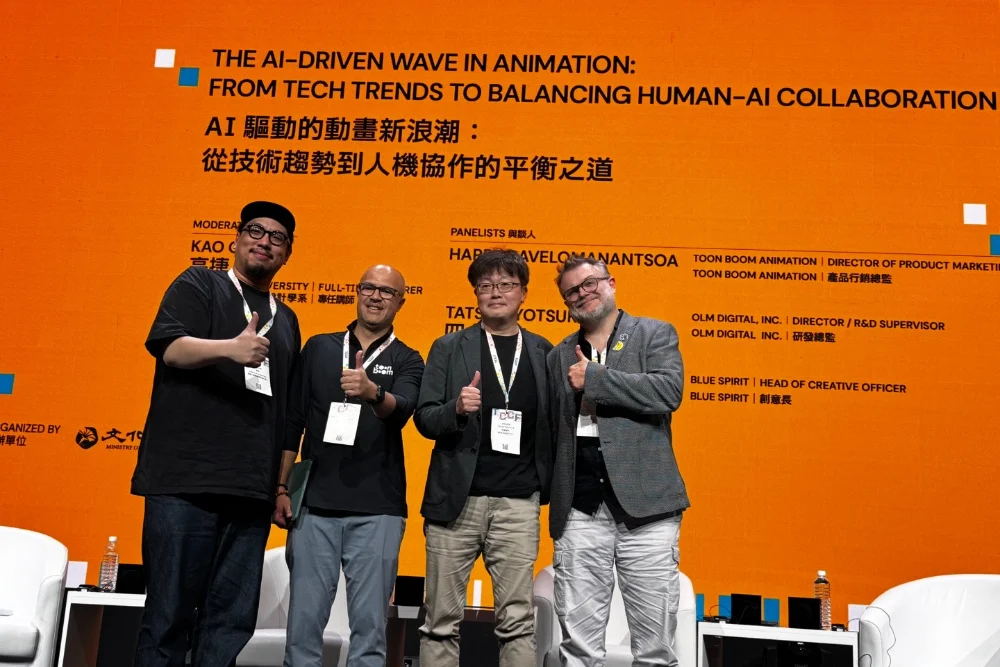
The Japanese animation powerhouse OLM, renowned globally for its iconic work on the "Pokemon" anime series and films, has unveiled a groundbreaking AI-powered coloring tool designed to significantly streamline the animation production process. This innovative technology, showcased at the Taiwan Creative Content Fest (TCCF) in Taipei by OLM Digital board director Yotsukura Tatsuo, represents a significant leap forward in how anime is created, addressing long-standing bottlenecks in the industry.
The development of this AI coloring tool emerged from ANIMINS, a comprehensive 15-month research initiative spearheaded by Yotsukura. This project was conducted under the umbrella of GENIAC, a national generative AI program meticulously overseen by Japan’s Ministry of Economy, Trade and Industry. The core objective of the GENIAC initiative was to explore and foster the integration of AI technologies into the creative workflows of anime creators. The ANIMINS project concluded successfully in February, paving the way for practical applications like the new coloring tool.
Traditionally, AI models require an immense volume of training data, a resource that animation studios often find challenging and time-consuming to assemble. OLM, however, adopted an entirely different and remarkably efficient approach. Instead of relying on massive datasets, their AI coloring tool operates on a far more economical principle. An artist meticulously hand-paints just three key frames of an animation sequence. The AI system then analyzes these three frames, rapidly learning the specific line shapes and the distinct color palette that defines the show’s visual aesthetic. This learning process is astonishingly swift, taking approximately 90 seconds to complete. Once trained, the AI can then color each of the remaining frames in a mere 15 seconds per frame. The accuracy and efficiency of the tool are further enhanced as the artist provides more hand-painted frames, allowing the AI to refine its understanding of the artistic style.
Yotsukura clarified that, in a strict technical sense, the tool is not a generative AI. "Strictly speaking, it isn’t generative AI," he stated. This distinction is crucial, as it highlights the tool’s function as an intelligent assistant rather than an autonomous creator. A key ethical and practical advantage of OLM’s approach is that the AI is trained exclusively on the production’s own frames. This ensures that no existing copyrighted works are infringed upon, a common concern with broader AI applications. Furthermore, the tool demonstrates remarkable adaptability. When new characters, creatures, or elements, such as a dragon, are introduced into a scene, the AI can immediately adjust and apply the appropriate colors based on the updated hand-painted frames.
The primary objective that OLM aimed to emphasize with this innovation is its seamless integration into existing anime production workflows. The tool is designed to complement, not disrupt, the established processes. During its proof-of-concept phase, Yotsukura estimated that the AI coloring tool has successfully reduced the manual painting workload by approximately 30%. While this offers a significant efficiency gain, it’s worth noting that the quality control process, involving checkers who meticulously review every colored frame, has seen a slight increase in their workload due to the sheer volume of AI-colored frames requiring verification.
The challenge of optimizing the coloring process is not unique to OLM. Toon Boom Animation, a prominent Canadian company specializing in animation software such as Harmony and Storyboard Pro, is also actively addressing this production bottleneck. Harry Ravelomanantsoa, Toon Boom’s product marketing director, revealed that the beta testing phase for their AI coloring tool, integrated into Ember, their AI suite, is nearing completion. Additionally, an AI tool for in-betweening, a crucial step in animation that involves generating frames between key poses, is slated to enter beta testing within the next couple of weeks. Ravelomanantsoa shared an impressive anecdote from a Manila-based studio that piloted Toon Boom’s coloring tool. In one instance, a 90-second scene that would have traditionally taken 15 hours to paint was completed in a mere two to three hours, a drastic reduction in production time.
OLM, a substantial player in the global animation landscape, boasts a workforce of approximately 600 employees spread across Japan, Malaysia, Thailand, and the United States. Yotsukura, in his address at TCCF, highlighted OLM’s primary identity. "As you probably saw passing through the first floor, we make the ‘Pokemon’ anime – not the games – including the TV series and the theatrical films," he explained, referencing the concurrent 2026-27 Pokemon Asia Championship Series: Taiwan Premier Ball League, which was being held on a lower floor of the Taipei Nangang Exhibition Center where TCCF was taking place from November 6th to 9th. Beyond the colossal success of "Pokemon," OLM’s diverse portfolio includes popular children’s titles such as "Beyblade" and "Hanakappa," as well as the critically acclaimed adult-oriented series "The Apothecary Diaries." Yotsukura, who also holds the position of CTO for OLM’s Malaysian and Thai operations, pointed out that the establishment of an in-house Research and Development division is a relatively uncommon undertaking for a Japanese animation company, underscoring OLM’s commitment to technological innovation.
The company’s exploration of AI extends beyond coloring. OLM is actively experimenting with AI for in-betweening as well. However, Yotsukura believes that the most significant advancements and benefits may arise from indirect applications of AI across their various productions, which often involve more than 100 staff members. In collaboration with a startup partner from the GENIAC project, OLM is developing anime-specific AI agents. These agents are envisioned to provide invaluable support to new directors or production managers joining long-running series, potentially recalling specific directorial intentions for particular scenes or cuts. Furthermore, these AI agents could significantly expedite the approval processes and streamline license management for secondary uses of OLM’s intellectual properties, a facet Yotsukura identified as the most critical for the company’s revenue. Recognizing the sensitive nature of these areas, OLM is proceeding with utmost caution and meticulous planning.
Yotsukura drew an insightful parallel between the current state of AI demonstrations and the realities of production, likening it to "gacha," the popular Japanese capsule-toy machines. In gacha, each ¥500 (approximately $3.30) turn offers an uncertain outcome, a scenario he equated to the cost of an AI generation credit. AI technologies often achieve around 80% of the desired outcome, which is sufficient to generate significant anticipation and excitement. However, he cautioned, "Raising it from there to 90 or 100% turns into work so hard it can make you heartsick." While hobbyists might be content with an 80% success rate, professional animators demand tools that deliver their creative vision with 100% accuracy and allow for immediate corrections. He further emphasized the extreme sensitivity of color in anime, noting that AI tools that modify images can inadvertently alter RGB values, even if the visual result appears satisfactory to the untrained eye.
Harry Ravelomanantsoa echoed this sentiment by stating, "The creative stays with the artist, and the mechanical time goes to AI, to Ember." Yotsukura expressed his strong agreement with this division of labor, adding, "AI can only do what it has learned." He firmly believes that the captivating images that move audiences in cinemas and the groundbreaking, never-before-seen ideas that fuel hit anime will continue to originate from human creativity.
He further contextualized the adoption of AI by drawing a parallel with the integration of 3DCG technology into anime. "Twenty years ago, I kept rejecting it, saying, ‘How could this ever be used in anime?’ Now it’s unthinkable for anime not to have 3DCG," he recalled. Yotsukura predicts that AI will achieve widespread acceptance at a much faster pace due to its already high starting quality.
Charles Beirnaert, Chief Creative Officer at Blue Spirit, the French studio behind the acclaimed Netflix series "Blue Eye Samurai," offered a contrasting perspective, stating that their studio employs no AI whatsoever on that particular project. "We’re not allowed to use AI for the Netflix projects," he asserted. Beirnaert indicated that Blue Spirit consistently inquires about the potential for AI integration at various stages of production, with the answer always being negative. He did acknowledge, however, that this restriction might not apply universally to all of Netflix’s production partners. For an Amazon series, Blue Spirit is permitted to utilize AI solely for pre-visualizing characters and robots, with no AI-generated content making its way into the final product. Netflix’s published guidelines for production partners, issued in August 2025, mandate the disclosure of any intended use of generative AI, with written approval required for specific applications, including the inclusion of generative AI material in the final output.
Beyond these specific projects, Beirnaert’s team is actively experimenting with AI on a new series that is being greenlit as a conventional CG production, with a shorter YouTube version also under consideration. The traditional pilot for this series involved a team of approximately 20 individuals dedicating roughly three months to its creation. In contrast, using AI, a single person was able to recreate a similar scope of work, encompassing modeling, layout, and animation, within a matter of days. While Beirnaert conceded that the animation quality fell short of the original, he noted that the backgrounds produced by AI were superior. "For me, AI is not meant to replace animators. The day every animator is replaced, I will change job and do something else," Beirnaert declared, underscoring his belief in AI as a tool for augmentation rather than displacement.
A divergence in opinion emerged when an audience member posed a question about the potential financial savings AI could offer. Beirnaert provided what he termed a "random estimate" of saving €1 million on an €8 million budget, suggesting that AI might also be instrumental in securing the remaining financing for projects that are already 80%-90% funded. Yotsukura, however, presented OLM’s position as distinct. OLM is typically engaged only after a budget has been finalized. For OLM, AI is viewed as a means to achieve greater creative freedom within the existing budget, rather than a tool for cost reduction. He recalled that a year or two ago, the central question revolved around the number of staff AI could replace. Today, the focus has shifted towards exploring new creative possibilities and shots that AI tools have made achievable.
Moderator Kao Chieh, a lecturer at Shih Chien University, attributed this difference in perspective to a potential divide between Eastern and Western animation companies. Yotsukura elaborated on the Japanese anime industry, stating that it already possesses an abundance of creativity. He believes that technology, particularly AI, can play an increasingly significant role, with the synergy between creativity and technology propelling the industry forward, much like a pair of wheels. "I think ‘not using AI’ is probably no longer an option from here on," he concluded, signaling a clear trajectory towards AI integration in the future of anime production.
