
 By admin
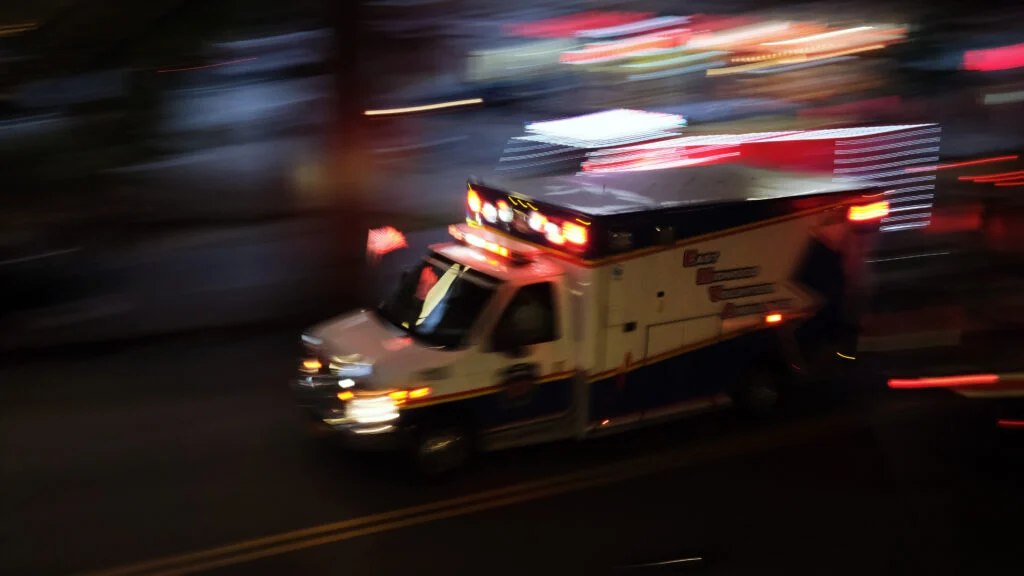
The window for intervention is agonizingly small. Survival chances drop by an estimated 10% for every single minute that passes without cardiopulmonary resuscitation (CPR) or the application of an automated external defibrillator (AED). Because emergency medical services (EMS) often take eight to twelve minutes to arrive on the scene, the life of a victim rests almost entirely in the hands of whoever happens to be standing nearby. This "bystander effect" is the pivot point between life and death. Yet, despite decades of public health campaigns and the proliferation of CPR training, the national survival rate has remained stubbornly low for years.
In an ambitious attempt to move the needle on these grim figures, researchers launched a massive, multi-year randomized controlled trial in North Carolina. The results of this study, presented recently at the American Heart Association’s Scientific Sessions and published in the New England Journal of Medicine, offer a sobering look at the challenges of community-based medical intervention. Led by Dr. Carolina Malta Hansen, a cardiologist and clinical research associate professor at Herlev and Gentofte Hospital and Copenhagen EMS, the trial sought to determine if an intensive, multifaceted education program could significantly improve survival and neurological outcomes.
The study, which began in 2021, involved 60 counties in North Carolina, covering a diverse population of approximately 8.5 million people. Researchers randomly assigned these counties to either receive an intensive educational intervention or to continue with standard care. The intervention was comprehensive, targeting every link in the "chain of survival." It involved specialized training for 911 dispatchers to help them recognize cardiac arrest faster over the phone and provide high-quality "tele-CPR" instructions to callers. It also included training for first responders—such as police officers and firefighters—to ensure they were proficient in using AEDs before paramedics arrived. Furthermore, the program reached deep into the community, providing CPR and AED training to workplaces, religious organizations, and government offices.
Over the five-year study period, the researchers tracked 22,459 adult residents who experienced an out-of-hospital cardiac arrest. The demographic breakdown of the victims reflected the broader American landscape: the median age was 64, 37% were women, 33% were Black, and 29% lived in rural areas where EMS response times are traditionally longer. Of these cases, 11,615 occurred in counties receiving the intensive training, while 10,844 occurred in the control group.
Despite the scale and quality of the effort, the primary results were disappointing. "We performed an efficient, large, and high-quality trial engaging large segments of the community in emergency response, and in spite of this, survival remained low and unchanged," Dr. Malta Hansen stated during a media briefing. The study found no statistically significant difference in survival with favorable neurologic outcomes between the intervention counties and the control counties. For many in the medical community, the results underscored the difficulty of translating clinical knowledge into real-world results.
Dr. Amrish Deshmukh, a cardiac electrophysiologist at the University of Michigan Health Frankel Cardiovascular Center, noted that while the results were frustrating, they were not entirely unexpected. He pointed out that many previous interventions—ranging from mobile phone alerts for volunteers to increasing the sheer number of AEDs in public spaces—have failed to show a consistent improvement in survival rates. The gap between someone knowing how to perform CPR and actually performing it in a high-stress, real-life emergency remains a significant hurdle in implementation science.
However, the North Carolina study was not without its glimmers of hope. An exploratory analysis of the trial’s fourth year revealed a significant increase in the percentage of patients who received bystander-initiated CPR. This suggests that the community education portion of the program was beginning to take root, even if those efforts had not yet translated into higher survival rates. Dr. Malta Hansen suggested that more time might be required for these cultural and behavioral shifts to manifest in the data. "In light of the apparent improvement in CPR for the last year, further evaluation in the longer, more intense intervention is important," she said.
The study also highlighted a striking disparity between the United States and other nations, most notably Denmark. In Denmark, the survival rate for out-of-hospital cardiac arrest is approximately 16%, compared to the 10% seen in the U.S. Even more telling are the bystander intervention rates. In Denmark, bystander CPR is performed in nearly 75% of cases, and the use of AEDs by bystanders stands at 11%. In the United States, bystander AED use is a dismal 2%.
The Danish success is not an accident of geography but the result of a deliberate, decades-long policy shift. In the early 2000s, Denmark’s bystander CPR rate was roughly 20%, similar to many parts of the U.S. today. To change this, the country implemented mandatory CPR training for anyone seeking a driver’s license and integrated resuscitation training into the primary school curriculum. "It’s just an incredibly efficient way to reach everybody," Malta Hansen explained. Today, an estimated 80% of the Danish population is trained in CPR.
The North Carolina trial managed to train about 5% of the local population—a significant feat, but perhaps still below the critical mass necessary to change public health outcomes. The "Denmark Model" suggests that the U.S. may need to move beyond voluntary training and toward institutionalized, mandatory education to see a real shift in survival statistics.
External factors also likely played a role in the North Carolina trial’s results. Dr. Brahmajee Nallamothu, an interventional cardiologist and editor-in-chief of the AHA journal Circulation: Cardiovascular Quality and Outcomes, pointed out that the trial’s launch coincided with the onset of the COVID-19 pandemic. The pandemic created a climate of fear regarding physical contact with strangers and disrupted the very community gatherings where CPR training was supposed to take place. Furthermore, the strain on the healthcare and emergency response systems during 2021 and 2022 cannot be overstated.
Dr. Nallamothu also raised a philosophical question about the nature of medical training. He questioned whether the current methods of teaching CPR—often involving a one-time class and a certificate—are sufficient for maintaining the "sustained ability" to act when a crisis occurs. "I think we still struggle with what’s the best way to train individuals so that they have sustained ability to understand and then utilize that tool when that situation arises," he said. The psychological barrier—the "panic factor" that freezes a bystander—is often more difficult to overcome than the technical lack of knowledge.
The path forward for the North Carolina researchers involves another year of follow-up to see if the positive trends in bystander CPR continue to grow and eventually impact survival. The infrastructure built during the trial—a network of 911 centers, fire departments, and community leaders—remains in place. Dr. Malta Hansen remains optimistic that the "implementation gap" can be closed through persistence and community engagement.
Ultimately, the study serves as a call to action for policymakers. If the goal is to save the 350,000 Americans who fall victim to sudden cardiac arrest each year, the strategy may need to shift from localized "educational pushes" to systemic changes. This could include federal or state mandates for CPR training in schools and at the DMV, similar to the Danish approach. It also requires a deeper investment in implementation science—the study of how to make proven medical interventions actually work in the messy, unpredictable environment of the real world.
As Dr. Deshmukh from the University of Michigan noted, moving the needle on cardiac arrest survival is one of the most difficult challenges in modern medicine. It requires the perfect synchronization of the public, emergency dispatchers, first responders, and hospital systems. While the North Carolina results show that we are not there yet, the lessons learned from Denmark and the late-stage improvements in the RACE-CARS trial suggest that the goal is achievable. It will, however, require a long-term commitment to changing the culture of emergency response, ensuring that when a heart stops in a grocery store, a church, or a suburban driveway, the people nearby have both the skill and the confidence to jump in and restart it.
