
 By Lina Irawan
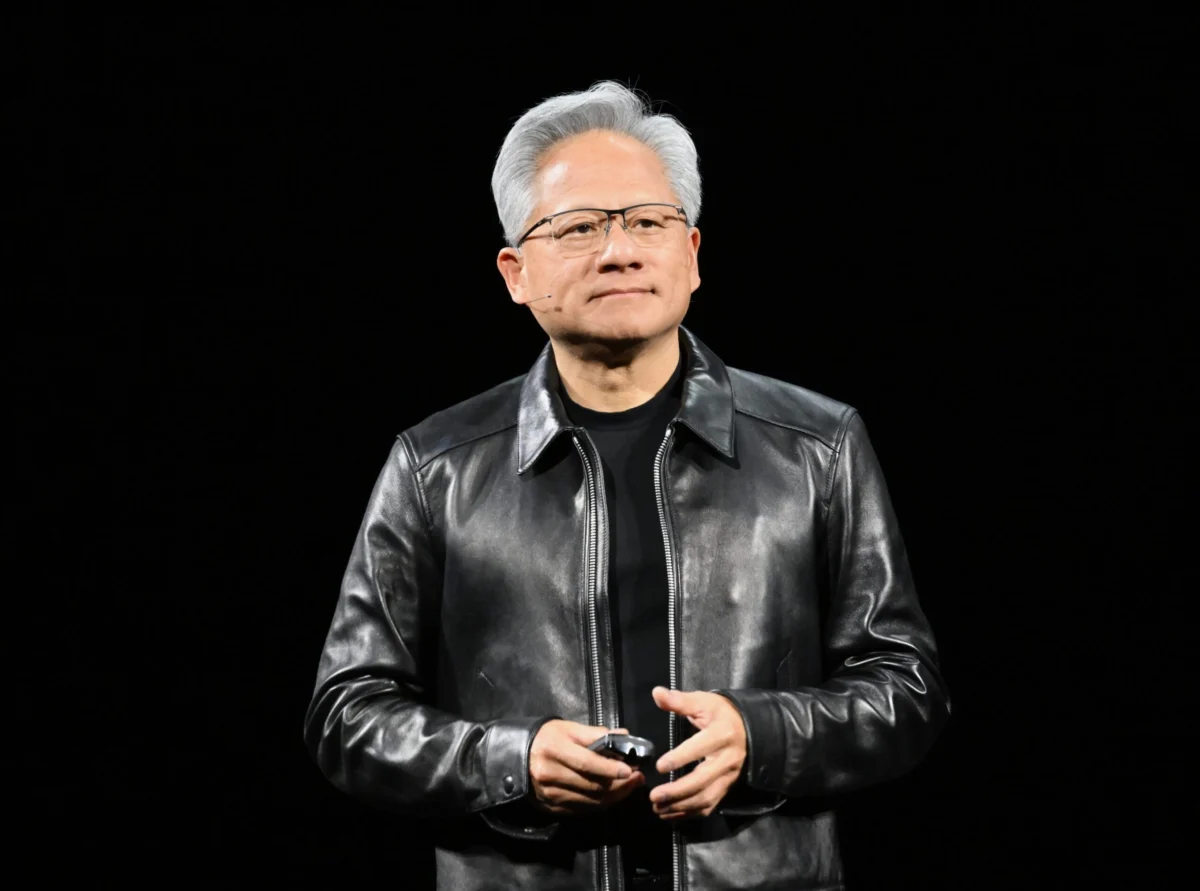
The probe, overseen by a committee of independent directors and an outside counsel, was initiated after reports surfaced alleging that Huang, the charismatic co-founder and CEO of the world’s most valuable chip company, had a romantic relationship with Alice Huang, an executive at Singapore-based data center firm Megaspeed. U.S. intelligence agencies suspect Alice Huang was operating as a spy for China, allegedly recruited by the Ministry of State Security (MSS) and feeding sensitive information back to Beijing. Nvidia’s board released a statement on Sunday, November 8, 2026, confirming the internal review, emphasizing that Jensen Huang fully supports the process and has pledged his cooperation.
"The Board prioritizes U.S. national and economic security, which is paramount to the interests of NVIDIA and its shareholders," the statement declared. "While the Board has no reason to believe that either national security or NVIDIA secrets were compromised, the Board’s inquiry will examine all available information." This measured response underscores the gravity of the situation, given Nvidia’s critical role in the global AI landscape and the escalating technological rivalry between the United States and China.
The allegations, first reported by the New York Times and Financial Times, sent shockwaves through the tech industry and national security circles. Jensen Huang, a revered figure often credited with foresight that positioned Nvidia at the forefront of the AI revolution, reportedly admitted to the affair in an internal message to company employees. "I was unfaithful to my wife. My actions hurt her and our children. There is no excuse for what I did. I am deeply sorry," he conveyed in the somber communication, according to the reports. The personal admission, while separate from the espionage allegations, inevitably complicates the narrative and adds a layer of human vulnerability to a high-stakes geopolitical drama. Representatives for Nvidia and Megaspeed did not immediately respond to requests for comment regarding the ongoing situation.
The backdrop to this unfolding drama is the intense geopolitical competition for AI supremacy. Jensen Huang, who is not related to Alice Huang, is an indisputably central figure in the U.S. AI industry. Under his leadership, Nvidia has developed world-class graphics processing units (GPUs) that are the indispensable backbone for training and running large language models and other advanced AI applications. These chips, such as the H100 and A100 series, are not merely components; they are strategic assets, enabling breakthroughs in everything from autonomous systems to advanced scientific research and military applications.
The sensitivity of Nvidia’s technology has already led the Trump administration to impose stringent export restrictions on its most cutting-edge products to China. President Donald Trump has frequently cited the burgeoning U.S.-China AI rivalry as a paramount reason for maintaining a rapid pace of technological development and for safeguarding American innovation. This policy reflects a broader U.S. strategy to curb China’s access to advanced semiconductors and manufacturing equipment, aiming to slow Beijing’s progress in AI and other critical technologies that could bolster its military capabilities. The fear is that China could leverage advanced AI to enhance its surveillance state, develop sophisticated autonomous weapons, or gain an economic edge that threatens U.S. global leadership.
Megaspeed, the Singapore-based data center company where Alice Huang holds an executive position, quickly rose to prominence as one of Nvidia’s top customers in Asia, reportedly purchasing over $4.8 billion in chips over the past two years. This substantial volume of transactions itself raised red flags, especially considering the U.S. government’s intensified scrutiny of chip exports. Last year, Megaspeed itself came under investigation by U.S. authorities for allegedly helping to smuggle restricted AI chips into China, an accusation the company has vehemently denied. If proven true, this would indicate a sophisticated network designed to circumvent U.S. export controls, underscoring the challenges faced by Washington in enforcing its technological blockade.
News of Nvidia’s probe into Huang emerges just weeks after a flurry of reports indicated a significant escalation in the U.S. defense and intelligence communities’ approach to industrial espionage and economic warfare. These reports suggest a strategic shift, moving beyond traditional intelligence gathering to more proactive and aggressive measures designed to counter foreign adversaries, particularly China, in the technological domain.
Sources told the Washington Post on October 21, 2026, that the Pentagon is actively planning a new spying program that would deploy "nonofficial cover officers." These operatives would pose as executives, entrepreneurs, or academics in the private sector, allowing them to gather intelligence and potentially disrupt adversary capabilities from within. This covert effort is part of a larger, multifaceted economic warfare campaign, blurring the lines between military, intelligence, and commercial spheres. The deployment of such "deep cover" agents signals a recognition that economic and technological competition is now as crucial as conventional military strength.
Further substantiating this strategic pivot, Politico reported on October 22, 2026, that the Defense Department is quietly establishing an elite agency, the Technology Support Office (TSO), tasked with covertly sabotaging foreign technology programs deemed a threat to U.S. military superiority. The TSO, reportedly established in April 2026, was formed by reorganizing two previously classified intelligence programs that had been conducting smaller-scale technology sabotage operations since 2023. This revelation suggests a significant institutionalization of offensive cyber and technological disruption capabilities within the Pentagon, moving beyond defensive postures to proactive neutralization of threats.
Despite these detailed reports, the Pentagon has consistently denied their veracity. "This query appears to be built on information that is simply not true. Whoever is feeding you these claims are either badly misinformed or deliberately leading you astray to peddle their fantasies," a Pentagon spokesperson told both the Washington Post and Politico. However, the consistent flow of information from multiple sources suggests a deliberate leak or a concerted effort to signal a new, more assertive U.S. stance.
Other public statements and organizational shifts further corroborate the U.S.’s growing commitment to economic warfare. In September 2026, CIA Deputy Director Michael Ellis explicitly stated that the U.S. is expanding its espionage activities against China, specifically targeting companies in sensitive areas such as AI, biotechnology, and advanced semiconductors. This marks a significant shift for an agency traditionally focused on political and military intelligence, highlighting the economic dimension of national security. Furthermore, earlier this year, the Pentagon formed the Economic Defense Unit (EDU), with sources telling DefenseScoop on April 10, 2026, that its mission is "deterring, denying, disrupting, and helping to defeat adversaries through economic means." The EDU, reportedly spearheaded by individuals with extensive experience in economic statecraft, is designed to integrate economic tools into national security strategy, ranging from sanctions and export controls to more covert financial operations.
AI, in particular, has emerged as such a foundational technology that the Defense Department has adopted a more heavy-handed approach even with U.S. companies. This was starkly illustrated by the protracted dispute with Anthropic, a prominent San Francisco-based AI startup known for its advanced large language models. Anthropic’s AI models were initially utilized by the military, but a schism developed between the startup and top brass just as the Iran war began.
Anthropic CEO Dario Amodei had publicly stated the company’s commitment to being "patriotic Americans" who seek to defend the U.S., but he drew firm lines against allowing its AI to be used in mass domestic surveillance or autonomous weapons systems. These ethical boundaries, deeply rooted in the company’s "Constitutional AI" philosophy, clashed directly with the Pentagon’s operational requirements. The Pentagon, in turn, insisted it would use the AI only in lawful scenarios and refused to abide by any limits from the company that would go beyond existing legal and ethical constraints, viewing any corporate-imposed restrictions as an unacceptable impediment to national security.
After failing to reach a compromise earlier in 2026, President Trump, frustrated by the impasse, ordered the Pentagon to phase out Anthropic’s technology. In a further punitive measure, Defense Secretary Pete Hegseth officially designated Anthropic as a "supply-chain risk," effectively barring military contractors from using its technology for any defense-related work. This move, unprecedented in its scope against a leading U.S. tech firm, sent a chilling message to the entire industry about the government’s expectations regarding AI development and deployment.
While an appeals court last month ruled that the supply-chain risk designation was illegal, citing issues with due process and arbitrary executive action, the Pentagon swiftly confirmed that it was no longer using any Anthropic tools. This decision, regardless of the legal outcome, underscores the government’s determination to maintain full control over AI applications critical to national security, even if it means alienating or bypassing domestic innovators who set ethical boundaries. The Anthropic saga highlights the profound tension between Silicon Valley’s ethos of open innovation and ethical AI, and the government’s imperative for unconstrained technological superiority in an era of escalating global competition.
The Nvidia investigation, therefore, is not an isolated incident but a critical data point in a much larger, complex, and intensifying global struggle for technological dominance and national security. It forces a reckoning with the vulnerabilities of interconnected global supply chains, the ethical responsibilities of tech leaders, and the ever-present threat of state-sponsored espionage in an era where data and advanced algorithms are the new strategic resources. The implications for corporate governance, cybersecurity protocols, and the personal lives of high-profile executives operating in critical technology sectors are profound and far-reaching. As the U.S. continues to ramp up its economic warfare capabilities, the line between business and national security will become increasingly blurred, placing immense pressure on companies like Nvidia to navigate a treacherous geopolitical landscape.
