
 By Lina Irawan
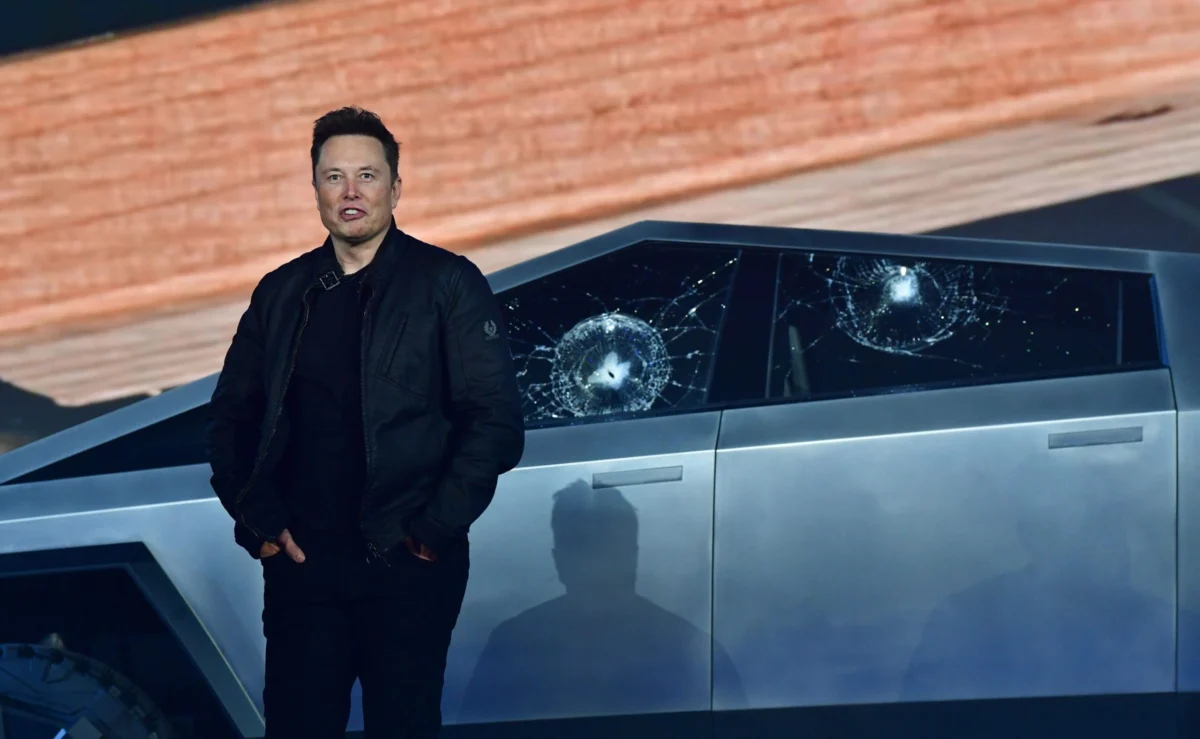
In a post on X, his social media platform, Musk stated, "Tesla will be winding down production of the Cybertruck at Gigafactory Texas around the middle of next year to make room for increased Cybercab production." This declaration, delivered with Musk’s characteristic directness, brought an abrupt end to a tumultuous chapter for a vehicle that has been emblematic of both Tesla’s innovative spirit and its often-rocky execution.
The Cybertruck’s journey has been anything but conventional. It was first unveiled in November 2019 at a splashy, Sci-Fi-themed event at Tesla’s design studio in Hawthorne, California. The presentation, complete with pyrotechnics and dramatic lighting, aimed to position the Cybertruck as a futuristic, almost otherworldly vehicle. Musk had touted it as "Tesla’s best product ever" during the company’s third-quarter earnings call just a month prior, exclaiming, "This could be totally wrong. I could be totally out to lunch here, but I think the Tesla Cyber Truck is our best product ever. That’s my opinion."
The launch event itself became instantly infamous due to a live demonstration intended to showcase the vehicle’s "armor glass." Tesla’s lead designer, Franz von Holzhausen, shattered two Cybertruck windows with a steel ball, much to Musk’s visible surprise and the audience’s amusement. This moment, widely circulated and meme-ified, inadvertently became a symbol of the Cybertruck’s ambitious, yet often flawed, development cycle.
The design of the Cybertruck, characterized by its sharp angles, stainless-steel exoskeleton, and distinct lack of traditional curves, was inspired by everything from "Blade Runner" to stealth bombers. Musk envisioned a vehicle that looked unlike anything else on the road, a stark departure from conventional pickup trucks. While it garnered immense initial buzz and millions of pre-orders, its polarizing aesthetic and unconventional construction posed significant manufacturing challenges. The use of ultra-hard 30X cold-rolled stainless steel, which proved difficult to stamp and bend, contributed to repeated production delays, pushing its promised 2021 launch date to late 2023.
Despite the initial fanfare and a devoted base of early adopters, the Cybertruck struggled to find the mass appeal of other Tesla vehicles like the Model Y and Model 3. Its niche design, coupled with a steadily increasing price point, limited its market penetration. Musk had once predicted annual production of between 250,000 and 500,000 Cybertrucks, a target that proved wildly optimistic.
Sales figures, though not officially disclosed by Tesla, painted a clear picture of underperformance. According to estimates by Kelley Blue Book, Tesla sold 38,965 Cybertrucks in the U.S. in 2024. This figure then plummeted to just 20,237 in 2025, representing a steep 48% decline. The first half of 2026 saw even further contraction, with Kelley Blue Book’s parent company, Cox Automotive, estimating only 7,263 units sold. This trajectory suggested yet another year-over-year sales decline, firmly establishing the Cybertruck as a low-volume product in Tesla’s portfolio. For comparison, traditional pickup truck leaders like the Ford F-150 consistently sell hundreds of thousands of units annually, underscoring the Cybertruck’s inability to compete in the mainstream truck market.
Beyond its unique aesthetics, the Cybertruck’s tumultuous rollout was plagued by a series of quality control issues and recalls. Since customer deliveries began in November 2023, the vehicle has been hit with 11 recalls, according to Reuters. These issues ranged from accelerator pedals getting stuck, leading to unintended acceleration, to windshield wiper failures and steering problems. Such frequent recalls, especially for a newly launched flagship product, eroded consumer confidence and further complicated its path to broader acceptance. The complexity of manufacturing the stainless-steel body, requiring extremely tight tolerances and specialized welding, often resulted in inconsistent panel gaps and fit-and-finish concerns that were uncharacteristic of high-volume automotive production.
The pricing strategy for the Cybertruck also contributed to its limited market reach. When introduced in 2019, Tesla advertised an aggressive starting price of $39,900 for the single-motor, rear-wheel-drive version. This competitive price point generated immense interest and positioned the truck as a potentially disruptive force. However, by the time deliveries finally began in late 2023, the starting price for the base model had climbed to an estimated $60,990. The most recent price adjustments saw Tesla discontinue orders for the cheapest model, the Dual Motor AWD, and raise prices on remaining configurations. The cheapest available Cybertruck now starts at a whopping $92,490, a significant increase from the $84,990 price point it reached in August after previous hikes, as reported by Electrek. This dramatic escalation effectively priced the Cybertruck out of reach for many original reservation holders and solidified its status as a luxury niche vehicle, far removed from Musk’s initial vision of an affordable, mass-market electric pickup. Tesla’s attempt to introduce less expensive versions, such as a rear-wheel-drive Cybertruck in 2025, were short-lived, with the model being pulled from the lineup just months after its launch.
This decision to phase out Cybertruck production comes as Tesla seeks to redefine its future amidst a challenging landscape for electric vehicle sales. The broader EV market has experienced a slowdown, with inventory levels rising and price wars intensifying. President Donald Trump’s decision to end the federal EV tax credit last year further impacted sales, particularly for companies like Tesla, which had heavily relied on such incentives to drive adoption. In this environment, Tesla aims to convince investors that autonomous technology, rather than traditional EV sales, will be the primary engine for future growth.
Musk has now emphatically pivoted the company’s focus and future prospects to the autonomous Cybercab. Unveiled to considerable fanfare at an event in 2024, the Cybercab is a revolutionary two-seater vehicle designed specifically for autonomous ride-sharing, notably lacking a steering wheel or pedals. The first Cybercabs began operating on public roads in Austin, Texas, in September. Tesla also maintains Robotaxi operations utilizing its Model Y vehicles in several other U.S. cities, including Houston, Dallas, and Fort Worth in Texas, as well as Miami, Orlando, and Tampa in Florida, with plans for further expansion.
The Cybercab represents a bold leap into Level 4 or Level 5 autonomous driving, where the vehicle handles all aspects of driving without human intervention. This strategic shift aligns with Musk’s long-held vision for Tesla as fundamentally an artificial intelligence and robotics company, with automobiles serving as a stepping stone. The Cybercab, with its purpose-built design, is intended to offer a more scalable and cost-effective solution for urban mobility compared to retrofitting existing vehicles for robotaxi services.
However, this new ambition is not without significant hurdles. Federal auto safety regulators, specifically the National Highway Traffic Safety Administration (NHTSA), opened an investigation in September into whether Tesla properly certified that the Cybercab complies with federal vehicle safety standards. The absence of traditional driver controls like a steering wheel and pedals raises complex questions regarding occupant safety, emergency intervention protocols, and crashworthiness. In late October, Tesla submitted its answers to NHTSA’s questions but requested that its responses remain sealed, citing them as "confidential business information." The NHTSA has yet to rule on Tesla’s confidentiality request, according to Electrek, indicating the ongoing scrutiny and the proprietary nature of the challenges Tesla faces in navigating this regulatory landscape.
Furthermore, Tesla is entering the autonomous robotaxi market as a relatively late entrant. Alphabet’s Waymo, widely considered a leader in the field, already operates in 15 U.S. cities and has a significant head start. Earlier this year, Waymo reported providing an impressive 500,000 rides per week, demonstrating a robust and scaling operational presence. Other competitors, like General Motors’ Cruise, despite recent setbacks and temporary suspensions, have also accumulated substantial real-world testing and operational experience. Tesla’s challenge will be to rapidly catch up, not just in technology, but also in building public trust and navigating the patchwork of state and local regulations governing autonomous vehicles. The "human-out-of-the-loop" approach of the Cybercab demands an even higher degree of regulatory confidence and public acceptance than current autonomous systems with safety drivers.
For existing Cybertruck owners, Musk’s Friday post leaves some questions unanswered. Tesla has not explicitly stated how long it will continue selling remaining inventory or supplying replacement parts. However, winding down production typically does not mean an immediate end to support for existing vehicles; automotive manufacturers are generally obligated to provide parts and service for a specified period, usually years, after a model is discontinued. Owners will undoubtedly be watching closely for more clarity on long-term support and the potential impact on resale values.
Despite the commercial struggles and the decision to discontinue production, Musk, for his part, still appeared enthusiastic about the truck on Friday. In response to a user on X who highlighted his Cybertruck announcement as the end of an era, the CEO replied: "True, but the Cybertruck fleet will be around for a long time." This statement, while acknowledging the end of a production chapter, underscores Musk’s belief in the enduring presence and unique appeal of the Cybertruck, even as Tesla’s strategic compass points firmly towards a fully autonomous future. The Cybertruck will likely remain a significant, if somewhat controversial, footnote in the history of electric vehicles, a testament to audacious design and the inherent risks of pushing technological boundaries. Tesla did not immediately respond to Fortune’s request for comment on the announcement.
