
 By admin
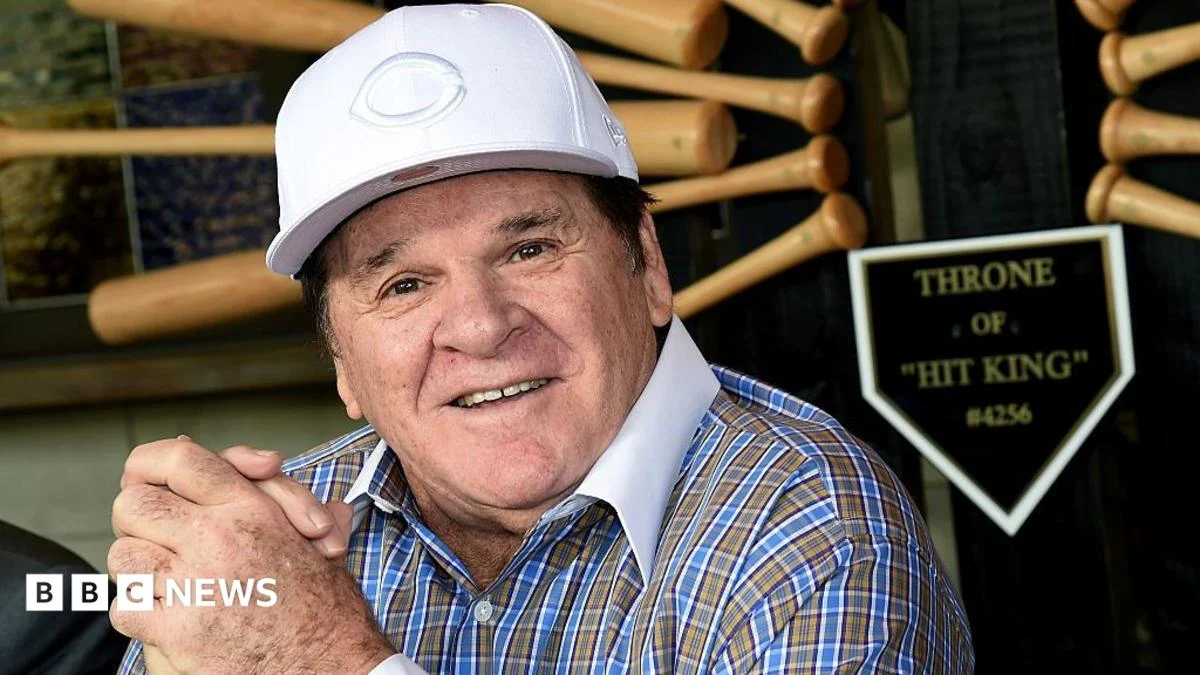
In a significant posthumous act, U.S. President Donald Trump has issued a "Complete and Total Pardon" to the late baseball icon Pete Rose, a move that, while largely symbolic, has once again thrust the controversial figure and his Hall of Fame eligibility into the spotlight. The announcement, made by Trump via his social media platform Truth Social on Thursday, declares Rose, who passed away in 2024 at the age of 83, a "true Baseball SUPERSTAR & LEGEND."
The pardon arrives nearly a year after Rose was posthumously reinstated to Major League Baseball (MLB) in 2025, making him eligible for induction into the prestigious Baseball Hall of Fame. This reinstatement, a landmark decision in itself, followed a lifetime ban imposed in 1989 after an MLB investigation concluded that Rose had bet on games while managing the Cincinnati Reds. Rose had previously pleaded guilty in 1990 to two counts of filing false tax returns, a conviction that led to a five-month prison sentence, a $50,000 fine, and community service.
President Trump’s pardon statement emphatically asserted that Rose’s record of "4,256 Hits in a Season will never be broken," a sentiment he reiterated in March of the previous year when he first floated the idea of pardoning the former ballplayer. This record, defined by MLB as a batter successfully hitting the ball into fair territory and reaching base without the aid of an error or fielder’s choice, stands as a testament to Rose’s extraordinary offensive prowess over his 24-season career. He amassed this unparalleled hit total in 3,562 games, a feat that solidifies his place in baseball history, regardless of Hall of Fame recognition.
Trump did not shy away from criticizing MLB’s handling of Rose’s case, stating, "Rose ‘was treated terribly by Major League Baseball in not allowing him to go into the Baseball Hall of Fame. Politics, I guess’." This sentiment echoes his previous public statements, where he lamented MLB’s perceived lack of "courage or decency" in excluding Rose, also known by his enduring nickname "Charlie Hustle," from Cooperstown. Trump had previously expressed his disappointment that Rose, having died before experiencing selection, could only be named posthumously, calling it "WHAT A SHAME."
The power of a presidential pardon, rooted in the U.S. Constitution, grants legal forgiveness and terminates any outstanding punishments. However, the practical implications of a posthumous pardon are limited. The Department of Justice (DOJ) typically does not process applications for posthumous pardons, although presidents have historically issued them. In Rose’s case, the pardon does not alter his current Hall of Fame status, which remains subject to the voting process of the Baseball Writers’ Association of America (BBWAA) and the Historical Overview Committee. The BBC has reached out to the Hall of Fame and the DOJ for comment on the implications of this latest development.
The path towards Rose’s potential Hall of Fame induction began to clear in May 2025, when MLB Commissioner Rob Manfred issued a decision that created eligibility for Rose, along with 16 other individuals, to be considered for induction as early as 2028. This ruling represented a significant shift in MLB’s stance on players banned from the sport, offering a glimmer of hope for Rose’s long-sought recognition.
Rose’s ban stemmed from an investigation initiated in August 1989. MLB investigators meticulously documented evidence that Rose had bet on his own team, the Cincinnati Reds, on multiple occasions between 1985 and 1987, a period during which he both played and managed the team. This violation of the sport’s cardinal rule against gambling on games led to his permanent exclusion from baseball. The subsequent guilty plea in 1990 for tax evasion further complicated his legal standing and public image. He was sentenced to five months in prison, fined $50,000, and ordered to perform community service, demonstrating the seriousness with which his financial misconduct was viewed. The admitted failure to report $354,968 in income over a four-year period highlighted a pattern of dishonesty that extended beyond the baseball diamond.
The debate surrounding Pete Rose’s eligibility for the Baseball Hall of Fame is one of the most enduring and divisive in sports history. Supporters argue that his on-field achievements are so monumental that they should transcend his off-field transgressions. His record 4,256 hits, 1,314 doubles, 3,562 games played, and his status as a three-time World Series champion, an MVP, a batting champion, and a Gold Glove winner paint a picture of a player who consistently performed at the highest level. They point to other Hall of Famers with checkered pasts, suggesting a double standard in how Rose has been treated. The "Charlie Hustle" moniker, a symbol of his relentless effort and competitive spirit, is often invoked to underscore his profound impact on the game.
Conversely, opponents of Rose’s induction emphasize the sanctity of the Hall of Fame as a moral as well as a statistical benchmark. They argue that gambling on baseball, especially by a player and manager, is an offense so egregious that it disqualifies one from the sport’s ultimate honor. The integrity of the game, they contend, must be upheld, and allowing Rose into the Hall would undermine the rules and principles that protect its fairness and credibility. The ban, they maintain, was a necessary consequence of his actions, and while his playing record is undeniable, his conduct off the field cannot be overlooked.
The posthumous pardon by President Trump, while not directly influencing Hall of Fame voting, injects a potent political dimension into an already emotionally charged debate. It aligns with Trump’s broader pattern of intervening in high-profile cases and often using pardons to signal his support for individuals who have faced legal challenges. The timing of the pardon, occurring after Rose’s passing and his reinstatement to MLB, suggests a desire to offer a final, symbolic gesture of vindication. It also serves to amplify the narrative that Rose was unfairly targeted by the baseball establishment, a narrative that resonates with some segments of the public and political spectrum.
The historical context of presidential pardons further illuminates the nature of this action. While presidents have the constitutional authority to pardon, the exercise of this power has often been a subject of intense scrutiny and debate. Pardons can be seen as acts of mercy, reconciliation, or political statement. In Rose’s case, the pardon can be interpreted as an attempt to right a perceived wrong, to offer closure to a career marred by controversy. However, its posthumous nature means that Rose himself will not experience the immediate tangible benefits of this legal forgiveness.
The Baseball Hall of Fame, an institution entrusted with preserving the legacy of the game’s greatest figures, faces a complex challenge. The reinstatement of Rose to eligibility has already opened the door for renewed consideration, and the presidential pardon, however symbolic, may embolden those who advocate for his induction. The decision ultimately rests with the voting bodies, who must weigh Rose’s unparalleled statistical achievements against the gravity of his transgressions.
As the baseball world continues to grapple with the legacy of Pete Rose, President Trump’s posthumous pardon adds another layer to an already intricate narrative. It is a reminder that the impact of actions, both on and off the field, can resonate for decades, and that the quest for recognition and redemption can take unexpected turns. The question of whether Pete Rose will one day take his place among the legends in Cooperstown remains unanswered, but the latest development ensures that his story, and the debate it engenders, will continue to captivate and divide. The enduring appeal of "Charlie Hustle" and the complex ethical questions surrounding his ban and potential enshrinement ensure that his name will remain synonymous with both unparalleled athletic achievement and profound controversy in the annals of baseball history.
