
 By admin

The delivery and inaugural flight of the A321XLR come at a time when United Airlines is aggressively pursuing its "United Next" plan, an ambitious fleet renewal program designed to modernize the passenger experience while drastically reducing the carbon footprint per seat. The A321XLR is the crown jewel of this narrowbody expansion, offering an unprecedented range of up to 4,700 nautical miles. This capability allows United to connect secondary European cities directly to its East Coast hubs at Newark Liberty International Airport (EWR) and Washington Dulles International Airport (IAD) with an aircraft that is significantly cheaper to operate than the widebodies it replaces.
Technologically, the A321XLR is a marvel of modern aerospace engineering. Its defining feature is the permanent Rear Center Tank (RCT), which is integrated directly into the fuselage structure. This design allows for increased fuel capacity without sacrificing significant cargo space, a hurdle that previous long-range narrowbodies struggled to overcome. However, the path to this 2026 entry into service was not without its challenges. The European Union Aviation Safety Agency (EASA) and the Federal Aviation Administration (FAA) scrutinized the RCT’s design for years, requiring Airbus to implement additional protective layers and structural reinforcements to ensure fire safety and crashworthiness. United’s 2026 model incorporates all these final safety iterations, making it one of the most thoroughly vetted airframes in recent history.
From a strategic perspective, the A321XLR serves as the functional successor to the Boeing 757-200, an aircraft that United has relied upon for years to serve "long and skinny" routes—flights that are too long for standard narrowbodies but lack the passenger demand to fill a 250-seat widebody. As the 757 fleet faces mandatory retirements due to age and high maintenance costs, the A321XLR steps in with 30% lower fuel burn per seat. This efficiency is driven by the CFM International LEAP-1A engines, which provide not only better fuel economy but also a significantly reduced noise footprint, a critical factor for operating in noise-sensitive European airports like London Heathrow or Amsterdam Schiphol.
The passenger experience on board United’s A321XLR has been meticulously designed to mirror the luxury found on its larger "high-J" Boeing 767-300ER aircraft. Recognizing that a narrowbody flight across the Atlantic can feel claustrophobic, United has outfitted the XLR with its "Signature Interior." This includes 16 to 20 United Polaris business class suites in a 1-1 configuration, ensuring every premium passenger has direct aisle access—a first for a United narrowbody. These suites feature lie-flat beds, 17-inch 4K entertainment screens, and the latest ergonomic bedding. Behind the Polaris cabin, United has installed a dedicated United Premium Plus section, offering a true "purple seat" experience with extra recline and legroom, catering to the growing segment of leisure travelers willing to pay for enhanced comfort without the full business class price tag.
The Economy and Economy Plus sections are equally modernized, featuring the Airbus "Airspace" cabin architecture. This includes larger overhead bins capable of holding every passenger’s carry-on bag vertically, customizable LED mood lighting designed to reduce jet lag, and redesigned sidewall panels that offer more shoulder room at window seats. Furthermore, every seat on the A321XLR is equipped with high-speed Wi-Fi and Bluetooth-enabled entertainment systems, allowing passengers to use their own wireless headphones to enjoy a library of thousands of movies and shows.
Aviation analysts suggest that the A321XLR will allow United to dominate "secondary" markets that were previously the territory of European flag carriers or required a connection through a major hub. Destinations like Nice, Malaga, Reykjavik, Porto, and even smaller cities in Central Europe and Africa are now within reach of Newark and Dulles on a daily basis. "The XLR is a game-changer because it de-risks new routes," explains Marcus Thorne, a senior aviation consultant. "If a route from Newark to a city like Bordeaux doesn’t have enough demand for a 280-seat Boeing 787, United can now fly it with 160 seats on an XLR and still turn a profit. It’s the democratization of point-to-point long-haul travel."
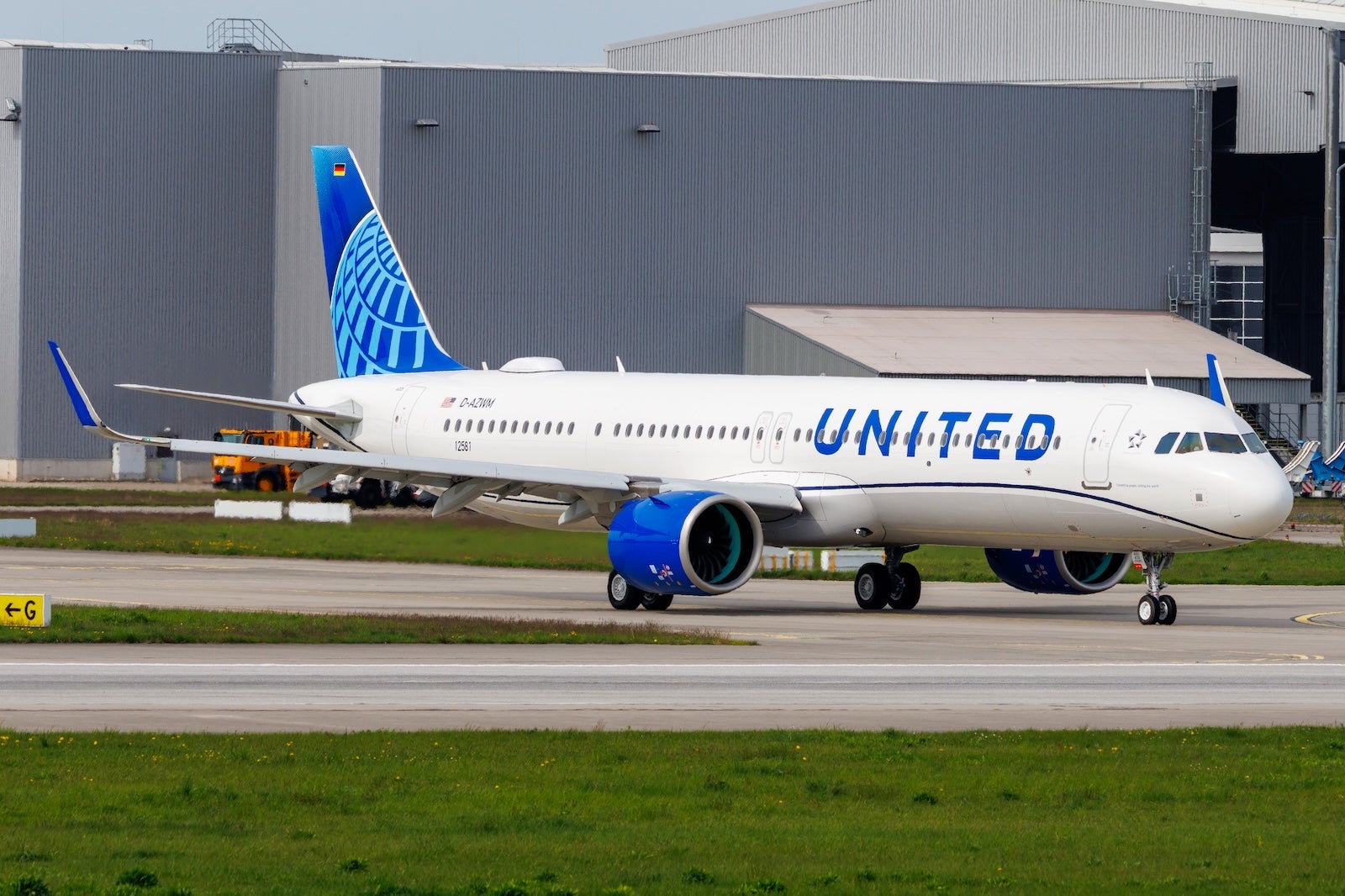
The environmental implications of the A321XLR’s entry into service are also substantial. United Airlines has committed to becoming 100% green by 2050 without relying on traditional carbon offsets. The A321XLR plays a vital role in this by being fully compatible with Sustainable Aviation Fuel (SAF). On its delivery flight from the Airbus factory in Hamburg to Newark, the aircraft utilized a 50% SAF blend, showcasing United’s commitment to reducing lifecycle CO2 emissions. By replacing the inefficient 757s with these neo-generation aircraft, United expects to shave millions of tons of carbon emissions from its annual totals over the next decade.
The competitive landscape of the mid-2020s has been reshaped by this aircraft. While American Airlines and JetBlue have also integrated the A321XLR into their fleets, United’s order of 50 units remains one of the largest in the industry. This scale allows United to create a "fleet within a fleet," providing operational flexibility. If a widebody aircraft scheduled for a London flight has a mechanical issue, two A321XLRs could potentially cover the capacity, or more likely, the XLR can be swapped onto various routes to match seasonal demand fluctuations without the massive overhead of under-filled widebodies.
However, the transition to long-haul narrowbodies is not without its detractors. Some frequent flyers express concern over the "narrowbody feel" on an eight-hour flight, noting that widebody aircraft generally offer more room to walk around and a smoother ride in turbulence due to their greater mass. United has countered these concerns by investing heavily in cabin air quality and pressurization technology. While a narrowbody cannot match the lower cabin altitude of the composite-bodied Boeing 787 Dreamliner, the A321XLR features advanced filtration and humidity controls that significantly improve the onboard environment compared to older aluminum aircraft.
Looking ahead, the integration of the A321XLR is just the beginning of a broader fleet transformation. As United continues to take delivery of these aircraft through 2027 and 2028, the airline’s route map is expected to sprout dozens of new lines connecting the American heartland to the world. We may soon see the XLR operating routes from Chicago O’Hare to Dublin or even Houston to South American destinations that were previously on the edge of narrowbody range.
The economic impact on United’s bottom line is projected to be favorable. By standardizing its narrowbody fleet around the A321 family (including the A321neo already in service for domestic routes), United benefits from "pilot commonality." Pilots can transition between the domestic A321neo and the international A321XLR with minimal additional training, creating a more efficient labor pool and reducing scheduling complexities.
As the first United A321XLR taxied through a water cannon salute at Newark this morning, it carried more than just passengers; it carried the weight of a new era in aviation. The "United XLR" isn’t just a new plane; it is a statement of intent. It proves that the future of international flight is not necessarily bigger, but smarter, more efficient, and more tailored to where people actually want to go. With 49 more aircraft set to follow this first delivery, United Airlines is well-positioned to lead the industry in the "narrowbody revolution," forever changing the way we cross the Atlantic. The cards featured in United’s marketing materials for this launch highlight the rewards for loyal travelers, but the real reward remains the ability to fly further, cleaner, and more comfortably than ever before on a single-aisle jet. As the industry watches closely, the A321XLR’s performance over the coming months will likely set the standard for the next decade of global aviation.
