
 By Lina Irawan
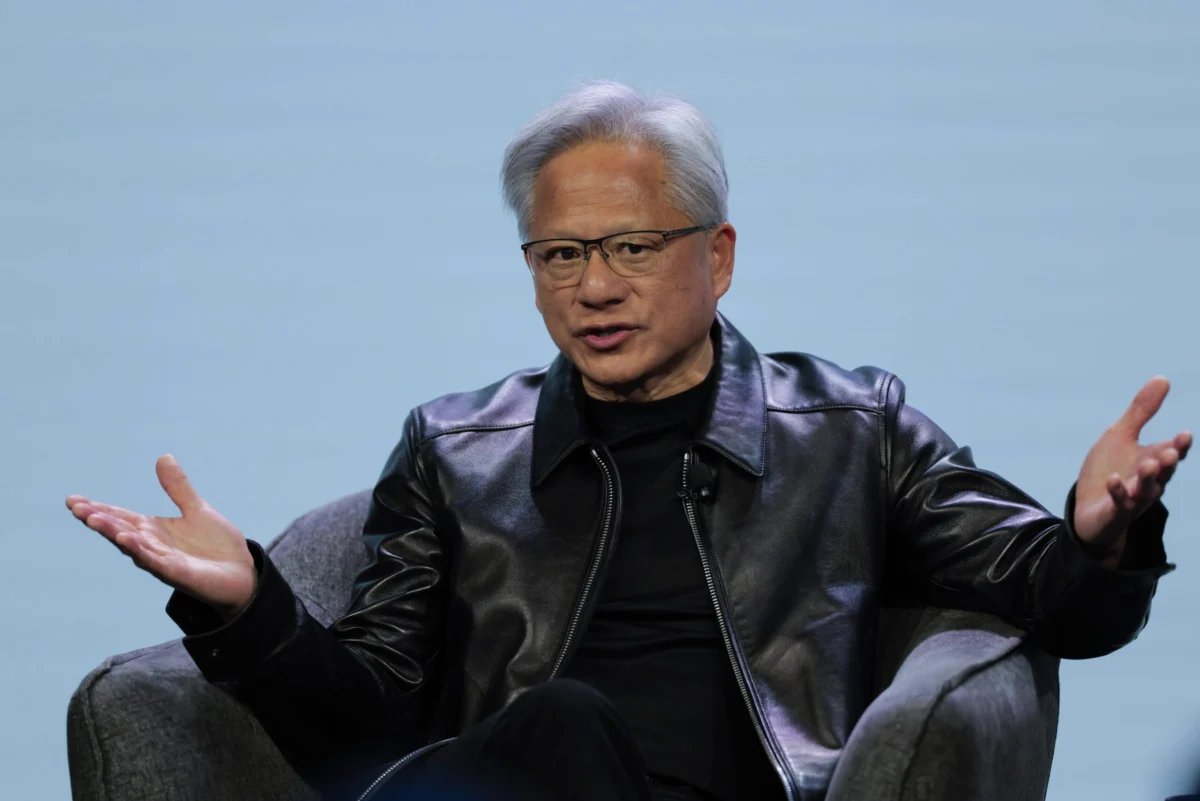
While Nvidia’s leadership transition is undoubtedly sending shockwaves across every industry reliant on its cutting-edge chips—from advanced data centers to automotive and healthcare—and impacting countless investors whose portfolios and 401Ks are heavily weighted in the company, some analysts contend that the most acutely vulnerable entities are the so-called "neoclouds" that have built their entire business models around Nvidia’s powerful GPUs.
How Nvidia Propped Up the Neoclouds: A Fragile Ecosystem
Nvidia stands as the undisputed titan in designing the graphics processing units (GPUs) that are the bedrock for training most advanced AI models. These sophisticated chips are then predominantly manufactured by Taiwan’s TSMC, a critical link in the global semiconductor supply chain. This highly concentrated dependency, according to Joe Kaiser, a seasoned investor who launched Switchyard Partners earlier this year after a distinguished tenure as CEO of Mercato Partners, where he managed approximately $1.5 billion, is precisely where the vulnerability lies.
Neocloud companies, such as CoreWeave and Nebius, operate on a unique and capital-intensive model. They acquire Nvidia’s high-demand GPUs, often by the hundreds of thousands, to populate massive data centers. These data centers then rent out their formidable computing power to AI labs, startups, and other enterprises, effectively competing with the hyperscale cloud giants like Amazon Web Services (AWS), Google Cloud, and Microsoft Azure. However, unlike their larger counterparts, neoclouds often lack the diversified revenue streams and deep balance sheets of the tech behemoths.
Nvidia’s relationship with these neoclouds extends far beyond a simple vendor-client dynamic; it’s a symbiotic ecosystem fostered through direct investment and crucial financial guarantees. For instance, public filings at the end of June revealed Nvidia held approximately $329 million in Nebius shares, underscoring its vested interest in their success. More critically, Nvidia had strategically moved to de-risk these partnerships for lenders. In July, the company initiated a program offering to rent back unused GPU capacity from its neocloud partners at a fixed rate. This innovative "floor" mechanism was designed specifically to bolster lender confidence, making banks more amenable to extending substantial credit lines for GPU purchases and data center build-outs.
The magnitude of Nvidia’s financial backstop became even clearer when the company joined a colossal $500 billion financing platform with six institutional partners, a consortium in which Nvidia itself committed to backstopping up to $125 billion. This explicit guarantee, Kaiser explained, fundamentally altered the risk-pricing calculus for lenders. "The chip isn’t what puts them at risk, but it’s the financial backstop that allows CoreWeave or Nebius to go get those hundreds of millions of dollars of debt from Blackstone and Brookfield," Kaiser told Fortune. He elaborated, "Why is Blackstone willing to back a CoreWeave project? It’s because they know that there’s an Nvidia backstop, a written backstop, behind it, and so it lowers the risk, and then obviously lowers the interest rate."
This intricate web of financial support allowed neoclouds to scale rapidly, but also to accumulate staggering levels of debt. CoreWeave, for example, reportedly carried $35 billion in debt by the end of June. Even before Huang’s dramatic exit, lenders had begun to express increasing wariness about businesses whose entire viability hinged on the sustained, meteoric demand for AI, a market inherently prone to volatility. "If the capital providers now say that Nvidia guarantee is not worth what it was worth a week ago, that puts those neocloud businesses at risk," Kaiser warned. He stressed the fundamental nature of the industry: "At the end of the day, this is a heavy-asset, infrastructure-based industry." The perception of Nvidia’s financial strength and strategic stability, deeply intertwined with Huang’s leadership, was a cornerstone of these lending arrangements. His sudden departure, especially under a cloud of controversy, introduces an unprecedented level of uncertainty into those guarantees.
The Winners and Losers in a Post-Huang AI Landscape
The immediate aftermath of Huang’s resignation saw predictable market reactions. Neocloud stocks, highly sensitive to Nvidia’s stability, experienced significant drops. CoreWeave’s stock fell approximately 9% on Thursday, erasing a substantial portion of a 25% rally from the previous day, indicating profound investor unease. Nebius fared even worse, plummeting 16% on the same day, exacerbated by the simultaneous issuance of weak full-year guidance. Nvidia itself was not immune; in the days following Huang’s admission of the affair and prior to Thursday’s official announcement, the company shed an estimated $450 billion in market value, a stark reflection of the founder’s outsized influence and the market’s anxiety over a sudden leadership vacuum.
While the neoclouds appear to be the most immediate losers due to the potential devaluation of Nvidia’s financial backstops, the long-term landscape could see a redistribution of power. OpenAI and SoftBank’s SB Energy, for instance, were significant beneficiaries of Nvidia’s generous backstop arrangements, with Kaiser referencing ongoing talks for a reported $250 billion Nvidia backstop to help OpenAI lease a massive Ohio data center campus being developed by SB Energy. The future of such large-scale projects, now potentially less certain, could shift.
Kaiser, however, doesn’t anticipate Nvidia losing its iron grip on AI training for at least another two to three years. This inertia is largely attributed to the "stickiness" of Nvidia’s proprietary CUDA software platform, which forms the computational backbone for countless AI models and applications. Developers and companies deeply embedded in the CUDA ecosystem would find it "really hard" to switch to alternative architectures. The real battleground, he suggests, will be in AI inference – the process of running trained models, which now accounts for a larger share of AI compute than training itself. Here, buyers are increasingly evaluating Nvidia’s general-purpose GPUs against a growing array of specialized chips tailored for specific tasks. Competitors like Qualcomm are making inroads in robotics, while Cerebras, Etched, Google’s custom TPUs (Tensor Processing Units), and Amazon’s Trainium chips offer compelling alternatives for particular workloads, often at a lower cost or with greater efficiency for their intended purpose.
"If Nvidia no longer has Jensen as its rainmaker, did that just tip the scale towards using specialized chips?" Kaiser pondered, suggesting that the charisma and strategic vision of Huang were powerful forces in maintaining Nvidia’s broad dominance. "The bigger play is actually for the specialty chip makers," he affirmed, predicting that companies like Advanced Micro Devices (AMD) and Broadcom would inevitably gain an opening in a post-Huang Nvidia landscape. The hyperscale cloud providers, Google and Amazon, could emerge as dual winners. They can not only pitch their proprietary chips (TPUs, Trainium) directly to AI labs like OpenAI and Anthropic, but also leverage their colossal balance sheets to step into the void left by Nvidia’s potentially diminished financial guarantees. "The Googles and others can step into that Nvidia backstop arrangement," he said, indicating a potential shift in the architecture of AI infrastructure financing.
Taiwan Semiconductor Manufacturing Company (TSMC), Nvidia’s primary manufacturer, is expected to weather the storm relatively unscathed. Kaiser estimates that roughly two-thirds of TSMC’s capacity is dedicated to Nvidia, but he believes the foundry giant could swiftly reallocate that capacity to other customers "in pretty short order," given the insatiable global demand for advanced semiconductors.
Following Intel: A Roadmap for Nvidia’s Future?
Kaiser drew a poignant historical parallel, suggesting that Nvidia under Huang operated on a highly centralized, "hub-and-spoke" management model. "The stories are true about Jensen having 60-plus direct reports," he revealed, a structure that, while effective under a visionary leader, now leaves a significant "leadership vacuum and vision vacuum" that interim CEO Colette Kress and the new board must address.
He invoked the post-Andy Grove era at Intel, a semiconductor giant that Grove, an iconic figure, led as CEO until 1998. "Andy Grove and Jensen both have just this iron-fist approach to management, very disciplined approach," Kaiser observed. While Intel continued to grow revenue after Grove’s departure, the company eventually lost market share and struggled to adapt as chip demand diversified beyond its core PC market. It "didn’t adapt as well" as the industry shifted towards mobile and other new uses, ceding ground to competitors. "Intel is the roadmap here to what might be ahead for Nvidia," Kaiser concluded, implying that without Huang’s singular strategic foresight and relentless drive, Nvidia faces a similar challenge of maintaining its innovative edge and market dominance in a rapidly evolving technological landscape.
Furthermore, Kaiser connected Huang’s exit to broader geopolitical and infrastructural trends, specifically referencing the recent midterm elections where the massive energy and land consumption of data centers became a contentious campaign issue. Huang, as the industry’s most vocal and visible proponent of these mega-facilities, effectively served as its "true spokesperson." With that influential voice now silenced, Kaiser posits that the case for giant, single-site data centers weakens further. "This is just more push for distributed edge compute," he argued, suggesting a strategic pivot "away from these mega monolithic data centers." The transition towards distributed, localized computing at the network’s edge, often championed for its lower latency, enhanced security, and reduced environmental footprint, could accelerate in a future where the centralizing force of Jensen Huang is no longer at Nvidia’s helm. The implications of this leadership change are profound, potentially reshaping not just Nvidia’s trajectory, but the very architecture and financial underpinnings of the entire AI industry.
