
 By Titik Puspa
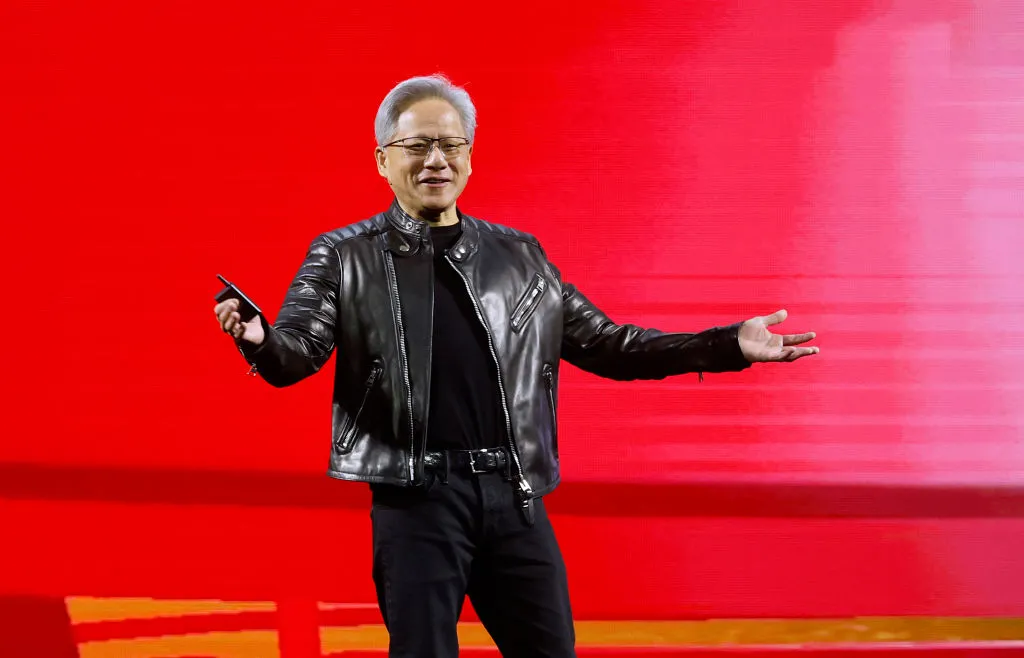
Nvidia, the titan of the artificial intelligence chip industry, finds itself at the epicenter of a seismic upheaval, a maelstrom of personal indiscretions and escalating national security concerns that have led to the dramatic resignation of its co-founder and long-time CEO, Jensen Huang. The 63-year-old industry luminary, typically known for his understated demeanor rather than the flamboyant personalities of some AI counterparts like OpenAI’s Sam Altman or SpaceXAI’s Elon Musk, has admitted to infidelity, a revelation that has sent shockwaves through the tech world and ignited a firestorm of scrutiny.
The admission, delivered in a candid message to Nvidia employees on November 8, 2026, confessed that Huang had been "unfaithful" to his wife of 40 years, acknowledging that his actions had caused pain to his family. This personal confession, however, quickly became intertwined with far more consequential allegations. U.S. officials have raised alarms, pointing to one of Huang’s alleged romantic interests, Alice Huang, an executive at the Singapore-based AI infrastructure company Megaspeed, as a suspected Chinese spy feeding sensitive information to Beijing. It is crucial to note that Alice Huang, a Chinese national, is not related to Jensen Huang.
Megaspeed has emerged as a critical nexus in this unfolding drama. The company has reportedly purchased a staggering $4.8 billion worth of Nvidia chips over the past two years. This significant business relationship has been under a cloud of suspicion, with both the U.S. and Singapore having previously investigated Megaspeed for allegedly circumventing export controls and illegally sharing chips with China. The gravity of these allegations has prompted the U.S. Department of Justice to take over the federal investigation into Megaspeed, as reported by The New York Times.
The personal and national security crises converged with alarming speed. On November 11, 2026, The New York Times, citing five sources within Nvidia, reported that Jensen Huang had also engaged in an extramarital affair with Kimberly Powell, the company’s Vice President of Healthcare, who directly reports to him. Neither Nvidia, Huang, nor Powell have confirmed this report. When approached by a Times reporter, Huang reportedly deflected, stating, "I don’t think you should be talking to me directly," before abruptly ending the conversation.
The repercussions were swift and severe. By early Thursday morning, November 12, 2026, Jensen Huang was no longer the CEO of Nvidia, the company he co-founded 33 years prior. The board of directors had accepted his resignation on Wednesday, November 11, according to an SEC filing. Stepping into the interim leadership role is Colette Kress, the company’s Chief Financial Officer, who will continue to fulfill her CFO responsibilities. Nvidia is reportedly initiating a broader search for a permanent successor to Huang. Adding a new layer of corporate governance, Harvey C. Jones, a managing partner at Square Wave Ventures and former CEO of Synopsys, was appointed as the company’s first-ever Chair of the Board of Directors. Jones has been a member of Nvidia’s board since 1993, providing a long-standing institutional perspective.
Later on November 12, Reuters dropped another bombshell, reporting that Huang was allegedly involved in a third extramarital affair, this time with another unnamed Nvidia employee. This revelation further deepened the crisis and intensified the public scrutiny on the former CEO and the company’s internal culture.
The geopolitical backdrop to this unfolding saga is the intense technological arms race between the United States and China, vying for dominance in advanced AI infrastructure. This competition has profound implications for each nation’s economic future, military capabilities, and innovative potential. Nvidia’s position as a leading manufacturer of AI chips, indispensable for accelerating AI development, makes it a pivotal player. However, as an American company, Nvidia operates under significant government restrictions regarding the sale of its most powerful chips to Chinese entities, a policy that Huang himself has previously advocated for relaxing.
A Timeline of Escalating Revelations and Consequences:
November 12, 2026: A Third Affair and a Congressional Appearance
The revelations continued to mount on November 12. Following his ousting, Reuters reported that Jensen Huang was involved in a third extramarital affair with an additional, unnamed Nvidia employee. On the same day, Huang confirmed that he would testify before Congress before Thanksgiving, which falls on November 26. House Foreign Affairs Committee Chairman Brian Mast acknowledged the seriousness of the situation, stating to reporters, "Jensen and I have been very at odds as some of you already know on export controls, but Nvidia is a very important company to the United States of America… I don’t want to see anything hurt in Nvidia, but he has some very serious questions to answer." The testimony is expected to be conducted behind closed doors but recorded and transcribed.
November 11, 2026: Nvidia Stock Dips as Huang’s Ouster Looms; Affair with Executive Revealed
Nvidia’s stock experienced a notable decline on November 11 as reports emerged that the company’s board was preparing to remove CEO Jensen Huang. The New York Times published its report detailing Huang’s affair with Kimberly Powell, the Vice President of Healthcare, who reportedly reported directly to him. The Times cited evidence of Huang and Powell being captured on film exhibiting "affectionate" behavior at a conference earlier in the year. Concurrently, Congress was signaling its intent to subpoena Huang to address questions surrounding his alleged affair with a suspected Chinese spy. House China committee Chairman Moolenaar stated that if Huang did not agree to a closed-door briefing, a subpoena would likely be issued.
November 9, 2026: Huang Withdraws from Speaking Engagements
Amidst the growing controversy, Jensen Huang began withdrawing from public appearances, pulling out of upcoming speaking engagements at the ElevenLabs Summit and the Anthropic CEO Forum.
November 9-10, 2026: Business Ties to Alleged Spy Under Scrutiny
Details emerged regarding the intricate business dealings between Nvidia and entities connected to Alice Huang. Reports from The Information indicated that Alice Huang and her family had established a network of companies in China and Singapore to acquire Nvidia chips, including founding Shanghai Century Litong in 2023. This company reportedly became an Nvidia-preferred cloud partner, granting it priority access to chips, and facilitated the purchase of approximately $7.5 billion worth of Nvidia chips, including those subject to export bans. Bloomberg reported that Nvidia’s head lawyer, Tim Teter, had intervened in a 2025 U.S. government probe into alleged chip smuggling by Megaspeed International, inquiring about the Trump administration’s role in Alice Huang’s detention. Further highlighting the global reach of these concerns, the Financial Times reported that in early 2025, Alice Huang and a business partner sought Chinese investors for an Asian data center, expressing confidence in their ability to secure GPUs.
November 8, 2026: Trump Voices Support for Huang; Huang Admits to Infidelity
In a notable intervention, former President Donald Trump weighed in on the controversy on November 8, expressing support for Jensen Huang and calling him a "fine person." When asked if Huang should remain CEO, Trump responded, "I think so. Oh yeah, sure." On the same day, Huang issued a public message to Nvidia employees, confessing to his infidelity and apologizing to his family and the company. He linked his personal failings to the "national security concerns raised in news reports" and stated that the Nvidia Board of Directors had initiated an independent investigation, which he pledged to cooperate with fully. Nvidia shares saw a decline of over 5% the following day.
November 5, 2026: Congressional Committees Request Briefing
Three prominent Republican committee chairmen – John Moolenaar (House Select Committee on China), Brian Mast (House Foreign Affairs Committee), and Rick Crawford (House Permanent Select Committee on Intelligence) – formally requested a closed-door joint briefing from Jensen Huang. Their statement emphasized the significant national security concerns arising from China’s alleged access to sensitive U.S. technology and information, deeming it vital to ascertain the extent to which U.S. national security may have been compromised.
October 29, 2026: Relationship with Suspected Spy Publicly Revealed
The New York Times broke the story on October 29, revealing that U.S. officials had been investigating Alice Huang and Megaspeed for over a year, and that Jensen Huang had developed a "close relationship" with Alice Huang. An Nvidia spokesperson, John Rizzo, dismissed the concerns, stating that Jensen Huang’s interactions with Alice Huang were not unusual for a CEO and that the company had no reason to believe the government considered her a threat.
Spring 2026: Secret Memo Circulates
During the spring of 2026, a confidential memo circulated within the Trump administration, warning that Alice Huang, who had a relationship with Jensen Huang, was allegedly a spy for China’s Ministry of State Security. This memo’s existence and contents were not public knowledge until later reported by The New York Times. Secretary of State Marco Rubio reportedly supervised the drafting of this memo.
Late 2025: Trump Briefed on Surveillance, Takes No Action
In late 2025, President Donald Trump was reportedly briefed on U.S. intelligence findings concerning Alice Huang’s alleged spying activities and her relationship with Jensen Huang. However, according to The New York Times, Trump took no action following this briefing. This inaction is particularly noteworthy given that Jensen Huang, an ally of Trump, had consistently advocated for the U.S. government to permit Nvidia’s expansion in China.
October 2025: Megaspeed Under Investigation
In October 2025, both the U.S. and Singaporean governments launched investigations into Megaspeed over suspected violations of Chinese export controls. As a significant customer of Nvidia, Megaspeed was believed to be assisting Chinese companies in circumventing American embargoes on chip exports. The New York Times reported that Megaspeed, a neocloud provider utilizing Nvidia chips, had been renting computing power to Chinese internet giant Alibaba and other Chinese firms. Concerns were raised after a Commerce Department official observed a substantial quantity of unused Nvidia equipment at a Megaspeed data center in Malaysia in 2024, suggesting potential diversion to China rather than direct installation and sale as cloud services. Jensen Huang had reportedly been seen socializing with Alice Huang in Taiwan as early as 2024. These investigations underscored the challenges Nvidia faced in tracking its chip exports, with the company maintaining at the time that it had "no reason to believe products had been diverted."
The cascading events surrounding Jensen Huang’s personal life and the subsequent national security implications have underscored the complex interplay between corporate leadership, international relations, and the critical role of advanced technology in global power dynamics. The future of Nvidia, under new interim leadership and facing intense congressional scrutiny, remains a focal point as the U.S. navigates its technological competition with China.
