
 By admin
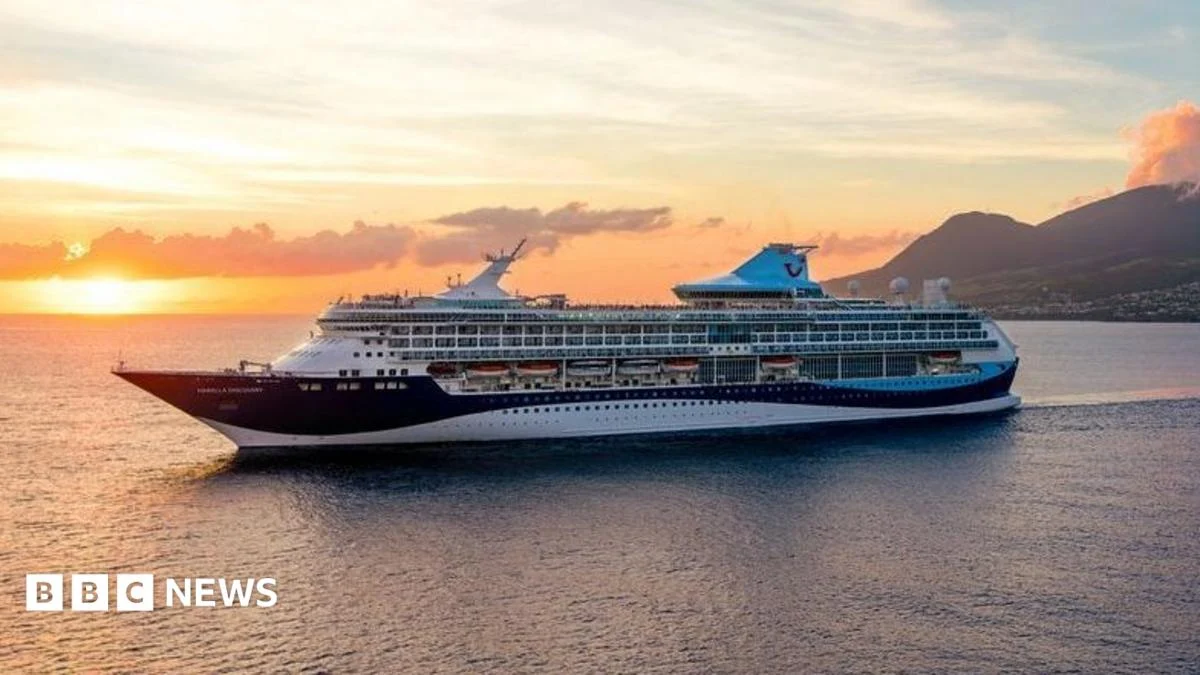
The extensive international search for a 72-year-old British woman, who is feared to have gone overboard from Tui’s Marella Voyager cruise ship while traversing the vast Atlantic Ocean, has been officially suspended. The U.S. Coast Guard (USCG), which coordinated the maritime rescue efforts, made the somber announcement on Wednesday, citing a confluence of grim factors including the "low likelihood of survival" in the challenging conditions of the North Atlantic. The woman was last seen aboard the vessel on Monday, with her absence only noted on Tuesday morning when staff discovered her "bed untouched," signaling a potentially catastrophic event during the ship’s journey towards the Caribbean.
The Marella Voyager, a vessel carrying approximately 2,000 passengers and 800 crew members, was approximately 500 nautical miles from the area where the woman is believed to have entered the water when the critical missing person report was filed. This distance underscores the immense scale of the search operation and the remoteness of the incident. The ship had departed from Malaga, Spain, on November 4th, embarking on a transatlantic voyage with scheduled stops in Antigua, Dominica, and a final destination in Barbados on Sunday. The incident has cast a shadow over what was intended to be a leisurely holiday cruise.
Further details released by the USCG paint a picture of a sophisticated, yet ultimately unsuccessful, rescue endeavor. The woman was last officially recorded accessing a cabin door around midday on Monday. It is understood that she went overboard in a highly remote section of the North Atlantic, a staggering 1,400 nautical miles from Bermuda, a location that presents significant logistical challenges for any search and rescue operation. The precise circumstances leading to her disappearance remain unclear, adding to the tragedy.
Marella Cruises, the operator of the Marella Voyager, confirmed that upon realizing the woman was missing, the alarm was immediately raised, and an internal search of the ship was conducted. The gravity of the situation quickly escalated, prompting a broader, coordinated response. Reports from passengers onboard, as relayed by the Daily Mail, described a palpable sense of unease as holidaymakers were asked to interrupt their dinners, drinks, and entertainment on Tuesday evening for an emergency headcount. Passengers were reportedly organized into lines of four as crew members meticulously scanned boarding cards to account for every soul on board, a procedure designed to ascertain the exact number of individuals and to identify any potential discrepancies.
The USCG received the official missing person report at approximately 19:30 EST (00:30 GMT) on Tuesday. A significant operational hurdle emerged when it was reported that the Marella Voyager did not possess sufficient fuel reserves to undertake a significant return voyage to the potential search area. In light of this logistical constraint and the pressing need to reach its scheduled destination, the USCG, it is understood, advised the ship to continue its crossing rather than reverse course and engage in an extended search. This decision highlights the complex trade-offs involved in maritime rescue operations, where the immediate needs of a distressed vessel and the safety of its remaining passengers must be weighed against the resources and feasibility of a large-scale search in remote waters.
Following the notification, the USCG initiated a comprehensive search and rescue effort, collaborating with various international partners. This included volunteers from the Coast Guard, the Maritime Rescue Coordination Center Delgada, and the UK’s Joint Rescue Coordination Centre. Urgent maritime broadcasts were issued to all vessels in the vicinity, soliciting any potential assistance or sightings. Despite these widespread appeals, the operation encountered further difficulties. Multiple commercial vessels were contacted, but none were in the immediate vicinity to offer meaningful search opportunities. This lack of nearby assets in such a remote location proved to be a critical impediment to the search’s effectiveness.
The decision to suspend the search was made at approximately 15:50 EST (20:50 GMT) on Wednesday. The USCG cited a number of critical factors in this difficult determination: the vastness of the search area, the significant elapsed time between the presumed incident and the notification of authorities, the scarcity of available search assets in the remote location, the negative results from maritime broadcasts, the prevailing sea state, and, most crucially, the low probability of survival given the time spent in the water and the environmental conditions. The North Atlantic, particularly during this time of year, can present treacherous seas and frigid water temperatures, significantly reducing survival chances.
The Marella Voyager’s itinerary underscores the distance involved. Having departed Malaga on November 4th, the ship was on a multi-day crossing. Its scheduled arrival in Antigua on Friday, followed by stops in Dominica and a conclusion in Barbados on Sunday, illustrates the ship’s commitment to its route and the geographical challenges faced by the search and rescue operation. The sheer scale of the ocean means that even with dedicated efforts, locating an individual in such a vast expanse is an arduous and often improbable task.
Marella Cruises expressed profound sorrow over the disappearance. A spokeswoman for the cruise line stated, "We are deeply saddened by the disappearance. Our thoughts are with the guest’s loved ones at this very difficult time." The company confirmed its full cooperation with the authorities in their ongoing inquiries, emphasizing the support being provided to the family. Similarly, a spokesperson for the UK Foreign Office confirmed that they are actively supporting the family of the British national reported missing and are in constant communication with the relevant international authorities. This dual support structure aims to provide both operational and familial assistance during this period of immense distress.
The incident brings to mind other maritime emergencies, including a separate case reported recently where a cruise ship pianist was found treading water for approximately nine hours, around 20 miles off the Californian coast. This individual, a Royal Caribbean employee, was discovered by two fishermen near Catalina Island, a testament to the resilience of the human spirit and the possibility of survival even after prolonged exposure to the elements. While this case offers a glimmer of hope for survival in maritime incidents, the circumstances surrounding the Marella Voyager passenger highlight the immense challenges and often tragic outcomes associated with disappearances at sea. The vastness of the ocean, coupled with factors like time elapsed, weather conditions, and the availability of search resources, can create insurmountable obstacles in the quest to find those lost. The suspension of the search marks a tragic conclusion to a desperate effort, leaving a family to grapple with the devastating reality of their loss.
