
 By admin
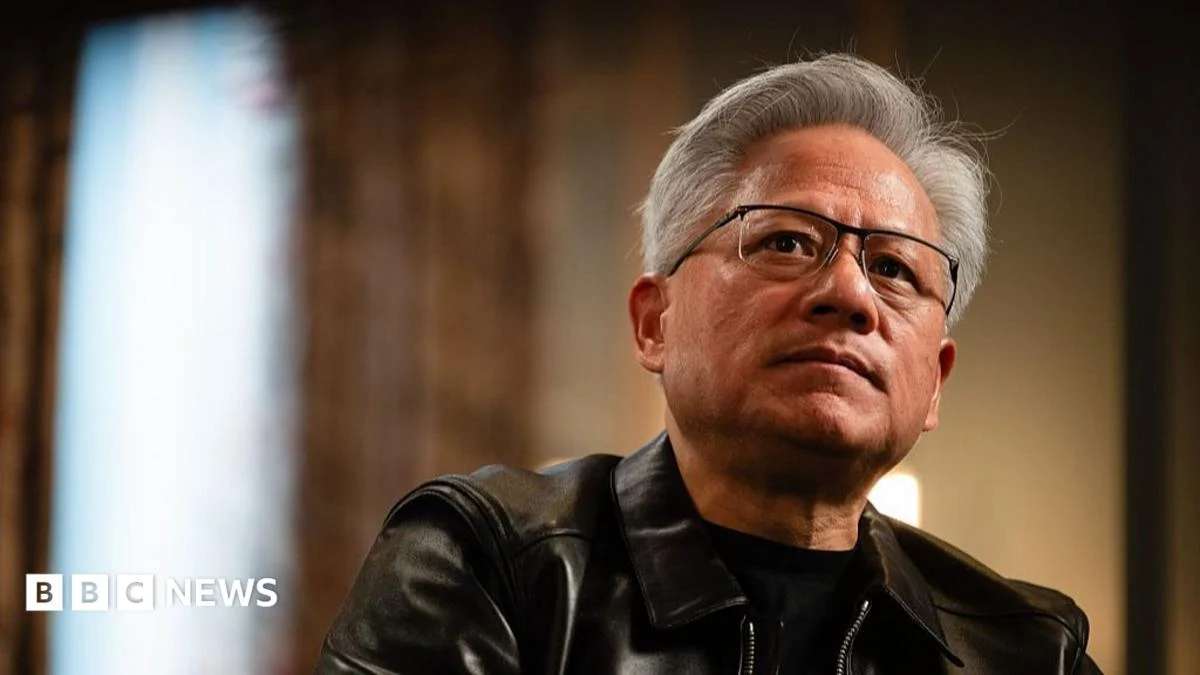
In a dramatic development that has sent shockwaves through the technology sector and raised serious national security concerns, semiconductor giant Nvidia has retained one of the most prestigious law firms in the United States, Wachtell, Lipton, Rosen & Katz, to conduct a comprehensive and independent investigation into allegations surrounding its chief executive officer, Jensen Huang. The probe is specifically focused on an alleged romantic relationship between Huang and a woman identified as Alice Huang, who is reportedly a spy for Beijing. The gravity of the situation is underscored by the concurrent involvement of the Federal Bureau of Investigation (FBI), which is also independently pursuing its own inquiry into the matter.
The revelations have already had a palpable impact on Nvidia’s market standing. The company’s share price has plummeted, nearing a yearly low, with a staggering $500 billion (approximately £375 billion) wiped off its market capitalization since Friday. This significant financial downturn reflects the deep-seated anxieties surrounding the potential implications of the alleged espionage for one of the world’s most strategically important technology companies.
Nvidia stands at the epicenter of the artificial intelligence (AI) revolution, a fact that amplifies the national security implications of these allegations. The company is the sole manufacturer of the specialized graphics processing units (GPUs) that are indispensable for the development and deployment of advanced AI tools. These chips are not merely components; they are the very engines driving the current AI boom, making Nvidia a linchpin in the global technological landscape. Consequently, the U.S. government views Nvidia’s technology as a matter of paramount national security, particularly in the escalating race for AI dominance. With its market valuation placing it as the second most valuable company globally, trailing only Apple, any perceived threat to Nvidia’s integrity or intellectual property is a cause for significant concern among policymakers and national security officials.
Alice Huang, also known by the name Huang Le, is reportedly not related to Jensen Huang. She is alleged to have held an executive position at Megaspeed, a Singaporean company that has been a customer of Nvidia. Prior to these recent allegations, Megaspeed had been under scrutiny for suspicions of helping to divert Nvidia chips to China. Nvidia has previously stated that these concerns were investigated and ultimately debunked. Furthermore, the company has asserted that it was not informed by the U.S. government about any intelligence concerns related to Megaspeed.
According to a report by The New York Times, a critical development in bringing these allegations to light involved a memo sent earlier this year by Secretary of State Marco Rubio to top officials in Washington. The memo reportedly warned of Jensen Huang’s close relationship with a Chinese spy. This high-level communication indicates that the concerns about Jensen Huang’s personal life and its potential national security ramifications had reached the highest echelons of the U.S. government well before the public disclosure of the investigation.
Beijing has vehemently rejected the claims that its intelligence services have targeted the Nvidia chief. The Chinese foreign ministry has characterized the allegations as an attempt "to smear and malign China," framing them as part of a broader geopolitical narrative rather than legitimate security concerns. This diplomatic response highlights the international tensions and differing perspectives surrounding the alleged espionage.
In the immediate aftermath of the news, former U.S. President Donald Trump stated that he had spoken with Jensen Huang, who reportedly claimed to have "no idea she was a spy." Trump indicated that he believed Huang’s assertion. However, the affair and the subsequent investigation have continued to attract significant political attention in the United States. Congressional leaders, specifically from the House Committee on Foreign Affairs, have formally requested that Jensen Huang appear for a closed-door briefing next week. A person familiar with the committee’s demands confirmed this request to the BBC. The committee possesses the authority to issue a subpoena, which could legally compel Huang to appear before them if he does not voluntarily agree to the briefing. The uncertainty surrounding Huang’s attendance further fuels speculation and underscores the seriousness with which Congress is treating the matter.
Nvidia’s board of directors publicly acknowledged the initiation of an investigation into the affair on Sunday. At that time, the company’s board expressed that it had "no reason to believe the company’s secrets or national security were compromised." The board further stated that a committee comprising independent directors would be responsible for overseeing the probe. This assurance was intended to mitigate immediate market panic and signal a commitment to a thorough and impartial review of the situation. The involvement of independent directors is a standard corporate governance practice aimed at ensuring objectivity in investigations that could potentially involve senior leadership.
The complexities of this situation extend beyond the personal relationship. The strategic importance of Nvidia’s technology to both the U.S. and China, coupled with the alleged involvement of a foreign intelligence service, places the company at a critical geopolitical intersection. The investigation will likely scrutinize the extent of any potential data breaches, the security protocols in place at Nvidia, and the channels through which sensitive information might have been compromised. The nature of the information potentially at risk could range from proprietary chip designs and manufacturing processes to advanced AI research and development strategies, all of which are vital to maintaining a competitive edge in the global technological arena.
The role of Wachtell, Lipton, Rosen & Katz in leading this investigation is significant. The firm is renowned for its expertise in corporate governance, complex litigation, and high-stakes investigations, particularly those with national security implications. Their appointment suggests that Nvidia is bracing for a rigorous and potentially lengthy examination, aiming to establish the facts comprehensively and decisively. The FBI’s concurrent investigation indicates that the U.S. government views the situation through a criminal and national security lens, potentially involving counterintelligence operations.
The implications for the broader semiconductor industry and the future of AI development are also considerable. Any disruption to Nvidia’s operations or its ability to innovate could have ripple effects across numerous sectors that rely on its advanced computing power. The incident also brings into sharp focus the vulnerabilities inherent in global supply chains and the constant threat of industrial espionage in an era where technological superiority is increasingly linked to economic and military power.
Jensen Huang, as a co-founder and the long-serving CEO of Nvidia, has been instrumental in the company’s rise to prominence. His personal conduct, therefore, is under intense scrutiny not only for its potential impact on the company but also for the broader ethical and security considerations it raises. The investigation will need to carefully navigate the intersection of personal relationships and professional responsibilities, particularly in a context where national interests are at stake.
The current situation highlights the delicate balance that technology companies, especially those involved in critical national security technologies, must maintain. They operate in a globalized marketplace, yet are subject to the security demands and geopolitical realities of their home countries. The alleged espionage attempt, if proven, would underscore the persistent challenges of protecting intellectual property and sensitive information in an increasingly interconnected and competitive world. The outcome of Nvidia’s internal investigation and the FBI’s probe will undoubtedly shape future discussions on corporate responsibility, national security protocols for technology firms, and the ongoing efforts to safeguard critical infrastructure from foreign interference. The coming weeks and months will likely see further developments as the investigations unfold, potentially revealing more about the extent of the alleged breach and the measures being taken to address it.
