
 By admin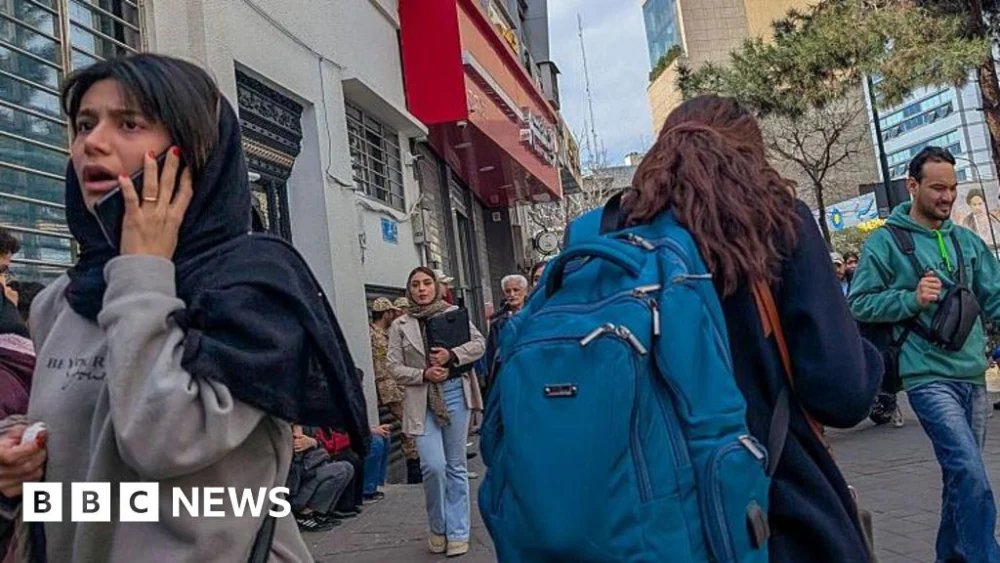
In a dramatic escalation of regional tensions, the United States and Israel have launched a significant military operation targeting Iran. US President Donald Trump confirmed on Saturday morning that "major combat operations" were underway, issuing a stark call for Iranian government forces to lay down their arms. The announcement followed an earlier declaration by Israel’s defence minister, who described the action as a "pre-emptive strike," with multiple explosions reported across Iranian cities. This aggressive move marks a critical turning point after weeks of heightened rhetoric and stalled negotiations concerning Iran’s controversial nuclear program.
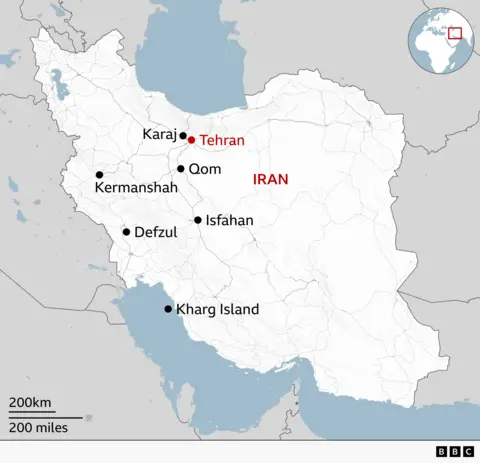
The unfolding events began shortly after 09:30 Tehran time (06:00 GMT) when Iranian state media reported a series of explosions reverberating through the capital. Eyewitness accounts and verified imagery shared with the BBC depicted plumes of smoke rising over prominent Tehran landmarks, including Jomhouri Square and Hassan Abad Square. The scale of the attack appears to be nationwide, with reports of explosions emerging from other major cities such as Isfahan, Qom, Karaj, and Kermanshah. As of this report, details regarding casualties or injuries remain scarce, with Iranian authorities yet to provide a comprehensive assessment. The nation’s airspace has been completely closed since the commencement of the strikes, according to the Tasnim News Agency, a measure indicative of the severity of the situation.
President Trump, in a forceful statement delivered via his Truth Social platform, characterized the operation as "massive and ongoing." He further articulated the US objective as the "elimination of imminent threats from the Iranian regime" to safeguard the American people and to "ensure that Iran does not obtain a nuclear weapon." In a highly unusual and provocative directive, Trump urged the Iranian populace to remain in shelter and not to leave their homes, suggesting that this moment might represent their "only chance for generations" to overthrow their current government.
The Israeli government, represented by Prime Minister Benjamin Netanyahu, echoed Trump’s sentiments, imploring the Iranian people to "throw off the yoke of tyranny and bring about a free and peaceful Iran." Netanyahu thanked President Trump for his support and reiterated Israel’s unwavering commitment to preventing Iran from acquiring nuclear weapons that could "threaten all of humanity." He asserted that the "joint action will create the conditions for the courageous Iranian people to take their destiny into their own hands." Israeli citizens were also advised to adhere strictly to guidance from local authorities. Earlier in the day, Israel’s defence minister had declared a "special and permanent state of emergency" across the entire nation, signaling a heightened level of alert and preparedness.
The attacks appear to have triggered a retaliatory response, or at least have been met with defensive actions, from Iran and its allies in the region. Israel’s military has reported identifying missile launches directed towards Israel from Iran and stated its forces are actively working to "intercept and strike threats where necessary." Explosions have been heard in the Israeli city of Haifa and other locations, though it remains unclear whether these were direct impacts or the result of interception efforts.
The conflict has also extended to regional US military installations and allied nations. Bahrain’s state news agency reported that the service center of the US Navy’s 5th Fleet, located in Bahrain, was "subjected to a missile attack." This incident occurred after Bahrain’s interior ministry activated emergency sirens and urged residents to seek safety. Similarly, Qatar’s defence ministry announced that it had "successfully countered a number of attacks targeting the country’s territory" following reports of explosions in the capital, Doha. Qatar hosts the significant Al Udeid Air Base, a crucial US military facility in the Middle East. The United Arab Emirates has also condemned an Iranian attack on its territory, stating that falling debris from intercepted missiles resulted in one fatality. The UAE confirmed that several missiles were successfully intercepted.
In response to the escalating hostilities, significant disruptions to air travel are already being felt across the region. Several major global airlines have suspended flights to and from various Middle Eastern destinations. Lufthansa, the German flag carrier, has halted flights to and from Dubai, as well as the capital cities of Israel, Lebanon, and Oman, with the suspension extended until March 7th. Wizz Air has similarly suspended flights to Israel, Dubai, Abu Dhabi, and Amman, Jordan, until the same date. Virgin Atlantic has announced it will temporarily avoid Iraqi airspace and has canceled a flight from London Heathrow to Dubai. Kuwait’s aviation authority has also halted all flights to Iran until further notice, according to state media reports. Other countries, including Iraq and Jordan, have closed their respective airspaces. The UAE has also reported a "partial and temporary" closure of its airspace as a precautionary measure.
The UK Foreign Office has updated its travel guidance for several countries in the region, including Jordan, Syria, Lebanon, Iraq, Yemen, Turkey, Saudi Arabia, and Oman. Travelers are now advised to "remain vigilant, follow local authority advice and take shelter if advised." This indicates a growing concern for the safety of foreign nationals in the affected areas.
The international community has reacted with a mixture of concern and condemnation. Kaja Kallas, the EU’s High Representative for Foreign Affairs and Security Policy, described the developments as "perilous." She reiterated the EU’s stance, which includes strong sanctions against Iran and support for diplomatic solutions, particularly concerning the nuclear issue. Kallas emphasized that the "protection of civilians and international humanitarian law is a priority."
A spokesperson for the UK government expressed a desire to avoid "further escalation into a wider regional conflict," stating that the "immediate priority is the safety of UK nationals in the region." The statement also assured that the UK "stand[s] ready to protect our interests." Prime Minister Keir Starmer was expected to convene a meeting of the government’s emergency Cobra committee to discuss the unfolding situation. It is understood that the UK was not directly involved in the US-Israeli strikes.
Conversely, Russia has strongly condemned the US-Israeli strikes, labeling them a "reckless move." The Russian Foreign Ministry criticized the timing of the attacks, stating, "It is also condemnable that the attacks are once again being carried out under the guise of a renewed negotiation process," referencing the recent US-Iran nuclear talks. Moscow called on the international community to assess these "irresponsible actions aimed at undermining peace, stability, and security" in the region.
The current situation represents a significant geopolitical crisis, with far-reaching implications for regional stability and global security. The underlying cause of this immediate confrontation stems from long-standing concerns over Iran’s nuclear ambitions. For years, international bodies and Western powers have accused Iran of pursuing a clandestine nuclear weapons program, a charge that Iran has consistently denied, maintaining that its nuclear activities are solely for peaceful energy purposes. Despite several rounds of negotiations, most recently aimed at reviving the Joint Comprehensive Plan of Action (JCPOA), the 2015 nuclear deal that placed curbs on Iran’s nuclear activities in exchange for sanctions relief, a breakthrough has remained elusive. The US withdrawal from the JCPOA under the Trump administration and the subsequent re-imposition of stringent sanctions significantly heightened tensions. Iran, in response, has gradually increased its uranium enrichment levels, moving closer to weapons-grade material, further fueling international alarm.
The involvement of the United States in this operation, particularly under a new administration, signals a potential shift in American foreign policy towards Iran. President Trump’s rhetoric, which appears to encourage regime change, suggests a more interventionist approach than previously seen. Israel, long viewing Iran’s nuclear program as an existential threat, has consistently advocated for a more robust stance against Tehran. This coordinated strike, therefore, represents a confluence of these long-held strategic objectives.
The ripple effects of this military action are likely to be profound. Beyond the immediate humanitarian concerns and the risk of wider conflict, the economic consequences could be substantial. The region is a critical hub for global energy supplies, and any significant disruption could lead to a surge in oil prices and further destabilize global markets. Diplomatic efforts are expected to intensify in the coming days as the international community grapples with this volatile situation, seeking de-escalation and a pathway back to dialogue, however improbable that may seem in the immediate aftermath of such a significant military engagement. The coming hours and days will be crucial in determining the trajectory of this escalating crisis and its impact on the Middle East and beyond.
