
 By admin
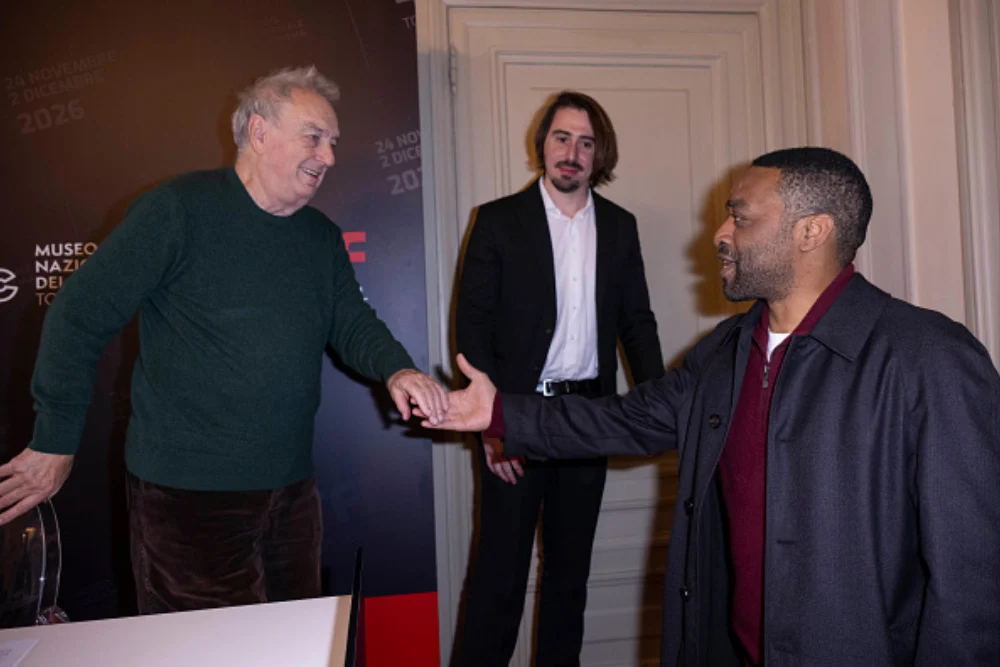
Chiwetel Ejiofor, the acclaimed British actor whose career has been marked by profound performances and a remarkable trajectory, confessed a surprising early apprehension about achieving such a significant milestone right at the outset of his cinematic journey. His very first film role was none other than in Steven Spielberg’s historical epic, "Amistad." This monumental debut, for many aspiring actors the ultimate dream, paradoxically instilled in Ejiofor a fear of "peaking too soon."
"I was definitely worried about it at the time," Ejiofor shared during his appearance at the Torino Film Festival, where he was honored with the prestigious Stella della Mole award for lifetime achievement. His sentiment stemmed from a perceived, albeit often illusory, linear progression in an actor’s career development. "You feel that there are stages to how you develop as an actor and the opportunities you get, and you think they might follow a very linear path. But of course, my first film role was with Steven Spielberg. I realized then, very early on, that it’s a deeply unpredictable profession. You can either feel disquiet or anxiety about that, or you have to go with it." This early brush with the pinnacle of filmmaking, rather than solidifying his path, illuminated the inherent volatility and serendipity of the acting profession.
Ejiofor elaborated on this realization, highlighting the often erratic nature of creative opportunities. "The opportunities can be sporadic or come from different places and angles that you didn’t imagine. Part of the challenge, but also the exciting thing about being an actor, is having the capacity and ability to roll with it, to travel on the journey of it and see where it takes you." This philosophy of embracing the unknown and navigating the unpredictable currents of the industry has undoubtedly been a cornerstone of his enduring success.
For a considerable period, despite his auspicious cinematic debut, Ejiofor did not fully embrace the identity of a film actor. His formative years were deeply rooted in the theatrical world. "Even though I had done the Steven Spielberg film, I still thought of myself primarily as a theater actor," he admitted. His dedication to the stage was substantial, marked by extensive work with esteemed institutions such as the National Theatre in Great Britain, numerous productions in the West End, and a variety of off-West End theatre companies. This commitment to live performance culminated in significant recognition; in 2008, he was awarded the Laurence Olivier Award for Best Actor for his powerful portrayal of Othello, a testament to his mastery of Shakespearean drama.
The pivotal shift in his self-perception, from predominantly a stage actor to a respected film performer, occurred with Stephen Frears’ critically acclaimed thriller, "Dirty Pretty Things." This film, which also screened at the Torino Film Festival on Thursday, proved to be a turning point for Ejiofor. Coincidentally, Stephen Frears himself was also recognized with an award at the festival during that week, underscoring the significance of their shared presence and artistic connection.
"I think it was around that time when I started to fall in love with film as well, with film acting and the rhythm and poetry of cinema," Ejiofor explained. He attributed this burgeoning affection for the cinematic medium to the collaborative experience on "Dirty Pretty Things," specifically mentioning the contributions of director Stephen Frears and cinematographer Chris Menges. "A lot of that had to do with Stephen Frears and Chris Menges, who was the cinematographer on that film. It became something that I started to pursue." The nuanced visual storytelling and the distinct temporal flow of filmmaking began to resonate with him, offering a new canvas for his expressive talents.
Initially, Ejiofor successfully navigated a period where he could effectively "balance the two very well," seamlessly transitioning between the demands of theater and film. However, as his career evolved and his creative ambitions expanded, the demands on his time intensified. "It was when I became more involved in writing and directing that it started taking up a lot of my time outside of acting in films. Historically, this would have been the time I spent on stage. I ended up writing or directing my own films." This dual engagement with filmmaking, encompassing both performance and creative direction, led to a natural shift in his primary focus.
Ejiofor has since demonstrated his directorial prowess by helming two feature films: "Rob Peace" and "The Boy Who Harnessed the Wind." Despite his significant contributions to filmmaking, his passion for theater remains undimmed, and a return to the stage is on the horizon. "It’s still something that I’m very passionate about," he affirmed. "Finding the time to do as much theater as I want can be challenging, but it’s something I’m in the midst of conversations about." He expressed optimism about participating in another theatrical production as early as next year, signaling a continued commitment to the art form that first ignited his acting career.
In the interim, Ejiofor expressed his contentment in reflecting on some of the most significant achievements of his filmography. Among these, he highlighted his role in Steve McQueen’s Oscar-winning "12 Years a Slave," a film that also resonated deeply within the Italian festival circuit. In this powerful historical drama, Ejiofor portrayed Solomon Northup, a free Black man from New York who was abducted in 1841 and subsequently sold into slavery in Louisiana.
The profound impact of Northup’s story on Ejiofor was evident. "I hadn’t heard of his story at all. When I was sent the script, I was incredibly moved and shocked by it," he confessed. His immersion into Northup’s harrowing experience deepened considerably when he delved into the subject’s autobiography. "Then I read Northup’s own memoir. I thought it was an extraordinary story, an extraordinary tale," he stated prior to the film’s screening. He eloquently described the narrative as capturing a "very tragic period of absence of humanity," a stark reminder of the brutal realities of slavery.
Ejiofor’s performance in "12 Years a Slave" was widely lauded for its raw emotional depth and nuanced portrayal of a man stripped of his freedom but not his spirit. He spoke with immense respect for the film’s director, Steve McQueen. "It felt very profound to me. I was just deeply moved. Steve McQueen is a phenomenal filmmaker, incredibly passionate, detailed and thorough, with a wonderful vision and cinematic heart." The overwhelming global and Academy recognition the film received was, for Ejiofor, a deeply gratifying experience. "It was incredibly gratifying to see the film being received the way that it was, globally and by the Academy."
Ultimately, Ejiofor underscored the universal resonance of "12 Years a Slave," emphasizing its core message. "At its heart, it was always a story about human respect and human dignity," he concluded, encapsulating the enduring power and ethical imperative of Northup’s true story and the film’s unflinching depiction of it. His career, from its astonishingly high-profile beginning to its current status as a testament to artistic integrity and resilience, continues to inspire and captivate audiences worldwide. The unpredictability he once feared has, in fact, become the very engine of his rich and varied artistic expression.
