
 By admin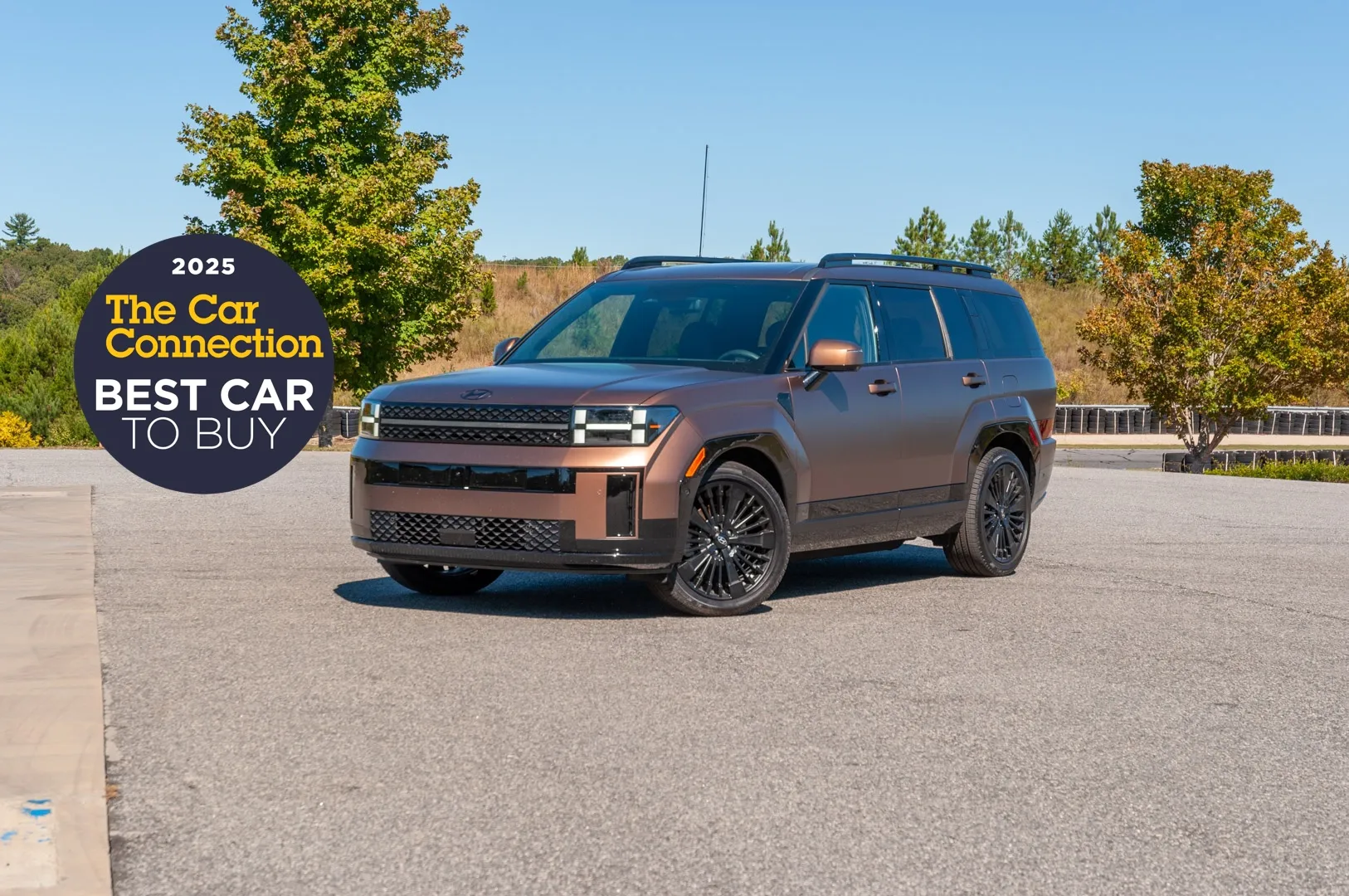
The ascent of the Santa Fe Hybrid to the top spot this year is multi-faceted, but perhaps the most immediate and striking reason is its dramatic and unapologetic styling. Hyundai has taken a bold leap, completely reimagining the Santa Fe’s aesthetic from the pleasing, albeit somewhat conventional, shape of its predecessor. That earlier model certainly had its merits, particularly with its upscale interior appointments at higher trims. However, the 2025 Santa Fe Hybrid carves out a distinct identity with its raffish, angular charm that unmistakably echoes the rugged, premium appeal of vehicles from Land Rover and Rivian, yet remarkably, at a fraction of their cost. This boxy, lengthy, and attention-demanding silhouette defies the trend of many large SUVs that often sacrifice visual flair for the sake of perceived utility. Instead, the Santa Fe Hybrid masterfully blends both, projecting an adventurous spirit that resonates deeply with modern consumers seeking both capability and character. Its broad stance, squared-off wheel arches, and distinctive H-shaped daytime running lights are not just design elements; they are declarations of a new design language that confidently positions the Santa Fe as a genuine competitor in a segment often dominated by more established, and pricier, luxury off-roaders.
The interior narrative is arguably even stronger, demonstrating Hyundai’s profound understanding of modern driver and passenger needs. The Santa Fe Hybrid boasts a sophisticated cockpit featuring twin 12.3-inch displays. One serves as a vibrant touchscreen infotainment hub, seamlessly integrating wireless Apple CarPlay and Android Auto, ensuring intuitive access to navigation, media, and communication. This digital prowess is complemented by a thoughtful array of physical controls for essential functions, particularly climate. In an era where many manufacturers are burying critical controls within layers of digital menus, Hyundai’s decision to retain tangible buttons and knobs for climate adjustments is a welcome nod to practicality and driver safety, allowing for quick, tactile adjustments without diverting attention from the road.

Beyond the digital interface, the cabin’s design prioritizes utility and comfort. The Santa Fe Hybrid’s generous dimensions translate into excellent passenger space, particularly in the first and second rows, which offer ample legroom, headroom, and shoulder room for adults. The third row, while typical for a crossover in its class, is suitable for children or shorter adults on shorter journeys, significantly enhancing the vehicle’s versatility for larger families or carpooling. The overall cabin ambiance varies with trim level. While the base models offer a respectable level of interior trim and materials, the top-tier Calligraphy trim elevates the experience to truly luxurious heights. Here, occupants are treated to sumptuous leather upholstery, a sophisticated dashboard design, and an array of premium features such as advanced adaptive cruise control, and heating and cooling functions for both driver and front passenger seats. This tiered approach allows consumers to choose a Santa Fe Hybrid that aligns perfectly with their budget and luxury aspirations, further cementing its broad appeal. The interior’s focus on maximizing usable space is evident in clever storage solutions throughout, including a versatile center console and ample cargo capacity behind the second and third rows, making it a highly practical choice for everything from daily commutes to extensive road trips.
While the "wrapper"—the exterior and interior design—is undoubtedly a delight, the Santa Fe Hybrid’s powertrain is where its true ingenuity and strategic advantage lie. The base Santa Fe offers a capable 277-horsepower turbocharged 2.5-liter four-cylinder engine, but it’s the hybrid variant that truly excels in the crucial "fuel-economy wars." This sophisticated hybrid system pairs a 1.6-liter turbocharged four-cylinder engine with a smooth-shifting 6-speed automatic transmission. This internal combustion engine works in harmony with a potent 47.7-kilowatt electric motor and a compact 1.5-kilowatt-hour battery pack. The combined output is a robust 231 horsepower and a substantial 271 pound-feet of torque. This integrated power delivery grants the three-row SUV a noticeably quicker step off the line and more responsive power on tap compared to the non-hybrid turbo-4. The immediate torque from the electric motor fills in the low-end gaps often experienced with purely gasoline-powered turbocharged engines, resulting in a more linear and satisfying acceleration experience, especially in city driving.
The integration between the hybrid components and the traditional gasoline engine is exceptionally smooth and refined, a hallmark of Hyundai’s advanced hybrid technology. Transitions between electric-only propulsion, hybrid assist, and full gasoline power are almost imperceptible, contributing to a premium driving feel. For those seeking a more dynamic experience, the Santa Fe Hybrid offers a Sport mode, which sharpens throttle response and optimizes the transmission for spirited driving. Paddle shifters provide manual control over the 6-speed automatic, allowing drivers to engage more directly with the powertrain. Furthermore, Hyundai has equipped the Santa Fe Hybrid with an intelligent regenerative braking system, offering four distinct modes. This system efficiently recaptures kinetic energy that would otherwise be lost during deceleration and braking, converting it back into electricity to recharge the battery. These modes allow drivers to tailor the regenerative braking intensity, from a gentle coasting sensation to a more pronounced deceleration that can effectively contribute to single-pedal driving in certain conditions, further enhancing efficiency and extending the electric-only driving range. This sophisticated energy management system is a key factor in the Santa Fe Hybrid’s impressive fuel economy.

The Santa Fe Hybrid, thus equipped, achieves an impressive EPA-estimated 36 mpg combined. This figure is a significant achievement for a three-row SUV of its size and capability, representing a substantial advantage over its purely gasoline-powered counterparts and many competitors in its segment. This excellent fuel economy is not merely a number; it translates directly into tangible savings at the pump for consumers and a reduced environmental footprint. In an automotive landscape increasingly focused on sustainability, the Santa Fe Hybrid offers a compelling argument for those seeking a practical, family-friendly vehicle that doesn’t compromise on efficiency or performance. It bridges the gap between traditional gasoline vehicles and fully electric options, providing a flexible solution for a wide range of drivers.
Beyond its efficiency, the Santa Fe Hybrid’s glowed-up cabin continues to impress. As mentioned, it comfortably seats up to seven people, with particularly generous space and comfort allocated to occupants in the first and second rows. The interior trim, while perfectly adequate in the base model, truly shines in the Calligraphy trim. This top-tier variant transforms the cabin into a truly luxurious sanctuary, outfitted with premium leather upholstery that exudes sophistication. The advanced adaptive cruise control system is particularly noteworthy for its smooth operation and ability to significantly reduce driver fatigue on long journeys, maintaining set speeds and distances with remarkable precision. Complementing this are practical luxuries such as heating and cooling functions for both the driver and front passenger, ensuring optimal comfort regardless of external temperatures.
Safety is another cornerstone of the 2025 Hyundai Santa Fe Hybrid’s appeal. The vehicle has performed commendably in preliminary crash tests, aligning with Hyundai’s strong reputation for building safe vehicles. Every Santa Fe Hybrid model comes standard with a comprehensive suite of advanced safety features, including automatic emergency braking, which can detect potential collisions and apply the brakes autonomously, and blind-spot monitors, which provide crucial alerts to drivers about vehicles in their blind spots. Moving up the trim levels, buyers gain access to even more sophisticated driver assistance technologies. These systems, designed to augment an attentive driver, include features that offer extra help for braking, steering, and maintaining lane position, making long-distance cruising less strenuous and safer. Hyundai’s Highway Driving Assist, for example, combines adaptive cruise control and lane-keeping assist to provide semi-autonomous driving capabilities on compatible roads, significantly enhancing both convenience and safety. These robust safety features underscore Hyundai’s commitment to protecting occupants and making driving a less stressful experience.

What truly solidifies the Santa Fe Hybrid’s status as the Best Car To Buy 2025, and what makes it an irresistible proposition, is its phenomenal value. The hybrid model costs only a mere $500 more than a similarly equipped gas-only model. This minimal price premium for significantly enhanced fuel economy, smoother power delivery, and reduced emissions makes the hybrid variant an unequivocal winner in terms of long-term cost of ownership and environmental responsibility. The recommended Santa Fe Hybrid SEL starts at an attractive $38,615, with the price rising to $48,865 for the fully loaded Calligraphy trim. In any configuration, the substantial extra gas mileage—and the corresponding fuel savings over the vehicle’s lifetime—presents an offer no discerning driver should refuse. This strategic pricing by Hyundai effectively eliminates the common barrier of a high initial investment for hybrid technology, making it accessible to a broader market segment.
Looking ahead, Hyundai is also preparing for the future of electrification with its upcoming Ioniq 9 electric SUV, a close relative of the Kia EV9, which itself was honored as The Car Connection’s Best Car To Buy 2024. This demonstrates Hyundai’s dual-pronged strategy: embracing full electrification while simultaneously perfecting hybrid technology for those not yet ready to make the full EV leap. For this critical segment of the market, the Santa Fe Hybrid makes eminent sense, offering a compelling blend of traditional utility with modern efficiency and advanced technology. It stands as a testament to Hyundai’s engineering prowess and its ability to deliver innovative, value-driven vehicles that resonate with contemporary consumer demands.
In summary, the 2025 Hyundai Santa Fe Hybrid doesn’t just check all the boxes; it redraws them. Its audacious design challenges conventions, its interior prioritizes both luxury and utility, its hybrid powertrain delivers an unparalleled balance of performance and efficiency, and its value proposition is simply unmatched. It’s a vehicle that doesn’t merely transport but inspires, making it the undisputed champion for Best Car To Buy 2025.

For a deeper dive into other top performers, including performance and green winners, explore our sister websites, Motor Authority and Green Car Reports.
