
 By admin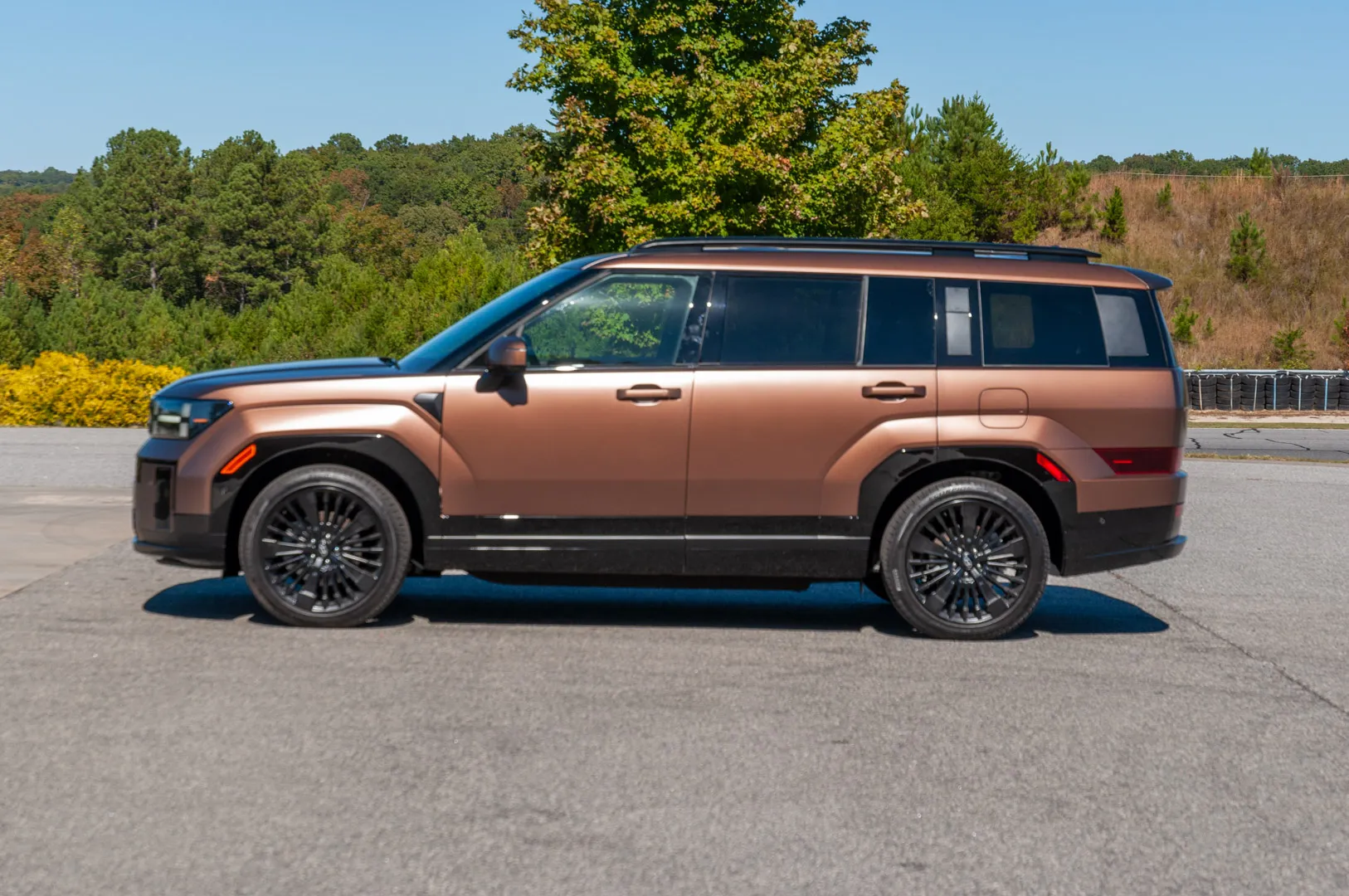
The selection of the Hyundai Santa Fe Hybrid as The Car Connection’s Best Car To Buy 2025 is a testament to its exceptional blend of innovation, practicality, and, most critically, its compelling value proposition in an increasingly competitive automotive landscape. This prestigious award is not given lightly; it reflects a rigorous evaluation process that considers a vehicle’s overall package, including its design, performance, safety features, technology, efficiency, and, crucially, its cost of ownership and perceived value against its peers. In the bustling segment of midsize three-row crossovers, the Santa Fe Hybrid doesn’t just stand out; it carves a new niche by masterfully balancing premium aspirations with accessible pricing.
At first glance, the fourth-generation Santa Fe makes an undeniable statement with its bold, boxy, and unapologetically rugged styling, drawing clear comparisons to iconic off-roaders like the Land Rover Defender. This distinctive aesthetic, characterized by the pervasive "H" motif subtly integrated into its lighting elements and grille, breaks away from the often-homogenous designs found in the crossover segment. It’s a deliberate design choice by Hyundai to inject personality and a sense of adventure, appealing to a demographic that values both form and function. Beyond its striking exterior, the Santa Fe has been strategically "right-sized," growing in dimensions to genuinely meet the evolving demands of families and individuals seeking a versatile three-row SUV. This expansion ensures ample passenger room and cargo capacity, addressing one of the primary drivers for consumers in this category.
However, the true cornerstone of the Santa Fe Hybrid’s award-winning appeal lies beneath its striking sheet metal: its sophisticated hybrid powertrain and the extraordinary value it presents. In an era where fuel efficiency and reduced emissions are paramount, Hyundai’s approach to hybrid integration is particularly astute. The Hybrid model demands a mere $500 premium over a similarly equipped gas-only Santa Fe. This minimal upcharge is quickly recouped, and then some, through significant fuel savings. The Environmental Protection Agency (EPA) estimates a substantial $3,250 in fuel cost savings over five years when opting for the Hybrid over its conventional gasoline counterpart. This calculation underscores a clear financial incentive, making the hybrid variant an almost irrefutable choice for any discerning buyer.
The economic argument for the Santa Fe Hybrid becomes even more compelling when considering the current volatility of fuel prices and the long-term financial planning that modern car ownership entails. The immediate return on investment for the hybrid premium is swift, translating into tangible savings that enhance the overall affordability of the vehicle. This shrewd pricing strategy by Hyundai effectively democratizes hybrid technology, making it accessible to a broader market segment that might otherwise shy away from the higher entry costs typically associated with electrified vehicles. Furthermore, beyond the direct financial benefits, choosing a hybrid contributes to a reduced carbon footprint, aligning with growing environmental consciousness among consumers and offering an added layer of "value" that extends beyond mere monetary terms.
Powering this efficiency marvel is a meticulously engineered powertrain that pairs a 1.6-liter turbocharged inline-four engine with a potent 47.7-kW electric motor and a compact 1.5-kWh battery pack. This synergistic combination delivers a robust total system output of 231 horsepower and an impressive 271 lb-ft of torque. The electric motor’s immediate torque delivery provides an exhilarating electric boost off the line, translating into swift and smooth acceleration. This instant responsiveness proves particularly beneficial for tasks such as uphill passing maneuvers or merging onto highways, offering a more dynamic and refined driving experience compared to the purely gasoline-powered 277-hp turbo-4, which, while more powerful on paper, lacks the instant low-end torque of the hybrid system.
A particularly innovative aspect of the Santa Fe Hybrid’s powertrain is its sophisticated 6-speed automatic transmission, cleverly integrated between the engine and electric motor. This traditional automatic transmission, rather than a continuously variable transmission (CVT) often found in hybrids, contributes significantly to a more engaging and familiar driving feel. In Sport mode, the transmission holds gears longer, allowing the engine to rev higher and extract maximum power, while paddle shifters on the steering wheel offer manual control for drivers who prefer a more hands-on experience. Conversely, when the drive mode dial is switched to Eco or Smart mode, these same paddle shifters undergo a transformative function: they become controls for the regenerative braking system. With four selectable levels, drivers can adjust the intensity of energy recovery, channeling more kinetic energy back into the battery pack during deceleration, thereby maximizing fuel efficiency in city driving or stop-and-go traffic. This seamless integration of power and efficiency, whether managed by the driver or optimized autonomously by the powertrain, exemplifies the Santa Fe Hybrid’s advanced engineering.
The question then arises: which trim level of the Santa Fe Hybrid best maximizes this compelling value proposition? Hyundai simplifies this decision by generously equipping every Santa Fe with a comprehensive suite of advanced driver-assist safety technologies. Standard features include automatic emergency braking with pedestrian detection, adaptive cruise control, active lane control, and blind-spot monitors. These systems not only enhance occupant safety but also contribute to superior safety ratings, offering invaluable peace of mind for families. Beyond active safety, Hyundai reinforces its commitment to customer satisfaction with an industry-leading warranty package: a 5-year/60,000-mile basic warranty, complemented by an exceptional 10-year/100,000-mile warranty specifically covering the hybrid powertrain and its associated components. This extended coverage for the most critical and potentially costly hybrid parts significantly de-risks ownership, further solidifying the Santa Fe Hybrid’s long-term value.
To unlock the hybrid powertrain, prospective buyers must bypass the base SE trim, which is exclusively offered with the gasoline engine. The Santa Fe Hybrid journey begins with the well-appointed SEL grade, starting at a highly attractive $39,175, including the $1,475 destination fee. This price point represents a remarkable value, positioning the Hybrid SEL approximately $8,000 below the average new car transaction price recorded in 2024. For this competitive sum, the Hybrid SEL comes loaded with features that feel anything but entry-level. The interior boasts a modern digital cockpit, featuring a flowing twin 12.3-inch display setup that integrates a digital instrument cluster and a vibrant touchscreen infotainment system, complete with wireless Apple CarPlay and Android Auto compatibility. Convenience is further enhanced by a wireless smartphone charger, four USB ports for all occupants, a hands-free power tailgate, and dual-zone automatic climate control. Comfort features include heated front seats, a power-adjustable driver’s seat, and premium synthetic leather upholstery, all riding on stylish 18-inch alloy wheels. This comprehensive feature set for under $40,000 truly positions the SEL Hybrid as an outstanding deal.
For those navigating diverse climates or seeking enhanced traction, the option of all-wheel drive (AWD) is available for an additional $1,800, bringing the total to $40,975. While AWD slightly reduces fuel economy from 35 mpg combined to 34 mpg combined, the added all-weather assurance and superior grip from all four wheels offer a valuable trade-off for many buyers, particularly in regions prone to snow, ice, or heavy rain. Aesthetically, Hyundai offers appealing no-cost color options like Rockwood Green or Atlantis Blue, which provide a welcome departure from the ubiquitous black, silver, or white, allowing for a touch of personalization. Inside, the white interior offers a bright, airy ambiance, though families with young children might understandably lean towards the more practical black upholstery.
However, even the well-equipped SEL has its limitations, prompting some "buts" for those with specific preferences. A notable omission for many families is the inability to option second-row captain’s chairs, which reduce seating capacity from seven to six but significantly enhance comfort and ease of access to the third row. To acquire this desirable feature, buyers must make a substantial leap past the Limited trim and go directly to the top-tier Calligraphy model, representing a significant economic step up.
Stepping up to the Limited trim incurs a $6,900 premium, bringing the price to $47,875. This trim justifies its higher cost with a host of luxury and convenience upgrades. Comfort is elevated with cooled power front seats, a heated steering wheel, and heated outboard second-row seats. Audiophiles will appreciate the premium Bose sound system, while third-row passengers gain their own USB ports. The Limited also rolls on larger 20-inch alloy wheels. Crucially, this trim introduces advanced safety and convenience technologies such as a surround-view camera system and innovative blind-spot cameras that project a live feed onto the instrument cluster, effectively eliminating blind spots behind the Santa Fe’s robust pillars—a valuable feature for maneuvering a larger vehicle. For many, the Limited strikes an excellent balance, offering a near-luxury experience without venturing into the highest price bracket.
Finally, at the pinnacle of the Santa Fe Hybrid lineup sits the Calligraphy trim, priced at $51,025, an additional $3,150 over the Limited. At this level, the Santa Fe Hybrid truly blurs the lines with luxury vehicles. It boasts an array of opulent features, including dual wireless smartphone chargers, sumptuous quilted Nappa leather upholstery, therapeutic massaging front seats, and finally, the coveted second-row captain’s chairs. Additional refinements include a rearview camera mirror and striking 21-inch black alloy wheels. The Calligraphy delivers an unparalleled level of comfort and sophistication, transforming the driving experience into something truly premium.
While the Calligraphy’s extensive feature list is undeniably enticing, it does begin to "distort the value promise" that initially defined the Santa Fe Hybrid as an award winner. Crossing the $50,000 threshold places it in direct competition with dedicated luxury SUVs, potentially diminishing its relative value advantage. For those prioritizing the core value proposition, the SEL or Limited trims likely represent the sweet spot. However, the allure of features like massaging front seats and the convenience of multiple USB ports throughout the cabin can genuinely enhance the family road trip experience, transforming the journey itself into half the fun. Coupled with the inherent efficiency of the hybrid powertrain, which minimizes stops at the gas station, even the top-tier Calligraphy maintains an argument for its value, albeit one focused on experiential luxury rather than pure cost savings.
In conclusion, the Hyundai Santa Fe Hybrid’s recognition as Best Car To Buy 2025 is a resounding endorsement of its holistic appeal. It masterfully combines a distinctive, modern design with a highly efficient and refined hybrid powertrain, class-leading safety features, and an exceptional warranty. While the SEL Hybrid offers unparalleled value as a starting point, the Limited trim presents a compelling upgrade for those seeking enhanced comfort and technology. Even the luxurious Calligraphy, despite its higher price, retains a unique appeal by blending premium features with the underlying efficiency of the hybrid system. The Santa Fe Hybrid doesn’t just meet expectations; it redefines them, proving that a family-friendly three-row SUV can be stylish, efficient, safe, and, most importantly, an outstanding value.
