
 By admin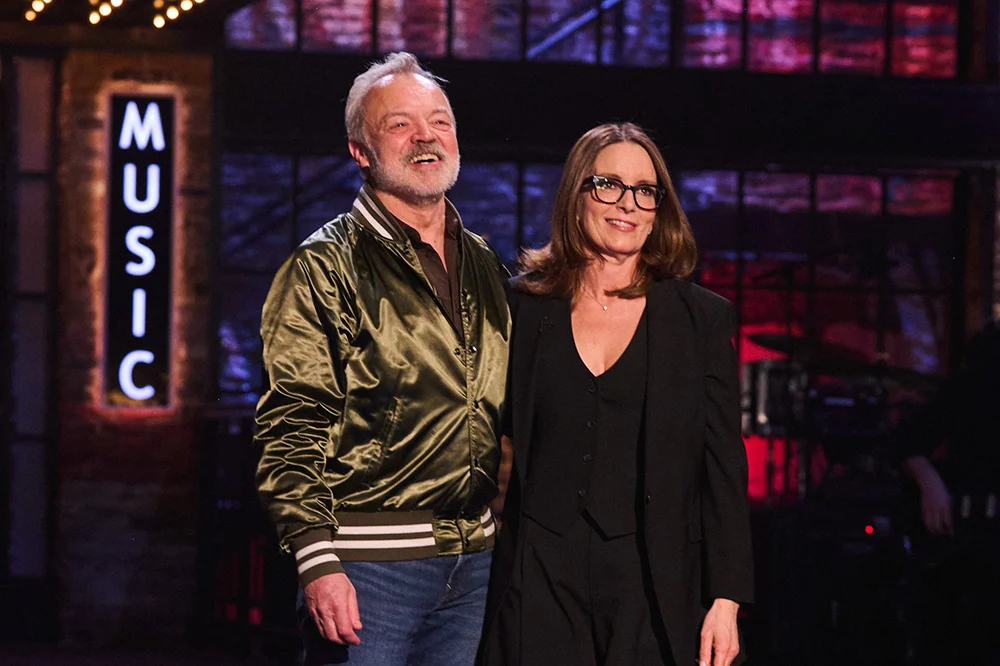
The inaugural broadcast of "Saturday Night Live U.K." on pay TV channel Sky One has officially launched with a notable viewership of 226,000, signaling a promising start for the beloved American sketch comedy format adapted for a British audience. Airing at 10 p.m., the show captured a 3.2% share of the television audience during its slot, according to official BARB figures provided by overnights.tv. This initial performance demonstrates a strong engagement from viewers, particularly considering the competitive landscape of late-night television.
The debut episode was further bolstered by the presence of acclaimed comedian and actress Tina Fey, who lent her considerable star power to the production. Fey’s involvement, alongside the familiar face of Graham Norton, and the guiding hand of executive producer Lorne Michaels, the mastermind behind the original "Saturday Night Live," created a compelling package for audiences. Michaels, a legendary figure in television comedy, has a proven track record of successfully adapting formats across different markets, and his oversight of "SNL U.K." suggests a commitment to quality and authenticity.
In a direct comparison, "Saturday Night Live U.K." outperformed Channel 4’s offering in the same timeslot. Channel 4 aired "Mission: Impossible – Rogue Nation," which garnered 215,000 viewers, falling slightly short of the "SNL U.K." debut. This victory is particularly significant, as it suggests the new British iteration of "SNL" managed to capture the attention of a discerning audience looking for fresh entertainment.
The success of "SNL U.K." is further amplified when juxtaposed with other Sky programming. The show’s viewership was nearly four times that of "A League of Their Own," Sky’s highest-rated entertainment program, underscoring the immediate impact of the "SNL" brand. Moreover, the U.K. version significantly outpaced the U.S. "SNL" on Sky Comedy, which had registered a modest 5,000 viewers the previous week. This stark contrast highlights the potential for "SNL U.K." to carve out a significant niche within the British television market.
Despite the strong performance against its immediate competition, it’s important to contextualize these figures within the broader television landscape. The news program on BBC One, which aired during the same 10 p.m. period, dominated the ratings, attracting nearly 2 million viewers and securing a commanding 25% share of the audience. This demonstrates the enduring appeal of traditional news broadcasts in the U.K. and sets a high benchmark for any entertainment program seeking to capture a substantial portion of the late-night viewership.
Critical reception to the debut episode has been largely positive, albeit with a degree of cautious optimism. Variety reviewer Scott Bryan, in a generally upbeat assessment, highlighted the show’s success in capturing the essence of its American progenitor while allowing for British sensibilities. Bryan noted, "Thankfully, ‘Saturday Night Live U.K.’ largely took the basics of what makes the U.S. version successful – sketch comedy, rotating guest hosts and the unpredictability of live television – and left the Brits to it. That’s where it works." He further observed that the sketches exhibited a darker, more surreal tone and a drier, deadpan comedic style compared to the U.S. version, suggesting a successful localization of the format. Bryan concluded his review with a forward-looking statement, suggesting, "Market it as one of the only places you can watch live comedy and music at a time on British TV when there’s shockingly little of both, and they might be onto a winner." This sentiment points to a potential gap in the British television market that "SNL U.K." could fill.
Other prominent publications also offered encouraging, if nuanced, feedback. Nick Hilton of The Independent awarded the show three out of five stars, acknowledging its mixture of successes and misses, and specifically commending a "bang-on Princess Di impression." Hilton praised the show’s "willingness to push the envelope, to risk bad taste," suggesting a bold approach to comedy. He added, "Borrowing a beloved American format might feel a bit stale, but there are notes of new ingredients that could offer something fresh." This observation implies that while the core concept is familiar, the execution and adaptation are injecting novel elements.
Lucy Mangan of The Guardian also bestowed a three-star rating, stating, "The general feeling, I think, will be that the inaugural episode of ‘Saturday Night Live U.K.’ […] did work." Mangan was pragmatic in her assessment, admitting, "It could have been a lot, lot worse," but also, "And it could have been a lot better." Despite these reservations, she found the attempt itself commendable, remarking, "honestly – it felt refreshing to see an ambition/piece of madness like retooling a legacy U.S. brand for this septic isle even being attempted." Her comment on the "septic isle" is a common British idiom, often used self-deprecatingly to refer to the United Kingdom, indicating a recognition of the cultural nuances being navigated.
Charlotte Ivers, writing for The Sunday Times, welcomed the introduction of edgier humor. "There’s something quite refreshing about seeing TV comedians really push close to the line," she commented. However, she tempered this praise by noting, "Sadly, in many cases the jokes don’t live up to the risk." This critique suggests that while the ambition to be daring is present, the comedic payoff wasn’t always consistent, a common challenge for sketch comedy shows finding their footing.
The adaptation of "Saturday Night Live" for a British audience is a complex undertaking, fraught with the potential for cultural missteps. The original "SNL," which premiered in 1975, has become an institution in American television, known for its topical satire, celebrity guest hosts, and often experimental comedy. Its success is deeply rooted in American cultural touchstones and political landscapes. Therefore, translating this format to the U.K. requires a delicate balance of preserving the core appeal while ensuring the humor resonates with a British audience.
The involvement of Lorne Michaels is a critical factor in this adaptation. His decades of experience in shaping "SNL" have provided him with an unparalleled understanding of what makes the show work. His decision to bring the format to the U.K. suggests a belief in its potential and a confidence in his ability to guide the creative team. The choice of Sky One as the broadcast platform is also strategic. As a major pay-TV provider, Sky has a subscriber base accustomed to premium content and a willingness to experiment with new formats. This provides a potentially more forgiving environment for a new show to find its audience compared to the broad, free-to-air landscape.
Tina Fey’s participation is particularly noteworthy. As a former head writer and cast member of "SNL," she possesses an intimate knowledge of the show’s DNA. Her transition from performer to a supporting role in the U.K. version could signify a mentorship or advisory capacity, helping to imbue the British cast and writers with the spirit of "SNL" while encouraging them to forge their own identity. Graham Norton, a household name in British television, brings his own brand of charm and interviewing prowess, which could be instrumental in navigating the guest host segment and engaging with the celebrity participants.
The initial viewership figures, while modest when compared to terrestrial news broadcasts, are a strong starting point for a pay-TV launch. The 3.2% share indicates that "SNL U.K." managed to attract a significant portion of the available audience during its timeslot. This is crucial for a new show aiming to build momentum and secure future commissions. The fact that it beat a major Hollywood film premiere on a rival channel is a significant win, suggesting that the novelty of "SNL" and its associated talent held considerable appeal.
The comparison with "A League of Their Own" is also illuminating. This established Sky entertainment show has built a loyal following over many years. For "SNL U.K." to surpass it in its debut is a testament to the enduring power of the "Saturday Night Live" brand and the effective marketing and casting of the U.K. version. The contrast with the U.S. "SNL" on Sky Comedy is even more stark. This discrepancy could be attributed to several factors, including the newness of the U.K. version, the perceived relevance of the talent involved, or the scheduling and promotion of the respective shows.
The critical reviews, though varied, generally lean towards the positive. The consensus seems to be that the show has successfully adapted the core elements of "SNL" while injecting a distinct British flavor. The emphasis on darker, more surreal, and deadpan humor aligns with established trends in British comedy and suggests a conscious effort to differentiate from the American original. The willingness to "push the envelope" and "risk bad taste," as noted by The Independent, is a characteristic often associated with successful British satire and could be a key factor in the show’s long-term appeal.
However, the critiques also highlight areas for potential improvement. The observation that "the jokes don’t live up to the risk" from The Sunday Times suggests that the ambition of the writing needs to be consistently matched by comedic execution. The notion that "it could have been a lot better" from The Guardian, while acknowledging the positive aspects, points to the inherent challenges of launching a new iteration of a well-worn format. The success of "SNL U.K." will likely depend on its ability to evolve, refine its comedic voice, and consistently deliver high-quality sketches and performances that resonate with its target audience.
The future of "Saturday Night Live U.K." will hinge on its ability to maintain and grow its audience in the coming weeks. The novelty of the launch may have provided an initial boost, but sustained success will require compelling content that keeps viewers tuning in. The show’s producers will undoubtedly be analyzing viewer data and critical feedback to identify strengths and weaknesses, and to make necessary adjustments. The prospect of live comedy and music, as highlighted by Scott Bryan, is a significant draw, and if "SNL U.K." can consistently deliver on this promise, it could indeed become a valuable addition to the British television landscape. The challenge lies in navigating the fine line between honoring the legacy of "Saturday Night Live" and forging a unique identity that speaks to the contemporary British viewer.
