
 By admin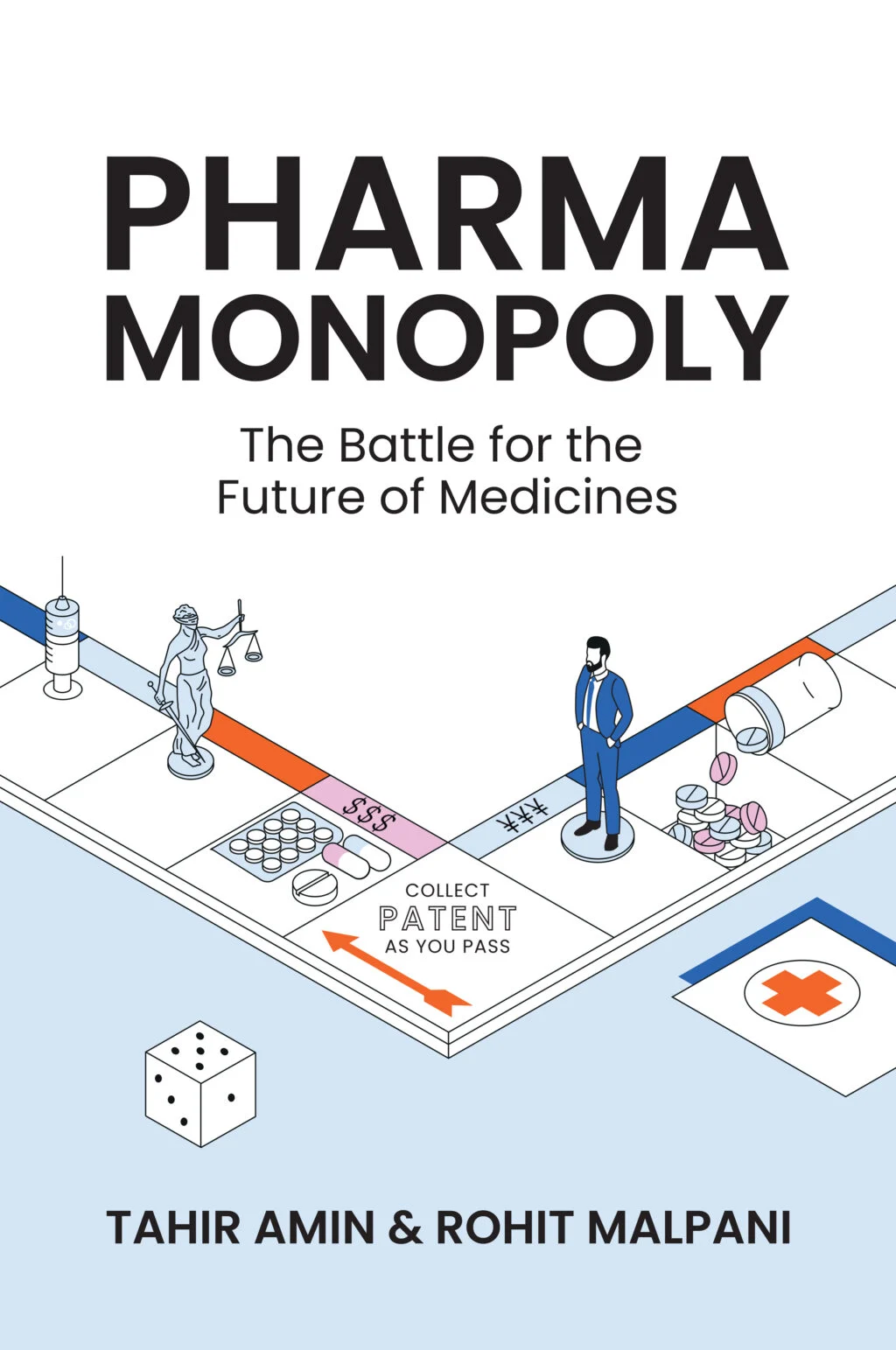
The confrontation between United States Senator John Cornyn and AbbVie CEO Richard Gonzalez during a 2019 Senate Finance Committee hearing serves as a watershed moment in the public’s understanding of modern pharmaceutical economics. During the exchange, Cornyn, a Republican from Texas, pressed Gonzalez on a figure that seemed to defy the spirit of the American patent system: 136. That was the number of patents AbbVie had secured for a single drug, the blockbuster anti-inflammatory medication Humira. When Cornyn asked how one molecule could justify over a hundred patents, Gonzalez offered a defense that has become the industry’s standard refrain: Humira was not just one drug, but effectively nine or ten different drugs because it treated various conditions. However, as Cornyn pointed out, the underlying molecule remained unchanged. This exchange laid bare the strategy of "patent thicketing," a practice that has allowed pharmaceutical giants to extend their market monopolies far beyond the original intent of the law, stifling competition and keeping drug prices at record highs.
Humira, used to treat rheumatoid arthritis, Crohn’s disease, and plaque psoriasis, among other conditions, is the most successful drug in history by lifetime revenue. Originally approved by the Food and Drug Administration (FDA) in 2002, its primary patent was slated to expire in 2016. In a traditional marketplace, this would have signaled the entry of lower-cost biosimilars—the biological equivalent of generics—leading to a sharp decline in prices. Instead, AbbVie’s "wall of patents" delayed the entry of competitors until 2023. By filing for patents on every conceivable aspect of the drug, from its chemical formulation and manufacturing processes to specific dosages and methods of administration for new diseases, AbbVie created a legal fortress. This strategy ensured that even if a competitor could bypass the original patent, they would still find themselves ensnared in a web of secondary and tertiary litigation.
The financial implications of this seven-year delay were staggering. Between 2016 and 2023, the period during which competition was effectively blocked, AbbVie generated approximately $114 billion in revenue from Humira alone. This figure is particularly notable because it exceeds the total revenue the drug earned in its first 13 years on the market. During this extended monopoly, AbbVie didn’t just maintain its price; it aggressively hiked it. Since its launch, the price of Humira has surged by 470%, reaching an annual cost of roughly $77,000 per patient. These price increases, often occurring multiple times a year, were made possible only because the "patent thicket" prevented the market from functioning competitively.
The mechanics behind this strategy were not accidental; they were the result of a meticulously crafted corporate blueprint. In 2021, a report from the House Committee on Oversight and Reform revealed that AbbVie had worked closely with the global consultancy firm McKinsey & Company to develop a "masterplan" for blocking competition. Internal documents and PowerPoint slides showed a concerted effort to "differentiate the product" through "product extensions." This involved identifying new conditions for the drug to treat, changing the formulation (such as removing citrate to reduce injection pain), and altering the delivery device. While these changes were marketed as patient-centric innovations, the primary goal was to generate new intellectual property that could be used in aggressive litigation to tie up rivals in court for years.
To foster this culture of perpetual patenting, AbbVie’s former parent company, Abbott Laboratories, incentivized its staff with a tiered reward system. Employees were offered high-end electronics—iPhones, iPads, and Apple computers—for generating patent ideas, submitting applications, and successfully securing awards from the U.S. Patent and Trademark Office (USPTO). This gamification of the patent system shifted the focus from genuine scientific discovery to the systematic harvesting of legal protections. In one internal "kick-off" effort, the company generated over 200 ideas for new types of patents in a single session.
Ironically, the core technology that makes Humira possible was not even an AbbVie invention. The development of fully human antibody proteins through phage display—the breakthrough that led to the drug—was the work of British scientist Sir Gregory Winter, who shared the 2018 Nobel Prize in Chemistry for this achievement. Winter and his colleagues at the Laboratory of Molecular Biology in Cambridge, along with the German company BASF, laid the scientific foundation. Abbott Laboratories acquired the technology when it purchased Knoll Pharmaceuticals, a division of BASF, in 2002. When Representative Rohit Khanna questioned Gonzalez in 2021 about who actually invented the drug, the CEO claimed ignorance, asserting that the company was focused on "new innovations." Khanna’s rebuttal was succinct: "What you are really doing is business."

The Humira case is not an isolated incident; it is emblematic of a systemic "lifecycle management" crisis across the pharmaceutical industry. Research by the Initiative for Medicines, Access & Knowledge (I-MAK) found that for the top ten best-selling drugs in the United States in 2021, there were an average of 74 patents granted per drug. On average, companies filed over 140 patent applications per product, with two-thirds of these filings occurring after the drug had already received FDA approval. This practice, often called "evergreening," allows companies to layer patents like shingles on a roof, ensuring that as one expires, several others remain in effect to block generic or biosimilar entry.
The industry argues that these follow-on patents are necessary to incentivize the research and development (R&D) required to improve existing treatments. However, many of these "innovations" offer no significant therapeutic improvement over the original version. Instead, they often rely on commonly known scientific techniques that should, under a strict interpretation of patent law, be considered "obvious" and therefore ineligible for protection. Yet, the USPTO, overwhelmed by the sheer volume of applications and operating under a fee-for-service model that incentivizes granting patents, often allows these secondary patents to pass through.
Furthermore, the current regulatory framework in the U.S. provides biologics with 12 years of market exclusivity through the FDA, regardless of patent status. This is intended to ensure a return on investment for complex medicines. However, when combined with patent thickets, this 12-year window frequently stretches toward 25 or 30 years. This prolonged period of monopoly control creates a "zero-sum game" where the financial gains of pharmaceutical shareholders come at the direct expense of the public health system, taxpayers, and patients.
The social cost of this model is increasingly unsustainable. When drug prices reach heights that force patients to choose between food and medicine, the patent system has drifted far from its constitutional mandate to "promote the Progress of Science and useful Arts." Instead, it has become a mechanism for financialized "innovation"—a term now used to describe the privatization of the knowledge commons rather than the creation of new knowledge. In this environment, "innovation" has become a rhetorical shield used to justify the extraction of maximum profit from existing products.
The "innovation trap" is further complicated by the fact that pharmaceutical companies often spend more on marketing, sales, and stock buybacks than they do on the R&D they claim to be protecting. The argument that high prices are a prerequisite for future cures is undermined by financial data showing that a significant portion of monopoly profits is returned to shareholders rather than reinvested in groundbreaking science.
Addressing this crisis requires a fundamental reassessment of how the patent system defines "novelty" and "non-obviousness." Policy-makers must consider whether the current standard for "incremental innovation" is too low, allowing companies to re-monopolize the same molecule repeatedly. Reforms could include limiting the number of patents that can be asserted against a single biosimilar, or strengthening the USPTO’s ability to reject secondary patents that do not offer a genuine therapeutic breakthrough.
Until such changes are made, the pharmaceutical industry will continue to operate under a business model where legal departments are as vital to the bottom line as research laboratories. The story of Humira serves as a cautionary tale of how a system designed to encourage ingenuity can be repurposed into an "ATM machine" for corporate interests. As drug prices continue to rise, the question for society is whether we are willing to continue paying a premium for "innovations" that serve the balance sheet more than the patient. The battle for the future of medicines is not just a legal or economic struggle; it is a moral one that asks whether the right to profit should ever supersede the right to health. Tahir Amin and Rohit Malpani’s investigation into this "pharma monopoly" suggests that without a major structural shift, the innovation trap will continue to tighten, leaving the public to pay the price for a system that values the length of a patent over the life of a patient.
