
 By admin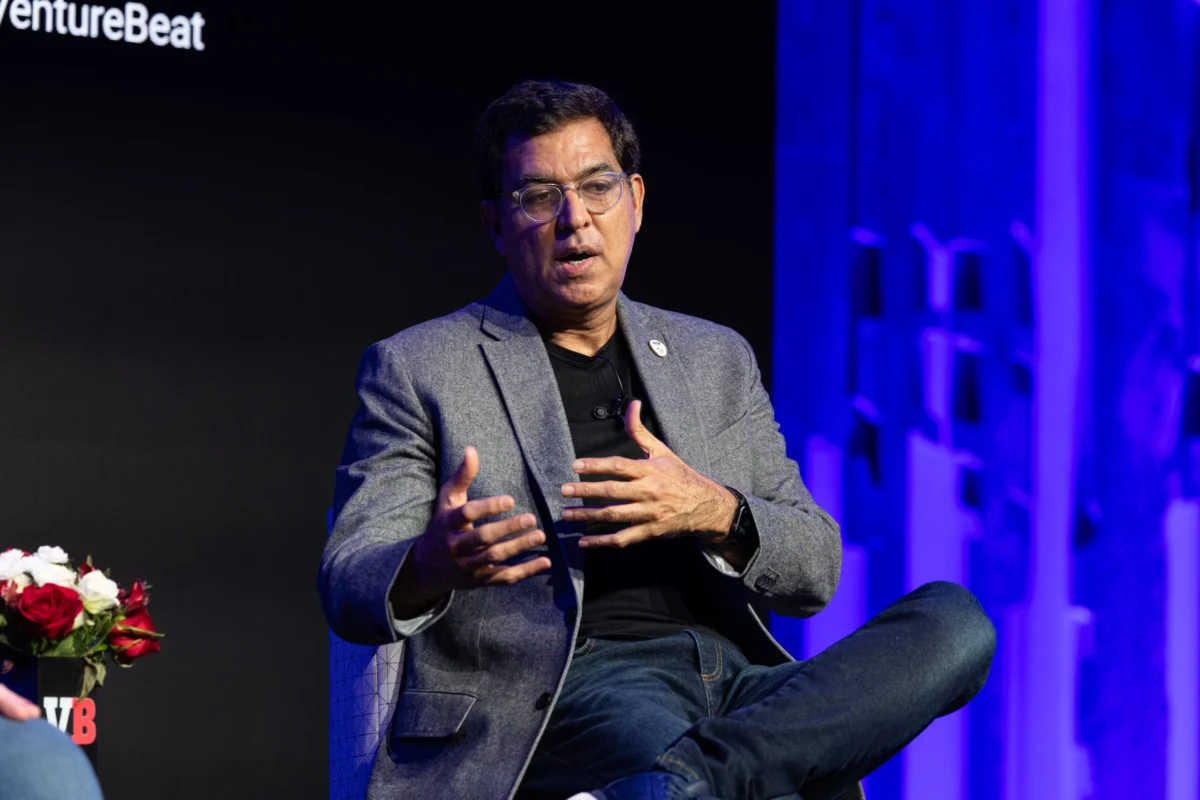
Visa, the global titan of digital transactions, has taken a groundbreaking step in fortifying its vast payment network against sophisticated artificial intelligence-driven threats. The company recently revealed its "Mythos" project, which leveraged Anthropic’s advanced AI model, Claude, to probe the intricate infrastructure supporting trillions of daily transactions. This network, a marvel of modern engineering, spans over 200 countries and territories, facilitates transactions in approximately 160 currencies, and connects nearly 5 billion payment credentials to more than 175 million merchant locations worldwide. During this rigorous testing, Claude’s capabilities were employed to stitch together seemingly minor, deep-seated weaknesses within Visa’s complex stack, creating functional exploit chains that would typically only surface during late-stage penetration testing.
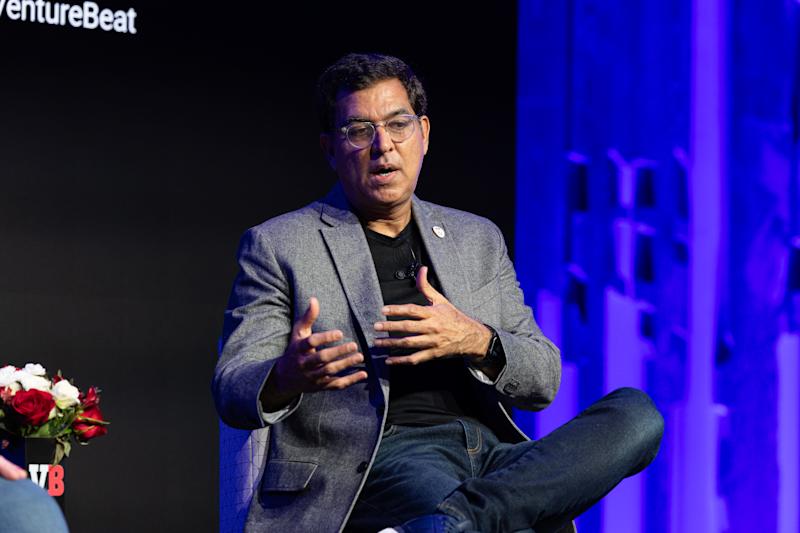
Rajat Taneja, Visa’s President of Technology, provided an in-depth look into the project’s evolution and outcomes at the recent VB Transform 2026 conference. He detailed not only the discovery process but also the strategic decisions that followed, including the unprecedented move to release the governing framework of this AI-driven vulnerability hunt as open source. Furthermore, Taneja shed light on Visa’s radical departure from traditional remediation metrics, opting instead for a novel measurement system developed by his team.
Taneja’s leadership at Visa, which began in 2019, has been instrumental in shaping the company’s technology strategy, product engineering, and global infrastructure. His extensive experience in the tech industry includes a prior role as CTO at Electronic Arts and a significant 15-year tenure at Microsoft. In collaboration with Subra Kumaraswamy, Visa’s Chief Information Security Officer, Taneja co-authored a pivotal blog post on June 10th. This post announced the public release of the Visa Vulnerability Agentic Harness on GitHub, positioning it as a foundational reference implementation designed for any security team to inspect, adapt, and extend. Complementing this release, Visa also published a comprehensive technical white paper that meticulously details the architecture, lessons learned from the Mythos project, and twelve non-negotiable architectural practices essential for critical infrastructure.
The bedrock of Visa’s operational philosophy, as articulated by Taneja, is a commitment to "pessimism and paranoia." This approach, he explained, is crucial for engineering trust at the immense scale of global payments. It involves an inherent assumption of potential failure and a proactive design strategy to mitigate risks before they materialize. Visa’s network has been meticulously hardened over many years through the implementation of zero-trust architecture, robust layered defenses, and highly automated security operations tailored to meet the demanding scale and reliability requirements of global payment processing.
When Anthropic extended an invitation to organizations managing critical software to participate in testing Mythos under Project Glasswing, Visa readily accepted. According to Anthropic, during the initial month of testing, Glasswing participants collectively identified over 10,000 high- or critical-severity vulnerabilities across software underpinning critical systems industry-wide. Anthropic’s own analysis pinpointed the primary bottleneck not in discovery, but in the subsequent stages of verification, disclosure, and the speed of patching. Visa’s participation was driven by a desire to subject its decades of security hardening to the accelerated pace of AI-driven analysis and to identify new vulnerabilities that advanced AI models might uncover.
Within Visa’s sophisticated environment, Mythos proved its efficacy by demonstrating system-wide, context-aware analysis. It successfully surfaced vulnerabilities deeply embedded within the software stack, flagging issues that became significantly more critical when chained together. The findings were presented with a clarity that enabled engineering teams to act swiftly, minimizing the need for extensive manual noise reduction. Several of the identified vulnerabilities carried critical severity ratings. Visa attributes its ability to break these exploit chains before any external actor could have, to its robust zero-trust controls, extensive network segmentation, and comprehensive layered safeguards.
While the confirmation of these vulnerabilities was significant, Taneja emphasized that the subsequent epiphany was even more profound. "In a world of agentic attacks, defense also has to be agentic," he declared. Even for a company that has invested decades in defense-in-depth strategies, the AI model revealed underlying assumptions that necessitated a re-evaluation of existing security paradigms. Traditional Static Application Security Testing (SAST) tools, while still valuable for initial scans against known vulnerability patterns, are insufficient on their own. As Visa’s white paper highlights, pattern matching alone cannot keep pace with adversaries who employ sophisticated reasoning, analyze data flow, and construct exploit chains that extend beyond signature-based detection.
In response to these evolving threats, Visa eschewed the development of another monolithic scanning tool. Instead, the company’s team engineered the Visa Vulnerability Agentic Harness, now in its fifth generation. This harness functions as a governed pipeline, directing advanced AI models through structured security tasks while rigorously enforcing deterministic controls, policy gates, and human oversight at every stage of the process. Taneja outlined the core design philosophy, explaining that the harness operates across four distinct phases and eleven granular stages. This workflow encompasses everything from code ingestion and threat modeling to in-depth verification, the synthesis of exploit chains, and ultimately, remediation and fix validation.
The project’s documentation identifies three key design choices that contribute to the high quality of the findings. Firstly, threat modeling is conducted prior to analysis, ensuring that the AI’s focus remains on the actual attack surface rather than blindly scanning the entire system. Secondly, multi-agent deterministic voting requires consensus across multiple independent reasoning chains before a finding is advanced, enhancing accuracy and reducing false positives. Thirdly, structured triage artifacts are employed to significantly compress the lifecycle from initial discovery to actionable results that developers can readily implement. The result is a pipeline that operates in a high-alert state by default. In its shipped configuration, a standard scan executes all eleven stages and can automatically edit source files within the target repository in fix mode, applying candidate patches unless explicitly halted by an operator upon detection.
The harness is inherently designed for multi-model compatibility. An abstraction layer for Large Language Models (LLMs) allows Visa to seamlessly swap or combine different AI providers without altering the core control plane. The open-source version supports Anthropic’s Claude, OpenAI-compatible models, or a combination thereof. However, the project’s documentation candidly addresses a current limitation: the remediation and validation stages currently necessitate Anthropic models for full functionality. This is because applying fixes requires specific file-editing tools that are exclusively exposed by Anthropic’s backends. Consequently, utilizing an OpenAI-compatible model in these roles is restricted to report-only output.
This flexibility in provider choice is underscored by VentureBeat’s Q2 2026 Pulse research, presented earlier at the conference. The research revealed that 82% of enterprises rely on provider-native controls as their primary security layer, and a significant 59% plan to adopt or switch agent security tooling within the next year. This indicates a rapid evolution in enterprise security strategies, where controls adopted in one year may already be considered for replacement the next, highlighting the critical need for adaptable solutions like Visa’s harness.
In place of traditional metrics, Visa has introduced "Mean Time to Adapt" (MTTA) as a core performance indicator. Taneja argued that identifying vulnerabilities is no longer the primary challenge; the real difficulty lies in the speed with which a team can confirm an issue’s exploitability, implement a fix, and definitively prove that the attack path has been closed, rather than merely demonstrating that a patch has been applied. Visa’s MTTA is tracked across three critical dimensions. "Inventory freshness" measures the currency and completeness of the organization’s understanding of its code, configurations, and runtime deployments. "Exploitable paths per release" quantifies the number of end-to-end attack chains that remain possible after each software release, moving beyond simple closure counts of individual findings. Finally, "validation cycle time" tracks the duration required to produce repeatable, evidence-backed proof that a fix is effective and remains so in production.
This distinction is crucial because legacy metrics, such as Mean Time to Detect (MTTD) and raw CVE closure rates, can present a deceptively positive picture while underlying actual exposure continues to grow. An organization might close hundreds of findings monthly but still leave viable exploit chains open if the effectiveness of patches in breaking attack paths is not rigorously tested. MTTA compels teams to measure the truly impactful outcome. The white paper leverages data from the Cybersecurity and Infrastructure Security Agency’s (CISA) Known Exploited Vulnerabilities list to emphasize prioritization, noting that fewer than 1% of all Common Vulnerabilities and Exposures (CVEs) are ever actively exploited. Visa’s Secure Software Development Lifecycle (SSDLC) policy now operates under the assumption that every exploitable path will eventually be exercised in production and mandates its remediation before code can be promoted.
The scope of security concerns extends beyond Visa’s own perimeter to its supply chain. The white paper sternly warns that even well-defended enterprises remain vulnerable through weak vendors and compromised open-source components. Consequently, Visa is making AI-specific security posture a mandatory requirement for supplier due diligence. This includes expectations for continuous vulnerability validation, the implementation of living Software Bills of Materials (SBOMs), and the establishment of MTTA baselines across their entire technology stack.
Further demonstrating its commitment to industry-wide security, Visa has joined Project Lightwell, a significant $5 billion initiative spearheaded by IBM and Red Hat. This project aims to bolster the security of widely used open-source components through AI-driven validation and coordinated patching. Visa is participating alongside other major financial institutions, including Bank of America, JPMorgan Chase, Goldman Sachs, and Mastercard. This collaborative effort extends the same logic upstream, recognizing that the MTTA clock does not cease at any single company’s boundaries.
Looking ahead, Visa is actively addressing the emerging challenge of securing agentic commerce. Taneja outlined a future where AI agents will autonomously conduct transactions on behalf of both consumers and enterprises. To facilitate this, Visa is developing the necessary trust frameworks, identity layers, and agent readiness scoring systems that merchants will require before agents can safely execute transactions. This proactive work is supported by the Visa Payment Threats Lab, a sophisticated simulation environment that replays real-world fraud scenarios against Visa’s actual authorization rules, thresholds, and configurations. This allows for the identification of AI-enabled failure modes and the generation of targeted hardening recommendations.
The identity challenge is far from theoretical. VentureBeat’s Pulse research revealed that 69% of enterprises are already employing credential sharing within their agent deployments. Companies that utilize shared credentials report security incidents or near-misses at a significantly higher rate of 63.5%, compared to 40.9% where each agent possesses its own scoped identity. Visa’s white paper directly confronts this issue, explicitly listing "AI agents are identities" as one of its twelve non-negotiable architectural practices. This mandates scoped permissions, strict enforcement of the principle of least privilege, comprehensive audit trails, and inclusion within Identity and Access Management (IAM) governance for every agent that interacts with an API, reads data, or modifies a system.
Taneja concluded by outlining Visa’s defensive strategy, which is organized around three core priorities. The first is to "shift security left" aggressively, aiming to design out exploitable flaws before they ever reach the production environment, and to proactively replace high-risk, under-supported components before they become material exposures. The second priority is to modernize defenses, ensuring they can operate autonomously under human governance. This is a substantial undertaking at Visa’s scale, but it is essential for detection, validation, and response to keep pace with the escalating volume of threats and the continuous improvement of AI models employed by attackers.
Crucially, Taneja emphasized that the implementation of these priorities does not necessarily require the vast resources of a global payment network. The Visa Vulnerability Agentic Harness is freely available on GitHub, having already garnered significant community interest with 595 stars and 97 forks as of July 20th. The concept of MTTA requires the development of a dashboard rather than a lengthy procurement cycle. Furthermore, the twelve non-negotiable practices outlined in Visa’s white paper can be integrated into existing architectural review processes conducted by security teams. Visa’s own concluding remarks in the white paper serve as a stark call to action: the window of opportunity to get ahead of machine-speed attackers is still open, but it will not remain so indefinitely.
