
 By admin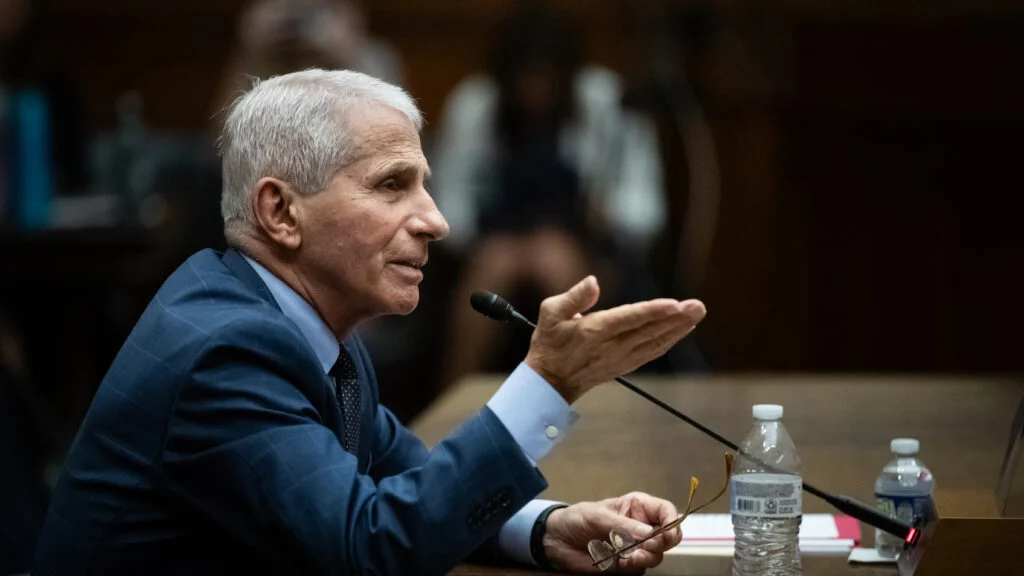
The halls of the Hart Senate Office Building are set to become the epicenter of a high-stakes political and legal confrontation this Wednesday as Dr. Anthony Fauci, the former director of the National Institute of Allergy and Infectious Diseases (NIAID), prepares to testify before the Senate Homeland Security and Governmental Affairs Committee. This appearance, compelled by a subpoena issued by Senator Rand Paul (R-Ky.), represents the latest and perhaps most aggressive chapter in a years-long crusade by Republican lawmakers to hold the retired public health official accountable for the U.S. government’s response to the COVID-19 pandemic. For Senator Paul, a physician himself and a long-time antagonist of Fauci, the hearing is not merely a fact-finding mission; it is a calculated effort to revisit what he describes as a systemic cover-up regarding the origins of the virus and the federal government’s role in funding controversial research abroad.
The relationship between Fauci and Paul has been defined by vitriol and public sparring since the early months of 2020. At the heart of their dispute is the "lab leak" theory—the hypothesis that SARS-CoV-2 escaped from the Wuhan Institute of Virology (WIV) in China. While Fauci has consistently maintained that the most likely origin was a natural zoonotic spillover from animals to humans, he has recently softened his public stance to acknowledge that a laboratory accident cannot be entirely ruled out. However, Republicans argue that Fauci and other high-ranking officials at the National Institutes of Health (NIH) actively suppressed the lab leak theory to protect themselves from scrutiny, given that the NIH had provided sub-grants to the WIV through the EcoHealth Alliance to study bat coronaviruses.
This hearing takes on a renewed sense of urgency and peril for Fauci due to the shifting political landscape in Washington. With the executive branch now under the control of a second Trump administration, the rhetoric surrounding pandemic accountability has shifted from legislative oversight to threats of criminal prosecution. Senator Paul has frequently taken to social media and news outlets to call for Fauci’s imprisonment, alleging that the scientist lied to Congress during previous testimonies regarding the nature of "gain-of-function" research—experiments that involve enhancing the potency or transmissibility of a pathogen to better understand future threats. Fauci has adamantly denied these claims, asserting that the research funded by the NIH did not meet the technical, regulatory definition of gain-of-function research at the time.
Adding a layer of legal complexity is the involvement of Robert F. Kennedy Jr., who now serves as the Secretary of Health and Human Services. Kennedy, a vocal critic of the "public health establishment," has joined Paul in suggesting that Fauci’s upcoming testimony could serve as a "perjury trap." Despite a preemptive pardon issued by former President Joe Biden intended to shield Fauci from prosecution for his past actions during the pandemic, that protection does not extend to new testimony. As Kennedy noted in a recent televised interview, any statement made under oath on Wednesday that is later proven to be false could result in fresh charges of perjury. This reality is expected to make Fauci’s responses exceptionally cautious, as he navigates a minefield of questions designed to elicit contradictions with his previous statements or newly discovered documents.
One of the primary catalysts for this week’s hearing is the recent release of a massive collection of Fauci’s personal diary entries from the pandemic era. These documents, obtained by the committee, provide a rare, unfiltered glimpse into the internal deliberations of the man who became the face of the American pandemic response. While the diaries document Fauci’s personal struggles with his sudden celebrity, the weight of the mounting death toll, and his frustrations with the first Trump administration’s messaging, Republicans are scouring the entries for evidence of "consciousness of guilt." They are looking for any indication that Fauci harbored private doubts about the virus’s origins that he did not share with the public, or that he orchestrated efforts to silence dissenting scientists who favored the lab leak hypothesis.
The legal pressure on Fauci’s inner circle has already yielded significant developments. David Morens, a former top adviser to Fauci at the NIAID, was recently indicted on charges related to concealing and falsifying information. Prosecutors allege that Morens used personal email accounts to circumvent the Freedom of Information Act (FOIA) and deleted correspondence related to the pandemic’s origins. While Fauci has denied any knowledge of Morens’ alleged misconduct, the indictment has provided Republicans with a narrative of a "shadow government" operating within the NIH to evade public transparency. Senator Paul is expected to use the hearing to probe how much Fauci knew about these back-channel communications and whether they were part of a broader culture of secrecy.
Beyond the legal and scientific debates, the hearing is inextricably linked to the current political climate. The Republican party is currently facing a difficult political environment ahead of the upcoming midterm elections. President Trump’s approval ratings have seen a decline amid a protracted and costly conflict with Iran, which has contributed to a sharp spike in domestic oil prices and inflation. In this context, some political analysts view the focus on Fauci as a strategic diversion—a way to energize the Republican base by targeting a figure who remains a lightning rod for conservative frustration over lockdowns, mask mandates, and vaccine requirements. By framing the pandemic response as a story of government overreach and deception, the GOP hopes to shift the national conversation away from current economic and foreign policy challenges.
However, it remains unclear if the general public shares the committee’s appetite for a retrospective trial of Anthony Fauci. For many Americans, the pandemic is a period of national trauma they are eager to move past. With the 85-year-old Fauci now years into retirement, the focus on his past decisions may feel disconnected from the immediate concerns of voters, such as the cost of living, healthcare accessibility, and the quality of education. Democrats on the committee are likely to emphasize this point, characterizing the hearing as a "political witch hunt" and a waste of taxpayer resources. They are expected to use their time to defend the integrity of the scientific process and to highlight the lives saved by the vaccines and public health measures that Fauci championed.
The hearing will also serve as a barometer for the future of public health policy in the United States. The aggressive questioning of a career scientist like Fauci signals a growing skepticism toward expert-led governance. If the hearing succeeds in further discrediting the federal health bureaucracy, it could have long-lasting implications for how the country responds to future biological threats. Public health experts warn that the politicization of science may discourage talented individuals from entering government service and could undermine public trust in essential health guidance during the next crisis.
As the hearing commences, observers will be watching closely for Fauci’s demeanor. Known for his Brooklyn-born toughness and occasionally sharp tongue, Fauci has previously lost his patience with Senator Paul, famously telling him, "You do not know what you are talking about." In this high-stakes environment, however, any flash of temper could be interpreted as defensiveness or used by his detractors to paint him as arrogant and unaccountable. The challenge for Fauci will be to remain clinical and precise, sticking to the data and the definitions that have guided his five-decade career in public service.
Ultimately, Wednesday’s hearing is unlikely to provide a "smoking gun" that definitively settles the question of COVID-19’s origins. Scientific consensus remains elusive, and the Chinese government’s lack of transparency continues to hinder a full investigation. Instead, the proceedings will likely reinforce the deep partisan divisions that have come to define the American memory of the pandemic. For the Republicans, it is a quest for a long-delayed "reckoning." For the Democrats and Fauci’s defenders, it is a defense of science against the encroachment of partisan politics. Regardless of the outcome, the spectacle of a nation’s former top doctor facing the threat of imprisonment underscores the profound and lasting scars that the COVID-19 era has left on the American body politic.
