
 By Isnaini Azizah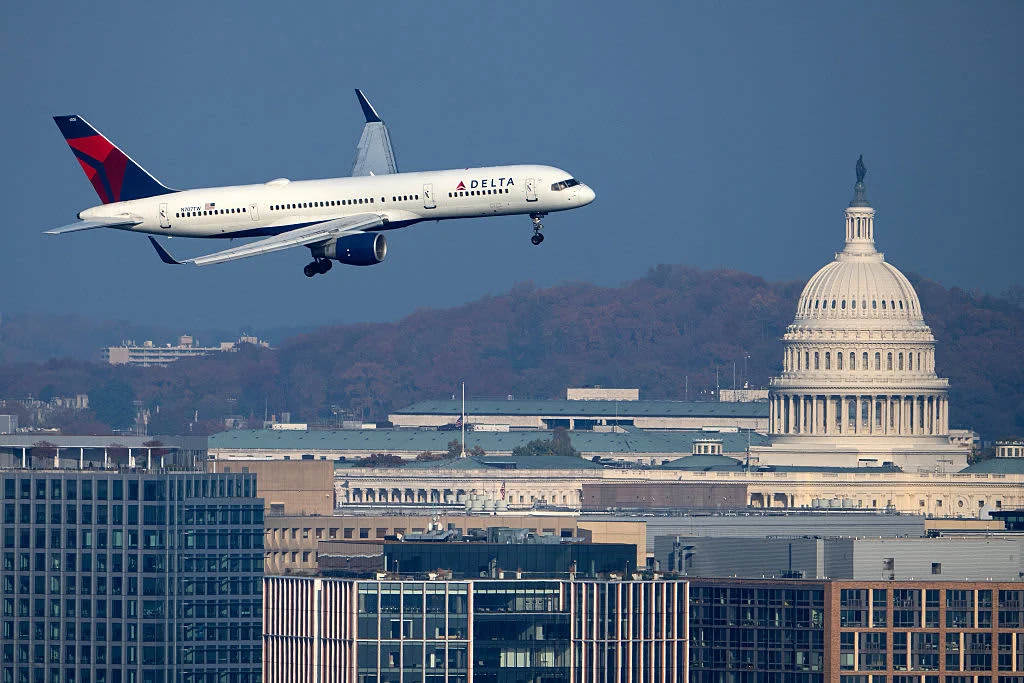
In a move that signals a significant escalation in the corporate pushback against federal gridlock, Delta Air Lines has officially suspended its elite airport escort and "Red Coat" services for members of the United States Congress and their staffers. The decision, announced on Tuesday, serves as a direct response to the ongoing partial government shutdown affecting the Department of Homeland Security (DHS), which has left thousands of essential aviation security workers performing their duties without pay. By stripping lawmakers of the specialized "high-touch" perks they have long enjoyed at major transit hubs, Delta is effectively forcing elected officials to experience the same logistical frustrations, long security queues, and staffing shortages that their constituents currently face across the nation’s aviation network.
The suspension of these "sky perks" marks a rare instance of a major American corporation taking punitive administrative action against federal legislators to protest policy failures. For years, the "Red Coat" service has been the gold standard of Delta’s customer service—elite agents dressed in distinctive scarlet uniforms who provide personalized assistance, gate-to-gate escorts, and rapid problem-solving for VIP passengers. For members of Congress, these services often meant expedited transit through crowded terminals and a buffer against the daily friction of commercial air travel. As of this week, however, Delta confirmed that these specialty services are "temporarily suspended" for lawmakers, who will now be treated like any other passenger, subject to the limitations of their individual SkyMiles frequent-flier status.
This tactical maneuver by the Atlanta-based carrier comes just seven days after Delta CEO Ed Bastian delivered a blistering critique of Congressional inaction during a televised interview on CNBC’s "Squawk Box." Bastian, who has emerged as one of the most vocal critics of the recurring funding impasses in Washington, characterized the failure to pay Transportation Security Administration (TSA) agents as "inexcusable" and "ridiculous." He argued that frontline security personnel are being used as "political chips" in a broader ideological battle over the DHS budget, a situation he described as an affront to the workers who maintain the safety and integrity of the American airspace.
"Next to safety, Delta’s No. 1 priority is taking care of our people and customers, which has become increasingly difficult in the current environment," the airline stated in its official communication. The "current environment" refers to the compounding pressure on airport operations as the DHS shutdown enters a critical phase. Because the TSA falls under the jurisdiction of the Department of Homeland Security, its officers are classified as essential personnel. This classification requires them to report for duty regardless of whether the federal government has authorized their salaries. However, as the shutdown persists, the financial strain on these low-to-mid-wage workers has led to a predictable and sharp increase in unscheduled absences, commonly referred to as "sick-outs."
At Hartsfield-Jackson Atlanta International Airport, Delta’s primary global hub and one of the world’s busiest airports, the impact has been palpable. Security lines that typically move with clockwork precision have swelled, with wait times occasionally stretching into hours. These delays are not merely a matter of convenience; they represent a systemic degradation of the travel experience that threatens the economic vitality of the airline industry. By removing the concierge "buffer" for politicians, Delta is ensuring that the people responsible for the funding deadlock are no longer insulated from its consequences.
The airline’s "Capital Desk," a dedicated reservation and support line for members of Congress and their administrative teams, remains operational. This ensures that the basic ability to book and manage travel is not compromised, which might otherwise invite legal or regulatory retaliation. However, the physical assistance once provided on the ground is gone. The symbolic weight of this decision cannot be overstated. In the hierarchy of Washington power dynamics, the ability to navigate an airport without the standard indignities of modern travel is a cherished privilege. Delta’s decision to revoke it is a calculated attempt to use the "customer experience" as a tool for political leverage.
The broader context of this shutdown reveals a deepening crisis within the Department of Homeland Security. This is not the first time the agency has been caught in a funding crossfire. Historical data from the 35-day shutdown in late 2018 and early 2019 serves as a grim precedent. During that period, the "Blue Flu"—the spike in TSA agent absences—eventually reached a breaking point that forced the closure of security lanes at major airports like Miami and LaGuardia. It was only when the aviation system began to show signs of a total localized collapse that the political will to reopen the government materialized. Delta’s leadership appears to be acting on the lessons of the past, attempting to accelerate the resolution of the current crisis by making the discomfort of the shutdown immediate for those in power.
Industry analysts suggest that Bastian’s "outrage" reflects a wider sentiment among airline executives who are weary of the instability caused by "budgeting by crisis." The aviation sector is highly sensitive to government efficiency; from air traffic control to customs and border protection, the industry relies on a fully funded and motivated federal workforce. When that workforce is forced to rely on food banks and payday loans to survive while still being required to secure the nation’s skies, the risk of a catastrophic security lapse or a total operational shutdown increases.
While Delta has taken this aggressive stance, other major carriers have remained more cautious. United Airlines, when pressed for comment, stated that it had "no changes to announce today" regarding its own VIP services for lawmakers. American Airlines has yet to issue a formal response. This divergence in strategy highlights Delta’s willingness to stick its neck out as an industry leader, potentially at the risk of drawing the ire of influential committee chairs who oversee aviation regulation.
The financial data surrounding these shutdowns underscores why Bastian is so frustrated. During previous funding lapses, the travel industry lost billions of dollars in economic activity. Uncertainty leads to canceled business trips, deferred vacations, and a general decline in consumer confidence. For an airline like Delta, which has invested billions in upgrading terminal infrastructure and enhancing the premium passenger experience, the sight of long security lines and demoralized federal staff is a direct threat to their brand promise.
Furthermore, public opinion appears to be firmly on the side of the workers. Bastian noted in his interview that over 90% of the American public supports paying essential security personnel. This high level of public consensus provides Delta with a degree of "moral cover" to take such a public swipe at Congress. By framing the suspension of perks as a resource management issue—stating that the shutdown has made it "increasingly difficult" to provide specialty services—Delta is grounding its political statement in operational reality.
The role of the TSA in this drama is particularly poignant. TSA officers are among the lowest-paid federal law enforcement workers, often starting at salaries that make living in high-cost-of-living hub cities like New York, Los Angeles, or Seattle a significant challenge. Missing two full paychecks, as many are set to do this week, creates an immediate personal financial crisis. When these officers stay home, it isn’t always an act of organized protest; often, it is a practical necessity—they cannot afford the gas to get to work or the childcare required to cover their shifts.
As the standoff in Washington continues, the pressure on the Senate and the White House to reach a funding deal is mounting. Delta’s move has been widely reported by major outlets, including the Atlanta Journal-Constitution and CNBC, ensuring that the message is heard clearly in the halls of the Capitol. The narrative is no longer just about a "partial government shutdown"; it is about the tangible breakdown of services and the withdrawal of cooperation from the private sector.
In the long term, this episode may change the relationship between the airline industry and the federal government. For decades, airlines and lawmakers have maintained a symbiotic relationship, with carriers providing high-level service in exchange for favorable regulatory environments. However, as political polarization makes basic governance more erratic, CEOs like Ed Bastian are signaling that the old rules of engagement are changing. If the government cannot fulfill its most basic obligation—paying the people who keep the country safe—then the private sector may no longer feel obligated to provide the red-carpet treatment to the architects of that failure.
For now, the members of the 119th Congress will have to navigate the crowded concourses of Hartsfield-Jackson and Reagan National Airport without their scarlet-clad guides. They will stand in the same lines as the families going on vacation and the business travelers heading to meetings. They will see the tired faces of the TSA agents working for free, and they will experience the frustration of a system pushed to its limit. Delta Air Lines has made it clear: until the people who run the airports are treated with respect and paid their due, the people who run the country will have to wait their turn.
