
 By Isnaini Azizah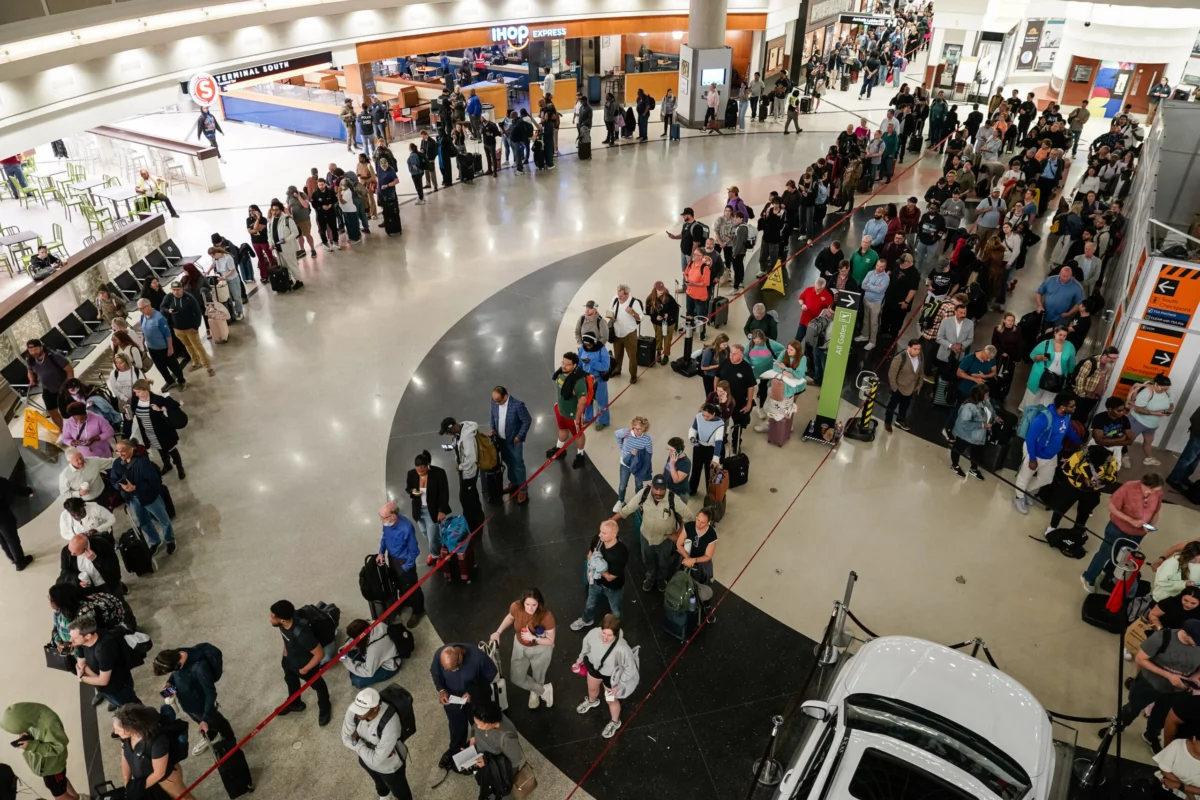
President Donald Trump confirmed on Wednesday that his administration is actively considering the deployment of National Guard troops to major U.S. airports, a move that would represent a significant escalation in the federal government’s response to a crippling partial shutdown of the Department of Homeland Security (DHS). This announcement comes just forty-eight hours after the White House authorized the deployment of Immigration and Customs Enforcement (ICE) agents to several of the nation’s busiest transit hubs to mitigate the chaos caused by hours-long security delays and a rapidly thinning workforce of federal screeners.
The current crisis, which has entered its second month since the shutdown began on February 14, has pushed the nation’s aviation infrastructure to a breaking point. In a series of statements posted to his Truth Social platform, President Trump laid the blame for the impasse squarely at the feet of congressional Democrats, while praising the ICE personnel who have already been reassigned to airport duty. "Thank you to our great ICE Patriots for helping. It makes a big difference," the President wrote. "I may call up the National Guard for more help."
The logistical strain on the Transportation Security Administration (TSA) has reached levels unseen in recent history. According to the latest data released by the DHS, more than 11% of the TSA’s total workforce called out of work on Wednesday alone. Even more concerning for long-term aviation security is the revelation that over 450 TSA officers have officially resigned since the shutdown commenced. Unlike the ICE agents currently assisting them, TSA officers are classified as "essential" employees who are required to work without a paycheck during a funding lapse. While they are promised back pay once the shutdown ends, the immediate financial pressure on low-to-mid-level federal employees has led to a mass exodus and a surge in "sick-outs" as officers struggle to cover childcare, transportation, and basic living expenses.
The impact of these staffing shortages is most visible at major international gateways. At Hartsfield-Jackson Atlanta International Airport, the world’s busiest airport, travelers on Monday faced security lines that snaked through baggage claim and out onto the curbside, with wait times exceeding four hours during peak periods. Similar scenes have been reported at Houston’s George Bush Intercontinental Airport and New York’s John F. Kennedy International Airport. The presence of ICE agents, while intended to provide a "show of force" and assist with perimeter security and crowd management, has done little to speed up the technical process of baggage and passenger screening, a task for which they are not specifically trained or certified.
The genesis of this political and logistical nightmare is rooted in a tragic and highly controversial incident in Minneapolis, where two U.S. citizens were shot and killed by ICE officers during a botched enforcement operation. The incident sparked national outrage and became the catalyst for a hardline stance by Democrats in Congress. Led by a coalition of progressive and moderate lawmakers, the Democratic caucus has refused to pass a clean funding bill for the DHS unless it includes sweeping reforms to federal immigration enforcement protocols. These demands include heightened oversight, stricter rules of engagement for ICE officers, and the redirection of some enforcement funding toward humanitarian efforts at the border.
The Republican-led executive branch, however, has characterized these demands as an attempt to "defund" law enforcement and compromise national security. The resulting stalemate has left the DHS without a budget for over five weeks, forcing tens of thousands of employees to work for "IOUs." Paradoxically, ICE agents continue to receive their paychecks due to different funding structures or specific emergency designations within their agency’s operational budget, a disparity that has fueled resentment among the unpaid TSA officers working alongside them.
The aviation industry, which serves as a vital artery for the U.S. economy, is growing increasingly desperate as the shutdown threatens to derail the spring travel season. Airline executives, who initially attempted to remain neutral, have shifted toward a more confrontational stance against Washington’s inaction. Delta Air Lines, headquartered in the heavily affected Atlanta hub, took the unprecedented step on Tuesday of suspending its "airport escorts" and other concierge-style services for members of Congress and their staff. In a pointed memo, the airline suggested that lawmakers should experience the same travel frustrations as the constituents they represent.

Delta’s move is a reflection of a broader frustration shared by CEOs across the industry. Airlines for America (A4A), the trade group representing major U.S. carriers, has warned that the shutdown is not just a matter of convenience, but a looming threat to the safety and efficiency of the National Airspace System. While air traffic controllers remain on the job, they too are working without pay, and the lack of funding for training new recruits or maintaining aging equipment is creating a "long-term safety debt" that experts say could take years to repay.
The potential deployment of the National Guard introduces a host of new legal and logistical questions. Under Title 32 of the U.S. Code, National Guard members usually operate under the control of their respective state governors but are funded by the federal government. For the President to "call up" the Guard for airport duty nationwide, he would likely need to utilize Title 10, federalizing the troops and placing them under the direct command of the Department of Defense. This move would likely face legal challenges, as the Posse Comitatus Act generally prohibits federal military personnel from performing domestic law enforcement functions. However, the administration may argue that airport security and crowd control fall under a "national emergency" exception or a support role for civil authorities.
Logistically, the Guard could provide much-needed manpower for tasks such as guiding passengers, managing queues, and monitoring exit lanes, which would free up the remaining certified TSA officers to focus exclusively on the X-ray machines and metal detectors. Yet, critics argue that the sight of camouflaged soldiers in civilian airports could further unnerve the traveling public and does not address the underlying issue of why professional, trained screeners are being forced to leave their posts.
The economic ripple effects of the airport delays are already being felt. Business travel, which accounts for a disproportionate share of airline revenue, is seeing a downturn as corporate travel departments advise employees to avoid major hubs or switch to rail and road travel where possible. Small businesses that rely on the "just-in-time" delivery of air cargo are also reporting delays, as the shortage of customs and border protection officers—also part of the DHS—slows the processing of international freight.
In Washington, the rhetoric remains heated with no clear path to a resolution. Democratic leadership has signaled that they are willing to stay the course, citing the Minneapolis tragedy as a moral imperative for reform. "We cannot continue to fund an agency that operates without accountability," said one high-ranking House Democrat. "The safety of our airports is paramount, but so is the safety of our citizens from the very agencies meant to protect them."
Conversely, the White House has shown no sign of backing down on its enforcement priorities. By floating the idea of the National Guard, President Trump is signaling that he is prepared to use every available executive tool to bypass the traditional appropriations process and maintain a semblance of order at the nation’s borders and gateways. This strategy, however, is a stopgap measure at best. The National Guard is not a permanent solution for the specialized needs of aviation security, and the mounting vacancies at the TSA cannot be filled by temporary deployments of soldiers or ICE agents.
As the shutdown drags on, the morale of the federal workforce continues to plummet. Support groups and food banks have been established at several major airports to help TSA officers who can no longer afford groceries or gas. The spectacle of those tasked with the nation’s security standing in line for donated bread while being ordered to work for free has become a potent symbol of the current political dysfunction.
The coming days will be critical. If the President moves forward with a formal order to deploy the National Guard, it will likely trigger a new round of litigation and further entrench the positions of both parties. Meanwhile, the American traveler is left caught in the middle, facing a reality where the simple act of catching a flight has become a testament to patience and a firsthand look at a government in crisis. The long lines in Atlanta and New York are not just a logistical failure; they are the visible symptoms of a deep-seated institutional paralysis that shows no signs of breaking.
