
 By admin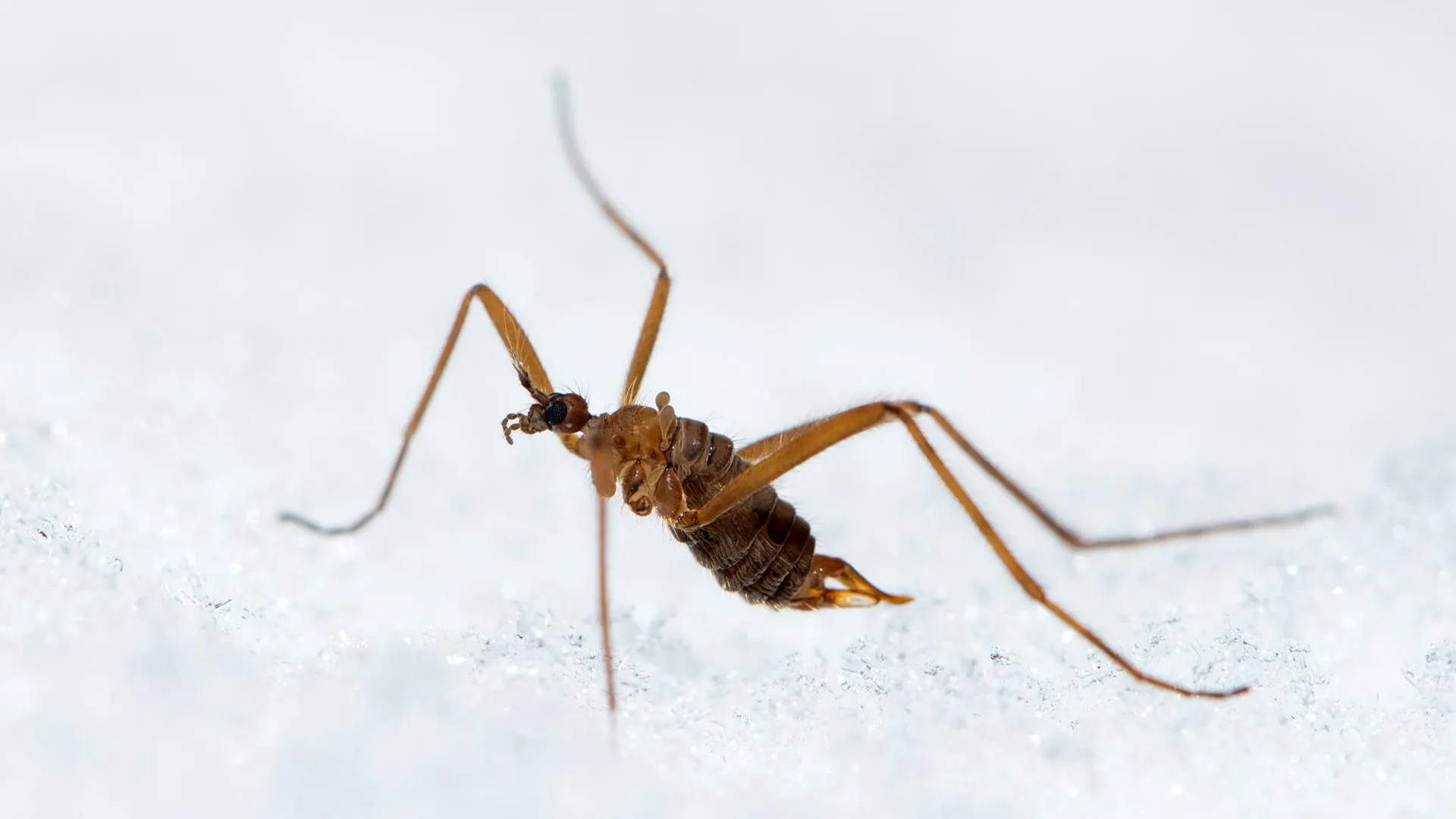
In a groundbreaking new study, scientists at Northwestern University have peeled back the layers of this extraordinary adaptation, revealing a surprising and sophisticated blend of survival mechanisms. They discovered that snow flies, belonging to the genus Chionea (often referred to as winter gnats), possess the astonishing ability to generate their own body heat, much like mammals, and simultaneously produce specialized antifreeze proteins akin to those found in Arctic fish. This dual-pronged approach positions them as biological outliers, rewriting our understanding of what is possible for cold-blooded organisms.
The research, published on March 24 in the prestigious journal Current Biology (and later featured on the cover of its April 6 volume), highlights how these small insects remain robustly active at temperatures plummeting as low as -6 degrees Celsius (or 21.2 degrees Fahrenheit). This is a stark contrast to the vast majority of insects, which enter a dormant state or perish once temperatures dip below freezing. The findings offer profound new insights into the intricate ways life adapts to extreme environments, carrying significant implications that could extend far beyond entomology. Researchers believe these discoveries may pave the way for novel strategies to protect cells, tissues, and even industrial materials from the destructive forces of cold.
"Insects are fundamentally cold-blooded, meaning their body temperature is largely dictated by their surroundings," explained Marco Gallio, a leading neurobiologist at Northwestern University who spearheaded the study. Gallio, who holds the Soretta and Henry Shapiro Research Professorship in Molecular Biology and is a professor of neurobiology at Northwestern’s Weinberg College of Arts and Sciences, emphasizes the "mind-boggling ability" of insects to adapt. "When temperatures drop, a common and effective strategy for most insects is to seek shelter, enter a state of dormancy known as diapause, and simply wait for conditions to improve. But snow flies defy this norm. Instead of slowing down, they actively prefer freezing cold, snowy conditions and paradoxically retreat when the snow melts and it gets warm. They truly push the limits of what we thought was biologically possible." Gallio added, "What we’ve now found is that snow flies aren’t merely tolerating the cold; they’ve evolved multiple, sophisticated ways to actively counteract it."
The interdisciplinary research effort involved a collaborative team of experts. Gallio co-led the study with Marcus Stensmyr, a distinguished biology professor at Lund University in Sweden, bringing together expertise from across continents. Northwestern’s contributions were also significant, including William Kath from the McCormick School of Engineering and Alessia Para from Weinberg College. Both Gallio and Kath are affiliated with the NSF-Simons National Institute for Theory and Mathematics in Biology (NITMB), underscoring the computational and theoretical rigor applied to this biological puzzle. The broad support for this ambitious project came from various esteemed institutions, including the National Institutes of Health, the Pew Scholars Program, the McKnight Foundation, the Paula M. Trienens Institute for Sustainability and Energy, the Crafoord Foundation, the National Science Foundation, the Simons Foundation, and NITMB. External collaborators included the DNAzoo project, as well as Olga Dudchenko and Erez Lieberman Aiden, faculty members at Rice University and the Baylor College of Medicine, who contributed specialized expertise in genome assembly.
Unusual Genes and the Power of Antifreeze Proteins
To unravel the mystery of how snow flies conquer such harsh conditions, the research team embarked on an ambitious genetic quest. Gallio and his colleagues were the first to successfully sequence the complete genome of the snow fly species Chionea alexandriana. This monumental task provided an unprecedented blueprint of the insect’s genetic instruction set. To understand the specific adaptations for cold, they meticulously compared this genome with those of related insect species that are not adapted to freezing environments. Concurrently, they performed RNA sequencing, a technique used to identify which genes are actively being expressed and translated into proteins, particularly those crucial for survival in frigid temperatures. These intricate genomic and transcriptomic comparisons were meticulously carried out by Richard Suhendra, a Ph.D. student working under the guidance of William Kath.
The initial results of this genetic analysis were, to say the least, unexpected. "We encountered a situation where many of the genes we identified simply couldn’t be matched within any existing genetic database," Gallio recounted, expressing his initial surprise. "At one point, I genuinely wondered if we had somehow sequenced an alien species. It’s incredibly rare for an active gene, one that clearly codes for a protein, to lack any comparable match in the vast repositories of known genetic information."
Further intensive investigation, however, provided the remarkable explanation: these previously unidentified genes were responsible for producing a unique suite of antifreeze proteins (AFPs). These AFPs function in a manner strikingly similar to those found in various Arctic fish species, such as the winter flounder or cod. AFPs work by binding to nascent ice crystals within the insect’s body fluids, effectively preventing them from growing larger and forming destructive ice shards. This crucial mechanism protects cells and tissues from the mechanical damage and osmotic stress that typically accompanies freezing, allowing the snow fly to tolerate internal ice formation without succumbing to it.
Gallio highlighted the profound evolutionary implications of this discovery: "Remarkably, some of the antifreeze proteins we identified in snow flies are actually structurally related to those found in Arctic fish. This isn’t a direct lineage but a powerful example of convergent evolution – where distantly related species independently evolve similar solutions to common environmental challenges. It suggests that natural selection, under the intense pressure of sub-zero temperatures, has arrived at the same elegant molecular solution for survival across vastly different branches of the tree of life."
Endogenous Heat Production: A Mammalian-like Strategy
Beyond simply resisting freezing, the snow fly’s genetic profile hinted at another astonishing ability. The research team identified a distinct set of genes linked to energy metabolism and specific cellular processes involved in the generation of heat. This strongly suggested that snow flies do not merely withstand the cold passively; they actively produce their own warmth from within.
"We discovered genes that, in larger animals, are intimately associated with mitochondrial thermogenesis, particularly within brown adipose tissue," Gallio explained. Brown adipose tissue (BAT), often referred to as brown fat, is a specialized type of fat tissue found in many mammals, including human infants, hibernating animals like marmots, and cold-adapted creatures such as polar bears. Its primary function is not energy storage but heat production. Unlike white fat, brown fat contains a high density of mitochondria, which, through a process called uncoupled respiration, can dissipate energy directly as heat rather than storing it as ATP (adenosine triphosphate), the cell’s energy currency. When these animals enter hibernation or are exposed to cold, they burn this stored fat to generate warmth, bypassing the typical energy production pathway.
"So, in a truly unique fashion," Gallio summarized, "snow flies appear to employ a combination of the survival strategies used by both polar bears, with their capacity for internal heat generation, and Arctic fish, with their sophisticated antifreeze mechanisms. It’s an unprecedented biological toolkit."
Empirical Evidence: Blocking Ice and Creating Warmth
To empirically validate the function of the identified antifreeze proteins, Matthew Capek, a Ph.D. student in the Gallio Lab, conducted a clever experiment. He genetically modified common fruit flies (Drosophila melanogaster), a widely used model organism in biological research, to express one of the antifreeze proteins isolated from the snow fly. These modified fruit flies were then subjected to carefully controlled freezing temperatures in a laboratory freezer, alongside control groups of unmodified fruit flies. The results were conclusive: the fruit flies producing the snow fly AFP survived at significantly higher rates than their normal counterparts. This experiment provided direct functional evidence that the proteins indeed act as molecular barriers, effectively halting the spread of ice crystals within cells and conferring enhanced cryoprotection.
The team also sought to confirm the hypothesis of endogenous heat generation. In another meticulously designed experiment, researchers measured the internal body temperature of living snow flies while gradually lowering the ambient temperature below freezing. The measurements revealed a consistent and remarkable phenomenon: snow flies maintained an internal temperature that was a couple of degrees Celsius warmer than would be expected based on the surrounding environment and compared to other insects. This slight but crucial temperature differential indicated active thermogenesis.
Marcus Stensmyr elaborated on the mechanism: "While some insects, such as large bees and moths, can generate heat by shivering their flight muscles, we found no evidence of this type of muscular thermogenesis in snow flies. Instead, our evidence strongly suggests that snow flies produce heat at the cellular level, a process more akin to how mammals generate non-shivering thermogenesis through brown fat, and even how some plants, like skunk cabbage, generate heat to melt snow around them." Even a seemingly small increase in internal temperature, a mere couple of degrees, can be profoundly critical for survival in such extreme conditions. This endogenous warmth can provide enough time for the snow flies to maintain essential metabolic functions, preserve membrane fluidity, and crucially, find immediate shelter if temperatures suddenly plummet further, thereby avoiding lethal freezing.
Reduced Sensitivity to Cold Pain: A Unique Sensory Adaptation
Beyond their physiological adaptations, snow flies also exhibit a remarkable sensory modification: they appear to be significantly less sensitive to the painful and damaging effects of extreme cold. Most organisms, including humans, experience a sharp, stinging sensation upon contact with intensely cold objects like ice or frozen metal. This sensation, known as cold nociception, is a vital protective mechanism, triggered by the activation of specific reactive molecules within cells that signal the body to avoid potential harm and tissue damage. In snow flies, this fundamental biological response is dramatically dampened.
Gallio and his team discovered that a key sensory protein, an irritant receptor channel typically involved in detecting a wide range of harmful stimuli, is substantially less responsive in snow flies compared to other insect species. Specifically, this crucial receptor was found to be 30 times less sensitive in snow flies than in common mosquitoes and fruit flies. As a direct consequence of this reduced sensitivity, these specialized insects can tolerate much higher levels of cold-related physiological stress and continue to function effectively in conditions that would overwhelm and incapacitate most other species. This adaptation allows them to remain active and perform vital behaviors like foraging and mating without being constantly bombarded by incapacitating pain signals, which would otherwise divert energy and attention from survival tasks.
Future Research on Extreme Cold Survival
The groundbreaking discoveries about Chionea alexandriana have opened numerous avenues for future scientific inquiry. The researchers are now poised to delve deeper into the molecular intricacies of how snow flies generate heat at the cellular level, aiming to pinpoint the exact proteins and metabolic pathways involved in this unique form of thermogenesis. Simultaneously, they plan to identify and characterize the full spectrum of antifreeze proteins produced by these insects, investigating their precise structures and mechanisms of action. This ongoing work holds the promise of revealing whether other organisms inhabiting similarly extreme cold environments, from polar arthropods to deep-sea invertebrates, employ analogous or entirely novel strategies to defy the cold.
The study, "Coordinated molecular and physiological adaptations enable activity at subfreezing temperature in the snow fly Chionea alexandriana," not only stands as a testament to the marvels of natural selection but also serves as a potent reminder of the vast, unexplored biological diversity that continues to surprise and inspire scientists. The snow fly, once an unassuming denizen of winter landscapes, now emerges as a biological marvel, a living testament to life’s extraordinary capacity to adapt and thrive against all odds. Its unique combination of antifreeze production, internal heat generation, and reduced cold sensitivity makes it a truly exceptional model for understanding the fundamental principles of cryobiology and adaptation to extreme conditions, with potential applications that could benefit human health and technology in profound ways.
