
 By admin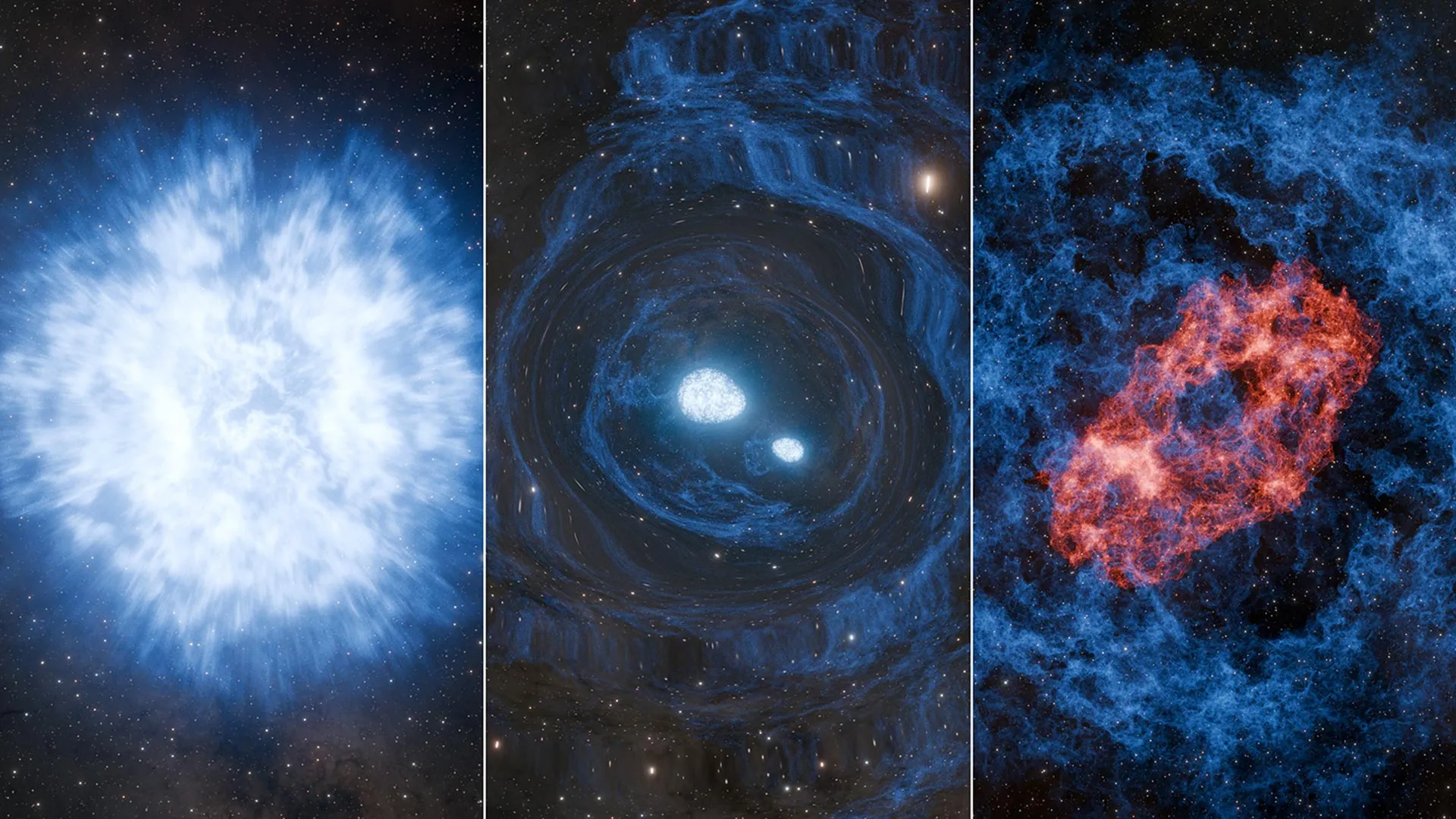
The universe is a grand alchemist, forging the very building blocks of existence through cataclysmic events. At the heart of this cosmic alchemy are stellar explosions, primarily supernovae, which mark the dramatic end-of-life stages for very massive stars. These colossal detonations scatter fundamental elements like carbon, oxygen, and iron across the vast expanse of space, enriching the interstellar medium and providing the raw materials for subsequent generations of stars, planets, and even life itself. However, an even more exotic and rarer class of cosmic explosion exists: the kilonova. This extraordinary event occurs when two neutron stars – the incredibly dense, city-sized remnants of once-massive stars – collide and merge. Kilonovae are the universe’s most efficient factories for producing the heaviest elements known, including precious metals like gold and platinum, and radioactive elements such as uranium. These super-heavy elements are not only rare on Earth but are also crucial ingredients that contribute to the diverse chemical tapestry of the cosmos, ultimately forming everything we observe around us.
Until recently, the scientific community had confirmed only one definitive observation of a kilonova. This landmark event, designated GW170817, transpired in August 2017 when two neutron stars, locked in a spiraling death dance, finally coalesced. The collision unleashed a torrent of both gravitational waves – ripples in the fabric of spacetime – and a subsequent electromagnetic burst across the spectrum. This unprecedented "multi-messenger" detection allowed researchers worldwide to observe the event through entirely new lenses. The gravitational waves, carrying invaluable information about the merger itself, were first detected by the National Science Foundation’s Laser Interferometer Gravitational-wave Observatory (LIGO) in the United States and its European partner, Virgo, located in Italy. Within hours, telescopes across the globe, responding to rapid alerts, captured the fading light from the resulting kilonova explosion, providing crucial optical and infrared data. This dual detection revolutionized astrophysics, confirming the origins of short gamma-ray bursts, validating theories of heavy element nucleosynthesis via the rapid neutron-capture process (r-process), and even offering an independent method to measure the expansion rate of the universe (the Hubble constant). GW170817 solidified our understanding of kilonovae as the primary cosmic forge for the heaviest elements.
A New and Puzzling Cosmic Event Emerges
Now, astronomers believe they may have stumbled upon evidence for a second kilonova, although this latest candidate event presents a far more complex and perplexing scenario than its predecessor. The object, named AT2025ulz, appears to be inextricably linked to a preceding supernova that occurred just hours earlier. This earlier, powerful explosion may have obscured or dramatically altered key observable characteristics of the kilonova, rendering the entire event exceptionally challenging to interpret and forcing scientists to reconsider their understanding of these extreme cosmic phenomena.
"At first, for about three days, the eruption looked just like the first kilonova in 2017," recounts Caltech’s Mansi Kasliwal (PhD ’11), a distinguished professor of astronomy and the director of Caltech’s Palomar Observatory near San Diego. "Everybody was intensely trying to observe and analyze it, but then it started to look more like a supernova, and some astronomers lost interest. Not us." Kasliwal’s statement highlights the initial excitement and subsequent scientific pivot that characterized the early observations of AT2025ulz. The unusual evolution of the light curve prompted many to dismiss it as a mere supernova, but Kasliwal’s team recognized the subtle, persistent anomalies that hinted at something far more profound.
Kasliwal spearheaded the comprehensive study detailing these groundbreaking findings, which was subsequently published in the prestigious journal The Astrophysical Journal Letters. Her team posits that this highly unusual event could represent an entirely new class of cosmic explosion: a "superkilonova." This theoretical concept describes a kilonova that is not a standalone event but is instead triggered by or deeply embedded within a supernova. While the idea of a supernova-triggered kilonova has been proposed in theoretical astrophysics, it has, until now, remained purely hypothetical, awaiting direct observational confirmation. The potential discovery of AT2025ulz as a superkilonova would therefore open an entirely new chapter in our understanding of extreme stellar deaths and element formation.
Gravitational Waves Point to Something Unusual
The first tantalizing hint of this rare and complex event emerged on August 18, 2025. On that day, the highly sensitive gravitational-wave detectors of LIGO in Louisiana and Washington, along with their European counterpart Virgo in Italy, simultaneously recorded a new and distinct gravitational-wave signal. Within minutes of the detection, an automated alert was disseminated to astronomers across the globe, indicating that the signal, later designated S250818k, likely originated from two merging compact objects. Crucially, the alert highlighted an unusual characteristic: at least one of the colliding objects appeared to be significantly smaller than a typical neutron star, hinting at masses potentially below the canonical lower limit for these stellar remnants. The alert also provided a rough localization of the source in the sky, allowing electromagnetic telescopes to quickly begin their search.
"While not as highly confident as some of our alerts, this quickly got our attention as a potentially very intriguing event candidate," states David Reitze, the executive director of LIGO and a research professor at Caltech. Reitze’s comments underscore the initial cautious optimism surrounding the detection, acknowledging the sub-threshold nature of the gravitational-wave signal while emphasizing its compelling astrophysical implications. "We are continuing to analyze the data, and it’s clear that at least one of the colliding objects is less massive than a typical neutron star." The implication of such low-mass objects in a merger event is profound, challenging established models of neutron star formation and evolution, and hinting at exotic pathways to their creation.
Just a few hours after the gravitational-wave alert, the Zwicky Transient Facility (ZTF) at Caltech’s Palomar Observatory, renowned for its wide-field sky surveys, successfully identified a rapidly fading red source. This optical transient, located approximately 1.3 billion light-years away in the same region of the sky pinpointed by the gravitational-wave signal, was initially named ZTF 25abjmnps. Following standard astronomical protocols, the object was later given the official designation AT2025ulz, confirming its status as a transient astronomical phenomenon requiring further investigation.
A Signal That Changed Over Time: The Cosmic Chameleon
The immediate response to the multi-messenger alert was a coordinated global effort. Roughly a dozen telescopes around the world quickly pivoted their observations to AT2025ulz, including the powerful W. M. Keck Observatory in Hawaiʻi, the Fraunhofer telescope in Germany, and numerous facilities connected to the GROWTH (Global Relay of Observatories Watching Transients Happen) program, which is expertly led by Kasliwal herself. This rapid, collaborative follow-up was essential for capturing the evolving characteristics of the event.
Early observations of AT2025ulz revealed a transient that was rapidly fading and predominantly glowing in red wavelengths, a spectral signature strikingly similar to what was observed during the 2017 kilonova, GW170817. In the case of GW170817, this characteristic red color was understood to originate from the prodigious production of heavy elements like gold, platinum, and uranium. These newly forged elements, created through the r-process in the neutron-rich ejecta of the merger, efficiently absorb blue light and re-emit or scatter light in the red and infrared parts of the spectrum, giving kilonovae their distinctive reddish hue.
However, the behavior of AT2025ulz soon diverged dramatically from the expected kilonova template. A mere few days after the initial red flash, the object surprisingly brightened again. Concurrently, its light began to shift towards bluer wavelengths, and spectroscopic analysis – the breakdown of light into its constituent colors – revealed the unmistakable presence of hydrogen. These features are highly characteristic of a supernova, specifically a "stripped-envelope core-collapse" supernova, a type of explosion that occurs when a massive star exhausts its nuclear fuel and its core collapses, but has previously shed its outer hydrogen envelope. Such supernovae are typically powerful, but they do not produce detectable gravitational waves from the core collapse itself. Because supernovae in distant galaxies are not expected to generate gravitational waves that LIGO and Virgo can detect, many astronomers, observing this shift in the light curve, concluded that the gravitational-wave signal (S250818k) was likely an unrelated, chance coincidence with an ordinary supernova, and thus, lost interest in further investigation.
Clues Point to a Possible Superkilonova
Despite the prevailing interpretation, Kasliwal and her dedicated team remained unconvinced. They meticulously analyzed the data and noticed several persistent anomalies that suggested the event did not fit neatly into either the category of a classic kilonova or a typical supernova. AT2025ulz displayed characteristics that were inconsistent with a pure kilonova – particularly the late-time brightening and the presence of hydrogen – but it also didn’t perfectly align with the expected behavior of a typical supernova. The light curve was simply too complex and dynamic to be easily categorized. Simultaneously, the gravitational-wave data continued to suggest that at least one of the merging objects possessed a mass smaller than that of our Sun, a truly unusual characteristic that fueled the possibility of two exceptionally small neutron stars being involved in the merger.
Neutron stars are among the most extreme objects in the universe. They are the ultradense remnants left behind after massive stars, typically eight to fifteen times the mass of the Sun, undergo core-collapse supernovae. Despite packing more mass than the Sun into a sphere only about 25 kilometers (roughly 15 miles) across – comparable to the size of a major city like San Francisco – they are incredibly compact. Their typical masses range from about 1.2 to 3 times that of our Sun, with the most common being around 1.4 solar masses. The detection of objects with sub-solar masses in the gravitational-wave signal from AT2025ulz is highly significant, as current theoretical models predict a minimum mass for neutron star formation. Some theories have long speculated about the potential existence of even smaller neutron stars, but direct observational evidence has remained elusive.
Scientists have proposed two primary theoretical pathways for the formation of such unusually tiny, sub-solar mass neutron stars. In one intriguing scenario, a rapidly spinning, massive star undergoes a core-collapse supernova, but its extreme rotation causes it to fission, or split, into two smaller neutron stars rather than forming a single, larger one. In another proposed mechanism, known as fragmentation, the violent explosion creates a swirling disk of superheated material around the collapsing core. Within this disk, clumps of matter could condense and eventually form a small neutron star, akin to how planets form within protoplanetary disks, but on a much more violent and energetic scale. The gravitational-wave detection of sub-solar mass objects, if confirmed, would provide crucial empirical support for these exotic formation channels.
A Hidden Collision Inside a Supernova: The Superkilonova Hypothesis
According to co-author Brian Metzger, a theoretical astrophysicist at Columbia University, the intricate and perplexing observations of AT2025ulz can be elegantly explained by a novel hypothesis: it is possible that two newly formed, sub-solar mass neutron stars could spiral inward and collide, producing a kilonova that emits gravitational waves, all within the immediate aftermath of the supernova that birthed them. As this merger occurs, the kilonova explosion would initially appear red due to the formation of heavy elements, precisely matching the early observations by telescopes. However, the expanding debris and powerful light from the earlier, encompassing supernova could quickly obscure the view of the kilonova, effectively "hiding" it within the larger, brighter supernova envelope. This scenario would explain the subsequent brightening, the shift to bluer light, and the appearance of hydrogen in the spectra, all of which are characteristic features of a supernova eventually dominating the overall emission.
In simpler terms, this suggests a spectacular two-stage cosmic event: a massive star explodes as a supernova, giving birth to two newborn neutron stars. These infant neutron stars, perhaps due to their unique formation mechanism within the supernova, then quickly spiral inward and merge, producing a secondary, powerful kilonova explosion that is initially shrouded by the debris of its progenitor supernova.
"The only way theorists have come up with to birth sub-solar neutron stars is during the collapse of a very rapidly spinning star," Metzger explains. His insight underscores the theoretical underpinning of the superkilonova concept. "If these ‘forbidden’ stars pair up and merge by emitting gravitational waves, it is possible that such an event would be accompanied by a supernova rather than be seen as a bare kilonova." This theoretical framework provides a compelling explanation for the observational discrepancies and the multi-faceted nature of AT2025ulz, bridging the gap between gravitational-wave detections of unusual masses and the peculiar evolution of the electromagnetic light curve.
More Evidence Needed: Paving the Way for Future Discoveries
While this proposed explanation for AT2025ulz as a superkilonova is theoretically compelling and provides a coherent narrative for the perplexing observations, the researchers are quick to emphasize that it remains a hypothesis. There is not yet sufficient definitive evidence to unequivocally confirm that AT2025ulz is indeed a superkilonova. The rarity of such events and the complexity of their multi-messenger signatures necessitate further investigation.
To test and ultimately confirm this groundbreaking idea, astronomers will need to identify and meticulously study more events like AT2025ulz. This will require sustained observational efforts and the deployment of next-generation astronomical facilities. "Future kilonovae events may not look like GW170817 and may be mistaken for supernovae," Kasliwal warns, highlighting the critical need for astronomers to remain vigilant and open to novel interpretations, even when observations seem to fit established categories. "We can look for new possibilities in data like this from ZTF as well as the Vera Rubin Observatory, and upcoming projects such as NASA’s Nancy Roman Space Telescope, NASA’s UVEX [led by Caltech’s Fiona Harrison], Caltech’s Deep Synoptic Array-2000, and Caltech’s Cryoscope in the Antarctic. We do not know with certainty that we found a superkilonova, but the event nevertheless is eye opening." The call to action from Kasliwal underscores the importance of advanced observatories, both ground-based and space-based, that can capture faint, rapidly evolving transients across a wide range of wavelengths. These future instruments will be crucial for detecting the subtle, tell-tale signatures that distinguish a superkilonova from a conventional supernova or kilonova, pushing the boundaries of multi-messenger astronomy.
Study Details and Funding
The groundbreaking study, comprehensively titled "ZTF25abjmnps (AT2025ulz) and S250818k: A Candidate Superkilonova from a Sub-threshold Sub-Solar Gravitational Wave Trigger," represents a collaborative effort across multiple institutions and was made possible through the generous support of various funding bodies. Key financial contributions were provided by the Gordon and Betty Moore Foundation, the Knut and Alice Wallenberg Foundation, the National Science Foundation (NSF), the Simons Foundation, the US Department of Energy, a McWilliams Postdoctoral Fellowship, and the University of Ferrara in Italy. These organizations played a crucial role in enabling the research, data analysis, and publication of these significant findings.
Beyond Mansi Kasliwal, other notable Caltech authors who contributed their expertise to this pivotal study include Tomás Ahumada (now affiliated with NOIRLab, Chile), Viraj Karambelkar (now at Columbia University), Christoffer Fremling, Sam Rose, Kaustav Das, Tracy Chen, Nicholas Earley, Matthew Graham, George Helou, and Ashish Mahabal. Their collective efforts in observation, data reduction, and theoretical interpretation were indispensable in unraveling the complexities of AT2025ulz.
Caltech’s Zwicky Transient Facility (ZTF), a cornerstone observatory for this research, receives substantial support from the National Science Foundation and an international consortium of partners. Additional crucial funding for ZTF’s operations and development comes from the Heising-Simons Foundation and Caltech itself. The immense volume of data generated by ZTF is meticulously processed and archived by IPAC, a leading astronomy center also located at Caltech, ensuring its availability and utility for the global scientific community. This robust network of funding and institutional support highlights the collaborative nature of modern astrophysics and its capacity to tackle the universe’s most profound mysteries.
