
 By admin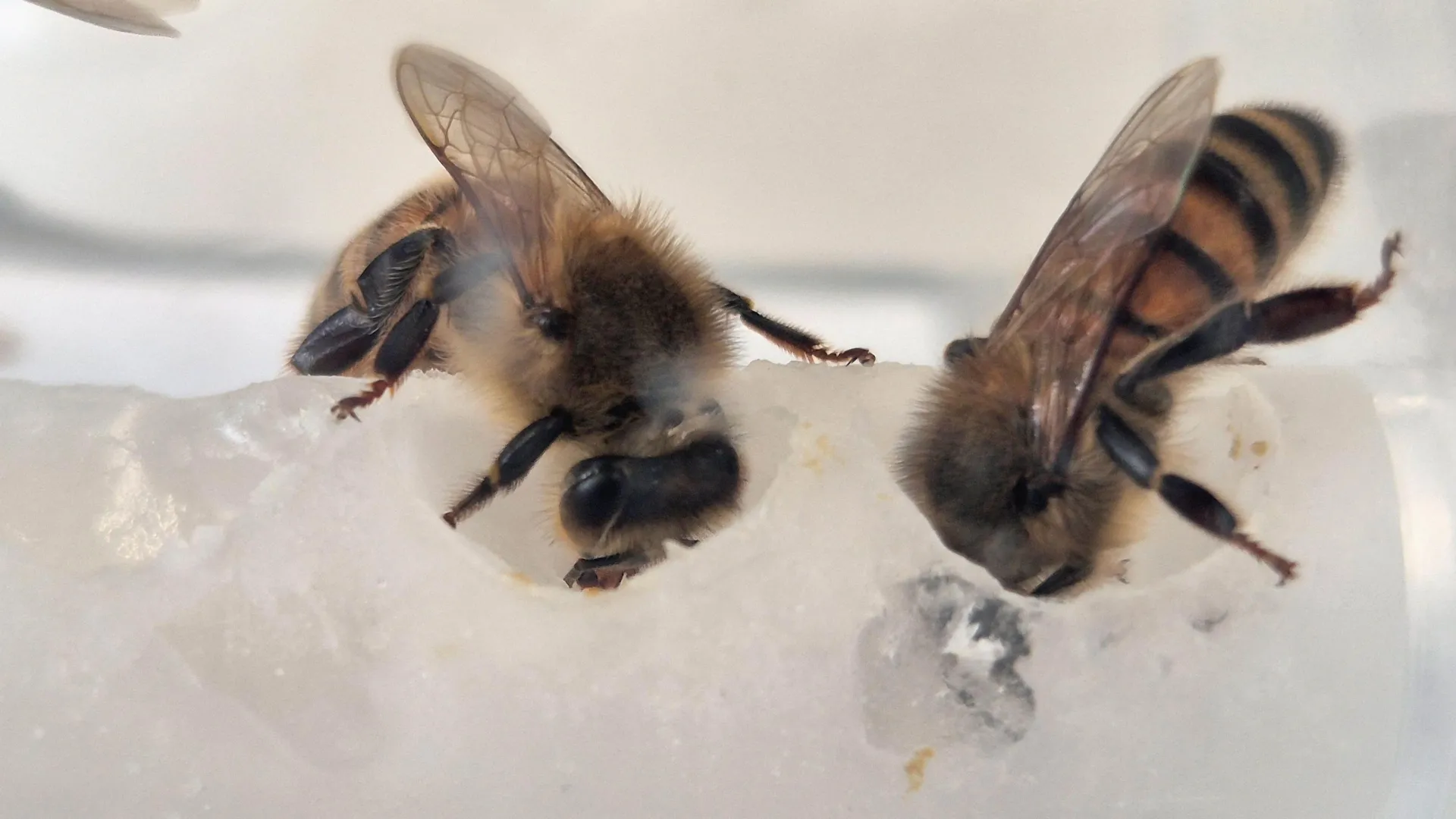
The collaborative effort behind this pioneering research involved leading institutions including the Royal Botanic Gardens Kew, the University of Greenwich, and the Technical University of Denmark. Their combined expertise in biology, ecology, and synthetic biology culminated in the creation of a diet that meticulously replicates the complex nutritional profile bees derive from natural pollen. The scientific community has taken note, with the findings, which demonstrated colonies fed this supplement produced an astonishing up to 15 times more young, published in the prestigious journal Nature. This level of success signals a paradigm shift in how we approach bee conservation and agricultural sustainability.
The Silent Crisis: Bees Starving for the Right Nutrients
Honeybees, the unsung heroes of our agricultural systems, rely fundamentally on pollen as their primary food source, a veritable superfood packed with essential proteins, lipids, carbohydrates, vitamins, and minerals. Among these, a specific class of lipids called sterols is critically important. These compounds are not merely supplementary; they are indispensable for a bee’s growth, development, immune function, and reproductive health. Without an adequate supply of the correct sterols, bees cannot properly mature, their immune systems weaken, and their ability to raise healthy brood is severely compromised.
However, the modern landscape presents a grim reality for these vital pollinators. Climate change, with its unpredictable weather patterns and shifts in flowering seasons, disrupts the availability and diversity of floral resources. Intensive agricultural practices, characterized by vast monocultures and the widespread use of pesticides, further exacerbate this problem by drastically reducing the variety of wildflowers and native plants that once provided a rich tapestry of nutritional options. As a direct consequence, bees are increasingly experiencing a form of "hidden hunger," missing the key nutrients, particularly the specific sterols, that are essential for their well-being.
The current remedies employed by beekeepers often fall short. Artificial pollen substitutes, commonly composed of protein flour, sugars, and oils, provide a caloric intake but fail to deliver the full spectrum of micronutrients, especially the crucial sterols, that bees require. While these substitutes can stave off immediate starvation, they leave colonies nutritionally deficient, much like a human subsisting on fast food—they get calories but lack essential vitamins and minerals for long-term health. This nutritional gap leaves colonies vulnerable to disease, parasites, and the general stressors of their environment, contributing significantly to the alarming rates of colony collapse.
A Lab-Made Solution: Harnessing Engineered Yeast for Precision Nutrition
To bridge this critical nutritional gap, the research team embarked on an ambitious project: to engineer a bespoke solution. Their innovative approach involved modifying the yeast Yarrowia lipolytica to produce a precise, tailor-made mix of six essential sterols identified as vital for bee health. This yeast was chosen for its natural ability to produce lipids, its well-understood genetic profile, its safety for food applications, and its potential for industrial-scale production.
The methodology was rigorous. The engineered yeast, enriched with the specific sterols, was incorporated into bee diets. To ensure the integrity of their findings, the scientists conducted controlled glasshouse experiments over a period of three months. This enclosed setup was crucial, as it guaranteed that the bees consumed only the experimental feed, eliminating any confounding variables from external pollen sources. This meticulous control allowed the researchers to directly attribute any observed improvements in bee health and colony growth to the novel supplement.
Unprecedented Results: Colonies Grew Faster and Stayed Healthier
The outcomes of these trials were nothing short of dramatic, providing compelling evidence of the supplement’s efficacy. Colonies that received the sterol-enriched diet exhibited an extraordinary increase in reproductive success, producing up to 15 times more larvae that successfully reached the pupal stage compared with those on standard, nutritionally incomplete diets. This surge in brood production is a direct indicator of a thriving, healthy colony with a robust future workforce.
Beyond the sheer numbers, the long-term health benefits were equally striking. Colonies fed the enriched diet demonstrated sustained brood rearing throughout the entire three-month study period. In stark contrast, colonies deprived of the essential sterols ceased producing brood after approximately 90 days, a clear sign of nutritional stress and an impending decline in colony vitality. The ability to continuously raise young is fundamental to a colony’s resilience, its capacity to replace older bees, and its overall ability to thrive.
Perhaps even more profoundly, the nutrient profile of the larvae from the supplemented colonies closely matched that of bees feeding naturally. This critical finding suggests that the engineered supplement does not merely boost growth but genuinely replicates the nutritional completeness of real pollen, providing the building blocks for genuinely healthy and well-developed bees. This biological validation underscores the precision and effectiveness of the synthetic biology approach.
Scientists Affirm: This Could Be a Game Changer for Global Food Security
The implications of this research are vast, prompting enthusiastic endorsements from the scientific community. Senior author Professor Geraldine Wright from the Department of Biology at the University of Oxford emphasized the broader significance of the study: "Our study demonstrates how we can harness synthetic biology to solve real-world ecological challenges. Most of the pollen sterols used by bees are not available naturally in quantities that could be harvested on a commercial scale, making it otherwise impossible to create a nutritionally complete feed that is a substitute for pollen." Her statement highlights the power of synthetic biology to overcome limitations of natural resource availability, paving the way for scalable, sustainable solutions.
Dr. Elynor Moore, who was at the Department of Biology at the University of Oxford during the study and is now at Delft University of Technology, provided a compelling analogy to illustrate the supplement’s impact: "For bees, the difference between the sterol-enriched diet and conventional bee feeds would be comparable to the difference for humans between eating balanced, nutritionally complete meals and eating meals missing essential nutrients like essential fatty acids. Using precision fermentation, we are now able to provide bees with a tailor-made feed that is nutritionally complete at the molecular level." This comparison vividly explains the profound difference the supplement makes, transforming a calorie-sufficient but nutrient-poor diet into a truly holistic one. Precision fermentation, the biotechnological process behind the engineered yeast, represents a cutting-edge approach to producing complex molecules efficiently and sustainably.
Cracking the Code of Bee Nutrition: A Delicate Scientific Endeavor
Unlocking the secret to optimal bee nutrition required incredibly delicate and painstaking scientific detective work. To precisely determine the essential sterols bees need, the researchers undertook meticulous analysis of tissues from pupae and adult bees. This involved extremely fine dissection, including isolating and examining individual nurse bees—the diligent workers responsible for feeding the larvae. This intricate process allowed the team to identify the exact biochemical components crucial for bee development.
Through this detailed analysis, they pinpointed six key sterols that dominate bee biology and are fundamental to their physiological processes: 24-methylenecholesterol, campesterol, isofucosterol, β-sitosterol, cholesterol, and desmosterol. Understanding this specific sterol profile was the linchpin for designing a truly effective and targeted supplement.
Scalability Through CRISPR and Yeast: A Sustainable Production Pathway
With the target sterols identified, the next challenge was to produce them efficiently and at scale. The team leveraged the revolutionary gene-editing technology, CRISPR-Cas9, to program Yarrowia lipolytica yeast. CRISPR-Cas9 allowed for precise modifications to the yeast’s genetic machinery, enabling it to synthesize these specific sterols effectively.
The choice of Yarrowia lipolytica was strategic. This particular yeast species is already recognized for its natural ability to produce lipids, making it an ideal candidate for sterol biosynthesis. Furthermore, it is generally recognized as safe (GRAS) for food use and possesses characteristics that make it highly suitable for industrial-scale production. The final supplement can be produced by growing the engineered yeast in large bioreactors, similar to those used in brewing or pharmaceutical production, and then drying it into a stable, powdered form that is easy to transport and integrate into bee diets. This scalability is crucial for widespread adoption and impact.
Why This Matters: Protecting Our Food and Our Future
The implications of this breakthrough extend far beyond the apiary. Honeybees are indispensable pollinators, responsible for facilitating the reproduction of more than 70% of the world’s major crops, including fruits, vegetables, nuts, and oilseeds. Their contribution to global food security is estimated to be worth billions of dollars annually. Yet, their populations are under severe, multifaceted pressure. Poor nutrition, as highlighted by this study, is a critical factor, but it compounds the threats posed by climate change, habitat loss, pesticides (especially systemic neonicotinoids), parasites like the Varroa destructor mite, and various diseases.
The statistics are stark and alarming. In the United States alone, annual honeybee colony losses have consistently ranged from 40 to 50% in recent years, representing an unsustainable decline that threatens agricultural productivity. Projections for 2025 paint an even bleaker picture, with potential losses soaring as high as 60 to 70% if current trends continue unabated. Such figures underscore the urgent need for comprehensive solutions.
This new supplement offers a powerful tool to strengthen bee health and resilience against these threats. Crucially, by providing a targeted nutritional boost, it can improve bee vitality without increasing competition for limited wildflowers – a significant concern in areas with large-scale beekeeping operations. It holds the promise of evolving into a complete nutritional feed, potentially reducing beekeepers’ reliance on foraging in increasingly barren landscapes.
A Dual Benefit: Helping Wild Bees Too
The benefits of this innovation extend beyond managed honeybee colonies to encompass wild bee species and other pollinators, which are also facing significant declines. Co-author Professor Phil Stevenson from RBG Kew and the Natural Resources Institute, University of Greenwich, elaborated on this crucial point: "Honey bees are critically important pollinators for the production of crops such as almonds, apples, and cherries and so are present in some crop locations in very large numbers, which can put pressure on limited wildflowers. Our engineered supplement could therefore benefit wild bee species by reducing competition for limited pollen supplies." In agricultural regions where honeybee colonies are brought in en masse for pollination services, they can inadvertently deplete local floral resources, putting stress on native solitary and bumblebee populations. By ensuring managed bees are adequately nourished through supplementation, the pressure on natural pollen sources is alleviated, indirectly supporting the health and survival of wild pollinators.
A Potential Breakthrough for Beekeepers and Agriculture
The beekeeping community, often at the front lines of this ecological crisis, has welcomed the potential of this research. Danielle Downey, Executive Director of the honeybee research nonprofit Project Apis m. (not affiliated with the study), articulated the practical impact: "We rely on honey bees to pollinate one in three bites of our food, yet bees face many stressors. Good nutrition is one way to improve their resilience to these threats, and in landscapes with dwindling natural forage for bees, a more complete diet supplement could be a game changer. This breakthrough discovery of key phytonutrients that, when included in feed supplements, allow sustained honey bee brood rearing has immense potential to improve outcomes for colony survival, and in turn the beekeeping businesses we rely on for our food production." Her perspective highlights the direct, tangible benefits for beekeepers struggling to maintain healthy colonies and for the agricultural industries that depend on them. Improved nutrition translates to stronger, more productive colonies, better honey yields, and ultimately, more stable food supplies.
What Happens Next: From Lab to Field and Beyond
While the initial results are overwhelmingly positive, the journey from laboratory breakthrough to widespread adoption requires further steps. Larger-scale field trials are now essential to confirm the long-term benefits of the supplement under diverse real-world conditions, including varying climates, agricultural practices, and bee subspecies. These trials will assess factors such as the supplement’s impact on overall colony health, honey production, disease resistance, and long-term survival rates outside of controlled environments.
If these larger trials prove successful, the researchers are optimistic that the supplement could become available to farmers and beekeepers within two years. The commercialization pathway would involve scaling up production, navigating regulatory approvals for a novel bee feed, and establishing distribution channels.
Furthermore, the technology developed in this study holds immense potential for broader applications. The same synthetic biology and precision fermentation techniques could be adapted to support the nutritional needs of other crucial pollinators, such as bumblebees, or even farmed insects like crickets or mealworms, which are increasingly seen as sustainable protein sources. This opens up new avenues for enhancing insect health across various sectors, contributing to more resilient ecosystems and sustainable agricultural practices globally. The Oxford-led breakthrough offers not just a solution for honeybees, but a blueprint for how cutting-edge science can address some of the most pressing ecological and food security challenges of our time.
