
 By admin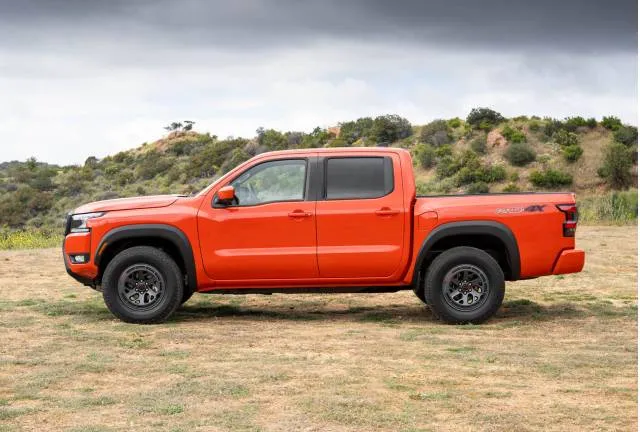
The midsize pickup truck segment continues to be a battleground of capability, affordability, and versatility, appealing to a broad spectrum of buyers who find full-size trucks excessive for their needs but demand more utility than a car or SUV. These smaller workhorses offer a compelling balance, proving adept at hauling, towing, and tackling rough terrain without the hefty price tag or cumbersome dimensions of their larger siblings. Within this fiercely competitive arena, two stalwarts stand out: the thoroughly redesigned 2025 Toyota Tacoma and the robust 2025 Nissan Frontier. Both offer distinct philosophies and features, vying for the attention of truck enthusiasts alongside formidable rivals like the Chevrolet Colorado and Ford Ranger. This detailed comparison aims to dissect their offerings, helping prospective buyers determine which midsize marvel truly leads the pack.
Frontier vs. Tacoma: Prices and Features – Value Versus Variety
The initial purchase price and the array of features packed into each trim level are often decisive factors for truck buyers. Here, the Nissan Frontier positions itself as a strong value contender, while the Toyota Tacoma counters with an unparalleled breadth of options and advanced technology.
How much is a Nissan Frontier?
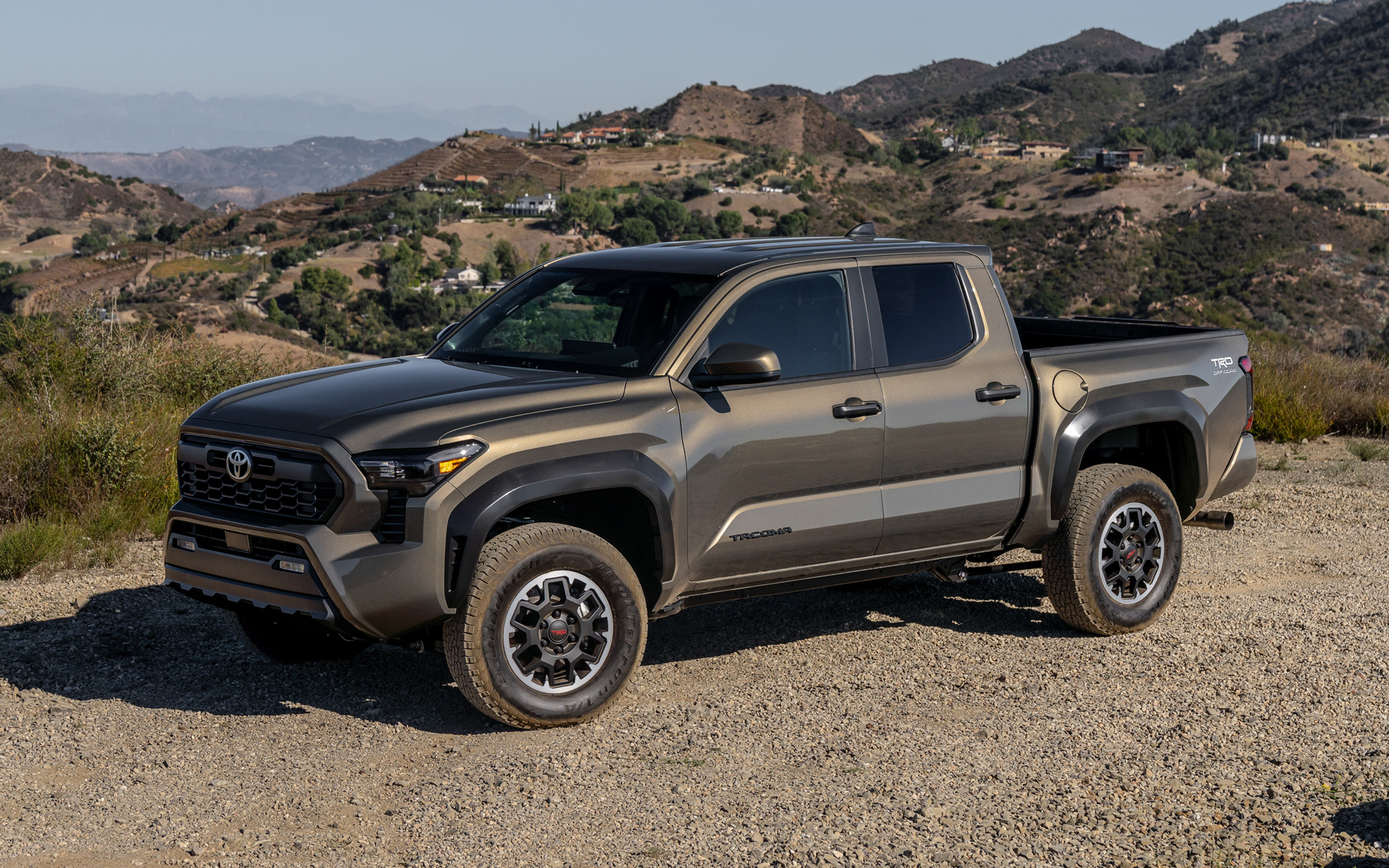
Nissan offers the 2025 Frontier across a focused lineup of S, SV, SL, and the off-road-oriented Pro-X/Pro-4X trim levels. The entry-point for the Frontier is remarkably accessible, with the base S King Cab (extended cab) starting at approximately $33,000. This baseline model, while budget-friendly, still includes essential amenities such as cloth upholstery, manually adjustable front seats, an 8.0-inch touchscreen infotainment system with wired Android Auto and Apple CarPlay, power features, a durable urethane steering wheel, a four-speaker audio system, a sliding rear window, a composite front skid plate, and 16-inch steel wheels. It’s a no-frills work truck designed for practicality.
Upgrading to the Crew Cab body style typically adds around $1,300, while opting for four-wheel drive (4×4) incurs an additional cost of approximately $3,000. For many, the sweet spot in the lineup might be the 4×4 SV model with the crew cab, priced at about $40,000. This trim significantly enhances the interior experience with a larger 12.3-inch touchscreen, wireless Apple CarPlay and Android Auto, power-adjustable exterior mirrors, an eight-way power driver’s seat with two-way lumbar adjustments for improved comfort, a six-speaker audio system, a satellite radio trial, a steel front skid plate, and more aesthetically pleasing 17-inch alloy wheels. This jump offers substantial technology and comfort upgrades without breaking the bank.
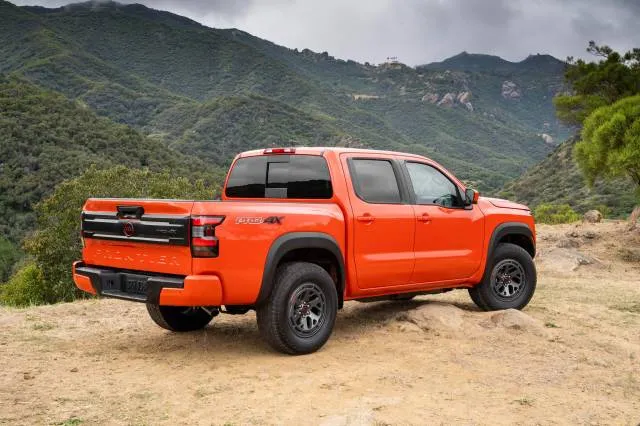
For those with an adventurous spirit, the crew cab Pro-4X, at just over $43,000, is purpose-built for off-road excursions. It comes equipped with serious hardware like Bilstein shock absorbers, an aluminum front skid plate, additional skid plates for the transfer case and fuel tank, and aggressive all-terrain tires.
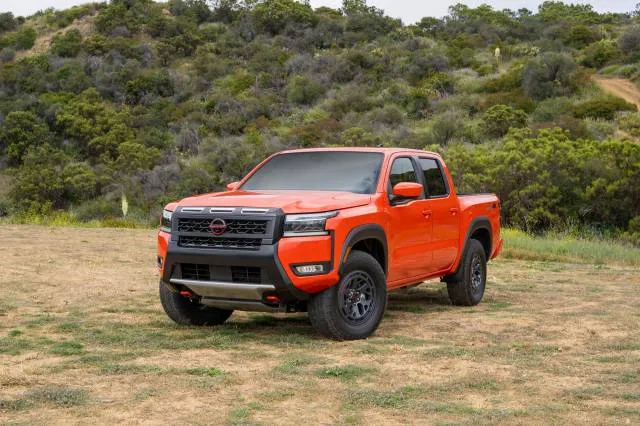
At the apex of the Frontier range, the 4×4 crew cab SL model commands a price tag exceeding $46,000. This premium trim caters to those seeking luxury and convenience, featuring leather upholstery, heated front seats and steering wheel, navigation, a wireless smartphone charger, a 120-volt outlet in the bed, a high-fidelity 10-speaker Fender audio system, remote start, a Class IV tow hitch, under-rail LED cargo bed lights, a versatile bed tie-down system with two adjustable cleats, a sunroof, and a surround-view camera system for enhanced maneuverability and safety.
The Frontier is backed by a standard 3-year/36,000-mile basic warranty, typical for the segment.
How much is a Toyota Tacoma?
Toyota’s approach with the 2025 Tacoma is one of extensive choice and advanced engineering, reflected in its far more expansive model range compared to the Frontier. The Tacoma lineup includes the SR, SR5, TRD PreRunner, TRD Sport, TRD Off-Road, Limited, Trailhunter, and TRD Pro.
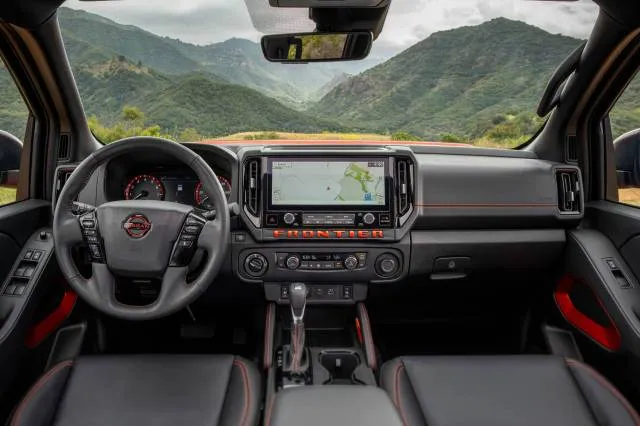
The base Tacoma SR model starts around $33,000, mirroring the Frontier’s entry price point. It comes standard with cloth upholstery, manually adjustable seats, an 8.0-inch touchscreen with Apple CarPlay and Android Auto, power features, and 17-inch steel wheels. Four-wheel drive is an option at approximately $3,200, and the popular crew cab body style (paired with the short bed) adds another $2,200.
For a well-rounded and capable truck without venturing into the highest trims, we often recommend the 4×4 SR5 crew cab with the long bed, priced at about $42,000. This configuration adds practical and desirable features such as LED fog lights, alloy wheels, a versatile deck rail system for cargo management, a coil-spring rear suspension (a significant upgrade for ride comfort on crew cab models), and crucial blind-spot monitors with rear cross-traffic alerts.
The allure of advanced powertrains is strong with the Tacoma. The TRD Sport i-Force Max, for around $48,000, introduces the potent hybrid drivetrain, a 12.3-inch digital gauge cluster, LED bed lighting, and 18-inch wheels. This trim also unlocks access to desirable optional features like cooled synthetic leather seats, a sunroof, and a comprehensive towing package.
The Tacoma’s pricing scale ascends significantly higher than the Frontier’s, culminating in the specialized TRD Pro, which can reach approximately $65,000. This top-tier off-roader boasts a massive 14.0-inch touchscreen, heated and cooled front seats, premium audio, and a plethora of advanced off-road hardware designed for extreme adventures.
While the Tacoma also carries a 3-year/36,000-mile basic warranty, Toyota sweetens the deal with an additional 2 years/24,000 miles of complimentary scheduled maintenance, a valuable perk that can offset ownership costs.
Advantage: Toyota Tacoma for features, lineup, and options, but the Frontier for price. The Tacoma clearly offers a more diverse and technologically advanced lineup, particularly with its hybrid option and extensive off-road variants. However, for buyers prioritizing a lower entry price and a straightforward, capable truck, the Frontier presents a compelling, more affordable choice, especially in its mid-range trims. The Frontier’s simplicity can also be seen as an advantage for those who prefer fewer complex systems.
Frontier vs. Tacoma: Performance – Power, Efficiency, and Ride Dynamics
The heart of any truck lies in its powertrain and how it translates to on-road performance, towing, and overall ride comfort. Both the Frontier and Tacoma offer capable engines, but they diverge significantly in their strategies and available options.
Toyota Tacoma Performance
The 2025 Tacoma introduces a sophisticated range of powertrain options, starting with a base 2.4-liter turbocharged inline-four engine. In its standard tune, this engine produces a respectable 228 horsepower, which is adequate for a midsize truck’s daily demands. Toyota pairs it with a smooth and responsive 8-speed automatic transmission, though purists will appreciate the availability of a 6-speed manual transmission on select trims for a more engaging driving experience.
Stepping up the lineup, a higher-output version of the 2.4-liter turbo-4 is available, delivering either 270 hp (with the manual) or 278 hp (with the automatic) in higher-line models. While this engine might exhibit a slight "diesel-like clatter" at times, it provides the robust power most buyers will desire, working seamlessly with the automatic transmission and offering a responsive throttle pedal for confident acceleration and passing.
The crown jewel of the Tacoma’s powertrain offerings is the innovative i-Force Max hybrid system. This variant combines the uprated turbo-4 with electric motors to unleash an impressive 326 horsepower and a formidable 465 lb-ft of torque. This hybrid setup significantly enhances power and instills greater confidence when towing heavy loads, making it a standout option in the segment. However, this increased power and capability come with a combined fuel economy rating of 23 mpg, which, while decent for a hybrid truck, isn’t groundbreaking compared to some smaller SUVs.
Nissan Frontier Performance
In contrast, the 2025 Nissan Frontier simplifies its powertrain strategy by offering a single, proven engine: a naturally aspirated 3.8-liter V-6. This engine generates a healthy 310 horsepower and 281 lb-ft of torque. It is exclusively paired with a 9-speed automatic transmission, which is generally praised for its smooth shifts and efficient operation. The V-6 delivers strong, consistent power, making passing maneuvers on highways a no-fuss proposition. While it lacks the hybrid efficiency or the low-end torque of the Tacoma’s i-Force Max, its traditional V-6 powerband is reliable and well-suited for truck duty.
Towing and Payload Capacity
When it comes to the core utility of a pickup, towing and payload are critical metrics. For the 2025 model year, the Frontier sees an increase in its maximum towing capacity, now reaching an impressive 7,150 pounds. Its payload capacity tops out at 1,620 pounds. The Tacoma, while highly capable, has a slightly lower maximum towing capacity of 6,500 pounds but can haul a greater payload of 1,710 pounds. This means the Frontier holds a distinct advantage in raw towing capability, whereas the Tacoma takes the lead for payload capacity. Buyers must weigh which of these capabilities is more crucial for their specific needs.
Suspension and Ride Dynamics
Both trucks initially share a common characteristic in their ride quality, especially in base models. The Frontier utilizes a traditional leaf-spring rear suspension combined with front double wishbones. Similarly, base Tacoma models also feature rear leaf springs and a solid rear axle, leading to a somewhat choppy ride quality that is typical of traditional pickup trucks when unladen.
However, Toyota significantly differentiates the Tacoma by equipping all crew cab models with a more advanced multi-link rear suspension featuring coil springs. This engineering choice markedly improves ride comfort, especially over rougher pavement, offering a more refined and less bouncy experience than the leaf-spring setup. Both trucks also offer specialized off-road suspensions, but Toyota’s range of choices, from TRD Off-Road to TRD Pro and Trailhunter, provides far more granular control over ride and handling characteristics tailored to specific off-road disciplines.
Advantage: Tacoma for advanced powertrain and suspension options. The Tacoma’s diverse engine lineup, including the powerful and efficient hybrid, along with its available multi-link coil-spring rear suspension on crew cab models, offers a more modern and refined driving experience. While the Frontier’s V-6 is a strong, reliable performer, it simply doesn’t offer the same breadth of choice or the advanced ride comfort features found in higher-trim Tacomas.
Frontier vs. Tacoma: Off-Road and 4×4 Systems – Conquering the Wilderness
For many midsize truck buyers, off-road prowess is a major draw. Both the Frontier and Tacoma are engineered to venture off the beaten path, but Toyota has invested heavily in creating a multi-tiered off-road ecosystem that provides unparalleled specialization.
Standard on both trucks is rear-wheel drive, with both offering a robust part-time four-wheel-drive system featuring a 2-speed transfer case for low-range gearing.
Nissan Frontier Off-Road Capability
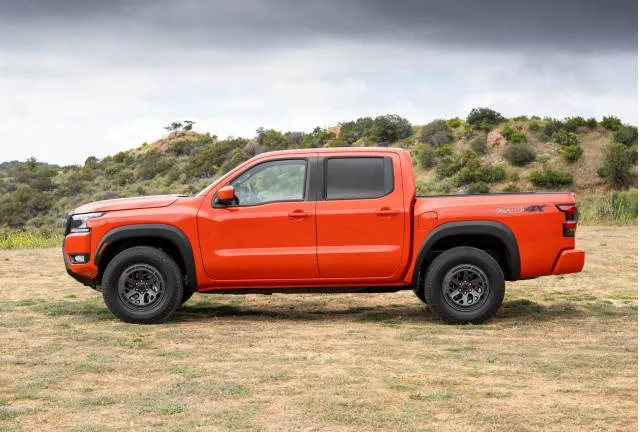
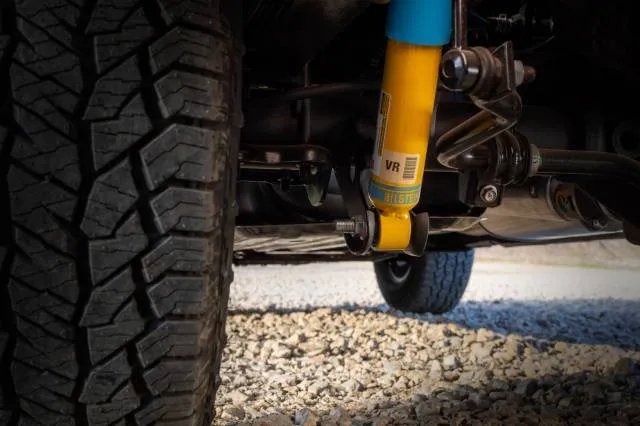
The Frontier’s four-wheel-drive system is intuitively controlled via a knob on the center console, allowing drivers to easily switch between 2WD, 4WD High, and 4WD Low. For serious off-roading, the Pro-4X model is the clear choice. It comes factory-equipped with a host of enhancements designed to tackle challenging terrain, including a locking rear differential for maximum traction, aggressive all-terrain tires, and a significantly improved 9.5-inch ground clearance, up from the 8.9 inches of a rear-drive base model. The Bilstein shocks and underbody skid plates further enhance its durability and capability. While capable, the Frontier’s off-road offerings are more streamlined.
Toyota Tacoma Off-Road Capability
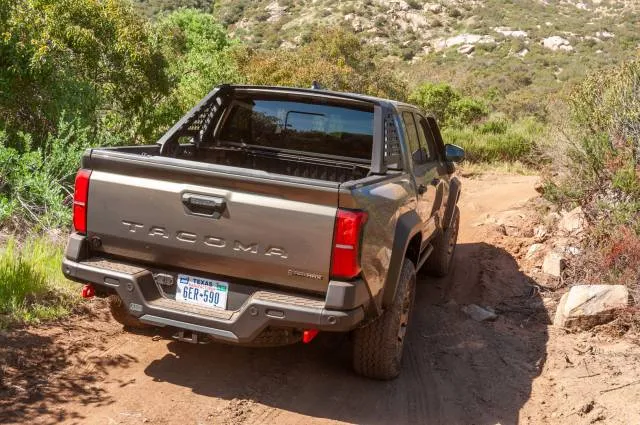
The Tacoma, on the other hand, boasts a significantly more expansive and specialized range of off-road choices, reflecting its deep heritage in overland and trail driving. Beyond the standard part-time 4WD system, the hybrid Limited model uniquely offers a full-time four-wheel-drive system, providing enhanced traction and stability in varying road conditions without manual engagement.
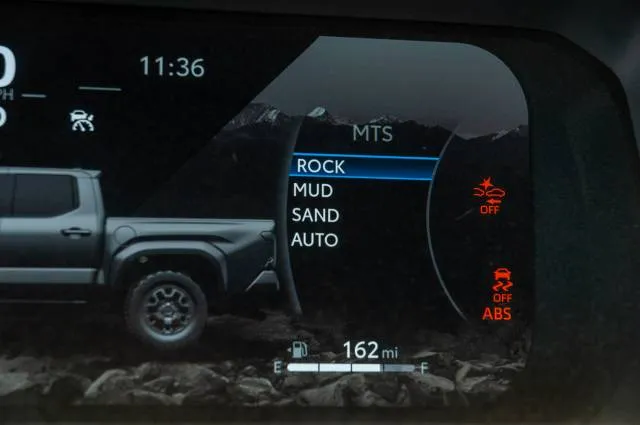
Toyota’s off-road suite includes a variety of selectable off-road modes (Multi-Terrain Select), an electronic locking rear differential, and a sophisticated Crawl Control feature that automatically manages throttle and braking at low speeds, allowing the driver to focus solely on steering over obstacles.
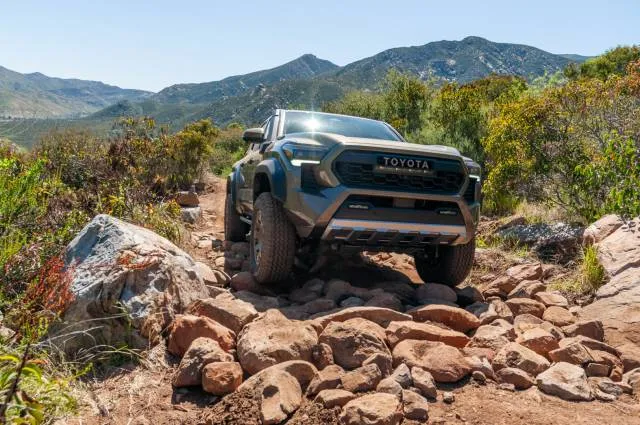
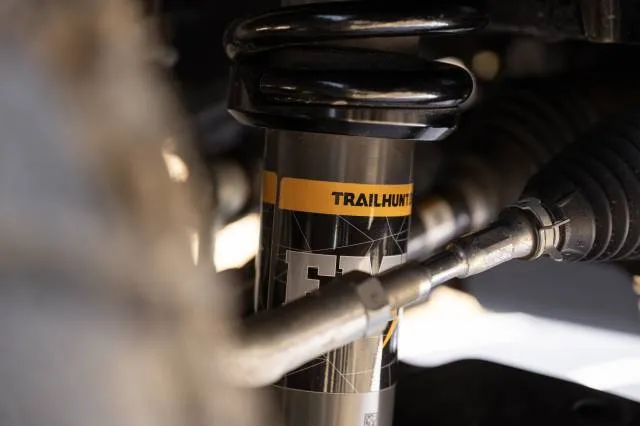
The TRD Off-Road trim elevates the Tacoma’s capabilities with 11.0 inches of ground clearance, 32-inch all-terrain tires, and the option of a disconnecting front sway bar for increased wheel articulation over uneven terrain. Building on this, the TRD Pro is engineered as a high-speed desert runner, adding stronger skid plates, Fox internal bypass shocks, and a raised ground clearance for tackling whoops and dunes with confidence. The newly introduced Trailhunter trim, in contrast, is outfitted as a slow rock crawler and overlanding rig, featuring Old Man Emu (OME) position-sensitive 2.5-inch forged monotube shocks, robust rock sliders, and a high-mounted air intake, making it ideal for extended backcountry expeditions.
Advantage: Toyota Tacoma for more capability, options, and specialized trims. While the Frontier Pro-4X is a highly capable off-roader, the Tacoma’s vast array of specialized trims, advanced electronic aids, and suspension options, including full-time 4WD and dedicated rock-crawling or desert-running setups, offer a level of customization and extreme capability that the Frontier simply doesn’t match.
Frontier vs. Tacoma: Size, Space, and Seating Capacity, and Bed Space – Practicality and Comfort
A truck’s utility is inextricably linked to its interior space, seating comfort, and cargo bed dimensions. Both the Frontier and Tacoma offer various configurations, but the Tacoma often edges out its competitor in overall dimensions and clever space utilization.
How big is the Nissan Frontier?
The 2025 Nissan Frontier is available in two primary body styles: a four-passenger extended cab (King Cab) paired exclusively with a 6-foot bed, and a five-passenger crew cab (Crew Cab) which can be optioned with either a 5-foot or a 6-foot bed. Its wheelbase measures 126.0 or 139.8 inches, and overall length spans 210.2 or 224.1 inches. The bed floor lengths are 59.5 inches for the short bed and 73.3 inches for the long bed.
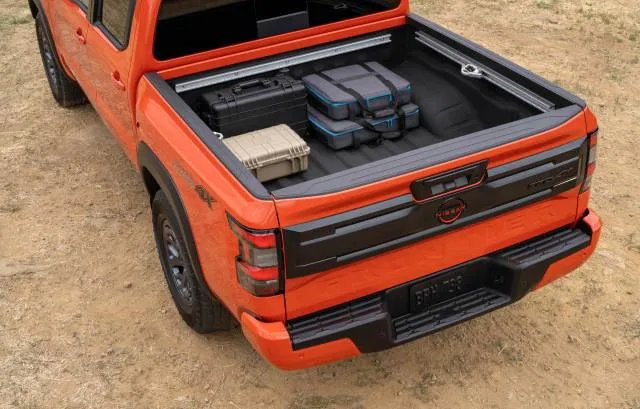
The Frontier’s bed comes standard with four fixed tie-down hooks, and available enhancements include a durable spray-in bedliner, a convenient 120-volt power outlet for tools, under-rail LED lighting, and a versatile Utili-track Channel System with two adjustable cleats, allowing for flexible cargo securing.
Inside the cab, the Frontier’s aesthetic leans towards utilitarian. While the front seats offer good space and comfort, the rear-seat accommodations are tighter in both cab styles. The Crew Cab provides 33.2 inches of rear legroom, which is adequate for a pair of adults on shorter trips but can become cramped on longer journeys. The King Cab, with its more restrictive 26.8 inches of legroom, is best suited for carrying packages or small children, making it less practical for adult passengers. The interior materials primarily consist of hard plastics, emphasizing durability over premium feel, and Nissan predominantly offers a charcoal (black) interior color.
How big is the Toyota Tacoma?
The 2025 Toyota Tacoma also comes in two main configurations: a two-passenger extended cab (Xtracab) with a 6-foot bed, and a five-passenger crew cab (Double Cab) available with either a 5-foot or 6-foot bed.
Front-seat space in the Tacoma is ample, and the bucket seats are generally comfortable and supportive, even on longer drives. Toyota has also prioritized clever small-item storage throughout the cabin, including practical Molle pockets on the doors and center console, catering to the needs of adventurers and those who carry gear. The Xtracab replaces traditional rear seats with small, lockable storage compartments, offering secure stowage for valuable items. The Double Cab, the five-passenger variant, boasts 33.7 inches of rear legroom, marginally more than the Frontier’s crew cab. However, these rear seats sit somewhat upright, which can affect long-distance comfort, though the seat bottoms conveniently fold up to create additional interior storage space for larger items.
In terms of cargo bed dimensions, the Tacoma’s long bed measures 73.5 inches, and its short bed is 60.3 inches, both slightly longer than the corresponding Frontier beds. The extended cab body style is 213.0 inches long with a 131.9-inch wheelbase. The crew cab with the short bed shares these dimensions, but the crew cab with the long bed stretches to 226.2 inches long and rides on a 145.1-inch wheelbase. All these figures indicate that the Tacoma generally offers larger exterior dimensions and potentially more interior and bed space than the Frontier.
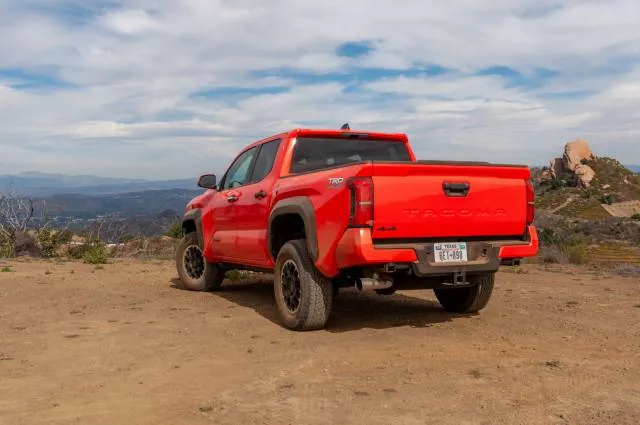
Every Tacoma model, except for the base SR, comes standard with a versatile deck rail system featuring four tie-down cleats for secure cargo management. Available options include LED bed lighting and a convenient bed storage box. Toyota also offers a comprehensive catalog of bed accessories, including various bed liners, a bed extender for longer items, and additional tie-downs, allowing owners to customize their truck for specific hauling needs.
Advantage: Tacoma for more space inside and in the bed. The Tacoma generally offers slightly more rear legroom in its crew cab, slightly longer bed options, and a more comprehensive approach to interior storage and bed utility accessories. While the differences might seem incremental, they contribute to a more versatile and comfortable experience for passengers and cargo alike.
Frontier vs. Tacoma: Styling – Rugged Aesthetics
The visual appeal of a pickup truck is a significant factor for many buyers, embodying ruggedness, capability, and a sense of adventure. Both the 2025 Nissan Frontier and the 2025 Toyota Tacoma represent contemporary takes on traditional truck styling, drawing inspiration from their full-size counterparts but executing their designs with distinct personalities.
Nissan Frontier Styling
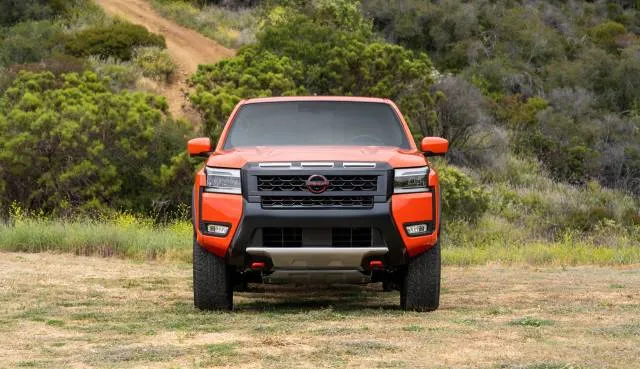
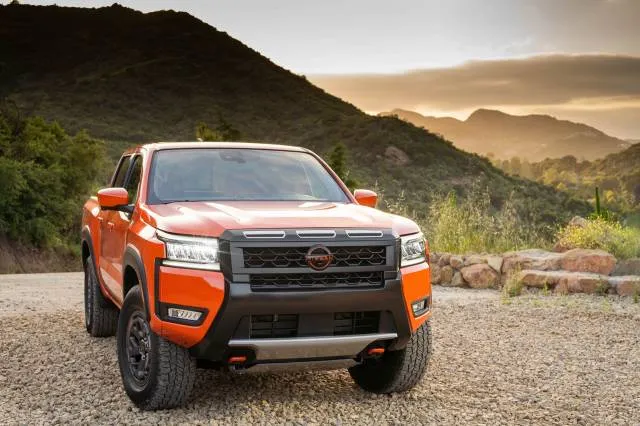
The Frontier presents a slightly blockier and more muscular aesthetic. Its design is characterized by pronounced upper character lines that flow seamlessly from the fender flares, creating a sense of robust strength. A complementary lower character line on the doors, paired with the flares, hints at a subtle "Coke-bottle" shape, adding a touch of classic truck design. The front fascia is dominated by a high, upright grille that integrates with rectangular headlights. These headlights feature available flourishing LED light signatures that give the truck a modern and assertive gaze. Pro models distinguish themselves with unique grilles and a taller stance, emphasizing their off-road readiness. Nissan has also cleverly offered exterior packages, including a nostalgic nod to the beloved 1980s "Hardbody" pickup, appealing to a sense of heritage.
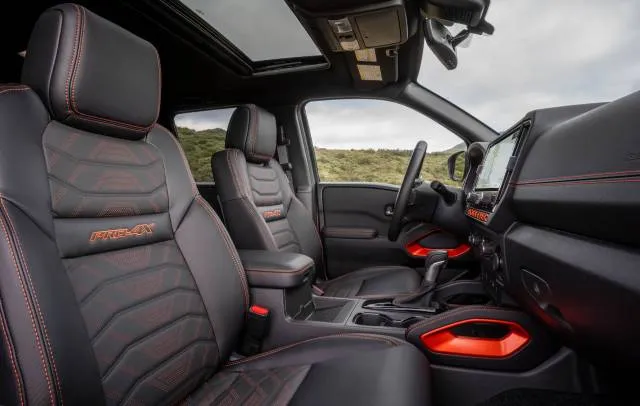
Inside, the Frontier’s cabin is designed with an "all-business" ethos. It prioritizes functionality and durability, featuring numerous hard-plastic surfaces that are easy to clean and withstand rigorous use. Despite its utilitarian nature, the interior integrates modern conveniences, most notably a sizable center touchscreen infotainment system. The physical controls are large, intuitively placed, and easy to operate even with gloves on, reflecting its work-truck roots. Nissan’s interior color palette is straightforward, primarily offering charcoal (black) upholstery and trim, reinforcing its no-nonsense character.
Toyota Tacoma Styling
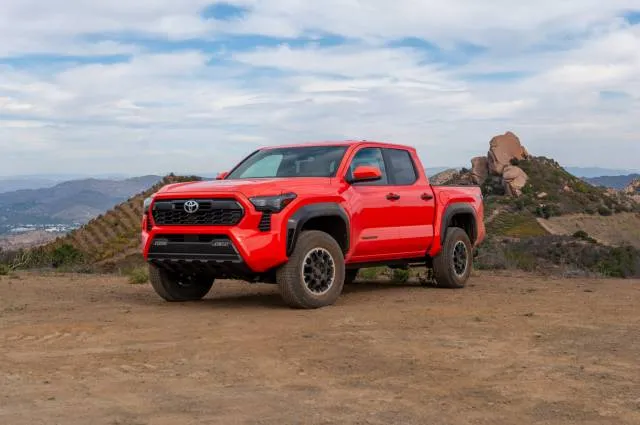
Over at Toyota, the Tacoma’s design language is similarly bold and purposeful, with a chunky, athletic stance. Its grille is also prominent but doesn’t extend as high into the hood as the Frontier’s, giving it a slightly different visual balance. The flanks feature more angular and aggressive wheel flares, which are a hallmark of Toyota’s TRD (Toyota Racing Development) styling. A lower character line gracefully rises from each front wheel well before subtly falling towards the rear, adding dynamic tension to its profile. The overall look is upright, commanding, and unmistakably modern truck.
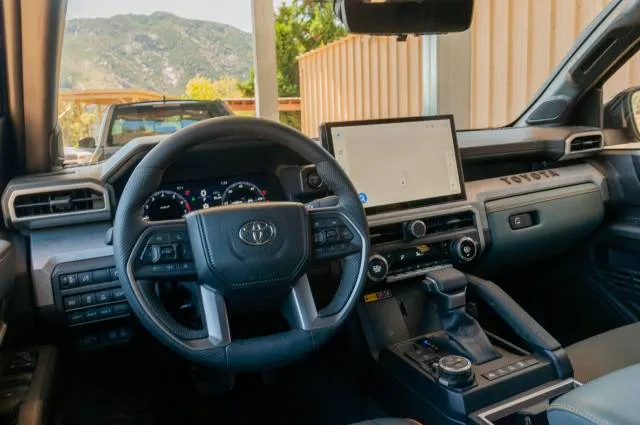
The Tacoma’s interior mirrors its exterior with a chunky, rugged aesthetic. It features large dials, robust buttons, and blocky details throughout the cabin, reinforcing its durable and adventure-ready image. While mostly black, body-color trim accents are available on certain trims, adding a splash of personality. A key feature of the Tacoma’s cabin is its dual digital screens: a digital gauge cluster and a prominent center touchscreen that appears to "pop out" or float above the center stack rather than being fully integrated. This design choice provides a contemporary feel. The Tacoma boasts a larger available center screen, measuring up to 14.0 inches on higher trims, compared to the Frontier’s 12.3-inch maximum. Like the Frontier, plastic surfaces are prevalent, designed for resilience in a truck environment.
Advantage: Draw. Both trucks successfully convey a rugged, purposeful aesthetic influenced by their larger siblings. The Frontier leans slightly more towards a classic, blocky truck design with a utilitarian interior, while the Tacoma adopts a more angular, modern, and tech-forward approach both inside and out. The choice between them comes down to individual preference for their respective interpretations of modern midsize truck styling.
Frontier vs. Tacoma: Safety – Protection and Driver Assistance
Safety is paramount in any vehicle, and modern trucks are expected to offer not only robust passive safety features but also a comprehensive suite of active driver-assistance technologies. Both the Frontier and Tacoma come equipped with essential safety systems, but their crash-test results and the breadth of standard features vary.
How safe is the Nissan Frontier?
The 2025 Nissan Frontier has received middling and, at times, incomplete crash-test scores from leading safety organizations. From the National Highway Traffic Safety Administration (NHTSA), it achieved a respectable five out of five stars in the side crash test but only three stars in the rollover test, indicating a potential area for improvement. The Insurance Institute for Highway Safety (IIHS) has awarded the Frontier a mix of "Good" and "Acceptable" ratings in its various crash tests, which, while not poor, are insufficient to earn it a "Top Safety Pick" or "Top Safety Pick+" award from the organization.
Despite these mixed crash ratings, Nissan has made a strong commitment to active safety by equipping the Frontier with a generous array of standard safety features across all trim levels. This includes automatic emergency braking with pedestrian detection for both the front and rear, blind-spot monitors to assist with lane changes, lane-departure warnings, rear cross-traffic alerts, adaptive cruise control for maintaining safe following distances, automatic high beams for improved nighttime visibility, and rear parking sensors to aid in maneuvering. A surround-view camera system, offering a 360-degree bird’s-eye view, is also available on higher trims, significantly enhancing parking and low-speed maneuvering safety.
How safe is the Toyota Tacoma?
The 2025 Toyota Tacoma, being a newer generation, has yet to undergo full crash testing by the IIHS. In limited NHTSA testing, it received three stars for frontal crashes and an excellent five stars for side crashes, similar to the Frontier in some aspects. However, Toyota equips the Tacoma with its comprehensive Toyota Safety Sense 3.0 suite as standard on all models. This impressive package includes automatic emergency braking with pedestrian detection, active lane control (which helps keep the truck centered in its lane), adaptive cruise control, and automatic high beams.
Beyond these standard features, higher-line Tacoma models or optional packages offer additional advanced safety technologies. These include blind-spot monitors, rear cross-traffic alerts, front and rear parking sensors, and a surround-view camera system, providing a similar level of driver assistance to the Frontier’s available offerings.
Advantage: Draw. Both trucks offer a comprehensive set of standard active safety features, demonstrating a commitment to driver and passenger protection. While the Frontier has a more complete, albeit mixed, set of crash test results from the IIHS, the Tacoma’s latest generation safety suite (Toyota Safety Sense 3.0) is cutting-edge. The incomplete crash test data for the Tacoma prevents a definitive declaration, but both trucks provide a high level of driver assistance and passive safety measures.
Which is better: Frontier or Tacoma?
The 2025 Toyota Tacoma ultimately emerges as the victor in this head-to-head comparison, securing a TCC Rating of 6.3 out of 10, compared to the 5.5 out of 10 for the Nissan Frontier. This outcome holds true even with recent reports suggesting that Toyota may no longer be the most reliable car brand, as its overall package still represents a more advanced and versatile offering in the midsize truck segment. (Read more about how we rate cars.)
The reasons for the Tacoma’s lead are numerous and compelling. It is a more modern truck, benefiting from a recent comprehensive redesign that brings with it a significantly more advanced interior technology suite, including larger available touchscreens and digital gauge clusters. Its powertrain lineup is far more diverse and sophisticated, highlighted by the availability of a powerful and relatively efficient hybrid system. Furthermore, the Tacoma’s suspension options, particularly the multi-link coil-spring rear suspension on crew cab models, provide a notably more refined and comfortable ride than the Frontier’s traditional leaf-spring setup.
Toyota’s commitment to catering to a wide range of buyers is evident in the Tacoma’s larger and more varied lineup, which includes specialized off-road variants like the TRD Pro for high-speed desert runs and the Trailhunter for dedicated overlanding and rock crawling. This breadth of choice allows buyers to select a Tacoma perfectly tailored to their specific adventure or work needs.
However, the 2025 Nissan Frontier remains a highly appealing choice for a particular segment of the market. It offers a more straightforward, no-nonsense approach to truck ownership. Its single V-6 powertrain is robust and reliable, delivering strong, consistent power for daily driving and towing. Crucially, the Frontier often appeals for its price, particularly in its mid-range trims, offering excellent value for money. It also boasts a slightly higher maximum towing capacity, making it a strong contender for those whose primary need is to pull heavy loads. The Frontier can confidently perform just as much, if not more, traditional truck work than the Tacoma, often at a more accessible price point.
Winner: The Tacoma. While we highly recommend the Toyota Tacoma for its advanced features, superior technology, diverse powertrain options, and refined ride quality, we fully understand that the Nissan Frontier represents a fantastic value proposition and a capable workhorse for buyers operating within a tighter budget or those who appreciate its simpler, more traditional truck experience. The best choice ultimately depends on individual priorities, but for the majority of buyers seeking a modern, versatile, and highly capable midsize truck, the Tacoma is the clear frontrunner.
