
 By admin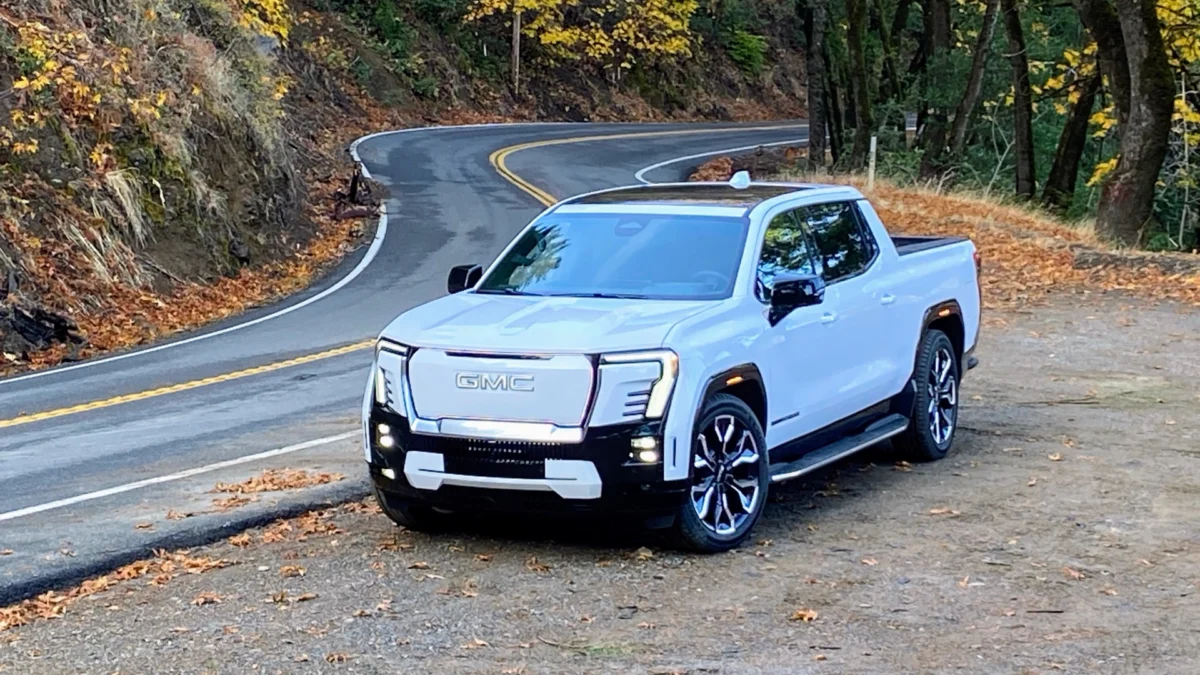
Electric pickup trucks are rapidly carving out a significant niche in the automotive market, challenging the long-held dominance of their gasoline and diesel counterparts. While they may not yet universally match the absolute massive towing capacities of heavy-duty diesel trucks, for the vast majority of other purposes, electric pickups present a compelling and often superior alternative. They are inherently cleaner, producing zero tailpipe emissions, and operate with a serene quietness that transforms the driving experience. Furthermore, their electric powertrains deliver instant torque, making them remarkably quicker and more exhilarating to drive. These vehicles are also at the forefront of automotive technology, boasting advanced infotainment systems, sophisticated driver-assistance features, and connectivity options that often surpass traditional trucks. In many practical scenarios, their innovative designs and powerful electric motors make them more capable, particularly in off-road conditions or as mobile power sources. The main downsides remain their usually higher upfront purchase price and the significant reduction in potential range when towing heavy loads, a critical consideration for many truck buyers.

The pickup truck segment itself is a titan of the American auto industry. These vehicles consistently account for more than 20% of annual sales, a substantial portion of the approximately 16 million total vehicles sold in the U.S. in 2024. Beyond sheer volume, these big haulers are also enormous profit drivers for automakers. According to J.D. Power, pickup truck prices have steadily climbed, becoming 3% more expensive every year since 2009, reflecting their strong demand and increasing feature sets. In 2024, the average price tag for a new pickup truck exceeded $60,000, underscoring their transformation from utilitarian workhorses to sophisticated, often luxurious, family vehicles.
This evolution is particularly evident in the current generation of pickups. What was once a basic, long-lasting work truck has been loaded with luxury and convenience options, morphing into a versatile family truck capable of doubling as a mobile boardroom. Electric trucks push this evolution even further. Built on dedicated EV platforms, they become true tech showcases for their respective brands, reimagining and recreating what’s possible within the traditional pickup truck form factor. Their architecture often allows for innovative features like air suspensions that provide exceptional ride quality and variable ground clearance, enhancing both comfort and off-road prowess. Clever storage areas, such as large "frunks" (front trunks) and gear tunnels, optimize the space afforded by the absence of a traditional engine and drivetrain, offering unprecedented utility and security.

The rapid ascendancy of electric pickups is well-deserved, with several models already earning critical acclaim. The Rivian R1T, for instance, clinched The Car Connection’s prestigious Best Pickup Truck To Buy 2025 award, lauded for its blistering acceleration, adventurous off-road capabilities, refined handling, and superlative telematics integration. Two years prior, Ford significantly improved upon its bestselling F-Series lineup with the F-150 Lightning electric pickup, which earned The Car Connection’s overall Best Car To Buy 2023 award. These aren’t merely "great trucks"; they represent an evolutionary leap, signaling a paradigm shift in automotive design and functionality.
Despite these successes, the broader electric pickup segment faced a mixed landscape in 2024. While GM had an early entrant with the exclusive GMC Hummer EV pickup, other major players like Chevrolet and Tesla were still playing catch-up with their more mainstream offerings. Ram, a perennial contender in the truck market, announced in December 2024 a further delay for its highly anticipated Ram REV electric pickup truck until 2026, pushing its market entry back once more.

Overall, electric trucks and delivery vans accounted for 132,993 sales in 2024, representing 11.7% of all EV sales. This marked a modest increase from 10.2% in 2023, but still constituted less than 1% of the total approximately 16 million vehicles sold in the U.S. that year. This modest growth raises questions about whether the burgeoning electric pickup segment will falter under potential political headwinds, such as shifting consumer sentiment, infrastructure challenges, or changes in regulatory support.
Government incentives play a crucial role in mitigating the higher upfront cost of EVs. The revised 2025 federal EV tax credit, offering up to $7,500, applies to eligible SUVs and trucks. To qualify, vehicles must cost less than $80,000, have final assembly in North America, and at least 60% of their battery pack components sourced from North America. The credit also includes income limits: up to $150,000 for single filers, $225,000 for head-of-household filers, and $300,000 for joint filers. For comprehensive details on income limits and other factors, consumers are encouraged to visit the official IRS page. A significant enhancement for 2025 is that qualifying electric trucks can have this credit absorbed directly into the sticker price at the point of purchase, eliminating the need for buyers to wait until filing their taxes to realize the savings. This immediate discount can significantly impact affordability and stimulate sales.

The following section details some of the most prominent electric trucks currently on sale or under active development. Prices and estimated ranges, like the technology itself, are subject to change as the market evolves.
Rivian R1T
R1T Models and Prices (Estimated Starting MSRP, subject to change):

- Dual-Motor AWD Standard Pack: ~$73,000 – $75,000
- Dual-Motor AWD Large Pack: ~$78,000 – $80,000
- Dual-Motor AWD Max Pack: ~$88,000 – $90,000
- Quad-Motor AWD Large Pack: ~$87,000 – $90,000
R1T Specs and Range (Estimated, dependent on configuration):
- Standard Pack (Dual-Motor): ~270 miles range; 0-60 mph in 4.5 seconds; 533 hp, 610 lb-ft torque.
- Large Pack (Dual-Motor): ~350 miles range; 0-60 mph in 4.5 seconds; 533 hp, 610 lb-ft torque.
- Large Pack (Quad-Motor): ~320 miles range; 0-60 mph in 3.0 seconds; 835 hp, 908 lb-ft torque.
- Max Pack (Dual-Motor): ~420 miles range (with aero wheels); 0-60 mph in 3.4 seconds (Performance option); 665 hp, 829 lb-ft torque.
- Towing Capacity: Up to 11,000 pounds
- Ground Clearance: Up to 14.9 inches (with air suspension)
The Rivian R1T holds a unique place in the EV landscape, being the first battery-electric pickup truck to reach mass market production, preceding even its R1S SUV sibling. Its groundbreaking design and performance immediately garnered accolades, including Motor Authority’s Best Car To Buy 2022 award, and its continued refinement has kept it at the top, earning The Car Connection’s Best Pickup To Buy 2025.

California-based Rivian offers the R1T with a sophisticated range of options. Buyers can choose from three battery pack sizes—Standard, Large, and Max—and two primary motor configurations: the robust Dual-Motor all-wheel drive and the even more powerful Quad-Motor AWD. The base Dual Standard model, even at a hefty 7,000 pounds, delivers impressive performance with a 0-60 mph time of 4.5 seconds. For those seeking even greater thrills, the Dual Large and Dual Max configurations can be optioned with the Performance pack, slashing the 0-60 mph sprint to a blistering 3.4 seconds. Adventure enthusiasts can opt for the All-Terrain pack, which adds enhanced skid plates, specialized off-road tires, and a full-size spare for extreme durability. The Dual Max pack stands out as the range champion, achieving an estimated 420 miles on a single charge, though this figure is best realized with the optional $2,200 aero wheels.
Beyond its speed, the R1T is exceptionally capable. It boasts a substantial towing capacity of 11,000 pounds and features an advanced air suspension system that allows for nearly 15 inches of ground clearance, making it highly adept for supreme off-roading. With over 50 different drive mode configurations, the R1T can adapt to almost any driving condition. Its footprint, while the length of a mid-size truck, has the width of a full-size truck, which translates into a roomy, luxurious crew cab interior. Rivian has also innovated with cargo solutions, notably the unique "gear tunnel" positioned between the cab and the bed. This weather-sealed pass-through compartment can hold up to 300 pounds of gear and features power-operated doors that double as convenient seats, perfect for outdoor activities like changing into ski boots. The R1T excels as both an excellent daily driver and a versatile weekend getaway vehicle, offering silent, emission-free off-roading, which is an invaluable bonus for nature lovers.
Ford F-150 Lightning
F-150 Lightning Models and Prices (Estimated Starting MSRP):
- Pro: ~$55,000 – $60,000
- XLT: ~$65,000 – $70,000
- Flash: ~$70,000 – $75,000
- Lariat: ~$78,000 – $82,000
- Platinum: ~$95,000 – $100,000+
F-150 Lightning Specs and Range (Estimated):
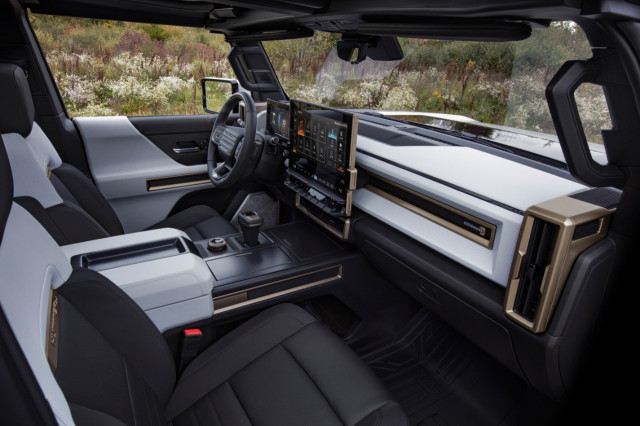
- Standard Range Battery (98 kWh): 240 miles range; 452 hp, 775 lb-ft torque.
- Extended Range Battery (131 kWh): 320 miles range; 580 hp, 775 lb-ft torque.
- Towing Capacity: Up to 10,000 pounds
- Payload Capacity: Up to 2,000 pounds
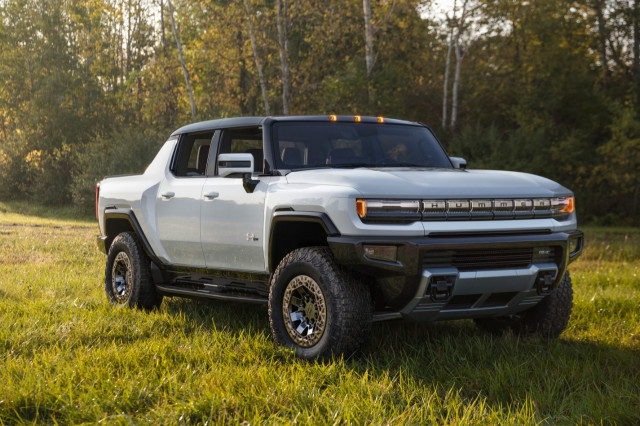
The Ford F-150 Lightning is a testament to Ford’s commitment to electrification, taking its bestselling model and electrifying it without sacrificing its core utility. Sold in Pro, XLT, Flash, Lariat, and Platinum trims, the Lightning maintains much of the familiar F-150 architecture from the crew cab rearward, including its 5-foot-6 bed. This design choice allows for seamless interchangeability of many accessories between gas and electric F-150 models, easing the transition for existing Ford truck owners.
Power is delivered by dual in-board motors, paired with either a standard-range 98-kWh battery pack offering an estimated 240 miles of range or an extended-range 131-kWh pack capable of an impressive 320 miles. Both battery configurations generate a formidable 775 lb-ft of instant torque. The standard-range models produce 452 horsepower, while trucks equipped with the larger battery pack are rated at a potent 580 horsepower. The Lightning is a true workhorse, capable of towing up to 10,000 pounds and handling a maximum payload of 2,000 pounds, making it suitable for a wide array of personal and commercial tasks.
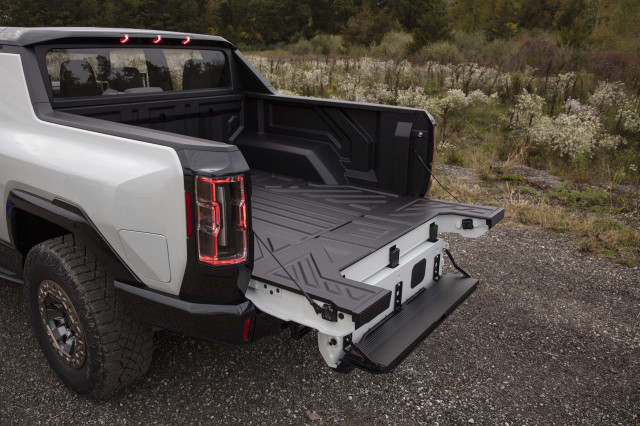
One of the Lightning’s most celebrated innovations is its "Mega Power Frunk." This spacious front trunk offers 14.1 cubic feet of storage, can carry up to 400 pounds, and is not only waterproof and secure but also features power outlets, effectively doubling as a massive cooler or a versatile power source. It’s often easier to load and unload groceries or tools into the frunk than the traditional bed. Furthermore, when equipped with Ford’s innovative Home Integration System and Pro Power Onboard, the Lightning can supply up to 9.6 kW of power from outlets in the bed, or even act as a crucial backup home generator in the event of power outages, showcasing its unparalleled versatility. Ford’s bestselling truck has indeed gotten significantly better with electrification.
GMC Hummer EV Pickup
Hummer EV Pickup Models and Prices (Estimated Starting MSRP):
- EV2X: ~$97,000 – $100,000
- EV3X: ~$107,000 – $110,000
- Edition 1 (Limited Availability): ~$112,000 – $115,000+
Hummer EV Pickup Specs and Range (Estimated):
- EV2X (Two-Motor): ~311 miles range; 625 hp, 7,400 lb-ft torque (wheel torque); 0-60 mph in ~4.5 seconds.
- EV3X (Three-Motor): ~329 miles range; 1,000 hp, 11,500 lb-ft torque (wheel torque); 0-60 mph in ~3.0 seconds.
- Towing Capacity: Up to 11,000 pounds
- Payload Capacity: Up to 1,300 pounds
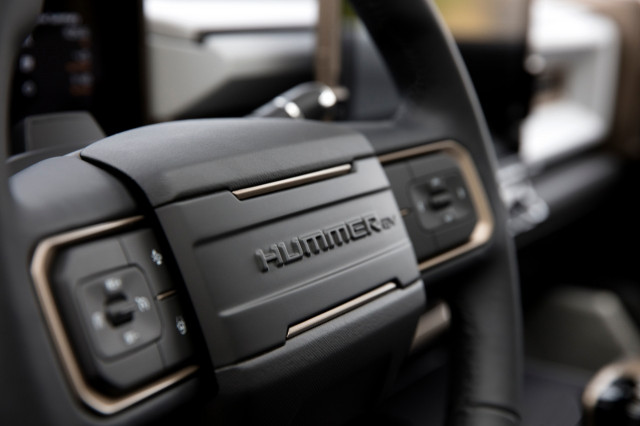
Once a symbol of environmental excess, the return of the Hummer as a zero-tailpipe-emission electric vehicle epitomizes the dramatic shifts in the automotive industry over the past decade. The GMC Hummer EV Pickup is not just a truck; it’s a technological showcase, blending extreme capability with exclusive features. Its unique four-wheel steering system enables the much-talked-about "Crab Walk" mode, allowing the vehicle to move diagonally, a marvel of engineering for navigating tight off-road trails. An adaptive air suspension system provides an incredible ground clearance of up to 15.9 inches, further enhancing its off-road prowess.
The Hummer EV also integrates GM’s advanced Super Cruise hands-free driving system for highway travel and features a distinctive four-panel removable roof that can be conveniently stowed in the frunk, offering an open-air driving experience. Powering this behemoth is a three-motor system in its top configurations, delivering an astounding 1,000 horsepower and an estimated range of 329 miles. Despite weighing over 9,000 pounds, the Hummer EV can rocket from 0-60 mph in approximately 3.0 seconds, thanks to its immense power and instantaneous electric torque. Its colossal 11,500 lb-ft of wheel torque (a more impressive figure than engine torque) translates into a formidable towing capacity of up to 11,000 pounds, proving that exclusivity and extreme capability can coexist with an electric powertrain.
Chevrolet Silverado EV
Silverado EV Models and Prices (Estimated Starting MSRP):

- WT (Work Truck): ~$45,000 – $50,000 (fleet-focused)
- RST First Edition: ~$105,000 – $110,000 (initial launch model)
- 3LT: ~$74,000 – $78,000
- Trailboss: ~$80,000 – $85,000 (future release)
Silverado EV Specs and Range (Estimated):
- WT (Front & Rear Motors): ~450 miles range (for specific configurations); 510 hp, 625 lb-ft torque.
- RST Max Range (Dual Motors): ~460 miles range (with 205 kWh battery); 664 hp, 780 lb-ft torque.
- Towing Capacity: Up to 10,000 pounds (RST), up to 8,000 pounds (WT).
- Payload Capacity: Up to 1,300 pounds (RST), up to 1,200 pounds (WT).
The Chevrolet Silverado EV, while sharing its iconic nameplate with the traditional Silverado, is fundamentally a different vehicle, built from the ground up on GM’s Ultium battery and motor propulsion platform, shared with the GMC Hummer EV. It is offered exclusively with a crew cab and a 5-foot-11 bed, and like its Hummer cousin, it’s a substantial vehicle, weighing around 8,000 pounds.
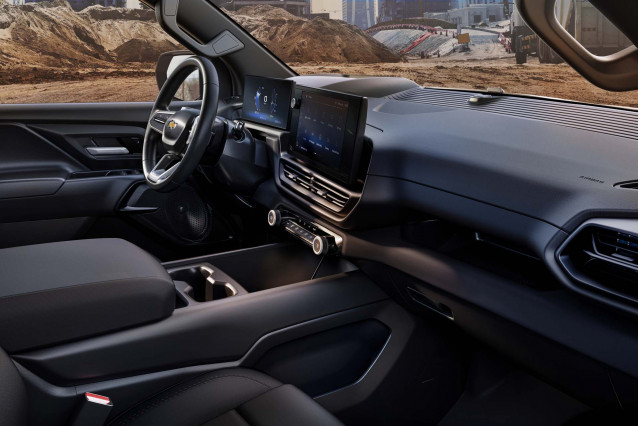
The Silverado EV Work Truck (WT) variant is designed for utility, featuring front and rear motors that collectively produce 510 horsepower and 625 lb-ft of torque. With standard all-wheel drive and a robust steel suspension, the WT is capable of towing up to 8,000 pounds and carrying a payload of up to 1,200 pounds. While Chevy initially did not disclose the precise battery size for the base model, it’s designed to meet demanding fleet needs. The flagship RST Max Range model, on the other hand, is a powerhouse, boasting 664 horsepower and 780 lb-ft of torque. It is equipped with a large 24-module, 205-kWh battery pack, providing an estimated range of 460 miles. Chevy also quotes an impressive 0-60 mph time of less than 4.5 seconds for the RST, alongside a towing capacity of 10,000 pounds, though its payload is slightly lower at 1,300 pounds. The RST model benefits from an adaptive air suspension with four inches of height adjustment and rear-axle steering for enhanced maneuverability. A standout feature of the RST is its innovative Multi-Flex Midgate, reminiscent of the old Chevy Avalanche. This 60/40 split mid-gate opens up from the cabin into the bed, allowing items up to 9-feet long to fit. When combined with the standard Multi-Flex tailgate and its raised rear stop, the bed can accommodate items up to an astounding 10-feet-10-inches in length, offering unparalleled cargo flexibility.
GMC Sierra EV
GMC Sierra EV Models and Prices (Estimated Starting MSRP):
- Denali Edition 1 (Launch Model): ~$107,000 – $110,000
- AT4: ~$80,000 – $85,000 (future release)
- Elevation: ~$70,000 – $75,000 (future release)
GMC Sierra EV Specs and Range (Estimated):
- Denali Edition 1 (Dual Motors): ~440 miles range (with 200 kWh+ battery); 754 hp, 785 lb-ft torque.
- Towing Capacity: Up to 10,500 pounds
- Payload Capacity: Up to 1,300 pounds
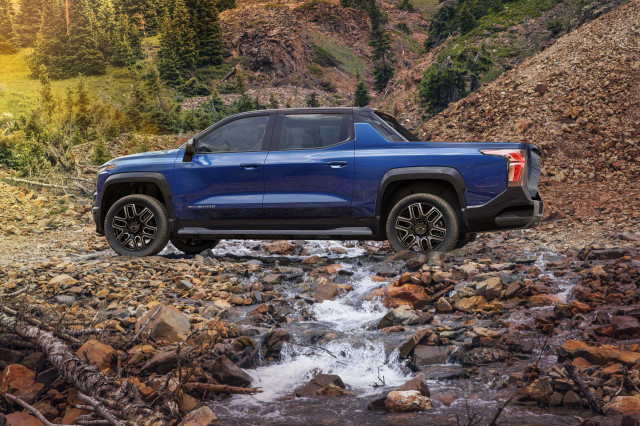
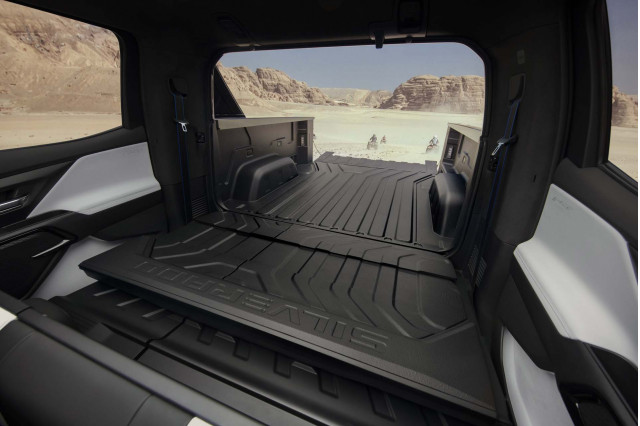
Nearly identical in its underlying Ultium platform to the Chevrolet Silverado EV, the GMC Sierra EV is positioned as a more luxurious electric truck, initially offered only in top-tier trims. While plans exist for more approachable Elevation and AT4 models, the launch focused on the premium Denali Edition 1. The Sierra EV’s massive battery packs feed two permanent magnet motors, providing standard all-wheel drive and a robust torque rating of 785 lb-ft. This setup allows it to hit 60 mph in a quick 4.5 seconds.

The Sierra EV aims for a more sophisticated experience than the flashier Hummer EV Pickup and even the Silverado EV. It includes an adaptive air suspension for refined ride quality and variable height, as well as rear-wheel steering to enhance maneuverability. It boasts a strong 10,500-pound towing capacity. The large crew cab features a Multi-Pro Midgate that opens up from the inside, extending the 5-foot-11 bed to 9-foot-1. By flipping down the 6-way power tailgate’s bed extender, the bed can stretch out to an impressive length of 10-foot-10, mirroring the Silverado EV’s exceptional cargo versatility. The Sierra EV is designed to cater to a discerning clientele who demand both premium features and robust electric performance.
Tesla Cybertruck
Cybertruck Models and Prices (Estimated Starting MSRP):

- Rear-Wheel Drive: ~$60,990 (expected 2025)
- All-Wheel Drive: ~$79,990
- Cyberbeast (Tri-Motor AWD): ~$99,990
Cybertruck Specs and Range (Estimated):
- Rear-Wheel Drive: ~250 miles range; 0-60 mph in 6.5 seconds.
- All-Wheel Drive: ~340 miles range; 600 hp, 7,435 lb-ft torque (wheel torque); 0-60 mph in 4.1 seconds.
- Cyberbeast (Tri-Motor AWD): ~320 miles range; 845 hp, 10,290 lb-ft torque (wheel torque); 0-60 mph in 2.6 seconds.
- Towing Capacity: Up to 11,000 pounds
- Payload Capacity: Up to 2,500 pounds
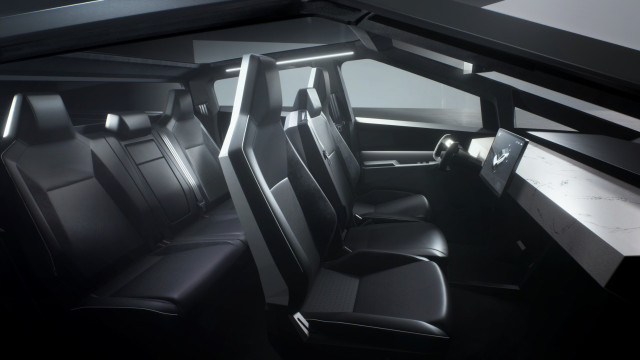
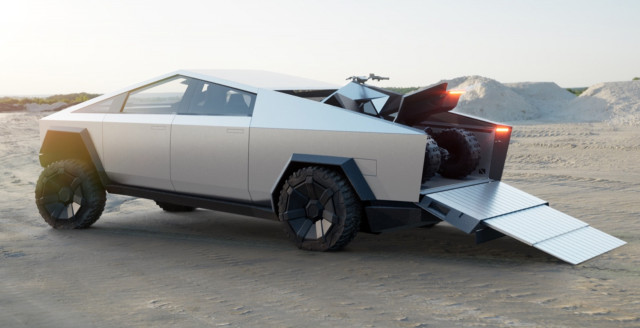
The Tesla Cybertruck stands apart from all other pickups, electric or otherwise, with its polarizing and utterly unique design. The stainless-steel wedge body, combined with a "vault" bed measuring 6-foot-4 (offering 100 cubic feet of lockable storage), defines its unconventional aesthetic. It’s designed to carry up to 2,500 pounds of payload or tow up to 11,000 pounds, while seating six occupants. Its performance is undeniably Tesla-esque, with the top-tier Cyberbeast model capable of hitting 60 mph in under three seconds.

Its angular vertical ends and triangular points, along with a massive single-blade windshield wiper, ensure it looks like nothing else on the road—a design choice that has been met with both fervent enthusiasm and strong criticism. Blistering acceleration and futuristic dashboard interfaces certainly align with Tesla CEO Elon Musk’s vision of a vehicle suited for, perhaps, life on Mars. However, despite its adaptive air suspension that can raise the ground clearance to an impressive 17 inches, its real-world adeptness at handling the diverse and often challenging contours of planet Earth, especially off-road, is still a subject of ongoing debate and evaluation by early owners. Its unique exoskeleton construction also presents challenges for repair and customization.
Ram 1500 EV (REV)
Price: TBD (Expected to be competitive with other full-size electric pickups, likely starting in the $60,000 – $70,000 range)
Expected Delivery: 2026

Ram, a latecomer to the electric pickup market, first previewed its intentions with the Ram 1500 Revolution BEV Concept unveiled early in 2023. This concept provided a strong indication of the production version, which was initially expected sooner but has now been delayed to 2026, giving competitors a significant head start. The long and lean concept featured two electric motors for all-wheel drive, though Ram did not disclose specific battery pack sizes or whether it would utilize 400-volt or 800-volt architecture.
The concept highlighted several innovative features, including a crew cab that had grown by 4.0 inches, rear suicide doors, and a bold design choice to eliminate the B-pillar between the front and rear doors for an expansive opening. The configurable cabin was designed to be exceptionally flexible, with the potential to be equipped with a third row of jump seats and a removable mid-gate option that could even allow the jump seats to be positioned outside of the main cabin for unique cargo or passenger arrangements. A distinctive center tunnel, akin to a driveshaft tunnel, was designed to run from the bed through the cabin and into the frunk, enabling the truck to haul exceptionally long items—up to 18 feet in length—a revolutionary feature for pickup utility. The production Ram REV will need to deliver on these promises and offer compelling performance and range to compete in a rapidly maturing segment.
RIP: Electric trucks that never made it
The road to electric vehicle innovation is often paved with good intentions but fraught with financial and logistical challenges. Not all ambitious electric truck projects survive the journey from concept to mass production.
Lordstown Endurance
Price: ~$65,000 (initial target)
Expected Delivery: Lordstown shipped the first batch of trucks to fleet customers in December 2022, but the company later filed for bankruptcy.
The Lordstown Endurance was envisioned as a mid-size electric work truck, aiming to fill a niche for fleet customers. It boasted an innovative powertrain, featuring four in-wheel motors, one at each wheel, producing a combined 550 horsepower. Lordstown estimated a modest 193-mile range from its 109-kWh battery unit. Performance figures included a 0-60 mph time of 6.3 seconds and a top speed of 118 mph. The truck was designed to haul a maximum payload of 1,050 pounds and tow up to 8,000 pounds.
However, the journey for Lordstown Motors was turbulent. Beset by significant financial woes, manufacturing challenges, and an SEC inquiry over allegations of executives selling shares before adverse news broke, the company struggled to scale production. Ultimately, the Lordstown Endurance electric truck factory was acquired by iPhone maker Foxconn. While an initial batch of approximately 500 Endurance trucks was built and delivered to fleet customers in late 2022, the company filed for Chapter 11 bankruptcy in June 2023, effectively ending the Endurance’s aspirations for broader market penetration. Lordstown’s story serves as a cautionary tale of the immense capital and operational hurdles involved in bringing new automotive manufacturers and complex electric vehicles to market.

In conclusion, the electric pickup truck segment is a vibrant and rapidly evolving frontier in the automotive world. While still a small fraction of overall vehicle sales, its growth is undeniable, driven by a compelling blend of utility, innovation, and environmental responsibility. With award-winning models like the Rivian R1T and Ford F-150 Lightning leading the charge, and established giants like GM and Tesla pushing boundaries, these vehicles are redefining what a pickup truck can be. The interplay of consumer demand, technological advancements, and government incentives will continue to shape this segment’s trajectory, determining whether it can overcome present challenges and truly capture a larger share of the lucrative pickup market. The "modest gain" in sales, coupled with potential political headwinds and the high cost of entry, means the future of electric pickups, while promising, remains an exciting and closely watched development in the automotive industry.
