
 By admin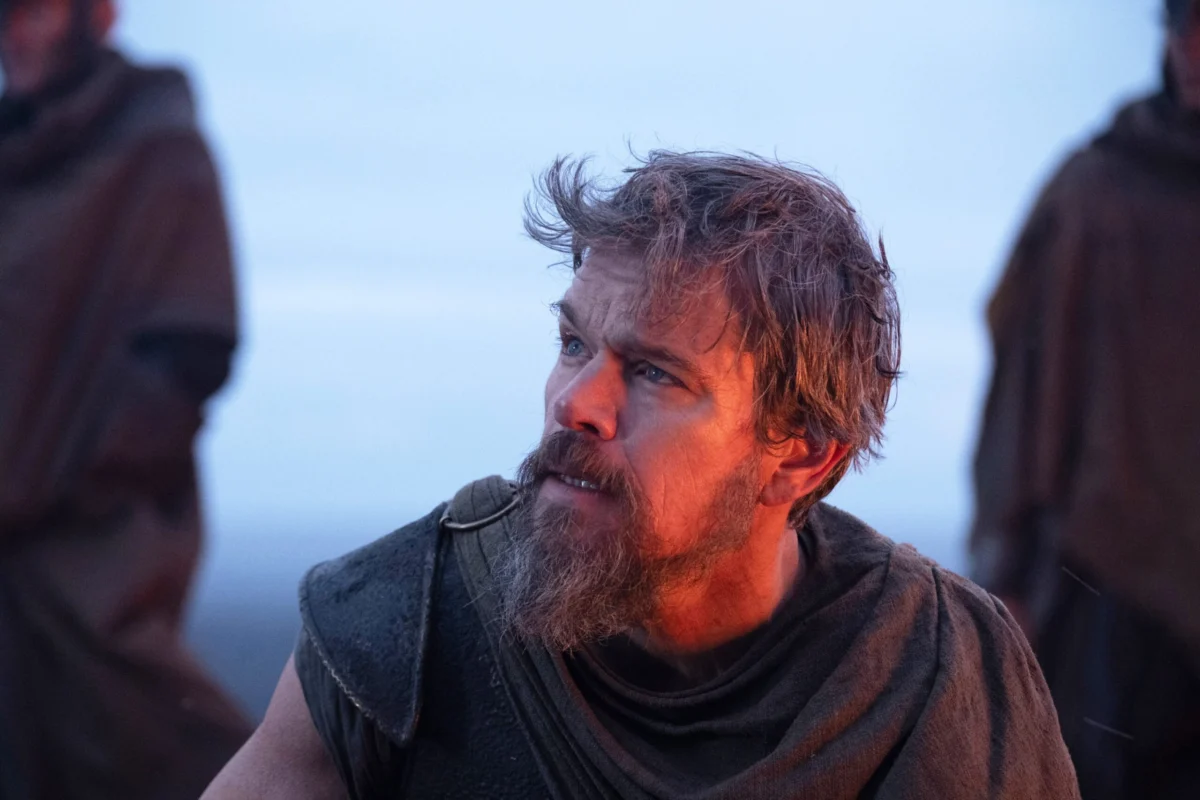
Christopher Nolan, a filmmaker renowned for his labyrinthine narratives and grand-scale productions, once again plunges audiences into a complex and awe-inspiring cinematic experience with his interpretation of Homer’s timeless epic, "The Odyssey." This ambitious adaptation, boasting an A-list ensemble cast and Nolan’s signature non-linear storytelling, transforms the ancient Greek hero Odysseus’s arduous 10-year journey home from the Trojan War into a sprawling, nearly three-hour odyssey that intertwines historical events with profound psychological exploration.
At the heart of Nolan’s vision is a meticulously crafted narrative that unfolds through multiple perspectives, echoing the oral tradition of ancient storytelling. The film employs a bard, brought to life by the distinctive voice of Travis Scott, who acts as a cosmic narrator, weaving tales of Odysseus’s legendary exploits. Interspersed with these bardic recitations are Odysseus’s own introspective reflections, as he grapples with the trauma and moral compromises of his homecoming voyage. This dual narrative structure invites viewers to question the nature of truth, memory, and the subjective experience of epic events.
The foundation of Nolan’s "The Odyssey" is laid in the tumultuous aftermath of the 10-year Trojan War, a conflict ignited by the abduction of Helen, the most beautiful woman in the world, by Prince Paris of Troy. This legendary beauty, portrayed with captivating allure by Lupita Nyong’o, left her scorned husband, King Menelaus (Jon Bernthal), seeking retribution. His plea for aid was answered by his brother, Agamemnon (Benny Safdie), the powerful king of all ancient Greece, who, despite his own marriage to Helen’s twin sister Clytemnestra (also played by Nyong’o), rallied an unprecedented Greek army.
Before embarking on the fateful journey to Troy, Odysseus, the shrewd king of Ithaca, played with stoic resilience by Matt Damon, made a solemn promise to his devoted wife, Penelope (Anne Hathaway). He stipulated that should their young son, Telemachus (Tom Holland), come of age before his return, Penelope was to remarry. In the opulent halls of Ithaca’s palace, Odysseus was known not only for his wisdom but also for his extraordinary strength, symbolized by his unparalleled ability to string his formidable bow. This prowess was often showcased during lavish parties, where he would challenge guests to attempt to wield the weapon, only to effortlessly string it himself and then demonstrate his archery skills by shooting an arrow through a row of twelve axes—a feat of entertainment that underscored his divine favor and martial superiority.
The initial phase of the war saw the Greek forces, including Odysseus, embark on their campaign. To circumvent the seemingly insurmountable defenses of Troy, Odysseus devised a cunning strategy: the Trojan Horse. This monumental wooden effigy, a masterpiece of deception, concealed a contingent of Greek soldiers, including Odysseus himself. The ruse was executed flawlessly; the main Greek fleet feigned retreat, leaving the colossal horse as a supposed peace offering. A single soldier, Sinon (Elliot Page), was deliberately left behind, unaware of the true plan, tasked with convincing the Trojans to accept the horse into their city. His staged betrayal and subsequent "discovery" of the horse as a sacred offering to Athena (Zendaya) proved instrumental. However, in a tragic twist of fate, the Trojans, suspecting treachery, executed Sinon, a cruel irony that would later resonate with Odysseus. The Trojans, blinded by victory and deceived by Sinon’s fabricated narrative, brought the Trojan Horse within their walls. That night, as the city slept, Odysseus and his men emerged from the belly of the horse, signaling the Greek army to return and launch their final assault. The gates of Troy were opened, and the city fell, marking a decisive victory for the Greeks.
The triumphant return journeys of the three kings—Agamemnon, Menelaus, and Odysseus—were far from uneventful, each marked by tragedy and divine retribution. Menelaus returned to Sparta with Helen, whose unparalleled beauty, the cause of the war, was permanently marred by Menelaus’s vengeful scarring, a stark reminder of the conflict’s cost. Agamemnon, anticipating a hero’s welcome in Mycenae, was met with a bloody reception. His wife, Clytemnestra, consumed by grief and rage over the sacrifice of their daughter Iphigenia before the war, exacted a brutal revenge, murdering him shortly after his arrival.
Odysseus and his men, however, faced a different kind of trial, a series of encounters with mythical creatures and divine wrath that tested their endurance and their very souls. Their initial misfortune stemmed from a desecration of Zeus’s sacred law of hospitality during the sack of Troy, a transgression that incurred the wrath of the gods, particularly Poseidon, the god of the sea. Blown off course by ill winds, they landed on the island of the one-eyed cyclops, Polyphemus (Bill Irwin). Trapped in Polyphemus’s cave with his flock of sheep, Odysseus, in a desperate act of survival, blinded the cyclops. This act, however, proved to be a fatal miscalculation, as Polyphemus was a son of Poseidon, igniting the sea god’s eternal fury and setting the stage for Odysseus’s prolonged suffering.
The relentless pursuit of Poseidon steered Odysseus and his remaining men towards the land of the Laestrygonian giants, monstrous cannibals who decimated their fleet, leaving them with only one ship. Their next stop was the island of Aeaea, home to the sorceress Circe (Samantha Morton). Circe, a figure of seductive power and dangerous magic, transformed Odysseus’s men into swine. It was through Odysseus’s cunning and the intervention of Hermes that he managed to break Circe’s enchantment and persuade her to restore his men to their human forms. Before their departure, Circe delivered a crucial prophecy: Odysseus and his surviving crew must journey to the Underworld to consult the prophet Tiresias (James Remar) for guidance on their homeward path.
The descent into the Underworld was a profound and harrowing experience. Here, Odysseus raised an army of the dead, encountering not only Tiresias but also the spectral presence of Sinon. Sinon, still bitter about his betrayal and death, revealed that the fallen Ithacan soldiers were denied eternal rest due to the lack of proper funeral rites. He implored Odysseus to seek vengeance in his name against Antinous, a prominent suitor back in Ithaca. Furthermore, Agamemnon’s spirit emerged, recounting his own tragic homecoming and advising Odysseus to return to Ithaca in disguise, a cautionary tale of hubris and the dangers of misplaced trust.
Tiresias then laid out the perilous route home, a series of deadly obstacles. Odysseus and his men would have to navigate past the enchanting Sirens, whose irresistible songs lured sailors to their doom. They would then face a choice between two equally treacherous paths: the deadly whirlpool Charybdis, which would consume their entire ship, or the six-headed monster Scylla, who would snatch six men from their crew. Despite the dire warnings, Odysseus, harboring a belief that he could defy fate, chose not to fully disclose the prophecy to his men, particularly the choice between Scylla and Charybdis, fearing their despair. He did, however, instruct them to plug their ears with wax to resist the Sirens’ song, while he himself, bound to the mast, was compelled to listen. The Sirens’ song, a haunting melody of ultimate fulfillment and ultimate unattainability, left Odysseus weeping, a profound moment of existential anguish.
The choice between Scylla and Charybdis became a point of contention. Odysseus, driven by his belief in his own ability to outwit destiny, ordered his men to attempt the Charybdis crossing. However, his crew, distrustful of his seemingly reckless command, steered them towards Scylla. As Tiresias had foretold, six men were lost to the monster’s ravenous heads. Now, realizing the extent of Odysseus’s withheld knowledge, the crew, led by the second-in-command Eurylochus (Himsesh Patel), demanded a full disclosure of Tiresias’s prophecy. Odysseus, now resigned to his fate, revealed that all his men would perish upon reaching the island of Apollo, where they were forbidden to harm the sun god’s sacred cattle.
Despite Odysseus’s pleas and their promise, the men, driven by starvation and despair on Apollo’s island, broke their vow and slaughtered one of the sacred cattle. The gods, their fury now fully ignited, unleashed a tempest that destroyed the ship and drowned every man except Odysseus. Washed ashore on the island of Ogygia, Odysseus found himself captive for seven years with the nymph Calypso (Charlize Theron). Banished to this solitary existence after the Olympians’ victory over the Titans, Calypso, through her potent lotus flowers, induced a state of blissful forgetfulness in Odysseus, shielding him from his grief and longing for home. It was only after confronting his trauma and the profound guilt associated with his actions at Troy that Calypso, her purpose served, aided him in constructing a raft and guided him back towards Ithaca. As he was deposited on the shores of his homeland, Athena, the goddess of wisdom and warfare, appeared, confirming his long-awaited return.
Upon finally reaching Ithaca, twenty years after his departure, Odysseus was a changed man, physically and emotionally. He appeared disguised as a beggar, a stark contrast to the heroic king he once was. His first encounter was with Eumaeus (John Leguizamo), the loyal swineherd, who had recently been attacked. It was through the recognition of Argus, Odysseus’s faithful old dog, who, after a brief wag of his tail upon seeing his master, died peacefully, that Odysseus and his son Telemachus were reunited. The reunion was fraught with caution, as Odysseus instructed Telemachus to keep his return a secret from Penelope and to encourage her to finally choose a suitor.
Back in Ithaca, the social fabric had frayed under the weight of Odysseus’s prolonged absence. Despite the lingering whispers of invaders from the sea, Zeus’s law of hospitality still held sway, though it was increasingly challenged by the desperate pleas of Penelope’s suitors. Dozens of noblemen had descended upon the palace, eager to claim Penelope’s hand and, with it, control of Ithaca. Penelope, a paragon of fidelity and cunning, had skillfully fended off their advances, clinging to the hope of Odysseus’s return. Telemachus’s assertion that it was time for her to choose a new husband was met with her understandable anger.
During a feast hosted by the suitors, Odysseus, still in his beggar’s guise, pleaded for food. He was met with scorn and physical abuse, particularly from Antinous, who spat in his bowl. Telemachus intervened, upholding the sanctity of Zeus’s law. Penelope, intrigued by the mysterious beggar, requested a private audience. Hidden behind a screen, Odysseus recounted tales of his service alongside the heroic Odysseus, subtly attempting to gauge Penelope’s resolve and gently nudge her towards remarriage. However, a long-serving slave recognized a distinctive scar on Odysseus’s leg, a mark of his past adventures. He implored her to maintain her silence, a pact that cemented Odysseus’s secrecy. In a moment of profound vulnerability, Odysseus finally confessed the trauma that had haunted him: his guilt over breaking Zeus’s law after the fall of Troy, a transgression that had weighed heavily on his soul.
Meanwhile, Antinous, ever the antagonist, lurked with murderous intent, plotting to kill Telemachus. His sinister plan was momentarily derailed by Penelope’s announcement that she was finally ready to choose a suitor. The following day, the palace doors were sealed for Penelope’s final challenge: the suitors were tasked with stringing Odysseus’s legendary bow and shooting an arrow through twelve axe heads, a feat only Odysseus could accomplish. Telemachus and Eumaeus, foreseeing the ensuing chaos, secured all other weapons upstairs. The suitors, one by one, attempted the challenge and failed miserably, their pride bruised. Antinous, arrogant and impatient, demanded Penelope simply choose the most deserving among them. It was at this moment that Odysseus, shedding his disguise, stepped forward and effortlessly completed the challenge, his true identity revealed in a single, triumphant act.
The revelation triggered an immediate and violent confrontation. The suitors, enraged and feeling their claim to Ithaca threatened, launched an assault. Melanthius (Logan Marshall-Green), a renegade among the palace servants, managed to break into the upper chambers to retrieve weapons for the suitors. In a brutal and decisive battle, Odysseus, aided by Telemachus, Eumaeus, and Athena, fought a hundred men and emerged victorious. In a final act of poetic justice, Odysseus killed Antinous, fulfilling Sinon’s ancient plea for vengeance.
With the suitors vanquished and Ithaca secured, Odysseus and Penelope were finally reunited, their love and loyalty enduring the twenty-year separation. Telemachus was crowned the new king of Ithaca, a testament to his growth and readiness to lead. As a final act of closure and atonement, Odysseus vowed to sail west, a symbolic journey towards the land of Elysium, the final resting place of Greek heroes, to honor the souls of the men who had perished on his epic journey. This westward voyage, representing both death and eternal peace, marked the culmination of Odysseus’s extraordinary odyssey, a testament to resilience, divine intervention, and the enduring power of the human spirit.
