
 By admin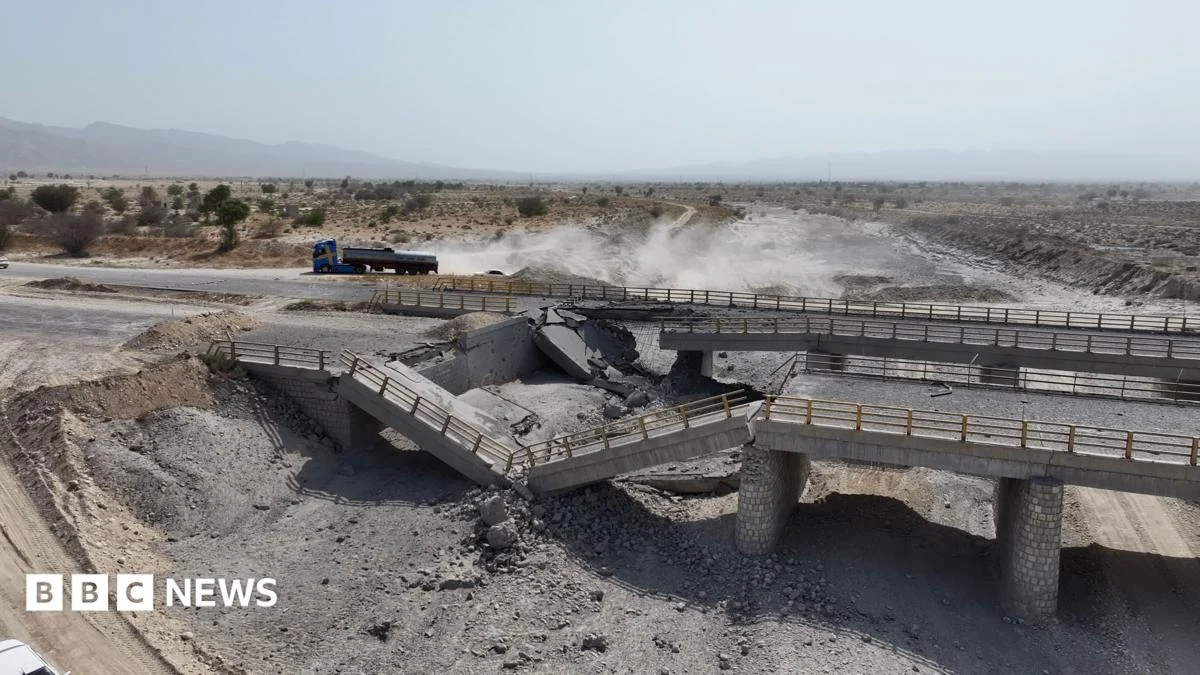
The United States military confirmed it is currently undertaking its seventh consecutive night of aerial bombardment against targets within Iran, a military campaign initiated following President Donald Trump’s unequivocal declaration that the temporary ceasefire agreement between the two nations was officially "over." This sustained offensive, orchestrated directly under the command of the Commander in Chief, aims to systematically dismantle and degrade Iran’s military capabilities, as articulated by a statement from the US military’s Central Command (Centcom). The ongoing hostilities have plunged the strategically vital Strait of Hormuz into a state of heightened alert, with shipping traffic experiencing significant disruptions, jeopardizing global energy supplies that normally rely on this crucial chokepoint, which accounts for approximately one-fifth of the world’s oil and liquefied natural gas (LNG) transit.
The escalation comes amid a volatile exchange of accusations and counter-accusations. Iran’s Islamic Revolutionary Guard Corps (IRGC) initially claimed that two oil tankers had detonated and caught fire while navigating a purportedly mined section of the shipping channel within the Strait of Hormuz. This assertion, however, was swiftly and unequivocally dismissed as false by Centcom, which later posted on the social media platform X: "Like most IRGC claims, this is false." Iranian state media, including the Fars news agency, had reported that explosions were audible in Iran’s central city of Yazd, as well as on Qeshm island and at the port of Bandar Abbas, both located adjacent to the strait. The Fars report specifically detailed two oil tankers "exploding and catching fire while passing through a mined route south of the Strait of Hormuz."
This latest round of US strikes marks a significant intensification of military action, occurring precisely one week after the collapse of peace talks with Iran. The breakdown in negotiations was largely attributed to the persistent and growing tensions surrounding the future of the Strait of Hormuz, which have severely hampered efforts to broker a lasting and permanent ceasefire. The fragility of the region’s security is underscored by the fact that the strait, a narrow waterway connecting the Persian Gulf to the Gulf of Oman, is a critical artery for global commerce and energy. Any significant disruption here has immediate and far-reaching economic consequences.
The tit-for-tat military engagements have not been confined to the Strait of Hormuz. On Friday, Iran’s armed forces asserted they had launched attacks against multiple US military facilities across the broader Gulf region, including targets in Kuwait, Bahrain, and Jordan. In a significant development, Iran also claimed to have struck targets in Syria for the first time, an allegation that the United States vehemently denied. These Iranian claims followed earlier reports from Kuwaiti officials, who stated that Iranian drone strikes had resulted in injuries to several of their soldiers and caused damage to a power plant and water desalination stations. Adding to the gravity of the situation, sources speaking to the BBC’s US partner, CBS News, indicated that several American service members had sustained injuries during Iranian attacks on two Jordanian bases over the preceding week.
Washington has, in turn, refuted Tehran’s earlier allegations that its forces had struck civilian infrastructure within Iran. Reports from Iranian provincial authorities in the affected Hormozgan province stated that seven people had been killed in the US attacks. However, the White House spokesperson reiterated to the BBC that the US had "carried out strikes exclusively on military targets, including military logistics infrastructure." The BBC’s verification units, including BBC Verify and BBC Persian, have corroborated footage depicting damage to the Gariveh Bridge. Nighttime videos shared widely showed a massive ball of flames engulfing the bridge, while subsequent daylight images revealed a section of the road completely crumbled, with debris scattered around the damaged structure. This visual evidence serves as a stark testament to the destructive power unleashed during these strikes.
The current military confrontation is not an isolated incident but rather the latest chapter in a long and complex history of geopolitical tension between the United States and Iran. Relations have been strained for decades, marked by periods of overt hostility and proxy conflicts. The immediate catalyst for the current escalation appears to be the breakdown of diplomatic efforts to de-escalate the situation and establish a more stable regional security framework. President Trump’s decision to withdraw the US from the Joint Comprehensive Plan of Action (JCPOA), commonly known as the Iran nuclear deal, in 2018, and the subsequent re-imposition of stringent sanctions, significantly exacerbated existing tensions. This move was met with strong condemnation from Iran and criticism from several European allies.
The Strait of Hormuz has long been a focal point of contention. Iran has repeatedly threatened to disrupt shipping traffic in the strait as a retaliatory measure against any hostile actions or sanctions imposed by the US and its allies. The strategic importance of this waterway cannot be overstated. It is the gateway to the Persian Gulf, through which a vast majority of oil produced by Saudi Arabia, Iran, Iraq, Kuwait, the UAE, and Qatar is exported. Any sustained disruption or closure of the strait would have catastrophic consequences for the global economy, leading to a surge in oil prices and potential shortages. The current situation thus carries the risk of a wider economic crisis, in addition to the immediate human cost of conflict.
The IRGC’s claim of striking mined areas, even if dismissed by Centcom, highlights the potential for miscalculation and unintended escalation in such a volatile environment. The presence of mines, whether deliberately placed or a consequence of past conflicts, poses a grave danger to maritime navigation and further complicates efforts to ensure the safety of commercial shipping. The accusations of Iran mining the strait, if substantiated, would represent a significant violation of international maritime law and could invite a more forceful international response.
The involvement of regional actors also adds layers of complexity. Kuwait, Bahrain, and Jordan, all of whom have hosted US military facilities, find themselves directly implicated in the escalating conflict. Their proximity to Iran and their strategic alliances with the United States make them vulnerable to retaliatory actions. The reported injuries to Kuwaiti soldiers and damage to critical infrastructure underscore the tangible impact of these hostilities on non-belligerent nations. The US denial of striking civilian infrastructure in Iran, while emphasizing its focus on military targets, is crucial in attempting to manage international perception and prevent a complete breakdown of any semblance of restraint.
Expert analysis of the situation paints a grim picture. Many observers believe that the current trajectory suggests a potential for further escalation, particularly if diplomatic channels remain largely closed or ineffective. The risk of accidental engagement or misinterpretation of actions in such a high-stakes environment is substantial. The effectiveness and long-term implications of the US strikes remain to be seen. While they may aim to degrade Iranian military capabilities, they also risk galvanizing anti-American sentiment within Iran and the wider region, potentially leading to a protracted and costly conflict.
The role of international diplomacy in de-escalating the current crisis is paramount. While the United States and Iran appear entrenched in their current positions, external pressure from key global powers, including European nations and China, could play a vital role in urging restraint and reopening avenues for dialogue. The United Nations, too, has a crucial role to play in mediating disputes and enforcing international law, particularly concerning freedom of navigation in international waters. However, the effectiveness of such international efforts is often contingent on the willingness of the principal parties to engage constructively.
The current situation is a stark reminder of the precarious balance of power in the Middle East and the profound impact that regional conflicts can have on global stability and economic well-being. The continued military engagements in and around the Strait of Hormuz, coupled with the breakdown of diplomatic efforts, signal a period of heightened uncertainty and potential for further instability. The world watches with bated breath as the seventh night of strikes marks another grim milestone in this escalating confrontation, with the hope for a peaceful resolution growing increasingly distant. The economic ramifications of prolonged conflict in this vital shipping lane are immense, threatening to disrupt global supply chains and fuel inflation worldwide. The human cost, both in terms of direct casualties and the displacement of populations, also remains a significant concern. The path forward requires a delicate balance of military deterrence and a renewed commitment to diplomatic engagement, a challenge that the international community must urgently address.
