
 By admin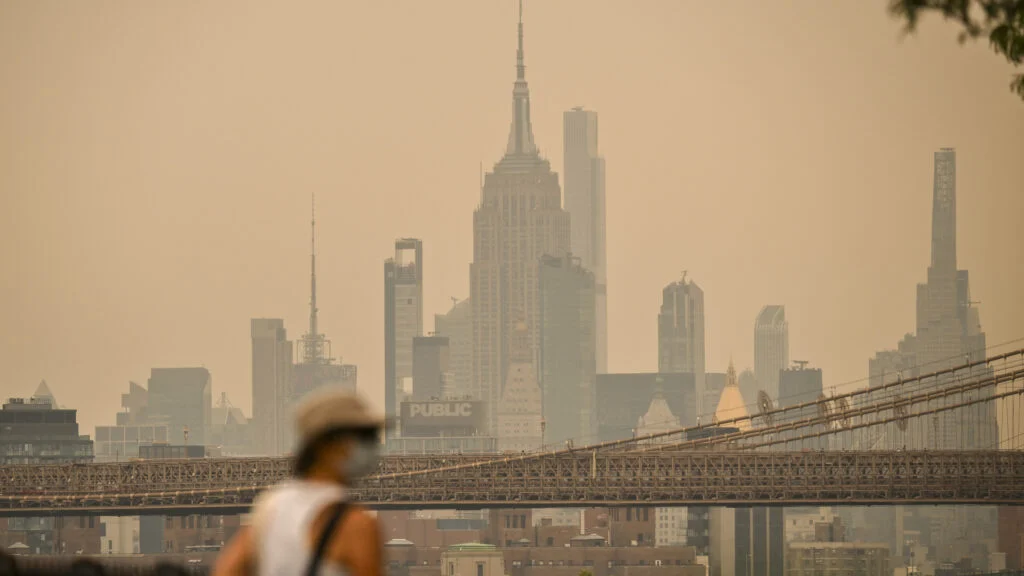
As of mid-July 2026, the North American landscape is once again defined by a hauntingly familiar orange haze. As wildfires continue to incinerate millions of acres across the Canadian provinces, the resulting plumes of particulate matter have descended upon major metropolitan corridors in the United States, sending air quality indices into hazardous territory. In New York City, the public health impact was immediate and measurable: by the conclusion of the first day of the current smoke inundation, emergency room visits for asthma exacerbations surged by 31%. This respiratory crisis is compounded by a brutal meteorological reality, as the city simultaneously grapples with its second major heat wave of the season. This convergence of extreme heat and toxic smoke is not a coincidence; it is the physical manifestation of a "polycrisis" where environmental degradation and human health are inextricably linked.
These extreme weather events represent the cyclical and compounding relationship between fossil fuel combustion, a warming climate, natural disasters, and the subsequent surge in chronic and acute illnesses. For many observers, the sight of a darkened midday sky serves as a grim omen that the climate crisis has reached a point of no return. However, a deeper look into the annals of environmental history suggests a different perspective. History teaches us that moments of acute environmental catastrophe often serve as the necessary "tipping points" for radical legislative and social transformation. We must not let this health-related environmental crisis go to waste; instead, we must use it as the catalyst for a second great era of environmental stewardship.
To understand our current predicament, we must look back at the post-World War II era. Long before "global warming" was a household term, the world’s rapidly industrializing cities faced a different but equally suffocating challenge: local air pollution. In the 1940s and 50s, regulations for air quality were virtually nonexistent. The prevailing economic philosophy prioritized industrial output over ecological or physiological health. In urban centers, garbage was routinely incinerated in backyard or municipal burners rather than being processed in managed landfills. The explosion of automobile ownership and the continued reliance on coal for home heating and industrial power, combined with an utter lack of emission standards, created an atmosphere that was, in the most literal sense, poisonous.
During this period, smoke and soot were not just atmospheric conditions; they were tangible parts of daily life. Soot regularly blanketed cars, windowsills, and laundry hung out to dry. Scientists of the era were beginning to identify what the World Health Organization (WHO) now classifies as "classical air pollutants" and the U.S. Environmental Protection Agency (EPA) calls "criteria air pollutants." These include carbon monoxide, particulate matter (PM), ground-level ozone, sulfur dioxide, and nitrogen dioxide. Each of these substances possesses unique chemical properties that interact destructively with human biology—sulfur dioxide triggers bronchoconstriction, while fine particulate matter (PM2.5) can bypass the lungs’ defenses to enter the bloodstream, causing systemic inflammation. Despite the emerging medical evidence of these risks, meaningful regulation remained elusive for decades, stifled by industrial lobbying and a lack of public urgency.
The inertia only broke when the pollution became too deadly to ignore. The turning point arrived when stagnant atmospheric conditions—known as temperature inversions—trapped pollutants at ground level, creating lethal "smog events." One of the most infamous occurred in December 1952, known as the Great Smog of London. For five days, a thick layer of sulfur-laden smoke enveloped the city. Visibility was reduced to a few yards, and public transport ground to a halt. The human cost was staggering: an estimated 12,000 people died as a direct result of the smog, and over 100,000 more suffered from respiratory and cardiovascular illnesses. The sheer scale of the tragedy forced the British government’s hand, leading to the landmark Clean Air Act of 1956, which introduced "smoke-control areas" and moved power stations away from city centers.
The United States faced its own reckoning a decade later. In November 1966, New York City experienced its most alarming smog event on record during the Thanksgiving holiday. As sulfur dioxide and carbon monoxide levels reached unprecedented heights, the city was forced into an emergency posture. For the first time, municipal authorities utilized television and radio to issue direct appeals to the public, urging citizens to stop driving and reduce energy consumption. Those with preexisting heart or lung conditions were warned that stepping outside could be fatal. As incinerators were shut down to mitigate the smoke, uncollected garbage began to pile up on the streets, creating a visceral image of a city in collapse. Approximately 200 New Yorkers died during that weekend, and hundreds of thousands more sought medical attention for shortness of breath and heart palpitations.
This tragedy galvanized a nascent environmental movement. The public, having seen the literal face of death in the air they breathed, demanded action. The legislative response was remarkably swift. Within a month, New York City updated its administrative code to expand air pollution surveillance and restrict emissions. The momentum spread nationally, fueled by extensive media coverage of the "dying cities." Just two months after the New York smog, President Lyndon B. Johnson delivered his "Protecting Our National Heritage" message to Congress. He explicitly cited the New York disaster as evidence that the nation could no longer afford to treat the atmosphere as a "limitless sewer." This led to the 1967 Air Quality Act and, eventually, the robust Clean Air Act of 1970.
The 1970 Act was revolutionary. It established National Ambient Air Quality Standards (NAAQS) and gave the newly formed EPA the teeth to enforce them. The results have been one of the greatest success stories in public health history. By 2020, collective levels of the six criteria pollutants had dropped by 78% compared to 1970 levels. In some cases, such as lead and sulfur dioxide, individual pollutant levels dropped by more than 90%. Today, thanks to these regulations, the localized, industrial-source smog events that once killed hundreds in a single weekend have been virtually eliminated in the United States.
However, we now face a more complex iteration of this challenge. While the 20th-century crisis was defined by "criteria pollutants," the 21st-century crisis is driven by "greenhouse gases"—carbon dioxide, methane, nitrous oxide, and tropospheric ozone. These gases are distinct from criteria pollutants in how they harm us. Criteria pollutants are direct toxins; they cause inflammation, cancer, and heart disease through direct inhalation. Greenhouse gases, by contrast, act as a thermal blanket, warming the planet and causing illness indirectly through the disruption of natural systems.
A warming climate manifests as health risks in varied and devastating ways. It increases the duration and intensity of pollen seasons, exacerbating allergies. It expands the geographical range of disease-carrying vectors like ticks and mosquitoes. Perhaps most visibly, it creates the "tinderbox" conditions that lead to the massive wildfires currently choking our cities. The smoke we see today is a hybrid threat: it is a criteria pollutant (particulate matter) produced by a climate-driven disaster. This brings the problem full circle. The combustion of fossil fuels produces the greenhouse gases that warm the planet, which in turn causes the wildfires that produce the smoke that directly poisons our lungs.
More than half a century after the first Clean Air Acts, the climate crisis has moved from the realm of abstract scientific modeling into the realm of lived experience. Much like the smog events of the 1950s and 60s, the increasing frequency of hurricanes, floods, and wildfire smoke is making the threat palpable for hundreds of millions of people. This "palpability" is reflected in shifting public opinion. According to recent reporting from the Pew Research Center, 67% of individuals across 25 countries now view climate change as a major threat to their nations. Furthermore, over 80% of those who have personally experienced extreme weather events recognize climate change as a contributing factor. Research consistently shows that those who endure these disasters are more than twice as likely to view climate change as an urgent crisis compared to those who only read about it in the news.
This shift in perception provides a critical window of opportunity. To secure a sustainable future, we must bridge the gap between climate science and public health. We must clearly and unapologetically link every extreme weather event to its underlying root cause: the continued combustion of fossil fuels. Highlighting the health risks and the economic costs of these events—such as the 31% spike in ER visits in NYC—is essential for engaging segments of the population that may remain skeptical of broader climate theory but are deeply concerned about the well-being of their families.
As environmental health physicians and public health researchers, we advocate for a strategy that puts human health at the center of the climate conversation. When a city is blanketed in smoke, the discussion should not just be about "acres burned" or "carbon offsets"; it should be about the children in emergency rooms, the elderly suffering from heatstroke, and the long-term rise in cardiovascular mortality. By framing the climate crisis as a public health emergency, we can recreate the same sense of urgency that led to the original Clean Air Acts.
The historical precedent is clear: crisis breeds change. The Great Smog of London and the New York Thanksgiving Smog were horrific tragedies, but they served as the foundation for the air we breathe today. We stand at a similar crossroads. This moment in history could be remembered as the era when environmental disasters reached an alarming peak, or it could be remembered as the moment we used those disasters to finally break our dependence on fossil fuels. If we make the commitment to tell the truth about the health impacts of our changing climate, we can transform this haze of smoke into a clear vision for a sustainable, breathable future.
