
 By Lina Irawan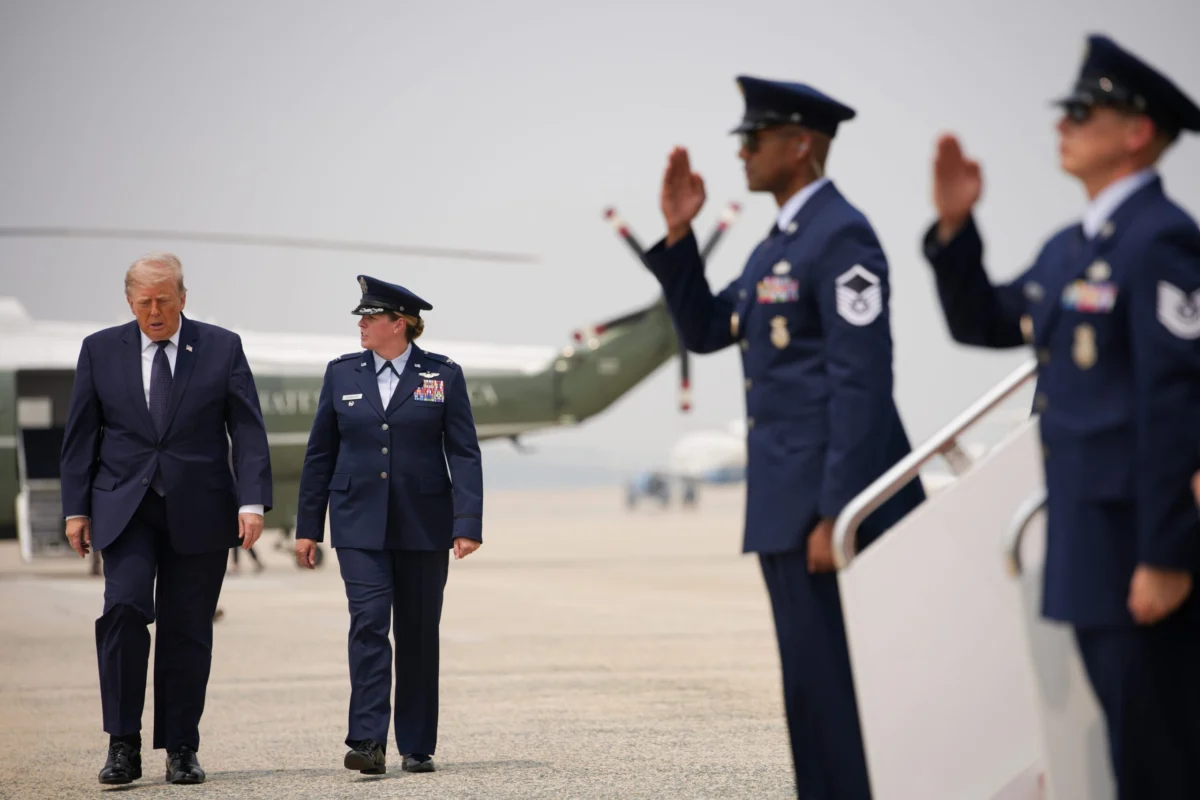
The already volatile geopolitical landscape in the Middle East plunged further into crisis this past weekend as the United States continued its targeted military strikes against Iran, actions explicitly sanctioned by President Donald Trump. Speaking from the Oval Office, President Trump declared the offensive to be "in honor" of three American soldiers recently killed in the region, a stark reminder of the escalating human cost of the conflict. This renewed military engagement has sent immediate shockwaves through global energy markets, propelling oil futures to multi-year highs and inflicting severe economic pain on American consumers already grappling with persistent inflationary pressures. The specter of a broader regional conflict, with its potential to disrupt vital oil transit routes, has ignited fears of an economic downturn, challenging the resilience of households and central banks alike.
The recent American military actions, reportedly targeting Iranian Revolutionary Guard Corps (IRGC) assets and infrastructure linked to attacks on U.S. personnel, mark a significant escalation in the long-standing, fraught relationship between Washington and Tehran. While President Trump’s rhetoric emphasized retaliation and honoring fallen soldiers, the strategic implications are far-reaching. The U.S. has maintained a robust military presence in the Middle East for decades, often citing the need to ensure regional stability and safeguard global energy flows. However, Iran views this presence as an infringement on its sovereignty and a direct threat to its national security, leading to a dangerous tit-for-tat dynamic that frequently spills over into economic and military confrontations. International bodies and allied nations have largely expressed concern, urging de-escalation and diplomatic solutions, though the immediate impact has been a sharp contraction in risk appetite across financial markets.
The most immediate and tangible consequence of this renewed conflict has been the dramatic surge in oil prices. Brent Crude, the international benchmark, touched an overnight high of $91 per barrel before settling slightly to $88 this morning. This spike is not merely a knee-jerk reaction; it reflects deep-seated anxieties about the stability of oil supply from the Persian Gulf. Futures markets, which provide a glimpse into investor expectations, show a troubling outlook. According to data from CME Group, crude oil futures have climbed approximately 1.5% over the next three months, indicating sustained prices above $80 a barrel. More alarmingly, market projections do not anticipate a return to the more comfortable $70 a barrel mark until December 2027, suggesting a prolonged period of elevated energy costs.
At the heart of this market trepidation lies the Strait of Hormuz, a narrow choke point at the mouth of the Persian Gulf. Bordered by Iran to the north, this waterway is arguably the world’s most critical oil transit route. An estimated one-fifth of global oil consumption, and nearly one-third of all seaborne-traded oil, passes through the Strait daily. Tankers carrying crude oil from major producers like Saudi Arabia, Iraq, UAE, and Kuwait must navigate these waters to reach international markets in Asia, Europe, and North America. Even with President Trump’s assurances that the U.S. controls the Strait, the geographical proximity and military capabilities of Iran, including its naval forces and coastal missile batteries, give it significant leverage to disrupt shipping. The mere threat of interdiction or actual attacks on commercial vessels, regardless of their success, dramatically increases insurance premiums for shippers and prompts many to seek alternative, often longer and more expensive, routes. This reduction in effective supply, even if demand remains constant, inevitably drives prices upward, as the market prices in the added risk and logistical hurdles.
For American households, the financial repercussions are already acutely felt at the gas pumps. Data from the American Automobile Association (AAA) confirms that the national average price for a gallon of regular gasoline breached the $4 mark this morning, a significant psychological and financial threshold. Just a day prior, prices hovered just shy of this benchmark. Looking back further, the rapid acceleration of costs becomes even more apparent: a mere week ago, the average price stood at $3.87, while a month ago, it was a comparatively manageable $3.14. This represents an increase of nearly 27% in just four weeks, a staggering burden on household budgets already stretched thin by years of "sticky inflation" across various sectors, from food to housing.
UBS’s top economist, Paul Donovan, issued a stark warning to clients, invoking the classic Wile E. Coyote scenario to describe the precarious position of U.S. households. Donovan observes that while oil costs are rapidly being passed on to consumers, the initial coping mechanism has been to "cut monthly savings rather than non-oil consumption." This phenomenon suggests a consumer base prioritizing current lifestyle and essential non-fuel purchases over long-term financial stability. However, as Donovan cautions, "this cannot be sustained indefinitely if oil prices remain elevated—in the Wile E. Coyote scenario, economic gravity eventually exerts itself." He predicts that this short-term resilience could last "for the remainder of this year," implying a potential cliff-edge moment for consumers in early 2027 if the conflict persists and energy prices do not retreat.
The Wile E. Coyote analogy perfectly captures the illusion of stability before an inevitable, painful fall. For years, American households have navigated a landscape of rising costs stemming from post-pandemic supply chain disruptions, robust consumer demand, and geopolitical shocks. Many have tapped into savings accumulated during the pandemic or relied on credit to maintain their living standards. The current surge in gas prices acts as a significant drain on discretionary income, reducing the funds available for other goods and services, and further eroding the financial cushion that families might have built. When savings are depleted, and credit lines maxed out, the "economic gravity" will indeed exert itself, forcing families to make difficult choices, potentially cutting back on essentials, delaying major purchases, or facing financial distress.
This resurgence of high energy prices poses a complex challenge for economic policymakers, particularly the Federal Reserve. With gas and fuel prices being a key metric in inflation data, their upward trajectory pushes against the Fed’s long-standing efforts to bring inflation down to its 2% target. Goldman Sachs’ chief U.S. economist, Jan Hatzius, outlined two distinct paths for the economy in a recent note. On one hand, he noted that "the swift recovery in flows prior to the most recent escalation shows that Gulf exports can rebound quickly when given a chance," suggesting that if the latest conflict subsides, prices could fall sharply. This optimistic scenario hinges on a rapid de-escalation of tensions and a restoration of confidence in shipping lanes.
However, Hatzius also warned of the darker alternative: "But more attacks on tankers and Middle East infrastructure could push prices back to the $100+ range that prevailed for much of the hot phase of the conflict." This scenario would prolong the inflationary pressures, making the Fed’s job significantly harder. While Goldman Sachs’ broader expectation for year-on-year core Personal Consumption Expenditure (PCE) inflation—the Fed’s preferred gauge—is still to slow to near the 2% target by 2027, driven by reduced contributions from software, accessories, and lower tariffs, a sustained energy shock could easily derail this forecast.
In this challenging environment, the onus falls heavily on Federal Reserve Chairman Kevin Warsh. Hatzius argues that Warsh "will have little choice but to explain the committee’s economic outlook and reaction function in much greater detail than in his first press conference and congressional testimony." This underscores the critical need for transparent and proactive communication from the central bank. The Fed must articulate how it plans to balance its dual mandate of maximizing employment and maintaining price stability in the face of an external, supply-side shock. Hiking interest rates aggressively to combat oil-driven inflation risks tipping the economy into recession, while inaction could allow inflation expectations to become unanchored, leading to a more entrenched inflationary cycle. The Fed’s communication strategy will be vital in managing market expectations and preventing financial conditions from "overshooting"—i.e., reacting too dramatically in a way that further destabilizes the economy.
Beyond direct consumer impact and central bank policy, the ripple effects of sustained high oil prices are extensive. Industries heavily reliant on transportation, such as logistics, airlines, and e-commerce, will face soaring operational costs, which will inevitably be passed on to consumers through higher prices for goods and services. Manufacturing sectors, which use petroleum derivatives as raw materials, will also see increased input costs. The agricultural sector, dependent on fuel for machinery and fertilizer production (which is energy-intensive), will experience similar pressures, potentially leading to higher food prices. Globally, major oil-importing nations, particularly in Europe and Asia, will face significant economic headwinds, potentially slowing global growth and further exacerbating supply chain issues.
The current crisis represents a delicate balance of risks. The potential for rapid de-escalation offers a glimmer of hope for a swift market correction and a reprieve for consumers. However, the deeply entrenched geopolitical tensions, coupled with the strategic importance of the Strait of Hormuz, suggest that the path to stability will be fraught with challenges. American households, already stretched by years of economic headwinds, find themselves at a critical juncture, facing the possibility of prolonged financial strain as the "economic gravity" of escalating energy costs continues to bear down. The coming months will test the resilience of the global economy and the wisdom of its policymakers.
Subscribe to Fortune Gulf Brief. Every Tuesday, this new newsletter delivers clear-eyed, authoritative intelligence on the deals, decisions, policies, and power shifts shaping one of the world’s most consequential regions, written for the people who need to act on it. Sign up here.
