
 By Rifan Muazin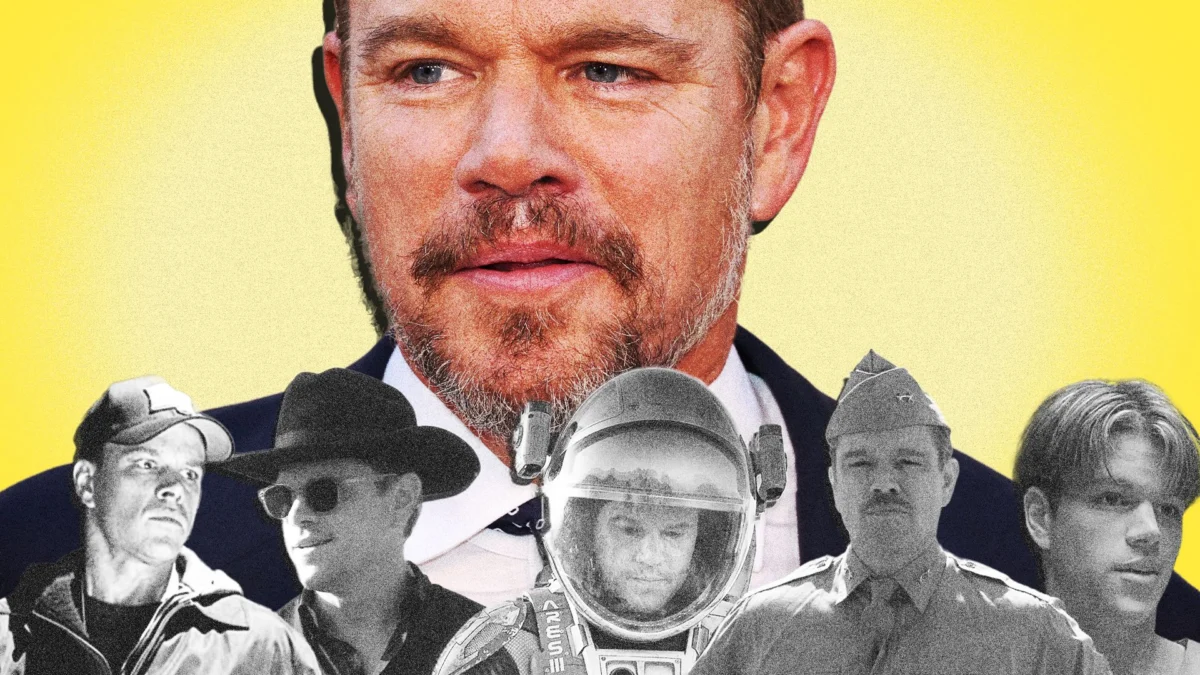
In The Odyssey, Damon portrays Odysseus not as a shimmering demi-god of marble and myth, but as a weary, salt-crusted veteran desperate to find his way home. This is Odysseus by way of a man who has seen too much, a King of Ithaca who carries the psychological scars of the Trojan War with more weight than his bronze armor. It is a performance of profound humanity, stripped of vanity despite the physical demands of the role. Critics are already calling it a "lock" for his fourth acting Oscar nomination, and many believe this will finally be the performance that secures him the trophy that has eluded his acting mantle since he burst onto the scene in the late 1990s.
The "underrated" tag feels strange for a man who has anchored the multi-billion-dollar Bourne franchise and worked with every auteur from Spielberg to Scorsese. Yet, there is a lingering sense that because Damon makes it look so easy, we forget how hard it actually is. He lacks the "method" theatrics that garner headlines; he doesn’t lose 60 pounds or live in a forest to prepare for a role. Instead, he weaponizes his innate "regular guy" quality to ground even the most fantastical premises. To appreciate the magnitude of his work in The Odyssey, one must look back at the career-defining roles that built the foundation for this latest triumph.
Good Will Hunting (1997): The Birth of a Southie Icon

To understand Matt Damon, you have to go back to the miracle of 1997. At just 27 years old, Damon—alongside his childhood friend Ben Affleck—shook the foundations of Hollywood by writing and starring in a film that felt both deeply personal and universally resonant. Good Will Hunting was more than just a box office success, grossing over $225 million on a modest $10 million budget; it was a cultural touchstone. Damon’s portrayal of Will Hunting, a janitor at MIT with a genius-level intellect and a defensive, working-class shell, remains a masterclass in vulnerability.
The brilliance of Damon’s performance lies in the friction between his intellect and his environment. He plays Will not as a superhero, but as a victim of his own brilliance and his traumatic past. His chemistry with the late Robin Williams, who played the therapist Sean Maguire, provided the film’s emotional core. The famous "It’s not your fault" scene is a testament to Damon’s ability to let a character’s guard down in a way that feels earned rather than manipulative. While he and Affleck walked away with the Academy Award for Best Original Screenplay, Damon’s nomination for Best Actor signaled the arrival of a performer who could carry a film’s emotional weight as easily as its dialogue.
The Departed (2006): The Stealth Slime-Bag
If Good Will Hunting established Damon as the boy next door, Martin Scorsese’s The Departed proved he could be the wolf in the fold. In this high-stakes cat-and-mouse thriller set in the Irish-American underworld of Boston, Damon plays Colin Sullivan, a protégé of mob boss Frank Costello (Jack Nicholson) who infiltrates the Massachusetts State Police. It is a role that requires a specific kind of "unshowy" acting; Sullivan must be believable as a rising star in law enforcement while maintaining a hollow, parasitic interior.

Damon’s "ordinariness" is his greatest asset here. Placed alongside Leonardo DiCaprio’s raw, nerve-frayed performance as the undercover cop Billy Costigan, Damon’s Sullivan is chillingly composed. He represents the banality of evil—the corporate-climbing sociopath who values his own advancement over any sense of loyalty or morality. In a film populated by scenery-chewing performances from Nicholson and Alec Baldwin, Damon’s quiet, calculated desperation provides the necessary anchor. He reminds us that the most dangerous man in the room is often the one who looks like he belongs there the most.
The Martian (2015): The Competence Porn Masterclass
In Ridley Scott’s The Martian, Damon was tasked with a challenge that has defeated many great actors: carrying a film entirely on his own. As Dr. Mark Watney, a botanist stranded on Mars after his crew presumes him dead, Damon spends the vast majority of the runtime speaking to a camera. The film became a massive global hit, earning over $630 million and garnering Damon another Best Actor nomination, largely because of his ability to make "science" feel like an adventure.
What makes Watney such a quintessential Damon character is his relentless competence and his refusal to succumb to melodrama. He doesn’t spend the movie weeping over his fate; he "sciences the shit out of it." Damon injects the role with a dry, self-deprecating humor that makes the audience root for him not just as a survivor, but as a friend. It is a performance of immense charisma that relies on the "Damon Aura"—the sense that if anyone can figure out how to grow potatoes in Martian soil using their own waste, it’s the guy who played Jason Bourne.

Ford v Ferrari (2019): The Soul of the Machine
By 2019, Damon had moved into a new phase of his career: the elder statesman of the "Dad Movie." In James Mangold’s Ford v Ferrari, he plays Carroll Shelby, the legendary automotive designer tasked with building a car that can beat Ferrari at the 1966 24 Hours of Le Mans. While Christian Bale’s Ken Miles is the volatile, eccentric heart of the film, Damon’s Shelby is its soul.
The dynamic between the two actors is a fascinating study in contrast. Bale is all sharp angles and exaggerated expressions, while Damon is a steady, southern-fried presence in a cowboy hat and aviators. It is a role that demands a subtle kind of leadership; Shelby has to navigate the corporate bureaucracy of the Ford Motor Company while protecting his friend’s artistic integrity. Damon plays the diplomat with a hidden edge, showing us a man who has traded his racing suit for a business suit but still has the fire of the track in his eyes. It is a performance that anchors the film’s high-octane racing sequences in a very human reality.
Oppenheimer (2023): The Aura of Authority

In Christopher Nolan’s historical masterpiece Oppenheimer, Damon took on the role of General Leslie Groves, the military director of the Manhattan Project. Despite sharing the screen with a transformative Cillian Murphy and a career-best Robert Downey Jr., Damon’s presence was vital. Groves is the pragmatic foil to Oppenheimer’s theoretical genius—the man who makes sure the "gadget" actually gets built.
Damon brings a specific kind of "aura" to the role—a gruff, no-nonsense authority that feels historically authentic without becoming a caricature of a military man. He represents the American industrial machine, grounded and direct. His performance provides a necessary tether to the real world as the film spirals into the abstract horrors of the atomic age. It was this collaboration with Nolan that clearly paved the way for The Odyssey, proving that Damon could thrive within Nolan’s rigorous, large-scale filmmaking style while maintaining his signature groundedness.
As we look toward the 2027 awards season, the conversation around Matt Damon is finally shifting. No longer just the "other guy" in the room with Leo or Brad, he has emerged as a singular force in American cinema. The Odyssey isn’t just another hit; it’s a culmination of a career built on the idea that the most compelling stories are the ones where we can see ourselves in the hero. Whether he’s a genius janitor, a crooked cop, a stranded astronaut, or a legendary Greek king, Matt Damon remains the ultimate proxy for the audience—the ordinary man doing extraordinary things. And if The Odyssey is any indication, he’s only just getting started.
