
 By Lina Irawan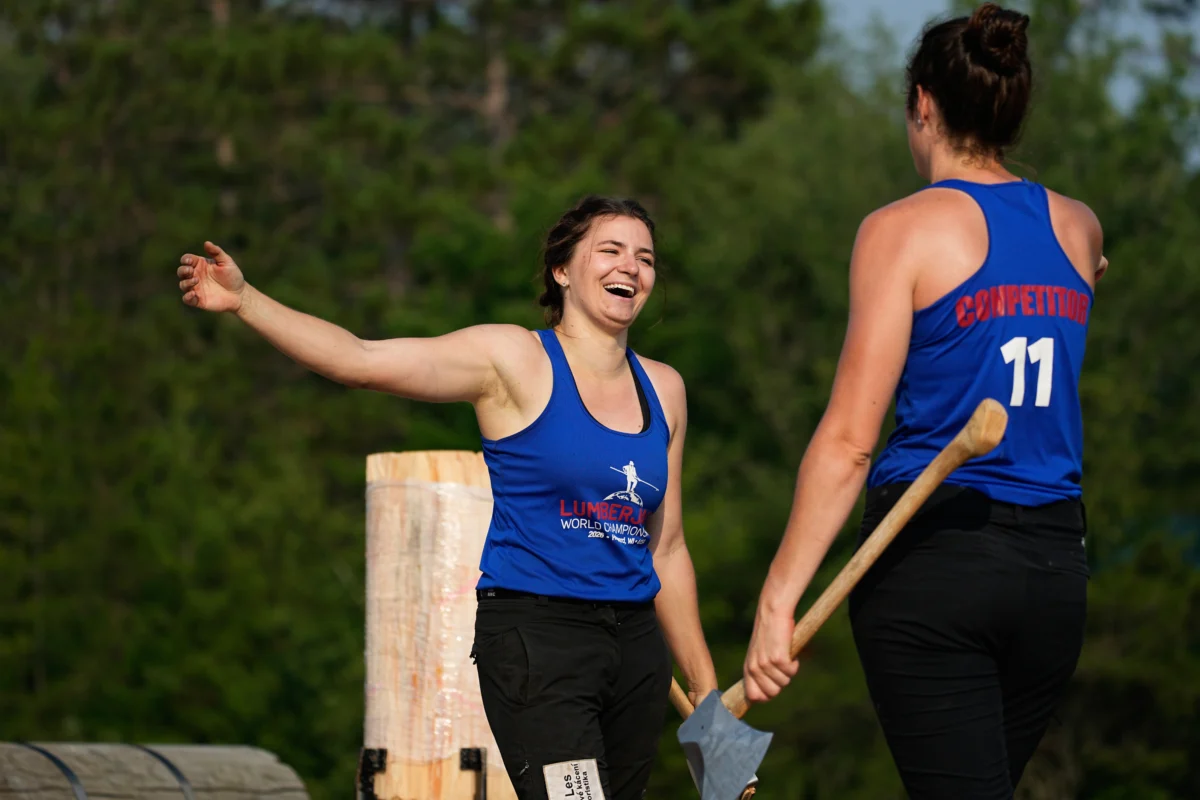
The tranquil shores of Lake Hayward, Wisconsin, erupted into a cacophony of roaring chainsaws, rhythmic axe blows, and fervent cheers as the Lumberjack World Championships (LWC) concluded its 63rd annual three-day spectacle. This year’s event, often dubbed the "Olympics of Timber Sports," showcased unparalleled athleticism and precision, particularly in the women’s division, where three new world records were etched into the annals of this historic competition. The championships, held in the dedicated Lumberjack Bowl—a site steeped in the region’s logging heritage—drew a diverse field of 66 men and 40 women, representing 16 states across the U.S. and nine countries globally, underscoring the sport’s burgeoning international appeal. The event, culminating on a vibrant Saturday, reaffirmed Hayward’s status as the undisputed capital of timber sports.
The essence of the Lumberjack World Championships lies not just in brute strength, but in a delicate balance of power, technique, and meticulous preparation. Competitors approach their craft with an almost reverential seriousness, reflected in their highly specialized gear. Custom-built chainsaws, often modified for extreme power and speed, are a staple, alongside axes that are sharpened with surgical precision to achieve the perfect bite into dense timber. Even the single buck saws, used in the grueling one-person sawing events, demand such a high degree of craftsmanship that their sharpening alone can cost upwards of $400, a testament to the pursuit of marginal gains in a sport where milliseconds separate victory from defeat.
A shining star of this year’s championships was Karolina Urbanová from the Czech Republic, who left an indelible mark by shattering two world records. Her performance was a masterclass in controlled aggression and flawless technique. In the Women’s Underhand Chop, Urbanová demonstrated incredible power and accuracy, severing an 11-inch (27.9 centimeters) white pine log in a blistering 21.28 seconds. This event requires competitors to stand on a horizontally placed log and chop through it between their feet, demanding immense core strength, balance, and a devastatingly precise swing. Not content with one record, she then dominated the Women’s Standing Chop, felling a 9-inch (22.8 centimeters) white pine log in an astonishing 19.38 seconds. The Standing Chop mimics the traditional felling of a tree, where athletes chop through a vertical log, requiring a different set of angles and power application. Urbanová’s dual record-breaking feat is not only a personal triumph but also a significant moment for the growing timber sports scene in Central Europe, highlighting the increasing global talent pool challenging traditional powerhouses. Her meticulous training and unwavering focus were evident in every swing, solidifying her status as a formidable force in the sport.
Adding to the electrifying atmosphere was hometown hero Meredith Ingbretson of Hayward, who brought the crowd to its feet by setting a new world record in the Women’s Boom Run. This unique event, a true test of agility, balance, and speed, involves sprinting across a series of free-floating logs laid out in the water and returning to the start. Ingbretson navigated the eight red cedar logs, which are notorious for their unpredictable rolling, in an incredible 13.78 seconds. The Boom Run is a direct descendant of the skills needed by historical log drivers who had to maintain footing on logs as they navigated rivers. Ingbretson’s local roots only amplified the cheers as she conquered the challenge, showcasing not only her athletic prowess but also the deep connection between the community and the sport. Her record stands as a testament to years of practice, often on the very waters of Lake Hayward, making her victory all the more poignant for the local spectators.
The prominence of women like Urbanová and Ingbretson in breaking records underscores a significant evolution within timber sports. While women have been an integral part of the LWC since its inaugural competition in 1960, their participation was initially limited almost exclusively to logrolling, an event demanding exceptional balance and coordination. Over the decades, however, organizers have witnessed and actively facilitated a dramatic expansion of women’s events. Today, female athletes compete across more than 20 diverse timber sports disciplines, mirroring the breadth of events available to men. This expansion includes not only chopping and sawing events like the Underhand Chop, Standing Chop, and Single Buck Saw, but also speed climbing, hot saw, and axe throwing, demonstrating a commitment to full inclusion and equal opportunity in the sport.
This journey of expansion hasn’t been without its trailblazers. Nancy Zalewski, a revered figure in timber sports with 27 years of competition under her belt, vividly recalls the earlier days. "When I started chopping I was chopping with the men," she stated, highlighting a period when dedicated women’s categories were scarce, forcing female athletes to directly contend with their male counterparts. Zalewski, who has not only competed at the highest level but also dedicated herself to training others, including fellow participant Kate Witkowski, embodies the pioneering spirit that paved the way for today’s record-breakers. Her experience illustrates the grit and determination required to compete in a historically male-dominated field and the significant strides made in establishing robust women’s divisions that celebrate female strength and skill.
The tradition of competition among lumberjacks traces its roots back to the 1890s, emerging from the rugged logging camps of North America. These informal contests, born out of necessity and camaraderie, served as a way for loggers to hone their skills, demonstrate their prowess, and pass the time during arduous work in remote wilderness settings. What began as friendly wagers and skill-testing games eventually formalized into organized championships, with the Hayward event becoming the pinnacle. The choice of the Lumberjack Bowl on the picturesque shores of Lake Hayward as the venue is deeply symbolic. In the past, this very area served as a crucial holding pond for massive log drives that coursed down the Namekagon River, a vital artery for the region’s burgeoning timber industry. The echoes of history resonate through the cheers and the axe swings, connecting modern athletes to the legacy of the lumberjacks who shaped the region.
Beyond the intense competition, the Lumberjack World Championships is a vibrant cultural festival that embraces its rich heritage. The lumberjack theme is ubiquitous and joyfully celebrated, creating an immersive experience for thousands of attendees. Children, often dressed in miniature flannel shirts, suspenders, and even lumberjack socks, gleefully wield blow-up axes and toy chainsaws handed out by enthusiastic brands. The air outside the competition bowl is thick with the aroma of local food trucks and alive with the sounds of live music. Demonstrations of intricate wood carving captivate onlookers, while aspiring young logrollers can try their hand at balancing on logs in supervised practice areas. Axe-themed events and games further reinforce the festival atmosphere, making it a truly family-friendly affair that extends far beyond the professional arena.
This unique blend of elite competition and community celebration fosters an exceptional culture, as highlighted by competitor Kate Witkowski. "The culture of it I think is really wonderful," she remarked, emphasizing the profound sense of mutual support among athletes. "I don’t know any other sports where the athletes support each other like we do here because it’s such a niche sport and because the gear is so hard to come by that we’re all just trying to get better." This sentiment speaks volumes about the timber sports community. Unlike many mainstream sports characterized by intense rivalries, the specialized nature of timber sports, coupled with the high cost and bespoke requirements of equipment, fosters a cooperative environment. Athletes often share techniques, lend tools, and offer advice, understanding that the collective pursuit of excellence elevates the entire sport. This camaraderie, born from shared passion and mutual respect, is a defining characteristic of the Lumberjack World Championships, making it not just a contest of skill, but a celebration of a unique and enduring way of life.
The breaking of three women’s world records at this year’s event signifies more than just individual achievements; it heralds a new era for timber sports. It underscores the rising caliber of female athletes, the increasing professionalism of the sport, and its growing appeal to a global audience. As the cheers of "Yo-Ho!" fade over Lake Hayward, the legacy of this year’s championships will undoubtedly inspire a new generation of lumberjacks, both male and female, to pick up an axe, sharpen a saw, and carve their own place in this thrilling, tradition-rich sport. The Lumberjack World Championships continues to be a powerful reminder of human strength, skill, and the enduring spirit of competition rooted deep in the heart of America’s logging country.
Schmidt is a corps member for The Associated Press/Report for America Statehouse News Initiative. Report for America is a nonprofit national service program that places journalists in local newsrooms to report on undercovered issues.
Associated Press reporter Kathy McCormack in Concord, New Hampshire, contributed to this story.
