
 By Rifan Muazin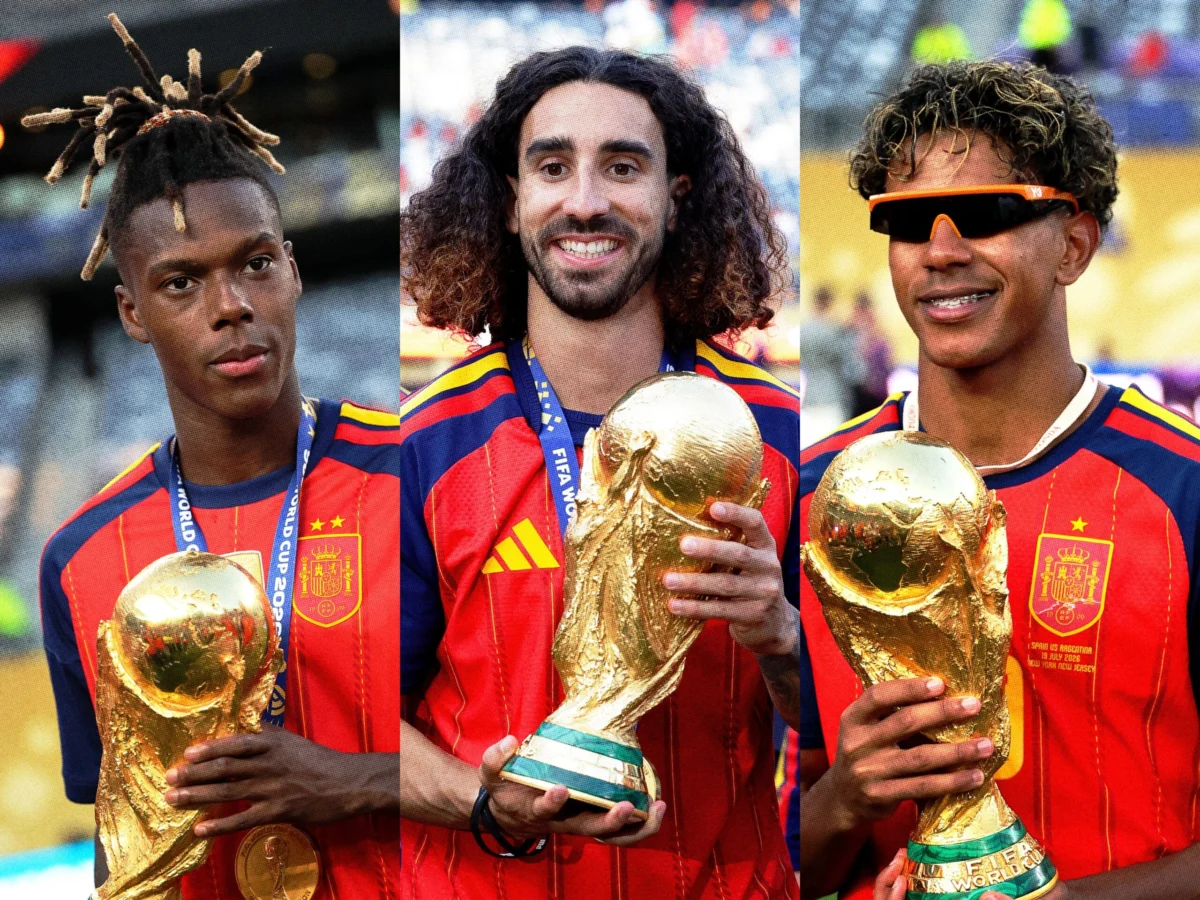
After watching over a month’s worth of high-octane football matches across North America, the dust has finally settled on the most expansive FIFA World Cup in history, leaving us with a definitive 2026 champion: Spain. In a tense, tactical masterclass held at the shimmering MetLife Stadium in East Rutherford, New Jersey, the Spanish national team secured a 1-0 victory over Argentina, dethroning the defending champions in front of a global audience of billions. While the technical proficiency of "La Roja" was the primary engine of their success, if you’ve been following the tournament closely, you’ll have noticed a prevailing hairstyle trend that transcended the tactical boards: frosted tips were abound on the field, signaling a nostalgic yet modernized aesthetic shift in the beautiful game.
The 2026 World Cup, the first to feature 48 teams and three host nations—the United States, Mexico, and Canada—was always destined to be a spectacle of cultural fusion. However, few predicted that the defining visual of the tournament would be a throwback to the late 1990s and early 2000s. Alongside honorable mentions of the Erling Haaland-style man buns that dominated the early group stages, the "blond fury" of the frosted tip was on full display Sunday as the champions took the podium to accept their trophies. Three star players, in particular, became the faces of this movement, showing off their longer, dip-dyed blond locks as they hoisted the iconic gold trophy.
Right winger Lamine Yamal, who entered the tournament as a burgeoning superstar and left it as a global icon, kept his natural curls short over a precision burst fade, with a few select strands meticulously dyed in a light yellow hue. At just 19 years old, Yamal’s aesthetic choices reflect a generation that views the pitch as both a competitive arena and a runway for personal branding. On the opposite flank, left winger Nico Williams provided the perfect visual and tactical symmetry. Williams opted for a high fade paired with dip-dyed dreadlocks, which were tied up for the match to ensure maximum aerodynamic efficiency during his blistering sprints down the touchline. Completing the trio was defender Marc Cucurella, whose shoulder-length curls have long been his trademark. For the 2026 final, Cucurella pushed the envelope further, coloring his ends in a vibrant, orangey-yellow that made him impossible to miss during his defensive duels.
The 2026 World Cup featured a number of players from various countries with frosted tips, suggesting that the trend was not merely a Spanish locker room whim but a global contagion. As the competition dwindled through the knockout stages in cities like Los Angeles, Mexico City, and Toronto, those wearing the hairstyle—like Curaçao’s Tahith Chong, Canada’s Derek Cornelius, and Tunisia’s Hannibal Mejbri—became fewer and fewer. This left the tournament’s last three stalwarts—Yamal, Williams, and Cucurella—to carry the torch into the final. This stylistic choice wasn’t unlike the wave of striking pink cleats seen on players throughout the tourney, a color palette designed to pop against the green grass and high-definition television broadcasts.
Though the frosted tip hairstyle was once famous for its heyday during the era of boy bands and early David Beckham, international players throughout the 2026 tournament wrote a new playbook for how to pull the style off. Unlike the uniform "hedgehog" spikes of the past, the modern iteration focuses on texture and contrast. “On curls, coils, and textured hair, lightened tips emphasize shape and movement differently than they do on straight hair, giving the trend a distinctly modern, global feel rather than evoking a single early-2000s archetype,” celebrity hairstylist TerraRose Puncerelli told GQ during the quarter-finals. Puncerelli notes that the 2026 version of the trend is more about "accentuating the natural architecture of the hair" rather than fighting against it with heavy gels and sprays.
The revival of such a drastic hairstyle also draws attention to a roster of athletes that viewers may not already be familiar with, especially in a 48-team format where players from smaller nations like Curaçao or Uzbekistan are suddenly thrust into the limelight. As Puncerelli explains, “It helps build a personal brand that extends beyond the game. In a world of social media clips and ten-second highlights, having a recognizable silhouette or a flash of color in your hair makes you instantly identifiable to a casual viewer.” For the Spanish trio, the hair was an extension of their confidence—a visual manifestation of the "Juego de Posición" (positional play) that Spain utilized to dismantle their opponents.
That said, Yamal, Williams, and Cucurella have already established their places in the soccer history books regardless of their grooming choices. The narrative surrounding Lamine Yamal, in particular, reached a fever pitch prior to the championship game. UNICEF revealed on X (formerly Twitter) a series of photographs from nearly 20 years ago, showing a young Lionel Messi meeting a baby Yamal and his mother during a fundraising photoshoot. The poetic symmetry of that moment was not lost on fans; two decades after being "blessed" by the GOAT, the 19-year-old right winger found himself facing off against Messi for the 2026 championship title. Since that fateful linkup, Yamal has evolved into one of the most impressive football players in the world, combining the dribbling wizardry of his predecessor with a modern physical intensity.
The final itself was a grueling affair, marked by the tactical rigidity of Argentina’s defense and the relentless pressure of Spain’s youth-led attack. Marc Cucurella, often a polarizing figure for his aggressive defending and eccentric style, made news during the final match for reasons beyond his hair. Argentina’s captain, Lionel Messi, in a moment of uncharacteristic frustration, made a desperate attempt to get the defender ejected. Messi claimed that Cucurella had engaged in unsportsmanlike conduct by briefly grazing his own mouth while speaking to Messi—a gesture Messi interpreted as a provocative insult. However, the VAR (Video Assistant Referee) and the on-field official dismissed the claim. It was a futile undertaking that left a bad taste in fans’ mouths, as many saw it as a legendary player struggling to accept the physical reality of a younger, faster opponent.
The deadlock was finally broken in the 84th minute, and it was the "frosted" duo of Williams and Torres that provided the magic. Nico Williams, receiving a cross-field diagonal from Rodri, used his exceptional vertical leap to win a contested header. It was Williams’ headbutt—a perfectly cushioned nod into the path of a surging Ferran Torres—that teed up the winning goal for the Spanish national team. Torres, who had also experimented with hair trends throughout the tournament, finished with a clinical low drive into the bottom corner of the net, sending the Spanish fans at MetLife into a frenzy. Who are we to say whether Williams’ frosted tips didn’t play a role in that legendary assist? The bright blond ends certainly made his movement easier for Torres to track in the crowded penalty area.
The statistical data from the 2026 World Cup supports the idea that Spain was a deserved winner. They led the tournament in pass completion percentage (91%), successful take-ons in the final third, and goals scored from open play. But beyond the numbers, the tournament will be remembered for its cultural impact. The 2026 World Cup was the moment football fully embraced its status as a lifestyle brand. From the pink cleats to the bleached curls, the players demonstrated that the modern athlete is a curated entity.
Spain’s victory also marks a shift in the global hierarchy. While Argentina’s "Last Dance" with Messi ended in a silver medal, Spain’s triumph signals the arrival of a generation that is not afraid to look back at the past for inspiration—whether that’s in their tactical setup or their choice of hair bleach—while moving the game forward into a new, technologically driven era. The 2026 FIFA World Cup will be remembered for many things: the massive crowds in American stadiums, the logistical feat of a three-country host, and the final crowning of Lamine Yamal. But for style enthusiasts and football historians alike, it will always be known as the "Frosted Tips Final," where Spain’s golden boys proved that you can play with the discipline of a veteran and the flair of a rebel. As the Spanish team returns to Madrid to celebrate with millions of fans, they do so not just as world champions, but as the trendsetters of a new global sporting aesthetic.
