
 By Lina Irawan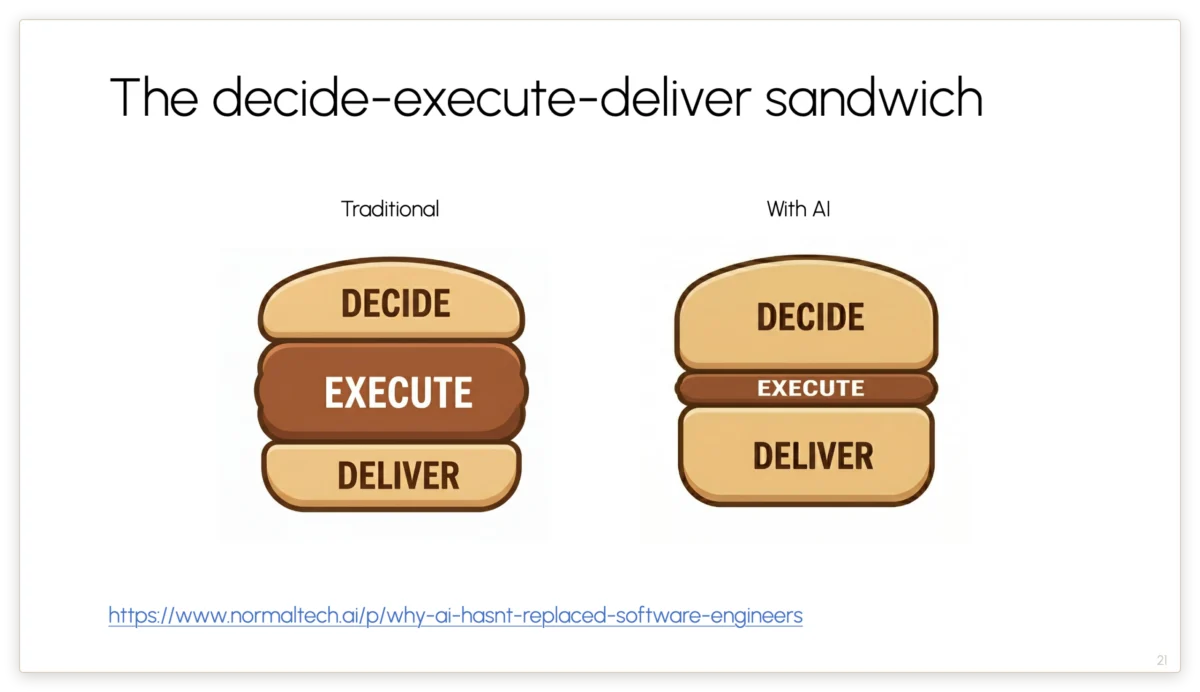
The global consulting giant KPMG has cemented a landmark strategic alliance with artificial intelligence powerhouse OpenAI, signaling a profound shift in how large enterprises will adopt and integrate AI-native workflows. This collaboration, unveiled today, is not merely a partnership but a testament to a revolutionary approach to enterprise technology, one that KPMG first prototyped for the very frontier lab it now seeks to bring to market. Long before KPMG began pitching its sophisticated AI-deployment model to its vast roster of enterprise clients, it successfully deployed this innovative solution for OpenAI itself, transforming the AI leader into its "client-zero."
This foundational engagement saw KPMG tasked with a critical mission: designing and building an internal Supply Chain & Fulfillment Orchestration platform for OpenAI. Essentially, OpenAI challenged KPMG to create the very kind of AI-native workflow system that KPMG now intends to commercialize and sell broadly across industries. This initial, high-stakes deployment served as an intensive proving ground, demonstrating the efficacy and scalability of KPMG’s approach in a real-world, high-demand environment, particularly for an organization at the forefront of AI innovation.
The successful "client-zero" deployment is the bedrock of their newly announced alliance, which elevates KPMG to the prestigious status of an OpenAI Elite Partner – the highest tier within OpenAI’s burgeoning partner network. This elite designation is a clear indicator of the depth and strategic importance of the relationship. Having partnered to meticulously design and deploy an AI-native Supply Chain & Fulfillment Orchestration platform for OpenAI, the two entities are now poised to jointly introduce this transformative model to the broader market, offering enterprises a blueprint for truly intelligent operations.
Colleen Kapase, Vice President of Strategic Global Partnerships and Ecosystems at OpenAI, underscored the exclusivity and significance of this new tier. Speaking to Fortune, Kapase stated that Elite Partner status is meticulously reserved for a "limited group of global partners" – firms that possess the unparalleled reach, scale, and delivery capabilities essential to support comprehensive enterprise AI adoption worldwide. This implies a rigorous vetting process, highlighting KPMG’s global footprint, technical acumen, and proven track record in large-scale digital transformations.
"We’re beyond experimentation," asserted Chad Seiler, KPMG’s U.S. industry leader for technology, media, and telecommunications, in an interview. His sentiment reflects a broader industry maturation, moving past pilot projects and proof-of-concepts to serious, production-grade deployments. "This is about large-scale enterprise deployment," Seiler emphasized, signaling KPMG’s confidence in its ability to implement these complex AI solutions across diverse organizational structures and highly intricate operational environments.
At its core, KPMG’s new offering represents a bold bet on the future evolution of enterprise software. The prevailing paradigm, where employees interact with work predominantly through applications – logging into systems, navigating intricate screens, and clicking through modules – is rapidly becoming obsolete, according to Seiler. He posits that this era of traditional user interfaces (UIs) is drawing to a close, giving way to a more intuitive, intelligent, and seamless interaction model.
The paradigm shift is encapsulated in the concept of "headless" software. "When we say headless, we’re really talking about decoupling the experience of work from the underlying systems and screens and modules while keeping those systems in place as a system of record," Seiler explained. This means that while crucial backend enterprise resource planning (ERP), customer relationship management (CRM), and supply chain management (SCM) systems will continue to function as the authoritative data repositories, the user’s interaction point will fundamentally change.
In this "headless" model, employees will no longer be forced to learn the specific "geography" of various software applications. Instead, they will simply describe their intent – what they want to achieve, the task they need done, or the information they require – using natural language. Advanced AI agents will then interpret this intent, intelligently coordinate across the disparate backend systems, and execute the necessary actions. Should a situation arise that requires nuanced judgment, human oversight, or strategic decision-making, the AI agent will seamlessly escalate the task to a human, ensuring a collaborative workflow that leverages the strengths of both artificial and human intelligence.
The ultimate vision, in Seiler’s compelling narrative, is a future dominated by voice interaction. "Over time, you’re going to be talking more than you’re typing," he predicted. "Instead of just interacting with your ERP system or your CRM system in a traditional way with clumsy UIs that are limited in what they can do, you’re kind of unleashed and you can have literally conversations with your systems and take actions with it and take actions not only within that system, but connect that to other data sets and other systems all through an intelligent agentic layer." This paints a picture of a hyper-efficient, natural-language-driven workplace, where technology becomes an invisible, responsive assistant rather than a barrier.
A KPMG blog post published on July 20, co-authored by Swami Chandrasekaran and Matteo Colombo, further formalizes this impending transformation. They frame the shift not as the demise of established Software-as-a-Service (SaaS) but as its evolution: "Tried and true SaaS isn’t going away. Its user interface is evolving. More precisely, a new work surface is emerging." This clarifies that the underlying architecture and data integrity of existing enterprise applications remain vital; they simply transition into robust infrastructure, operating invisibly beneath a new, intelligent layer of AI agents. These agents will act as sophisticated translators, bridging the gap between human intent and machine execution, thereby streamlining operations and enhancing user experience.
A Sandwich, Squashed: The Impact on Work Structure
To make this abstract concept more concrete, the interview delved into a compelling "sandwich" framework proposed by Princeton’s Arvind Narayanan, a prominent researcher focused on the societal impact of AI. Narayanan’s "AI as Normal Technology" research dissects work into three distinct layers: a "decide" layer on top (judgment, strategy), an "execute" layer in the middle (routine tasks, procedures), and a "deliver" layer on the bottom (accountability, verification). He aptly terms this the "decide, execute, deliver sandwich."
Narayanan’s core argument is that AI, particularly generative AI and automation, primarily compresses the "execute" layer – the routine, procedural tasks that were never more than a third of the total work to begin with. Conversely, the "decide" and "deliver" layers, which encompass complex judgment, strategic thinking, and ultimate accountability, inherently resist such compression and may even expand as AI takes over the more mundane aspects. The visual representation of this framework, showing a "skinny hamburger patty" between two buns, vividly illustrates the concept.

When presented with this framework during the interview, Seiler immediately concurred that it aligned perfectly with KPMG’s observations in its AI deployments. He acknowledged the visual accuracy of the "skinny hamburger patty" but added a critical nuance: the sheer speed and volume of output generated by AI create new, significant verification burdens at the "deliver" layer. This necessitates a novel kind of overhead not initially accounted for in Narayanan’s original thesis – an increased emphasis on discussing, validating, and contextualizing the work, rather than just performing it.
"The worker spends less time learning the geography of the software and more time focusing on the outcomes they’re trying to achieve," Seiler elaborated. In his interpretation, the "decide" bun doesn’t merely hold steady as the "execute" patty shrinks; it can actively expand, absorbing the sophisticated coordination and oversight work that previously resided within the now-compressed middle layer. However, he also mused that someday, "headless" work could become so flawlessly efficient that even the "decide" layer might eventually shrink.
Reached for comment, Narayanan offered his perspective, noting that software engineers have historically dedicated a substantial portion of their time to writing specifications and product requirements documents, activities that fit squarely into the "decide" bun of his metaphor. He reiterated that judgment and accountability not only structurally resist compression but also that "AI is rapidly increasing the ambition and complexity of projects, so the ceiling of judgment and accountability moves up, even as AI moves the floor up." This implies that while AI handles more routine execution, humans are pushed to tackle ever more intricate and high-stakes problems, demanding even greater discernment.
Narayanan further warned about the potential for "lock-in" within this agentic AI future. As AI agents become "the main queryable repository of all… tacit knowledge, creating dependence and stickiness," they effectively transform into indispensable coworkers. The consequence, he argued, is that "you can’t fire [them] without every team losing workflows and know-how." This highlights a critical strategic consideration for enterprises: managing the delicate balance between leveraging AI’s efficiency and avoiding excessive reliance that could cripple operations if an agent or its underlying platform were to be removed or fail.
Regarding timelines, both Seiler and Narayanan share a more aligned, long-term perspective than their differing views on the "sandwich" might suggest. Narayanan frames the full organizational adaptation to AI as a multi-decades-long process, drawing parallels to historical transformations like factory electrification rather than overnight disruption. KPMG implicitly echoes this cautious optimism, advising against wholesale, immediate reinvention. Their stance is that "the most successful organizations will be deliberate about where they reinvent – and where they do not," acknowledging that "the same workflows that have been in place for years may continue to be the best fit." This pragmatic approach emphasizes strategic, targeted AI integration rather than a blanket overhaul.
Narayanan, while acknowledging the long adaptation curve, also asserted that "AI is more urgent a shock than most organizations are used to dealing with," even if it’s not leading to "superintelligence by 2027" as some frontier labs portray. The implication is that while the journey will be long, the immediate imperative for adaptation is undeniable. In essence, as Narayanan succinctly put it, "it takes a long time to reinvent the sandwich."
Why KPMG Says Humans Still Matter: The Consulting Edge
Perhaps the most insightful point Seiler makes isn’t about the technology itself, but about KPMG’s unique positioning in a world where AI technology is rapidly commoditizing. His answer lies in the invaluable asset of decades of client-specific institutional knowledge that no frontier model, however advanced, can replicate. "We know their business models, their people, their culture, their systems, their data, their politics, their silos," he stated, "in an intimate way at scale that some of these frontier models don’t." This deep, contextual understanding allows KPMG to tailor AI solutions not just technically, but strategically, culturally, and operationally, navigating the intricate human and organizational dynamics that often make or break technology deployments.
Colleen Kapase of OpenAI readily concurred, highlighting that KPMG brings "deep enterprise transformation experience," especially across highly regulated industries, the public sector, and cybersecurity. In these domains, where stringent governance, compliance, and robust implementation expertise are absolutely critical, KPMG’s established reputation and capabilities are invaluable. She specifically pointed to public-sector modernization initiatives and a specialized product called Daybreak Cyber as key aspects where the partnership will deliver significant impact, in addition to KPMG’s trailblazing "client-zero" work within OpenAI itself. Kapase also clarified that OpenAI is committed to broad access across its ecosystem, assuring that KPMG is not receiving exclusive access to unreleased OpenAI capabilities, fostering a fair and competitive partner environment.
Seiler, for his part, described the OpenAI alliance as additive rather than exclusive. KPMG actively maintains parallel partnerships with other leading frontier labs, including Anthropic, recognizing the diverse and evolving landscape of AI innovation. He anticipates that large enterprise clients will not standardize on a single AI provider, opting instead for a multi-vendor strategy to ensure resilience, leverage best-of-breed capabilities, and manage costs. "We don’t think we’re going to see a lot of cases where we’re going to have one client that’s completely just using one frontier model to run everything," he remarked. He even acknowledged that some clients are already utilizing cheaper alternatives, including open-source models from China, for narrower tasks, as a strategic hedge against cost and to enhance system resilience.
Regarding the burgeoning rise of open-source models, Kapase emphasized that OpenAI’s core focus remains on "helping customers get greater value from OpenAI." She highlighted recent advancements, noting that GPT-5.6 delivers more intelligence from every token and stronger performance per dollar, with "Sol 54% more token-efficient on agentic coding tasks." These efficiency gains are crucial for enterprise adoption, directly impacting operational costs and scalability. Internally, KPMG has been an early adopter, with employees across their Advisory and internal teams utilizing OpenAI capabilities daily since the firm integrated it into its internal AI tool, aIQ Chat, in 2023. This internal adoption has also allowed KPMG to identify and develop Codex-related use cases, building AI-enabled capabilities for its clients with firsthand experience.
What truly distinguishes the OpenAI deal, in Seiler’s assessment, is the integrated go-to-market dimension. "It’s one thing to work with the labs, and then it’s another thing to also work with them and go to market with them," he articulated. The "client-zero" deployment for OpenAI serves as the ultimate proof point. If KPMG could successfully build and implement this sophisticated AI-native workflow system for the world’s leading AI research organization, the pitch to every other enterprise client seeking similar transformation becomes considerably more compelling and credible.
Narayanan, in separate commentary, reiterated his concerns about "lock-in," where the AI agent effectively becomes an indispensable "coworker" whose tacit knowledge and workflow integration create a dependence that makes it difficult to "fire" without significant operational disruption. This underscores the strategic planning required for AI adoption beyond mere technical implementation.
Ultimately, KPMG concludes its strategic announcement on a note that resonates less like a typical technology press release and more like a seasoned management consulting memo – which, arguably, is precisely the point. The firm posits that agentic AI adoption is "a portfolio of business decisions to be made, not a technology migration." For a firm whose enduring value proposition has always been its ability to guide large, complex organizations through difficult, high-stakes decisions with meticulous care and deep insight, this statement is less a hedge and more a powerful reaffirmation of its core identity and indispensable role in the AI-driven future. It positions KPMG not just as an implementer of technology, but as a crucial strategic advisor navigating the profound organizational, cultural, and operational shifts that AI demands.
