
 By Rifan Muazin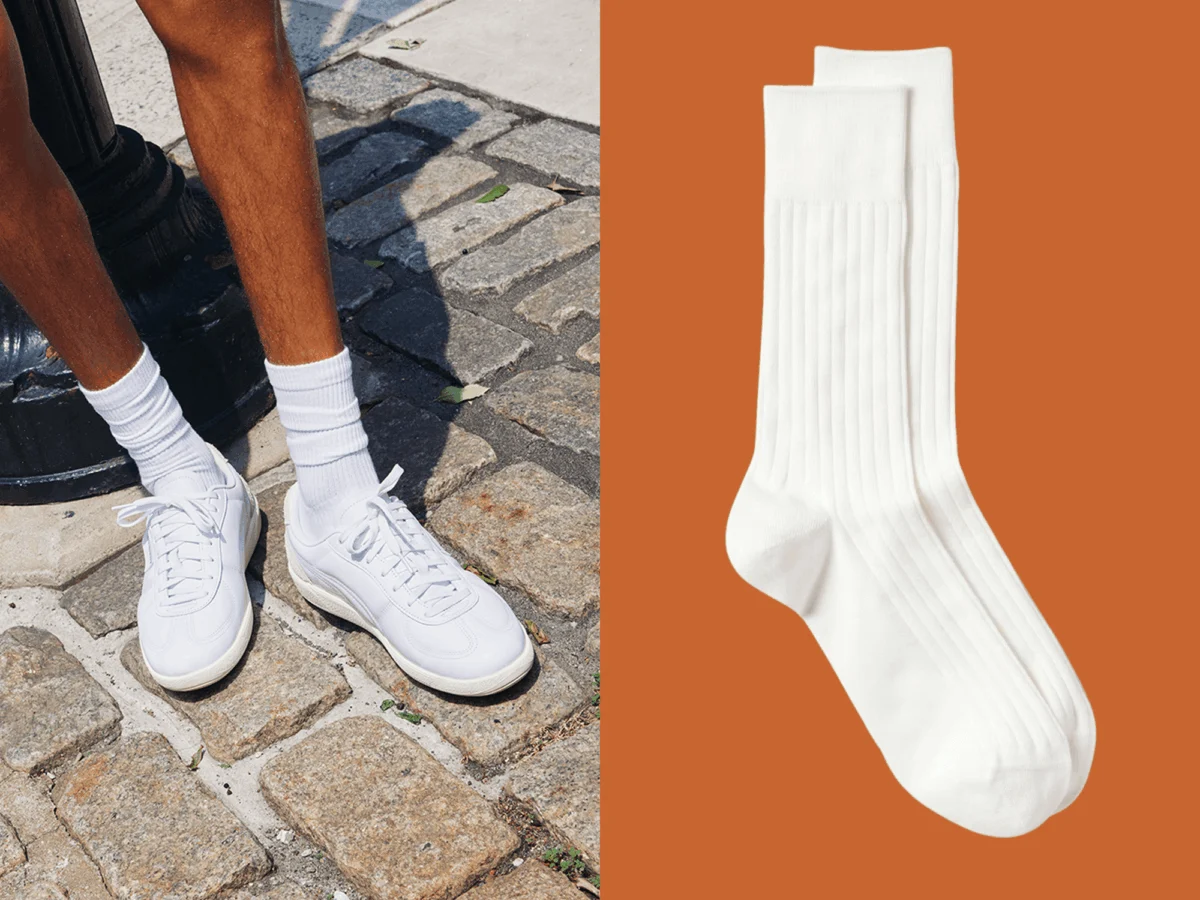
The quest for the perfect white sock is a journey through material science, manufacturing heritage, and economic value. There is a vast spectrum of options ranging from budget-friendly bulk packs to artisanal Italian knits, and the price point does not always correlate with performance. Understanding what separates a disappointing, flimsy garment from a resilient, comfortable staple requires an analysis of fiber length, knit density, and structural reinforcement. Whether one is seeking the moisture-wicking properties required for an athletic lifestyle or the silky drape of luxury mercerized cotton for a high-fashion silhouette, the current market offers a "hit list" of essentials that cater to every specific need.
At the foundational level of the market are the "Budget Buys," where brands like Goldtoe have maintained a dominant presence for nearly a century. Established in 1934 in Pennsylvania, Goldtoe built its reputation on a simple but effective innovation: reinforcing the toe of the sock with extra yarn to prevent the inevitable holes that plague inferior products. Their 656S Cotton Crew Athletic Socks represent the quintessence of the "unfancy" reliable garment. These socks are characterized by a substantial thickness that provides cushioning without becoming suffocating. While the brand’s signature gold-colored toe remains a polarizing aesthetic choice for those wearing open-toed footwear, it serves as a historical marker of durability. For the average consumer, these offer a mid-weight feel that transitions seamlessly from the gym to a casual office environment.
In the realm of modern retail, Uniqlo has revolutionized the basic essentials market through its "giant wall of socks," a display of organization that appeals to the color-coordinated minimalist. However, for those focused on the white crew sock, the distinction between their standard "Color 50" line and the Supima Cotton-Blend Wide Ribbed Socks is critical. Supima cotton, a trademarked name for American-grown Pima cotton, represents less than 1% of the cotton grown in the world. Its extra-long fibers are 35% longer and 45% stronger than conventional cotton, resulting in a fabric that is softer, more lustrous, and significantly more resistant to pilling. By spending an extra dollar for the Supima blend, consumers gain a sock that maintains its structural integrity through dozens of wash cycles, a testament to Uniqlo’s ability to democratize high-quality materials.
For those who prioritize domestic manufacturing and sheer volume, the Railroad Sock Company offers a glimpse into a disappearing era of American textile production. Founded in 1901 and still operating in Winston-Salem, North Carolina, the brand provides the "Baker’s Dozen" crew sock pack—a 13-pair set that emphasizes value over luxury. Often curated by high-end boutiques like Nepenthes for its "authentic" blue-collar aesthetic, these socks are proof that high-fashion "cool" can often be found in the most utilitarian places. While they may lack the longevity of more expensive blends, their price-per-wear ratio is nearly unbeatable, making them the ideal choice for those who view socks as a semi-disposable commodity.
Transitioning from pure comfort to performance, Dickies’ Dri-tech series introduces synthetic integration designed for moisture management. The workwear giant, known for its durable trousers, applies a similar philosophy to hosiery by blending cotton with polyester and spandex. This combination utilizes the natural breathability of cotton while leveraging the moisture-wicking and quick-drying properties of synthetics. This "Dri-tech" technology is essential for individuals who spend long hours on their feet, as it prevents the dampness that leads to blisters and odor. While the hand-feel is less "glamorous" than pure natural fibers, the functional benefits in a high-intensity environment are undeniable.
On the opposite end of the spectrum lies the luxury tier, where brands like Comme Si have transformed the humble sock into a piece of cultural capital. The Comme Si "Tube Sock Trio" is a masterclass in elevating a basic through superior sourcing and artful direction. These socks are knit in Italy using Egyptian cotton, a fiber renowned for its exceptional staple length and fineness. The resulting "Tube Sock" is daintier and more refined than the bulky versions of the 1970s, offering a silky texture that feels more akin to a dress sock while maintaining the athletic ribbing of a crew. The small tag at the cuff serves as a subtle signifier of taste, much like the branding on a luxury timepiece. As the brand’s enthusiasts often note, wearing a pair of Comme Si socks provides a psychological boost—a sense of "respect for the self" that a generic bulk-pack sock cannot replicate.
Similarly, the Scandinavian label CDLP has expanded its expertise in high-end undergarments to include the Mid-Length Tennis Sock. CDLP utilizes mercerized organic cotton, a process where the cotton thread is treated with sodium hydroxide to increase its luster, strength, and affinity for dye. This results in a "spongy" rib knit that feels incredibly plush against the skin. By offering a range of specific sizes rather than a "one size fits all" model, CDLP ensures a precise fit that prevents the sock from sliding down the calf or bunching at the heel. These technical details, combined with reinforced stress points, justify the higher price point for the discerning consumer who views their wardrobe as a long-term investment.
But what truly makes a white sock "great"? Beyond the brand names, the answer lies in the intersection of construction and materials. A superior sock must balance the softness of cotton with the resilience of elastane. A 100% cotton sock, while breathable, will inevitably lose its shape and sag around the ankles after a few hours of wear. Conversely, a high-synthetic blend can feel plastic-like and trap heat. The "sweet spot" is typically a blend that contains at least 70% high-quality cotton (like Supima or Egyptian) for comfort, with the remainder composed of nylon for durability and spandex for "recovery"—the ability of the sock to snap back to its original shape.
The construction of the toe is another often-overlooked marker of quality. Lower-end socks are typically finished with a machine-sewn seam that creates a bulky ridge. This ridge can rub against the toes, causing irritation during long walks. Premium hosiery features a "seamless" or "hand-linked" toe, where the stitches are joined precisely to create a flat surface. Furthermore, the "ribbing" of the crew sock serves a functional purpose: it provides the lateral tension necessary to keep the sock upright. The width and density of this ribbing can drastically change the aesthetic, from the chunky, athletic look of a classic tube sock to the fine, elegant lines of a designer knit.
The cultural significance of the white crew sock cannot be overstated. It has served as a symbol of mid-century Americana, the uniform of the 1980s fitness boom, and the cornerstone of the modern "normcore" movement. It is the only accessory that looks equally at home with a pair of beat-up canvas sneakers as it does with high-end leather loafers. By adhering to the criteria of material quality, tailored fit, and thoughtful construction, one can navigate the saturated market to find a pair that doesn’t just fill a drawer, but enhances the daily experience of getting dressed. In an era of fleeting trends, the plain white crew sock remains a permanent fixture—a reliable, humble, and essential piece of the human uniform.
