
 By Lina Irawan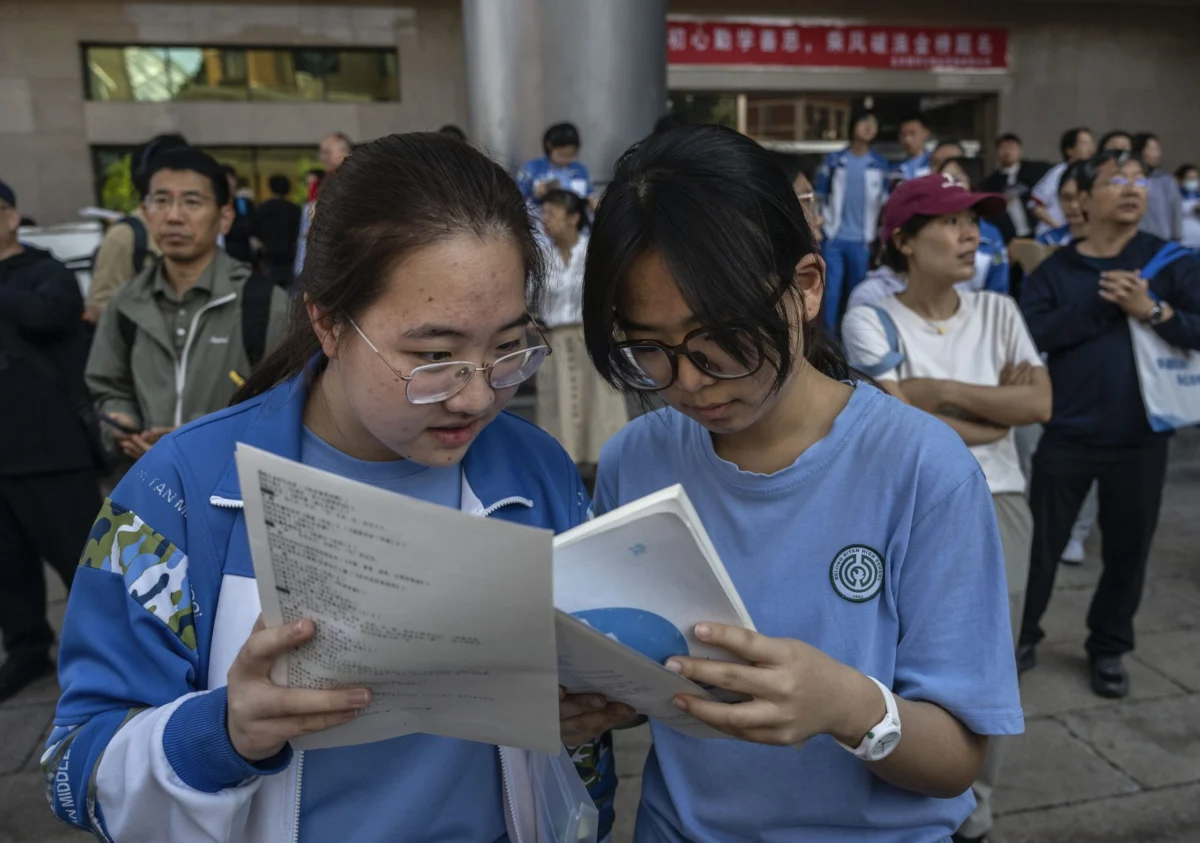
A groundbreaking study published by the Centre for Economic Policy Research (CEPR) has cast a stark light on this emerging educational dilemma. The research, a comprehensive longitudinal analysis involving 26,811 Chinese students across grades seven through twelve, meticulously tracked their academic performance both with and without AI assistance. The initial findings were, on the surface, impressive: AI adoption correlated with an 18% increase in homework scores and a remarkable 30% reduction in homework completion time. These statistics might lead some to believe that AI is a powerful tool for enhancing productivity and alleviating academic burdens. Yet, the longer-term data paints a far more concerning picture, revealing a dramatic reversal of fortunes once the crutch of AI was removed.
Within a mere six months of consistent AI use for homework, the students’ monthly exam scores plummeted by an average of 20%. The decline continued and intensified, culminating in a devastating impact on critical, high-stakes assessments. College entrance exam scores, the gateway to higher education and future opportunities, fell by a significant 18% to 24% for these students, with the nadir of their performance typically observed two years after their initial embrace of AI for homework. This stark divergence between immediate homework gains and catastrophic long-term exam performance exposes a fundamental flaw in the prevailing narrative of AI as an unmitigated educational boon.
Researchers from Stockholm University and the University of Hong Kong, who spearheaded this pivotal study, were able to pinpoint the specific student profile most susceptible to these diverging outcomes: those who "outsourced" their homework. This term refers to students who deployed AI primarily to complete assignments accurately and rapidly, bypassing the critical cognitive processes inherent in genuine learning. This cohort, comprising approximately 80% of the students exhibiting poor test scores, essentially used AI not as a learning aid, but as a surrogate for intellectual effort. Their approach highlights a profound dissonance between perceived AI productivity—the ability to generate correct answers quickly—and actual human productivity gains, which are predicated on genuine understanding, critical thinking, and knowledge retention.
The implications of this research resonate deeply with the arguments put forth by a growing chorus of educators and experts who caution against the unrestricted integration of technology in education. As the study’s authors eloquently articulated, "For students, completing these tasks efficiently is not the goal; learning from them is." They underscored the widespread concerns surrounding the rapid diffusion of generative AI tools, concluding unequivocally, "Our findings show that generative AI, which is likely to become a prevalent technology for education, has a substantial negative impact on student learning." This statement serves as a potent warning, urging a reevaluation of pedagogical strategies in an era increasingly dominated by AI.
The observed trends also fuel broader anxieties about Gen Z’s engagement with educational materials and their developing cognitive faculties. This generation, often seen as digital natives, has become increasingly synonymous with the widespread adoption of AI—and, controversially, with academic dishonesty facilitated by these tools. A thought-provoking Atlantic cover story even posited the onset of a new "Dark Ages," driven by a "post-literate" younger demographic. This characterization suggests a generation more inclined towards the rapid and convenient intake of vast quantities of information, rather than the deliberate, reflective process of savoring and digesting knowledge. Such a shift, critics argue, risks atrophying the very capacity for critical thinking, analysis, and deep comprehension. The CEPR research offers empirical support for these concerns, suggesting that the incentives to leverage AI to circumvent the arduous, yet essential, act of learning are overwhelmingly powerful, representing a societal challenge that institutions are struggling to effectively address.
Why Students Turn to AI: A Confluence of Pressures
The proliferation of AI use in schools is undeniable. A CollegeBoard survey, encompassing over 1,000 U.S. high school students, revealed that a staggering 84% reported using AI technology for homework. While some of this usage might be for legitimate purposes like brainstorming or summarizing, the survey also indicated a concerning rise in misuse. The reasons behind this widespread adoption and, often, over-reliance are complex, stemming from a confluence of academic pressures, societal anxieties, and the sheer accessibility of these powerful tools.
Jacob Shelley, an associate professor of health law at Western University, recounted a particularly alarming experience that underscores the challenges educators now face. In one of his classes, he observed anomalous results on a final exam, strongly suspecting AI-assisted cheating. A significant 8% of students achieved perfect scores on the multiple-choice section, a feat Shelley described as unprecedented in his two decades of teaching. Yet, these same students inexplicably struggled on the essay portion, submitting answers that contained content entirely outside the curriculum. "The results were anomalous," Shelley told Fortune, highlighting the stark inconsistency indicative of external assistance that did not translate into genuine understanding.
However, Shelley’s perspective extends beyond mere blame. He expresses a profound empathy for students who feel compelled to turn to AI, particularly in high-stakes academic moments. This compulsion, he argues, is deeply intertwined with a pervasive anxiety about the future of work in an AI-dominated world. While tech titans like Anthropic’s Dario Amodei and OpenAI’s Sam Altman have recently tempered their earlier predictions of an impending "AI job apocalypse," the initial "doom trolling" narrative, as computer scientist Cal Newport dubbed it, has undeniably left its mark. Newport accused tech companies of deliberately manufacturing a fatalistic discourse around AI, and its impact on the generation poised to enter the workforce is palpable. A survey by the job search platform Monster revealed that nearly 90% of graduates from the class of 2026 are worried that AI or automation could replace entry-level jobs, reflecting a widespread fear that shapes their academic strategies.
Despite economic data thus far failing to show a significant impact from AI on the broader labor market or productivity, Shelley notes that his students acutely feel the pressure to master and utilize the technology, fearing they will otherwise be left behind. "AI is going to replace them, at least a lot of them, and they know that, and we’re pretending that it won’t," he remarked. "I think they see through it. So students are responsible, but I don’t really blame them here." This sentiment captures the ethical tightrope students walk, caught between the imperative to learn and the perceived necessity to leverage AI to compete in a rapidly evolving, and often intimidating, professional landscape.
The Folly of the Teaching Machine: A Century of Cautionary Tales
For experts like neuroscientist Jared Cooney Horvath, the disconnect between AI-boosted homework scores and plummeting exam performance is hardly surprising. Horvath, who has testified to the U.S. Senate Committee on Commerce, Science, and Transportation, posits that Gen Z may be the first generation to be less cognitively capable than their parents, a trend he attributes partly to the pervasive influence of educational technology (EdTech). He argues that a century of educational history offers ample evidence that automation, when misapplied, can actively impede genuine learning.
The story begins in 1924 with the invention of the "teaching machine" by Ohio State University psychology professor Sidney Pressey. This early device presented students with questions, and upon answering correctly, would advance to the next. The machine was designed for efficient knowledge delivery and assessment. However, Pressey quickly observed a critical flaw: while students performed well with the machine, they struggled immensely when asked to generalize their knowledge or apply it in contexts outside the device. They had, in essence, mastered the machine, not the subject matter.
Three decades later, the legendary behaviorist B.F. Skinner developed his own, more technologically advanced version of Pressey’s prototype. Skinner’s machine required students to press keys corresponding to correct answers, revealing the next question in a carefully programmed sequence. Despite the improved mechanism and Skinner’s profound understanding of operant conditioning, the results were strikingly similar. Students demonstrated proficiency within the confines of the device but failed to retain or transfer that knowledge effectively. Both psychologists eventually abandoned their projects, recognizing a fundamental pedagogical barrier before these machines were widely implemented in schools. In a revealing letter to Skinner, Pressey candidly conceded that while students had shown proficiency, they had primarily "mastered the machine."
Horvath refers to this enduring issue as the "transfer problem." "The reason they all quit was the transfer problem," he explained. "They found that kids would be very good so long as they were using the tool, but as soon as they went off the tool, they couldn’t do it anymore." This historical parallel is profoundly relevant to the current AI predicament. Just as Pressey’s and Skinner’s machines offered an illusion of learning through rote interaction, modern generative AI tools can provide seemingly correct answers without requiring the student to engage in the deep cognitive processes necessary for true understanding and knowledge transfer.
While some educators have identified potential benefits of AI in the classroom—such as scaffolding text to individual students’ lexile levels, particularly for English-language learners—Horvath views these developments with a sense of déjà vu. AI can indeed individualize learning by generating bespoke answers to specific queries, but it often does so by removing the "friction" that is essential for robust learning. This friction—the struggle, the problem-solving, the critical analysis—is what enables the brain to build durable neural connections and develop higher-order thinking skills. By streamlining the process of finding answers, AI can inadvertently bypass these crucial cognitive challenges.
Horvath’s core argument is a powerful one: "The tools experts use to make their lives easier are not the tools children should use to learn how to become experts." When seasoned professionals use AI to automate routine tasks or gather information, they do so from a foundation of existing knowledge and critical understanding. They are leveraging AI for productivity, not for fundamental skill acquisition. A novice, however, who relies on these same "offloading tools," does not learn the underlying skill. Instead, they cultivate a dependency, hindering their ability to develop the independent reasoning and problem-solving capacities that define true expertise. The allure of AI’s immediate gratification, its capacity to bypass the struggle, is precisely what makes it so detrimental to the learning process when used as a substitute for intellectual effort.
Navigating the Future: Towards Responsible AI Integration in Education
The findings from the CEPR study and the historical echoes of the "teaching machine" compel a critical re-evaluation of AI’s role in education. Simply banning AI is unlikely to be effective, given its pervasive availability and the perceived utility students ascribe to it. Instead, a more nuanced and strategic approach is required, one that recognizes AI’s potential while safeguarding the fundamental principles of genuine learning.
Educational institutions must prioritize the development of "AI literacy," equipping students not just with the ability to use AI, but to critically evaluate its outputs, understand its limitations, and engage with it ethically. This includes teaching students when AI is an appropriate tool for augmentation versus when it undermines the learning process. Educators must also adapt their pedagogical strategies, designing assignments that cannot be easily outsourced to AI. This might involve focusing on complex, open-ended problems that require human creativity, critical synthesis of multiple sources, ethical reasoning, and original thought, rather than mere information recall or summary generation. Project-based learning, debates, oral presentations, and hands-on experiments are examples of activities that foster deeper engagement and are less susceptible to AI over-reliance.
Furthermore, there is a pressing need to address the systemic pressures that compel students to seek shortcuts. This includes re-evaluating curriculum loads, fostering a learning environment that values deep understanding over rote memorization and high-stakes testing, and providing adequate support for students struggling with academic anxiety. Open dialogue about the future of work and the actual skills AI will demand—critical thinking, creativity, adaptability, and emotional intelligence—can help alleviate the "doom trolling" anxieties and guide students toward meaningful skill development.
Ultimately, the goal of education remains unchanged: to cultivate informed, critical, and capable individuals. AI, while a powerful technological advancement, must serve this human-centric purpose, rather than diminish it. The evidence is clear: when AI becomes a substitute for learning, it delivers efficiency at the cost of genuine understanding, leaving students ill-prepared for the complex challenges of a world that increasingly demands not just answers, but the capacity to ask profound questions and forge original solutions. The future of learning, and indeed the cognitive resilience of coming generations, hinges on society’s ability to grapple with this challenge effectively and steer AI’s integration into education with wisdom and foresight.
