
 By admin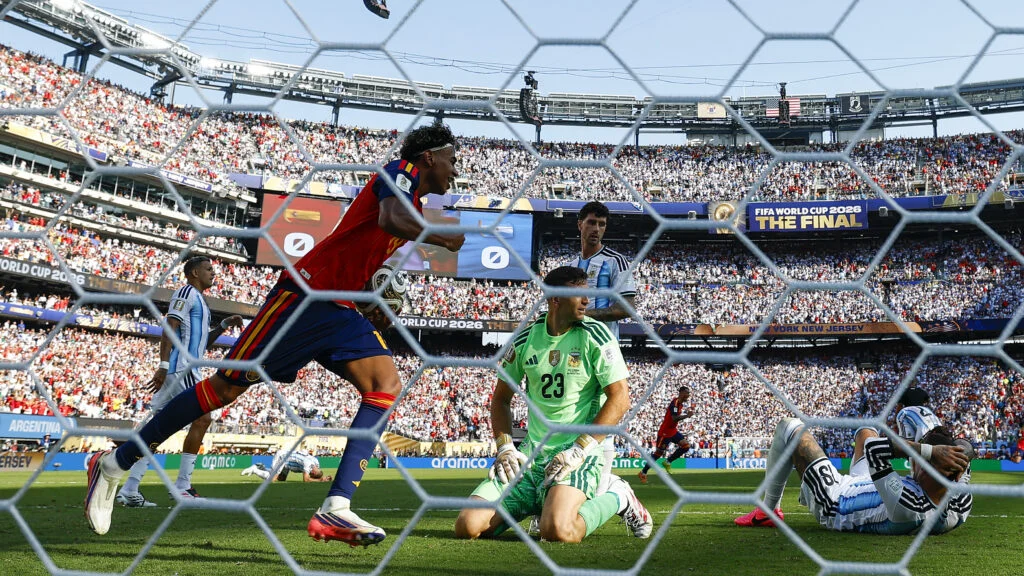
The roar of the stadium and the high-stakes drama of international football might seem worlds away from the sterile, hushed corridors of a tertiary care center, but the 2026 World Cup final between Argentina and Spain provided a masterclass in organizational theory that every hospital executive in America should study. As a physician, hospital administrator, and bioethicist, I watched the match not just as a fan of the beautiful game, but as a student of human systems. What I witnessed was a profound illustration of the "incumbent’s trap"—the dangerous tendency of successful organizations to mistake continuity for progress and to rely on the brilliance of individuals at the expense of the resilience of the system.
Four years ago, Argentina captured the world’s imagination by winning the World Cup in Qatar. That 2022 squad was a marvel of strategic engineering. While led by the transcendent Lionel Messi, the championship was not merely a product of his individual genius. It was built on a foundation of tactical cohesion, rigorous discipline, and a collective sense of sacrifice. Every player on that pitch understood their role and, perhaps more importantly, what they owed to their teammates. It was a well-oiled machine with a genius brain, a perfect synthesis of system and star.
Fast forward to this year’s final, and the surface-level components remained largely the same. Argentina returned with the same head coach, Lionel Scaloni, and the same captain in Messi. Many of the veteran players who had tasted glory in 2022 were back on the roster. On paper, the team was still elite. They reached the final through flashes of brilliance, and Messi, even at age 39, proved he could still conjure magic, scoring breathtaking goals and delivering assists that defied his years. However, the underlying mechanics had shifted. Against a vibrant, evolving Spanish side, Argentina appeared increasingly paralyzed by their own legacy. They became a team dependent on absorbing punishment, defending deep, and waiting for an aging superstar to produce one more miracle to save them. Throughout the entire final, Argentina failed to register a single shot on target. They were kept in the game only by the heroic, individual efforts of goalkeeper Emiliano Martínez, whose saves masked a systemic failure to control the pitch.
In contrast, Spain represented the triumph of the modern system. The Spanish players did not just execute a plan; they evolved in real-time. They controlled the tempo with a sophisticated, collective press and a fluid style of play that did not rely on any single point of failure. While they possessed their own superstars—most notably the 19-year-old sensation Lamine Yamal—these individuals did not operate in a vacuum. Their brilliance was a byproduct of a system that empowered them. Spain’s 1-0 victory in extra time was not a fluke; it was the inevitable result of a cohesive organization outperforming a fragmented one that was clinging to past glory.
For those of us in healthcare leadership, the parallels are striking and uncomfortable. American hospitals are currently grappling with an identity crisis, often making the exact same mistake Argentina made: we confuse the preservation of status quo with the maintenance of excellence. We retain the same leadership structures for decades, recycle the same "improvement" initiatives that yielded marginal gains years ago, and preserve rigid hierarchies that stifle innovation. Most dangerously, we continue to subscribe to the mythology of the "indispensable" individual.
In the world of medicine, we are conditioned to hunt for our own Messi. We celebrate the world-renowned neurosurgeon, the brilliant diagnostician who solves the "medical mystery," or the influential department chair who brings in millions in research grants. We fall into the trap of believing that these exceptional individuals can rescue an organization through sheer force of will or individual excellence. While it is true that extraordinary physicians are the backbone of clinical care, their brilliance is a fragile foundation. If a hospital’s success depends entirely on a few "star players" being in the room, that hospital is fundamentally unsafe.
The reality of modern healthcare is that a patient’s journey is a longitudinal experience involving dozens of moving parts. Patients rarely experience the "brilliance" of a single clinician in isolation. Instead, they experience the "systemness"—or lack thereof—of the institution. They experience whether the floor nurse truly understands the nuances of the attending physician’s plan. They experience whether a pharmacist catches a subtle medication discrepancy before it reaches the bedside. They experience whether the case management team is aware that a discharge plan changed at 8:00 AM, or if the patient will languish in a bed for an extra 24 hours because of a communication breakdown.
Data from The Joint Commission and various patient safety studies consistently show that approximately 70% to 80% of serious medical errors are linked to communication failures during handoffs or transitions of care. A patient may suffer a setback not because their doctor was incompetent, but because the system was fragmented. A "Messi-level" surgeon can perform a flawless triple bypass, but if the post-operative handoff to the intensive care unit is garbled, the patient remains at risk. In this light, the strongest hospitals are not necessarily those with the most famous names on the masthead; they are the ones where information flows so cleanly that no single individual is required to "rescue" the process.
The 2022 Argentine victory actually proves this point. Messi did not win that trophy alone. He succeeded because, at that specific moment in time, Argentina had built a robust system around him that emphasized emotional connection and a willingness of every player to do the "unseen" work—the tracking back, the closing of gaps, the selfless running. However, organizations often respond to such success by institutionalizing the visible "stars" while neglecting the invisible conditions that made the success possible. They keep the figureheads, repeat the slogans, and assume the culture will simply regenerate itself.
It rarely does. Excellence is not a static inheritance; it is a perishable commodity that must be rebuilt every single day. Hospitals fail when they copy last year’s strategic plan without accounting for shifts in nursing labor markets, changes in patient demographics, or the rapid integration of artificial intelligence in diagnostics. They fail when they assume that because they were a "Top 100 Hospital" five years ago, they are inherently superior today.
The World Cup final also offered a sobering look at what happens when a storied institution loses its composure under pressure. As the match slipped away, Argentina’s discipline dissolved. Enzo Fernández was sent off after receiving a second yellow card, leaving his team shorthanded at the most critical juncture. After the final whistle, the frustration boiled over into a physical altercation between players that is now the subject of a FIFA investigation. In a final act of defiance, the Argentine squad turned their backs as the Spanish team lifted the trophy.
This defensive, almost reactionary posture is frequently mirrored in hospital administration. When quality metrics slip, when patient satisfaction scores plummet, or when a high-profile "never event" occurs, the instinctive response is often defensiveness. Leaders question the validity of the data, departments begin a cycle of mutual recrimination, and clinicians may dismiss patient grievances as the result of "unrealistic expectations." We see organizations explain away poor outcomes by pointing to external factors: staffing shortages, the complexity of the patient population, or "flawed" CMS metrics. While these factors are often real, using them as a shield prevents the organization from learning. High-performing organizations, like high-performing athletes, must know how to lose. They must be able to acknowledge when a process has failed or when a long-standing strength has become a liability. Adopting this "growth mindset" is not a sign of weakness; it is the primary indicator of systemic strength.
Furthermore, the frustration of fans during the tournament regarding inconsistent refereeing mirrors the frustration patients feel regarding "arbitrary" hospital policies. In healthcare, trust is destroyed not necessarily by difficult outcomes, but by perceived unfairness. When one family is granted an exception to visiting hours while another is denied, or when one "VIP" patient bypasses a queue that others have waited in for weeks, the institution fails in its duty of justice. Consistency is often viewed as a mere operational virtue, but in a bioethical context, it is a requirement of equity. A system that relies on "exceptions" made by powerful individuals is a system that is inherently biased.
The contrast between Argentina and Spain is a warning about organizational complacency. Hospitals rarely collapse because their staff suddenly becomes incompetent. They decline because their past successes harden into blind spots. The experienced leader who has "seen it all" may stop listening to new ideas, viewing them as threats to a legacy. The stable department structure may become so rigid that it cannot adapt to new interdisciplinary care models.
The most dangerous phrase in a hospital’s vocabulary is, "This is how we’ve always done it." Argentina still had the best player in history, they still had the pedigree of champions, and they still had the talent to reach the final. But they were defeated by a better system. American hospitals must take heed: individual brilliance can win a "match" or save a single life, but only a cohesive, evolving system can provide safe, high-quality care to a community over the long term. We must stop looking for the next Messi and start building the next Spain.
Basel Tarab, M.D., is a physician, health care executive, and bioethicist. He serves as director of patient experience at Winchester Hospital, teaches health care administration at Boston College, and is a teaching affiliate at Harvard Medical School’s Center for Bioethics.
