
 By admin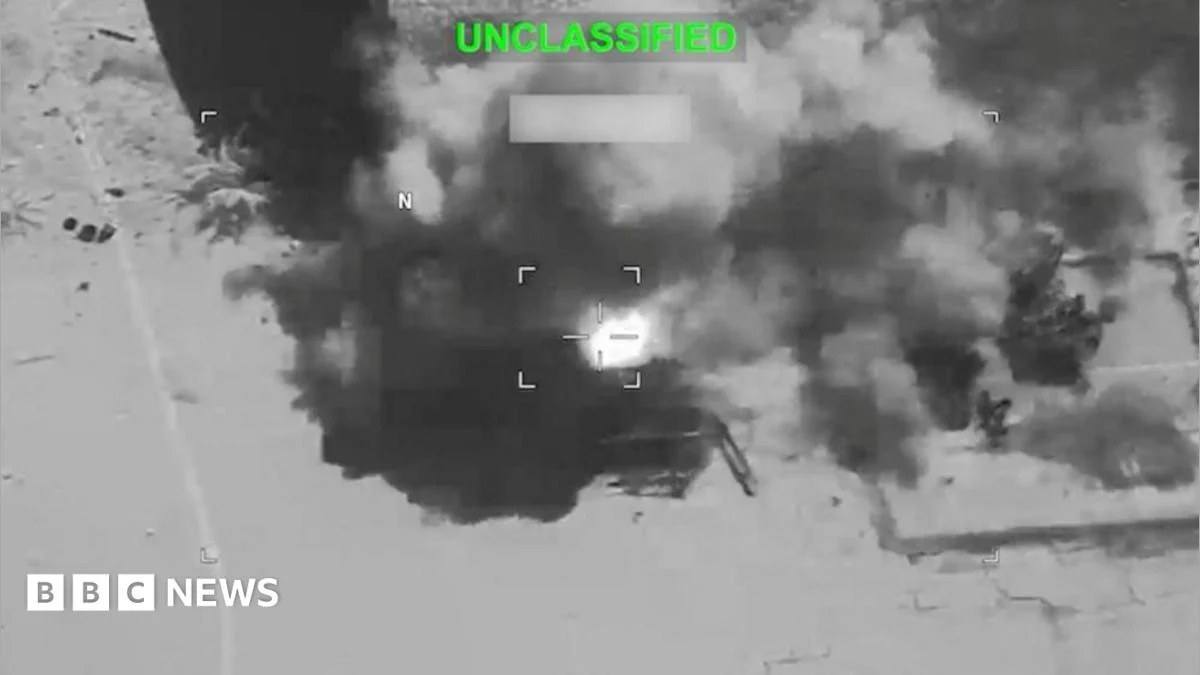
President Donald Trump has issued a stark and escalating threat, declaring that the United States would retaliate by destroying an Iranian bridge or power plant any time its forces attack a ship in the critical Strait of Hormuz. The potential targets, as outlined by the former president in a post on his social media platform Truth Social, would include infrastructure "located next to, or in," the capital Tehran. This potent military response would be triggered by any form of attack on shipping in the vital waterway, regardless of the weapon used – "whether it be by missile, rocket, drone, or any other device or weapon."
This aggressive stance from Trump follows a period of heightened tension and direct military action, with reports indicating that the US had launched strikes on Iran for the eleventh consecutive night. Simultaneously, Tehran has issued stern warnings against any US targeting of its nuclear facilities, a move that would undoubtedly carry profound implications for regional stability and global security.
The news of potential strikes and counter-strikes has reverberated across Iran. Iranian state media reported that air defense systems were activated in Tehran, signaling a heightened state of alert. Explosions were also reported in several key locations, including the northwestern city of Tabriz, the southeastern ports of Chabahar and Konarak, and the southern city of Bushehr, notably home to Iran’s sole nuclear power plant. These incidents underscore the volatile nature of the current confrontation and the widespread impact of the escalating conflict.
Iran, which has demonstrably retaliated against the US and its Middle Eastern allies in recent weeks, has further warned of significant reprisades. This warning comes in the wake of President Trump’s declaration that the US would soon target an underground nuclear site near Natanz, a facility of immense strategic importance to Iran’s nuclear program.
The regional implications of this escalating conflict are already being felt beyond Iran’s borders. Kuwait’s army confirmed on Wednesday that its air defenses had engaged with drone attacks originating from Iran. Bahrain and Jordan also reported intercepting drone and missile strikes, indicating a broader pattern of aggression and a widening sphere of influence for the conflict.
Secretary of State Marco Rubio, speaking on Wednesday, articulated the US commitment to defending maritime traffic through the straits. He stated that the US would "defend" ships transiting the area, emphasizing that any vessel getting "blown up" would necessitate a strong response. While Rubio acknowledged that US officials remain "open to diplomacy," he expressed skepticism regarding Iran’s genuine commitment to such negotiations, suggesting a lack of seriousness on Tehran’s part.
The immediate economic consequence of this heightened geopolitical friction has been a surge in oil prices. The price of crude oil jumped significantly in response to the latest escalation, reaching $94 per barrel on Wednesday. This price volatility highlights the Strait of Hormuz’s critical role in global energy markets and the profound impact that regional instability can have on the world economy.
In a defiant statement, Iran’s top negotiator, Mohammad Bagher Ghalibaf, issued a stark warning to the United States on Wednesday evening. He declared, "the equation of this war is clear: either all or none!" Ghalibaf further elaborated on Iran’s retaliatory capacity, stating, "In a region where we do not sell oil, no-one will sell oil. If our security is not ensured, no infrastructure will be safe, and the security of the strait is in the absence of American forces. We have repeatedly said that the situation of the strait will not return to pre-war conditions." His pronouncements, posted on X (formerly Twitter), signal Iran’s readiness to inflict severe economic consequences on the global oil market should its security be threatened.
Earlier, President Trump had indicated that the next potential US military target could be a complex known as Pickaxe Mountain. This site is described as an underground nuclear facility where Iran is suspected of developing an undeclared enrichment facility, a development that would raise significant concerns for international non-proliferation efforts.
Furthermore, President Trump extended his threats to include the Houthi rebels in Yemen, warning that the US would "take care of" the Iran-backed militant group if they followed through on their threatened blockade of Saudi ports. A Houthi media official had earlier announced their intention to close the Bab al-Mandab Strait, the southern gateway to the Red Sea, to Saudi vessels. The Red Sea has become increasingly vital for oil shipments from Saudi Arabia, particularly during the ongoing US-Israeli war with Iran, which has led to the effective closure of the Strait of Hormuz.
Following the Houthi announcement, two oil tankers that had just loaded Saudi crude at Saudi Arabia’s Red Sea port of Yanbu, bound for China and India, made U-turns on Tuesday and rerouted towards the Suez Canal, according to the British maritime risk management group Vanguard. This disruption to shipping routes underscores the fragility of global supply chains and the cascading effects of regional conflicts. The threat from the Houthis, coupled with the broader hostilities in the region, risks further disruption to international shipping and has already led to significant fluctuations in global fuel prices.
Adding a layer of complexity to the current situation, it is important to note a past diplomatic effort. Iran and the US had previously signed a Memorandum of Understanding (MoU) in June, aimed at halting military operations and reopening the Strait of Hormuz, with a goal of reaching a broader agreement to end the war within 60 days. However, this diplomatic initiative proved short-lived. Just three weeks after its signing, President Trump declared the ceasefire "over" following Iranian attacks on ships in the Strait of Hormuz and subsequent US strikes in retaliation. This collapse of diplomacy highlights the deep-seated mistrust and the challenges in de-escalating the ongoing conflict.
The financial burden of the protracted war with Iran has also become a significant factor. US Defense Secretary Pete Hegseth stated on Tuesday that the conflict has cost the US approximately $37.5 billion (£28 billion) so far, an increase of nearly $8 billion since the last estimate in May. Appearing before the Senate Appropriations Committee, Hegseth emphasized that military training programs would need to be curtailed unless lawmakers approved an urgent funding boost, underscoring the substantial resource commitment required to sustain US military operations in the region.
In a related development, House Republicans on Wednesday approved a $95 billion budget package. While the majority of this funding is earmarked for the Iran war, the package also includes a Trump-backed bill to change voting regulations within the US. This measure, passed with only Republican support, faces a formidable challenge in the narrowly divided Senate. Republican Senator John Thune defended the financial needs of the Trump administration, arguing that Iran is "violating international law by blocking the shipping lanes and the Strait of Hormuz" and that President Trump is "within his authority" to take action. He further stated, "In the meantime, I think most of us, at least, believe that we ought to support our men and women in uniform and hope and pray that they’re successful."
President Trump attended a dignified transfer ceremony on Wednesday in Dover, Delaware, for the bodies of US service members recently killed in the Middle East. He had previously vowed that Iran would pay for American fatalities "many times over." On Tuesday, the Pentagon released the name of a fourth soldier believed to have been killed in recent days. Sergeant Angel S Rampersad, 28, who was previously declared missing after an Iranian strike in Jordan, is now thought to have died alongside two other service members in the same incident. These tragic losses underscore the human cost of the escalating conflict and the profound sacrifices being made by US military personnel.
