
 By admin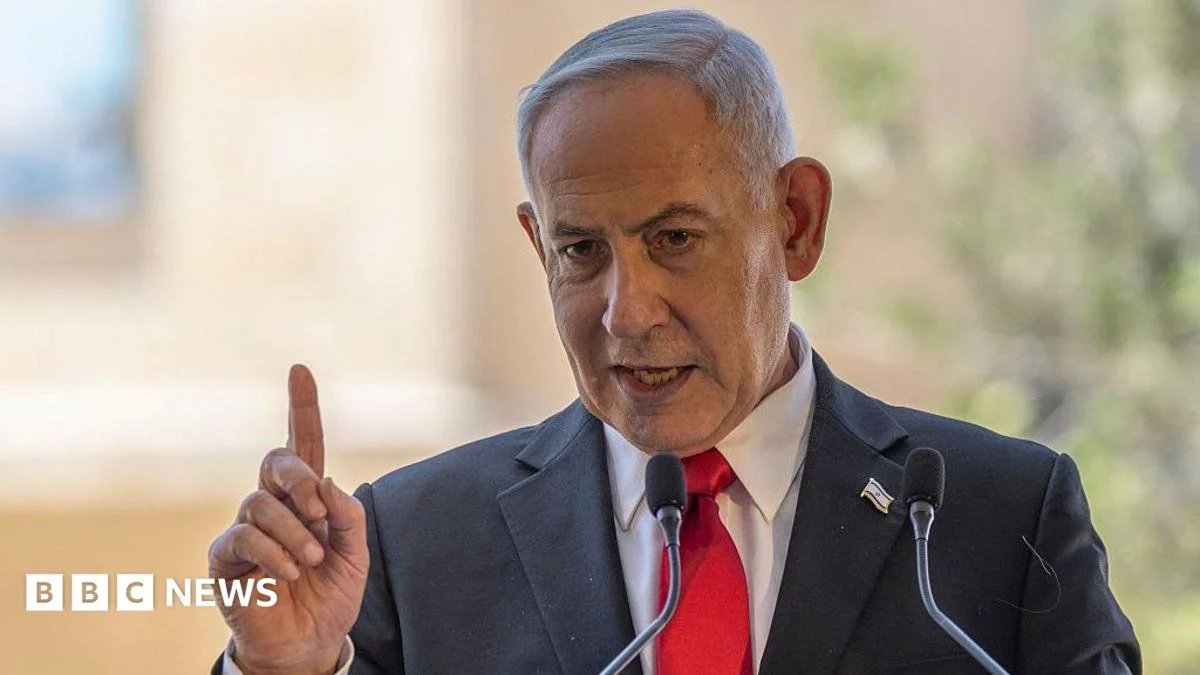
Israeli Prime Minister Benjamin Netanyahu has unequivocally stated his intention to address the United Nations General Assembly in New York City this autumn, a declaration made amidst a swirling controversy involving the city’s mayor, Zohran Mamdani. While Mamdani initially declared his intent to arrest Netanyahu, a move rooted in an International Criminal Court (ICC) arrest warrant, he has since significantly tempered his stance, acknowledging his lack of legal authority to unilaterally enforce such a warrant. The Israeli leader, speaking to Fox News on Sunday, dismissed Mamdani’s earlier pledge as inconsequential and pointedly accused the mayor of actively "fomenting hate" within the diverse fabric of New York City.
Netanyahu articulated his critique of Mamdani’s position, asserting that a mayor’s role should encompass representing all citizens, irrespective of their religious or ethnic background. "He’s supposed to be the mayor of all New Yorkers, Jews, Christians, Muslims, everyone, but he’s trying to turn one group against the other," Netanyahu stated, underscoring his belief that Mamdani’s rhetoric was divisive and harmful. His remarks were made in the context of recent violent incidents in New York, including a pair of stabbings that occurred on Thursday. In these attacks, a suspect allegedly targeted both a Jewish man and an Asian man, perpetrating the assaults mere blocks apart. Reports indicate that the suspect, during the commission of these violent acts, invoked the phrase "Allahu akbar." Consequently, the individual has been formally charged with hate crimes in relation to each victim. Both victims of these assaults survived, and the incidents have drawn swift and strong condemnation from prominent Jewish and Asian American leaders within the city. In the wake of these attacks, Netanyahu conveyed his perception that "Jewish New Yorkers were afraid right now," highlighting his concern for the safety and emotional well-being of the city’s Jewish community. The office of Mayor Mamdani did not immediately provide a response when approached for comment regarding these developments.
Mayor Mamdani, a vocal proponent of Palestinian rights, had strategically made his opposition to the Israeli military operation in Gaza a cornerstone of his electoral campaign last year. During a significant address delivered the previous week, Mamdani explicitly labeled Prime Minister Netanyahu as a "war criminal." This strong rhetoric was directly linked to his campaign promise to actively enforce a 2024 arrest warrant issued for Netanyahu by the International Criminal Court. The ICC, in its warrant, accused the Israeli Prime Minister of perpetrating war crimes in the Gaza Strip. Israel, however, vehemently denies any allegations of war crimes committed in Gaza, with Netanyahu himself characterizing the charges as "bogus."
The current conflict in Gaza originated following the Hamas-led attack on Israel on October 7, 2023. This initial assault resulted in the deaths of approximately 1,200 individuals and the taking of 251 people as hostages. In the ensuing Israeli military operations in Gaza, the Hamas-run health ministry in the territory has reported that over 73,000 people have been killed, a figure that includes more than 21,000 children. These casualty figures, provided by the Hamas-run health ministry, are generally considered reliable by United Nations agencies.
The shift in Mayor Mamdani’s position regarding the arrest of Prime Minister Netanyahu became evident when The New York Times pressed him on his earlier pledge. In response to their inquiries last week, Mamdani revealed that his administration had conducted a thorough legal review. The outcome of this review led to the conclusion: "We do not have the independent legal authority to enforce this warrant." This acknowledgment marked a significant departure from his initial strong pronouncements. Following this legal assessment, Mamdani redirected his appeal, urging the federal government to take action to arrest the Prime Minister. He further articulated his sentiment by stating, "Benjamin Netanyahu is not welcome in New York City." This statement, while softened in terms of direct enforcement capability, still conveys a clear message of political opposition and a desire for the Prime Minister’s exclusion from the city.
The complexities surrounding Mayor Mamdani’s initial threat and subsequent retraction are deeply intertwined with the broader geopolitical landscape and the legal frameworks governing international justice. The International Criminal Court (ICC), established by the Rome Statute, has the authority to prosecute individuals for genocide, crimes against humanity, war crimes, and the crime of aggression. However, its ability to enforce arrest warrants is contingent upon the cooperation of member states, which are obligated to assist the Court in its investigations and prosecutions. The United States, while not a state party to the Rome Statute, has a complex relationship with the ICC, generally opposing its jurisdiction over personnel from countries that have not ratified the treaty, including its own citizens and those of allied nations like Israel.
Mayor Mamdani’s initial assertion of an intent to arrest Netanyahu likely stemmed from a combination of his strong personal convictions regarding the situation in Gaza and a desire to leverage his public platform to express solidarity with Palestinian rights. His campaign rhetoric, promising to enforce the ICC warrant, resonated with a segment of his electorate and positioned him as a forceful advocate against what he perceived as Israeli transgressions. However, the practical realities of municipal law enforcement within the United States, particularly concerning international warrants and the jurisdictional boundaries between local, federal, and international legal bodies, proved to be a significant impediment to his stated intentions. The legal review undertaken by his administration would have undoubtedly highlighted the absence of any statutory authority for a city mayor or local police department to execute an ICC arrest warrant independently.
The subsequent appeal to the federal government to take action underscores Mamdani’s continued commitment to seeing Netanyahu held accountable, albeit through the appropriate legal channels. This pivot also reflects a recognition of the intricate web of international law and the limitations of sub-national governmental power in such matters. His statement that Netanyahu is "not welcome in New York City" can be interpreted as a symbolic expression of disapproval and a continued political stance, rather than a literal threat of immediate arrest.
Prime Minister Netanyahu’s response, characterized by a dismissal of Mamdani’s threats and accusations of "fomenting hate," reflects a broader pattern of Israeli government responses to international criticism and legal scrutiny. Israel has consistently maintained that its military actions in Gaza are a necessary response to security threats posed by Hamas and other militant groups, and that it adheres to international humanitarian law. The reference to the recent stabbings in New York, and the alleged invocation of "Allahu akbar," appears to be an attempt by Netanyahu to link Mamdani’s perceived anti-Israel stance to broader concerns about rising antisemitism and religiously motivated violence, thereby attempting to frame the situation as a matter of public safety for Jewish New Yorkers. This tactic can be seen as an effort to deflect criticism by associating it with broader, more universally condemned forms of extremism.
The statistics cited by the Hamas-run health ministry in Gaza, while acknowledged as reliable by the UN, are often subject to scrutiny and differing interpretations by various parties involved in the conflict. The Israeli government frequently questions the methodology and impartiality of figures released by entities controlled by Hamas. Nevertheless, the sheer scale of reported casualties, particularly among children, continues to be a major point of international concern and a driver of diplomatic pressure on Israel.
The situation presents a complex interplay of political posturing, legal limitations, and deeply held convictions on all sides. While Mayor Mamdani has acknowledged the legal constraints on his ability to enforce the ICC warrant, his vocal opposition to Prime Minister Netanyahu and the Israeli government’s actions in Gaza remains a significant political statement. Prime Minister Netanyahu’s determination to attend the UN General Assembly signals his commitment to engaging on the international stage, despite the challenges and criticisms he faces. The events highlight the ongoing tension between national sovereignty, international law, and the pursuit of justice for alleged war crimes, a tension that is often amplified in the global spotlight of the United Nations. The upcoming UN General Assembly will likely see these contentious issues further debated, with the actions and statements of figures like Mayor Mamdani and Prime Minister Netanyahu continuing to shape the discourse. The incident also serves as a stark reminder of the challenges faced by cities and mayors in navigating complex international relations and legal mandates, often caught between their local responsibilities and global geopolitical realities.
