
 By admin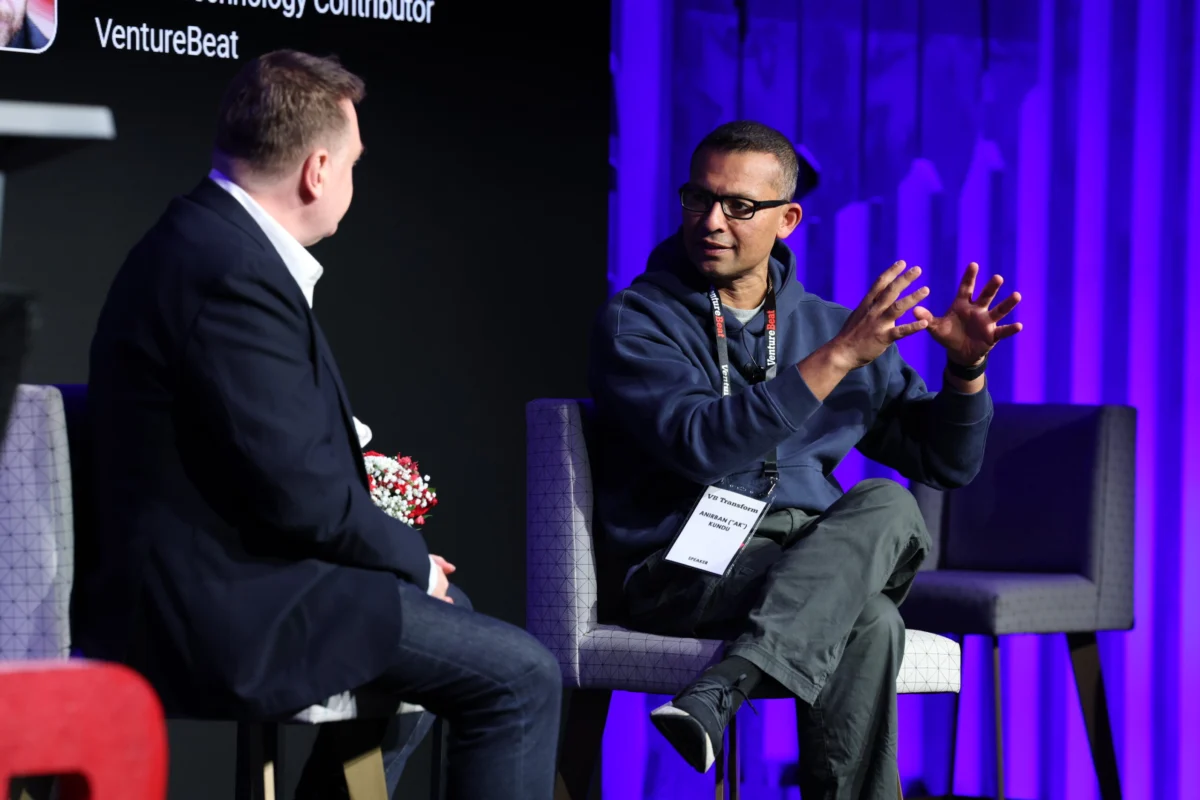
In a groundbreaking shift that challenges traditional software development paradigms, Instacart, the leading online grocery platform, is actively exploring a future where artificial intelligence agents shoulder the majority of engineering tasks, freeing human developers to focus on higher-order problem-solving. This vision was articulated by Anirban Kundu, Instacart’s Chief Technology Officer, during his keynote at the recent VB Transform 2026 conference. Kundu posited that development teams are currently bogged down by a relentless tide of repetitive, high-volume, and often draining work. He argued that these tasks are ripe for automation by AI agents, enabling human engineers to dedicate their cognitive prowess to intricate problems demanding nuanced judgment, strategic intent, and sophisticated exception handling.
The sheer scale of this potential transformation is underscored by a startling statistic: at Instacart, engineers now find themselves reviewing code in a mere 3% of cases. This signifies a profound evolution in the engineering workflow, where the primary interface with the codebase is shifting from direct manual manipulation to intelligent interaction with AI systems. "In the past, the tactical level was the creation of the code," Kundu explained, highlighting the historical emphasis on manual coding. "In the most tactical level going forward, it’s going to be, ‘How do you navigate around the AI system to give you what you want?’" This statement encapsulates the new skill set required: not just the ability to write code, but the mastery of guiding and leveraging AI to achieve desired outcomes.
This dramatic reduction in direct code writing doesn’t imply a complete abdication of human oversight. Instead, AI agents are now taking the reins for the bulk of code generation and the creation of boilerplate code. This is particularly true for newer projects where codebases are being generated or significantly refactored on a weekly basis. The implications of this approach are far-reaching, especially concerning the perennial challenge of technical debt. "The benefit of that is we don’t care about tech debt anymore," Kundu revealed. "Things that are not active just get dropped out and then it gets rebuilt, kind of like how we used to build assembly code or object code." This agile, AI-driven regeneration process effectively mitigates the accumulation of outdated or inefficient code, a common bane in long-standing software projects.
The remaining 3% of cases where human intervention is still crucial involves a specific set of critical systems. These include legacy applications that are deeply embedded and complex, compliance-driven workflows that demand meticulous human oversight, and latency-sensitive systems where even minor deviations can have significant consequences. Additionally, scenarios involving a substantial volume of "dead," partially active, or infrequently used code still necessitate careful human attention and strategic deconstruction. Instacart is proactively addressing these challenging areas through a meticulously planned initiative aptly named "Atoms." This project involves systematically breaking down monolithic systems into smaller, more manageable components and then rebuilding them in a cleaner, more modular fashion. Kundu’s team has transitioned from tackling the daunting monoliths to adopting remote procedure call (RPC)-driven architectures, a more distributed and scalable approach.
A central challenge in this AI-augmented development landscape is the evolution of evaluation processes. Traditional code reviews, designed for human-written code, become less relevant when AI is the primary generator. As Kundu noted, "the lines of code are going to be correct, the syntax is going to meet your expectations." The focus, therefore, must shift from syntactic correctness to semantic accuracy and functional alignment with business objectives. The new paradigm centers on an "intent model," where developers are trained to articulate their requirements to AI models through precise, intent-driven queries. This requires a deep understanding of the problem domain and the ability to translate abstract goals into concrete instructions for the AI.
To support this transition, Instacart has implemented a robust independent evaluation framework. Approximately 7,000 automated evaluations are conducted monthly, providing a continuous stream of performance data. Furthermore, the system is designed to answer over 8,000 real-time developer queries with an impressive accuracy rate of approximately 99.9%. This sophisticated evaluation infrastructure ensures that the AI-generated code not only compiles but also functions as intended, meeting the stringent performance and reliability standards of a high-volume e-commerce platform.
Beyond code generation, Instacart is also leveraging AI to revolutionize site reliability engineering (SRE) through an agentic system. This AI SRE is not trained on generic failure data but is instead steeped in the company’s own historical incident logs and root-cause analyses. By learning from the specific ways Instacart’s systems have malfunctioned over time and how human engineers have diagnosed and resolved these issues, the AI gains a highly contextualized understanding of potential vulnerabilities. This specialized training has led to a remarkable improvement in accuracy for detecting and mitigating production issues, soaring from around 60% to over 90%.
Kundu shared a compelling example illustrating the power of this AI SRE colleague, codenamed Blueberry. This AI assistant monitors over 200 Slack channels, analyzes system signals, and actively searches for patterns within human conversations and automated alerts. During a critical incident where a database shard experienced a transient issue with its underlying EBS volume, the human team initially struggled to pinpoint the cause, not immediately suspecting AWS disk problems. They were "obviously scrambling" to understand the shard’s aberrant behavior. However, approximately 20 minutes into the incident, Blueberry proactively posted in Slack, identifying a specific data blip. Crucially, it correlated this blip with an inadequacy in a feature-flagging system known as "roulette." The AI correctly deduced that the rollout cadence of this system had been excessively aggressive. "It’s supposed to be rolling out in this cadence, [but] it had been too much," Kundu explained. Blueberry’s swift and accurate diagnosis enabled the team to resolve the incident efficiently.
This incident highlighted a key advantage of AI in operational contexts: its ability to overcome human cognitive biases. "Would a human have been as quick? I think the problem is human intuition would hold us back a little bit," Kundu mused. Humans, he explained, often default to familiar patterns and established debugging methodologies, a process he referred to as the "first brain-second brain kind of thing." In contrast, Instacart’s agentic SRE is "more comprehensive in its ability to look at everything and then be able to decide what does or doesn’t matter." This capacity for unbiased, holistic analysis allows the AI to identify subtle anomalies that might elude human perception or be dismissed as insignificant.
The implications of these advancements are reshaping the very definition of an engineer’s role. Looking ahead, the most critical tactical work for engineers will involve navigating and orchestrating these sophisticated AI systems. This includes designing and meticulously supervising evaluation processes, coordinating multiple simultaneous experiments and feature rollouts, managing constraints such as limited top-of-funnel traffic for testing new functionalities, discerning when to escalate issues, and identifying elusive edge cases where systems might falter. The emphasis is shifting from being a direct builder to becoming a strategic conductor of AI-powered development.
Furthermore, the concept of domain expertise is undergoing a significant reevaluation in this AI-driven era. Traditionally, changes requiring specialized domain knowledge often created bottlenecks, with a single "owner" team holding the keys to the codebase. Instacart is actively dismantling this structure by embedding domain knowledge directly into definitions and specifications, making this knowledge accessible and usable by any team. "We’ve lived in this world where this group or this engineering team is the one that can touch the code and make the modification," Kundu stated. "We’re trying to move into a world where the code becomes completely democratized across groups." This democratization of code and domain knowledge, facilitated by AI, promises to accelerate innovation and foster a more collaborative and agile development culture. The future of engineering at Instacart, and potentially across the industry, is one where humans and AI collaborate seamlessly, with machines handling the heavy lifting and repetitive tasks, allowing human ingenuity to soar to new heights.
