
 By Rifan Muazin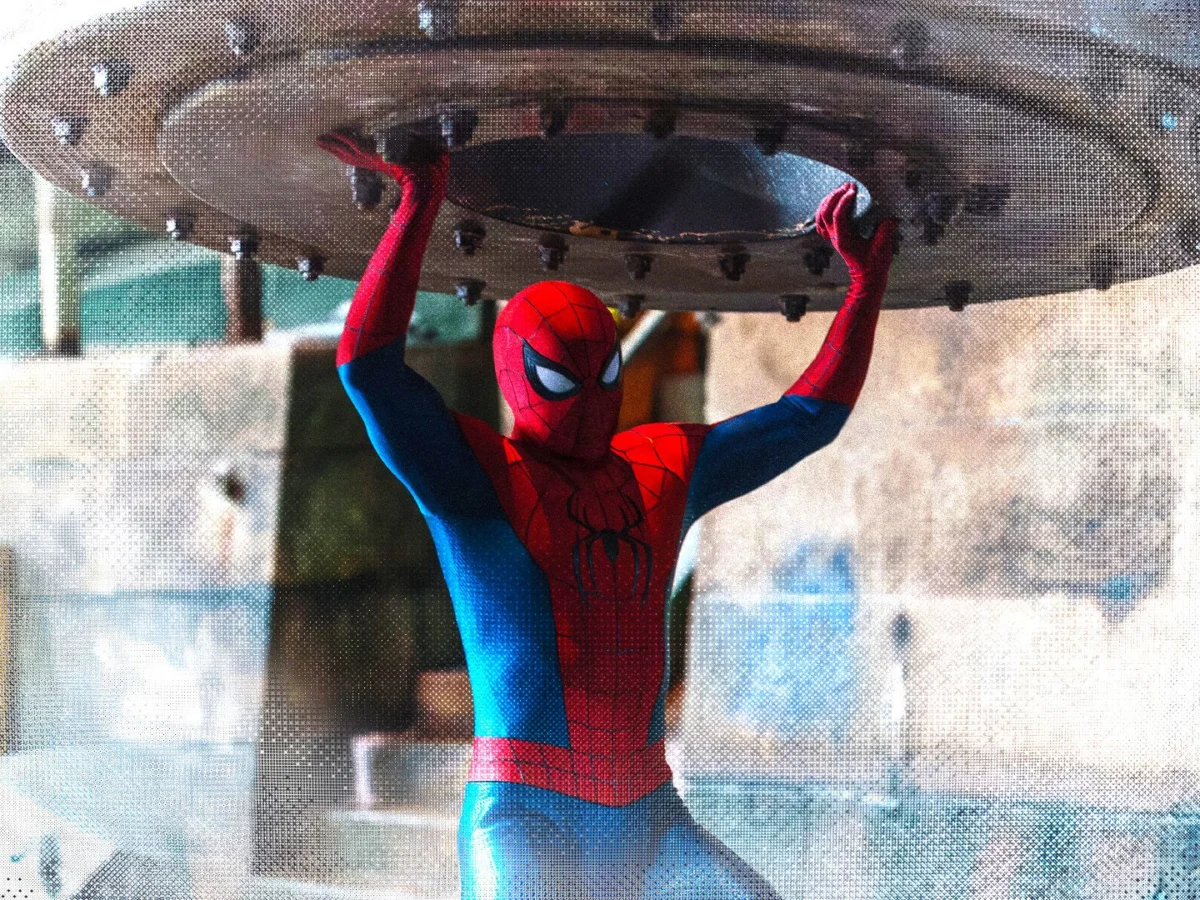
The Marvel Cinematic Universe has spent the better part of the last half-decade grappling with an identity crisis that has left even its most devoted acolytes feeling a sense of profound "superhero fatigue." For those who value auteurist flair over assembly-line connectivity, the post-Endgame landscape has been particularly barren. Aside from the polarizing yet visually distinct flourishes of Sam Raimi’s Doctor Strange in the Multiverse of Madness—a film where the director’s signature horror sensibilities and kinetic set-pieces managed to overshadow a messy, multiversal plot—the MCU has largely struggled to deliver movies with genuine personality. For years, the franchise has prioritized setting up a flimsy future at the expense of the present, falling victim to third-act fumbles and glaring plot holes that have become par for the course. In this climate, the bar has shifted; audiences are no longer just looking for a coherent story, but for a bit of flavor, grit, and a sense that a human being, rather than a committee, was behind the camera.
The recent slate of Phase 4 and 5 projects, ranging from the rote industrialism of Thunderbolts to the somewhat bland execution of Fantastic Four: First Steps, has done little to reignite the spark. Even Guardians of the Galaxy Vol. 3, while emotionally resonant for many, felt to some like a forced conclusion, and Spider-Man: No Way Home, despite its record-breaking box office, was often criticized by purists as a lifeless exercise in nostalgia—a movie built entirely around a gimmick that lacked a soul of its own. It is against this backdrop of skepticism that Spider-Man: Brand New Day arrives, and remarkably, it manages to be the "banger" the franchise so desperately needed. It is a film that finally gestures at the soaring highs of Tobey Maguire’s original trilogy while allowing Tom Holland to inhabit a version of Peter Parker that feels both classic and revitalized.
While Jon Watts’ "Homecoming" trilogy was characterized by a certain youthful charm and the occasional brilliance of villains like Jake Gyllenhaal’s Mysterio, those films often felt like empty calories. They were frequently bogged down by the overbearing presence of other Avengers and the constant need to service broader MCU narratives. The action, too, often lacked the weight and stakes of the early 2000s films, feeling more like a polished video game than a tactile cinematic experience. Enter Destin Daniel Cretton, the director tasked with steering the ship for this fourth outing. While Cretton may not possess the idiosyncratic "splatstick" DNA of a Sam Raimi, he brings a much-needed sense of physicality and grit to the production. Under his direction, the action feels weighted and the environment feels real, a shift that is largely supported by the narrative reset provided by the closing moments of No Way Home.
That previous film, for all its flaws, left Peter Parker in the perfect starting position for a "Brand New Day." By erasing the world’s memory of his identity, the MCU effectively stripped Peter of his Stark-tech safety net and his high-profile connections. We find him here as the Peter Parker of the comic book panels: broke, lovesick, mourning the loss of Aunt May, and burdened by a sense of responsibility that offers zero rewards. He is a loner, living in a cramped New York apartment, resolving to remain a monk-like figure as penance for the tragedies he has caused. He tracks the lives of MJ and Ned through Instagram like a ghost haunting his own past, a level of isolation that borders on the sociopathic. This emotional void gives Tom Holland more room to act than he has ever had in this role, allowing him to tap into a reservoir of pathos that was previously hidden behind Peter’s plucky, "happy to be here" sidekick persona.
What is most surprising about Brand New Day is that it manages to balance its "street-level" intimacy with the mandatory requirements of a modern blockbuster. On paper, the inclusion of heavy hitters like The Punisher and The Hulk should have felt like the same "Very Special Guest" syndrome that plagued previous entries. However, Cretton and the writers have woven these characters into the fabric of Peter’s New York with surprising elegance. Jon Bernthal’s return as Frank Castle, in particular, feels essential rather than ornamental. He serves as a dark mirror to Peter’s new, hardened worldview. The stakes feel personal and localized; this isn’t a battle for the fate of the multiverse, but a struggle for the soul of the city. The presence of other heroes doesn’t subsume Peter’s arc because his internal journey is so clearly defined and his emotional stakes are so high.
The relationship between Peter and MJ remains the heart of the story, even in its state of total fracture. Ironically, the "amnesia" plotline has revitalized the chemistry between Tom Holland and Zendaya. In the previous trilogy, their romance often felt like a foregone conclusion of teenage awkwardness. Here, because Peter is a stranger to her, Zendaya is given the opportunity to play MJ with a new layer of complexity. She feels like a fully realized, three-dimensional person rather than just the "love interest," delivering one of her most effortless and grounded performances to date. The tension of their interactions—Peter knowing everything and MJ knowing nothing—creates a poignant dynamic that the franchise has never quite captured before.
However, the film is not without the typical "Feige Factory" baggage. Like almost every Spider-Man movie since 2004, Brand New Day clearly aspires to the greatness of Spider-Man 2, and in its attempts to replicate that magic, it occasionally falters. There is a "New York City stands with Spidey" moment that feels like a direct, if slightly less earned, homage to Raimi’s iconic train scene. The soundtrack, featuring a Steve Lacy-led vibe, attempts to recreate the emo-rock catharsis of the early 2000s with mixed results. More problematic is a subplot involving a mental identity crisis that affects Peter’s powers—a beat taken straight from the Raimi playbook that feels underdeveloped here.
The film’s greatest struggle lies in its third act and its daunting 145-minute runtime. As the story reaches its climax, the personal stakes for Peter are somewhat sidelined by a villain-led narrative designed to set up the next five years of the MCU. The primary antagonists, including a long-awaited return for Michael Mando’s Scorpion and the introduction of a menacing Tombstone, are excellent, but they are eventually forced to share space with a "phase-next" tease that feels slightly disconnected from the gritty, street-level story Cretton was telling. By the time Peter reaches his final existential realization—answering the question of whether he is Peter Parker or Spider-Man—the moment feels somewhat flat, as the movie hasn’t quite given him the quiet space needed to earn that conclusion amidst the bombast of the finale.
Despite these structural issues, the highs of Brand New Day significantly outweigh the flaws. Much of this is due to the performances. Tom Holland has never been better, perhaps benefitting from his recent foray into more "prestige" filmmaking and his rumored involvement in Christopher Nolan’s next project. He brings a maturity to Peter that makes the character feel like a man rather than a boy. The supporting cast is equally strong, bolstered by the inclusion of powerhouse character actors like Liza Colón-Zayas and Trammell Tillman. Colón-Zayas brings a maternal warmth that fills the void left by Aunt May, while Tillman delivers an oily, inscrutable performance that adds a layer of sophisticated menace to the city’s underworld.
The film also succeeds in its "post-credits" ambitions, which for the first time in years, feel genuinely exciting rather than like a desperate grasp at straws. The introduction of Sadie Sink into the fold is handled with a level of care that suggests her character will be pivotal to the future of the street-level MCU, and her performance in her brief screen time is enough to justify the hype. It is a testament to the film’s quality that, in an era where many Marvel heroes feel "cooked" and the anticipation for the next Avengers event feels tepid, the prospect of a new Spider-Man trilogy feels genuinely invigorating.
Ultimately, Spider-Man: Brand New Day is a film that succeeds by looking backward to move forward. It embraces the tactile, character-driven roots of the character while navigating the complex demands of a shared universe. It gives Tom Holland the "grit" he was missing and gives the audience a reason to care about Peter Parker’s personal life again. While it may not reach the untouchable heights of the Raimi era, it is a significant step in the right direction—a movie that feels like it was made with a pulse, a vision, and a reminder that at his best, Spider-Man isn’t just a cog in a machine, but the heart of the Marvel Universe. Whether the studio can maintain this momentum remains to be seen, but for now, the web-slinger has finally found his footing in a world that had almost forgotten what made him special.
