
 By admin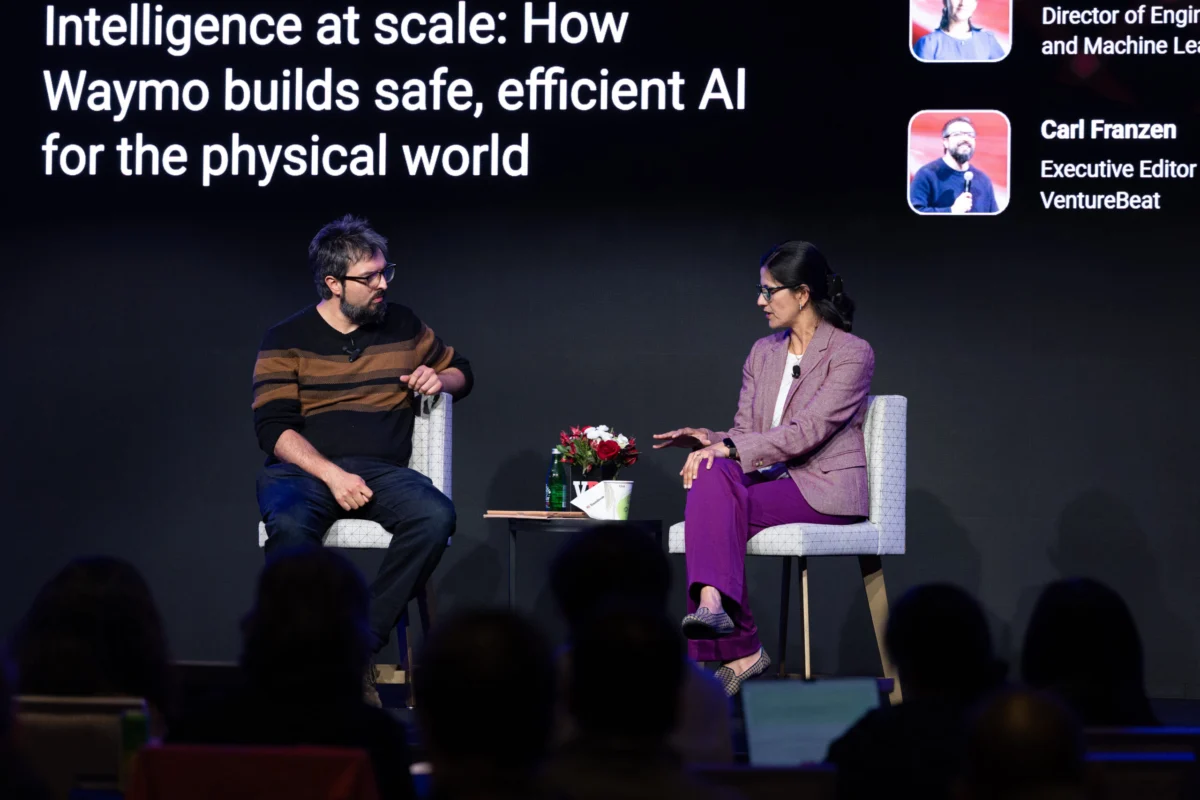
In the high-stakes arena of artificial intelligence deployment, few companies grapple with the profound implications of their AI models quite like Waymo, the pioneering self-driving car entity that emerged from Google’s ambitious X moonshot factory. Unlike businesses that leverage AI for generating text or streamlining back-office operations, Waymo’s AI agents are entrusted with the critical responsibility of navigating the chaotic, unpredictable physical world. These sophisticated systems must interpret complex traffic scenarios, react instantaneously to the erratic behavior of human drivers, and make life-or-death decisions in fractions of a second. However, the rigorous methodologies Waymo employs to manage these inherent risks – a robust framework of continuous evaluation, meticulously curated datasets, indispensable human oversight, and precisely defined business objectives – offer a comprehensive and adaptable playbook for enterprises venturing into AI agent deployment across virtually any industry.
At the forefront of this strategic approach is Manasi Joshi, Waymo’s Director of Engineering for Systems Intelligence and Machine Learning. Speaking at the recent VB Transform 2026 conference, Joshi provided an in-depth look into how the autonomous vehicle giant orchestrates the training, testing, and large-scale deployment of its advanced AI. The sheer scale of Waymo’s operations is staggering; to date, the company has accumulated over 220 million fully autonomous "rider-only" miles. More importantly, Waymo reports a remarkable safety record, achieving 17 times fewer serious crash injuries per mile compared to human drivers over the same distances. This extraordinary performance is not a matter of chance but a direct consequence of Waymo’s commitment to what Joshi terms "eval-forced development" or "eval-centric development." This philosophy fundamentally redefines the role of evaluation, elevating it from a perfunctory final check before deployment to an intrinsic, core component of the engineering lifecycle.
"The stage at which our projects are maturing can be easily kind of transpired based on the eval maturity that they showcase," Joshi explained, underscoring the direct correlation between a project’s readiness and the sophistication of its evaluation processes. In practical terms, Waymo gauges a project’s preparedness by rigorously examining the maturity and robustness of the tests designed to validate its performance. This principle carries significant weight for enterprises developing AI applications such as customer service agents, sophisticated coding assistants, complex financial systems, or any other AI-powered solution. The underlying message is clear: if a company cannot reliably and comprehensively measure the performance of its AI system, it is not yet ready to entrust that system with real-world responsibilities.
The Indispensable Nature of Post-Launch Evaluation
Joshi further elaborated that a substantial portion of Waymo’s quality assurance efforts have been strategically redirected towards ongoing evaluations. This encompasses a multi-faceted testing regime, including meticulous assessments during the model training phases, comprehensive reviews immediately following training, and extensive experimentation within both open-loop and closed-loop simulation environments. "Eval is not a one-time task to launch a model," she emphatically stated, highlighting the inadequacy of a singular evaluation before deployment.
Instead, Waymo conceptualizes evaluation as a dynamic, continuous process that spans the entire operational spectrum, from real-world driving scenarios to sophisticated simulations and rigorous validation protocols. Their methodology ingeniously integrates vast datasets, precise performance metrics, and a scalable infrastructure capable of processing this information with remarkable efficiency. For enterprises, this translates to a critical realization: pre-launch testing, while essential, is by no means sufficient. Development teams must maintain a vigilant stance, continuously evaluating their AI agents as underlying models evolve, business processes adapt, user behaviors shift, and the influx of new data introduces novel patterns. Crucially, these ongoing evaluations must be intrinsically linked to tangible business outcomes, rather than relying solely on abstract or broad industry benchmarks.
Joshi also issued a crucial caveat: the trustworthiness of model-quality measurements is directly proportional to the quality and representativeness of the evaluation data underpinning them. Waymo, therefore, meticulously substantiates its performance claims by providing detailed information about the specific properties and characteristics of the datasets employed in testing its systems. This transparency is paramount in building confidence and ensuring accountability.
Prioritizing the Rare and High-Risk Scenarios
At the heart of Waymo’s comprehensive evaluation hierarchy lies an unwavering commitment to safety, a paramount objective that guides every decision. The company draws upon a rich tapestry of data sources, including invaluable first-party driving logs, carefully selected third-party datasets, and highly realistic simulations. These simulations are engineered to expose their AI systems to an astronomical range of scenarios, effectively simulating billions of miles of potential driving experience. Task owners are empowered to select highly specialized data and metrics tailored to address specific, often complex, situations. This includes scenarios involving vulnerable road users (pedestrians, cyclists), hazardous railroad crossings, dynamic construction zones, and other environments that present heightened navigational challenges.
This fundamental principle of prioritizing risk extends far beyond the realm of autonomous driving. Enterprises deploying AI agents must adopt a similar rigorous approach. It is imperative to test not only the routine, high-frequency requests that their agents handle with seamless success but also the uncommon, low-probability situations. These are the scenarios where even minor errors could precipitate significant financial losses, severe legal repercussions, critical security vulnerabilities, or irreparable damage to the company’s reputation.
Joshi emphatically stressed that Waymo does not delegate critical release decisions solely to automated systems. Their stringent production-readiness reviews incorporate extensive human oversight, with dedicated internal safety leaders holding the ultimate authority to approve software releases and authorize expansions into new service areas. "This is not AI-driven and completely automated and zero human oversight," she clarified, reiterating the profound responsibility involved. "Human lives are at stake." This assertion underscores the indispensable role of human judgment and accountability in the deployment of safety-critical AI.
The Imperative of Reliability Over Expedient Efficiency
Waymo, like many enterprise AI teams, confronts a persistent challenge: the exponential growth in demand for computational resources – including compute power, storage capacity, memory, and network bandwidth – often outpaces the available supply. To navigate this constraint, the company actively pursues efficiency across its entire operational pipeline. This includes optimizing data extraction and storage processes, enhancing the efficiency of distributed model training, implementing advanced model distillation techniques, streamlining simulation workflows, and refining evaluation methodologies.
Furthermore, Waymo places a strong emphasis on "data efficiency." This strategic focus involves meticulously selecting the most informative and impactful training examples, recognizing that sheer volume of data is not inherently superior to curated quality. Since its early adoption of transformer architectures in 2017, Waymo has progressively expanded its AI capabilities, integrating large language models, vision-language models, and more recently, vision-language-action models. Joshi revealed that the company is now leveraging generative multimodal models as a cornerstone of its foundational model strategy, enabling a more holistic understanding of the physical world.
Waymo’s technological architecture is strategically divided between the onboard systems embedded within each vehicle and the off-board infrastructure dedicated to model development, data processing, and simulation. This dual-pronged approach necessitates a dual focus on optimizing both real-time inference capabilities within the vehicles and the broader, more resource-intensive systems that support their development and operation.
Empowering AI Agents with Their Own Rigorous Evaluations
Beyond its core autonomous driving systems, Waymo also employs AI agents internally as powerful productivity tools for its engineering teams. Joshi explained that these agents are instrumental in analyzing complex data distributions, assessing data efficiency, and efficiently triaging a wide array of issues identified in vehicle telemetry, training runs, and failed evaluation jobs. The overarching objective of this internal AI deployment is to accelerate the investigative process, thereby freeing up valuable engineering time to focus on critical judgment calls and the resolution of intricate technical challenges.
However, Waymo’s commitment to rigorous evaluation extends even to these internal AI agents. The company meticulously assesses these agents to ensure they consistently generate trustworthy and accurate results. This proactive approach prevents engineers from being inadvertently led down unproductive or erroneous paths, thereby safeguarding productivity and fostering innovation.
For enterprise leaders seeking to harness the transformative potential of agentic AI, Waymo’s comprehensive approach offers a profound and actionable lesson. The successful deployment of these advanced AI systems transcends the mere selection of a powerful underlying model. It necessitates the establishment of clearly defined, measurable objectives; the cultivation of representative and high-quality evaluation data; the implementation of continuous, multi-faceted testing protocols; the development of an efficient and scalable infrastructure; and, critically, the designation of accountable human decision-makers who retain ultimate responsibility for deployment and ongoing oversight. As Joshi aptly summarized, "Earning trust is supremely important." This sentiment encapsulates the core ethos that must guide any organization venturing into the complex and consequential world of artificial intelligence.
