
 By Titik Puspa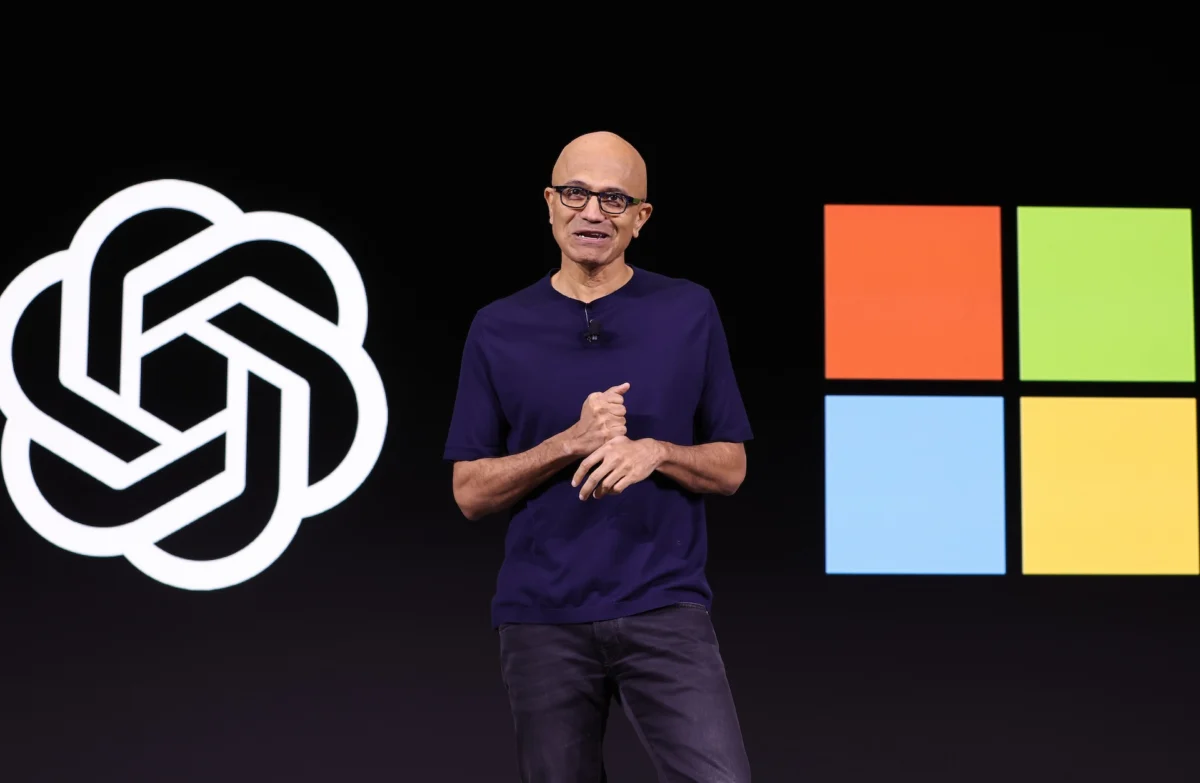
San Francisco, CA – July 29, 2026 – In a notable disclosure during its fiscal year 2026 fourth-quarter earnings call, Microsoft revealed a substantial financial uplift stemming from its strategic investment in AI powerhouse Anthropic, while concurrently acknowledging a quarterly write-down on its stake in OpenAI. The tech giant, which has placed significant bets on the future of artificial intelligence through its partnerships with both leading AI research labs, provided investors with a clear, albeit contrasting, picture of the financial performance of these crucial ventures.
For the fiscal quarter ending June 30, 2026, Microsoft reported a remarkable $3.2 billion gain attributed to its investment in Anthropic. This positive financial development significantly boosted the company’s diluted earnings per share (EPS) by an impressive 33 cents, contributing to an overall diluted EPS of $4.81 for the quarter. This substantial gain underscores the rapidly increasing valuation of Anthropic, a company that has emerged as a formidable competitor in the generative AI landscape.
Microsoft’s initial investment in Anthropic, announced in November 2025, was a significant $5 billion commitment. This strategic partnership was structured as a circular agreement, wherein Anthropic not only secured crucial funding but also committed to a substantial $30 billion expenditure on Microsoft’s Azure cloud services over time. This dual-pronged approach highlights Microsoft’s strategy of not only investing in cutting-edge AI technology but also driving demand for its core cloud infrastructure. The recent gain suggests that Anthropic’s valuation has appreciated considerably since this initial investment, far exceeding initial projections and demonstrating the immense potential perceived by Microsoft in Anthropic’s technological advancements and market position.
In stark contrast to the positive performance of its Anthropic investment, Microsoft disclosed a quarterly write-down of approximately $600 million related to its investment in OpenAI. This adjustment negatively impacted diluted EPS by around 7 cents per share. While this figure represents a notable decline in the quarterly valuation of its OpenAI stake, it is important to contextualize this write-down within Microsoft’s overall financial performance. For a company of Microsoft’s scale, reporting $90 billion in revenue and $35.8 billion in net income for the quarter, this $600 million adjustment, while significant in absolute terms, was largely absorbed as a "rounding error."
Microsoft holds a substantial ownership stake of approximately 27% in OpenAI, the creator of influential AI models like ChatGPT. The intricacies of this partnership are multifaceted, involving not only equity but also revenue-sharing agreements. However, Microsoft does not publicly detail the specific financial flows under these revenue-sharing arrangements, choosing instead to account for the value of its investment. The quarterly write-down indicates a potential short-term recalibration of OpenAI’s valuation, perhaps influenced by market dynamics, competitive pressures, or the pace of product development and commercialization.
Despite the quarterly dip, Microsoft’s investment in OpenAI presents a more robust picture when viewed on a full-year basis. For the entirety of fiscal year 2026, the company reported a $5 billion gain from its OpenAI investment, which contributed $0.67 to its overall EPS. This full-year positive performance demonstrates the long-term strategic value Microsoft places on its relationship with OpenAI, despite the short-term fluctuations in valuation. For the fiscal year, Microsoft reported an impressive EPS of $17.95.
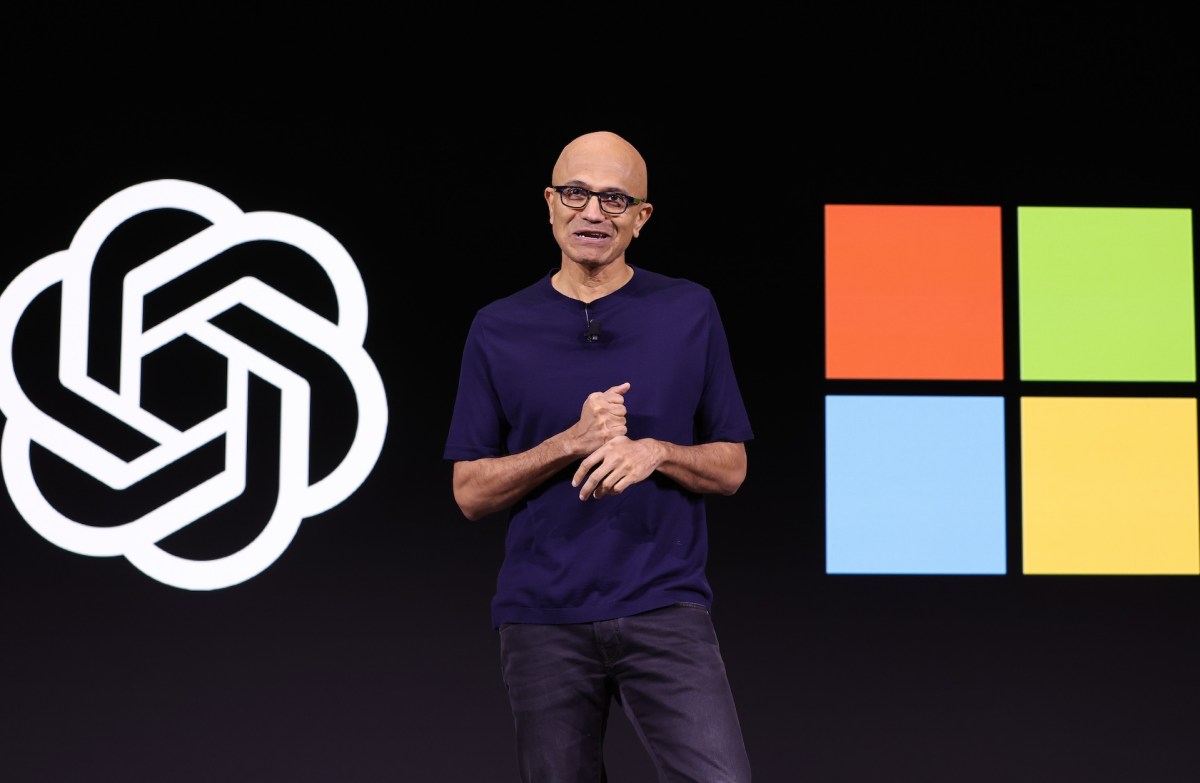
The juxtaposition of these two AI investments is particularly noteworthy. The fact that Microsoft chose to highlight the $3.2 billion quarterly gain from Anthropic, which is nearly as substantial as the full-year gain from OpenAI, speaks volumes about the rapid ascent and perceived immediate value of its partnership with the former. This disclosure suggests a strategic rebalancing or a recognition of Anthropic’s accelerated growth trajectory, potentially positioning it as a key driver of Microsoft’s AI-centric future alongside its established relationship with OpenAI.
The broader implications of these financial disclosures extend beyond Microsoft’s quarterly earnings. They signal a dynamic and increasingly competitive landscape in the AI sector. Both Anthropic and OpenAI are at the forefront of developing advanced AI models, pushing the boundaries of what is possible in areas such as natural language processing, code generation, and complex problem-solving. Microsoft’s dual investment strategy allows it to hedge its bets while also potentially fostering innovation through competition and collaboration between its key AI partners.
Industry analysts have widely recognized Microsoft’s ambitious AI strategy. By investing heavily in leading AI labs and integrating their technologies into its vast ecosystem of products and services – from Azure and Microsoft 365 to Windows and Bing – Microsoft is positioning itself as a central player in the AI revolution. The financial results from its AI investments provide tangible evidence of the early returns on this strategy, even as the market continues to evolve at an unprecedented pace.
The significant valuation increase of Anthropic, as reflected in Microsoft’s earnings, could be attributed to several factors. Anthropic’s focus on AI safety and constitutional AI, as demonstrated by its Claude models, has resonated with a growing segment of the market concerned about the ethical implications of artificial intelligence. Furthermore, its ability to attract top AI talent and rapidly iterate on its model capabilities likely contributes to its increasing market value. The substantial commitment to Azure services further solidifies the symbiotic relationship, ensuring a significant revenue stream for Microsoft while providing Anthropic with the robust cloud infrastructure necessary for its demanding computational needs.
Conversely, the quarterly write-down on OpenAI, while not a cause for alarm given the company’s overall performance, might prompt further scrutiny from investors. Questions may arise regarding the factors contributing to this valuation adjustment. Potential reasons could include increased competition from other AI labs, shifts in the go-to-market strategy for OpenAI’s products, or the significant capital expenditure required to maintain its leadership in AI research and development. However, it is crucial to remember that the AI field is characterized by rapid innovation and substantial R&D investments, and periodic valuation adjustments are not uncommon.
Microsoft’s disclosure strategy itself is noteworthy. By explicitly detailing the financial impact of its investments in both Anthropic and OpenAI, the company is providing a level of transparency that offers valuable insights into the financial dynamics of these critical AI partnerships. This transparency allows investors and analysts to better understand the financial performance of these ventures and their contribution to Microsoft’s overall business.
Looking ahead, the interplay between Microsoft, Anthropic, and OpenAI is likely to remain a key focus for the tech industry. As AI continues to permeate various aspects of business and daily life, the success of these partnerships will be instrumental in shaping the future of technology. Microsoft’s ability to successfully navigate and capitalize on the evolving AI landscape, as evidenced by its diverse and significant investments, positions it as a formidable force in the ongoing technological transformation. The contrasting quarterly performances of its major AI investments serve as a powerful reminder of the inherent volatility and immense potential within the rapidly advancing field of artificial intelligence. The company’s comprehensive financial reporting for fiscal year 2026, including a total revenue of $331.8 billion and a net income of $133.7 billion, demonstrates its robust overall financial health, allowing it to absorb such investment fluctuations while continuing to invest aggressively in future growth areas.
