
 By Rifan Muazin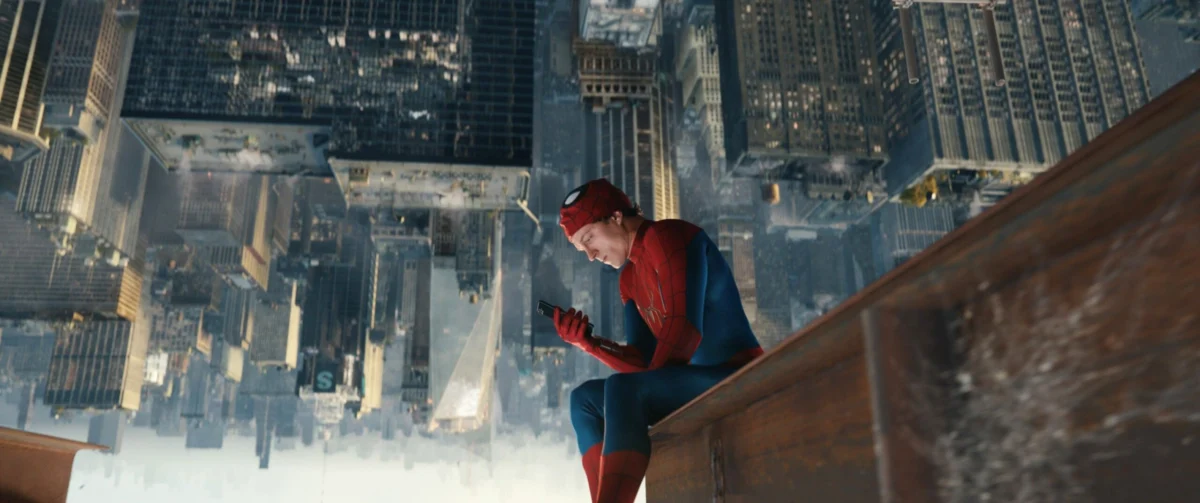
The Marvel Cinematic Universe is currently undergoing a massive structural revitalization, and nothing signals this shift more potently than the arrival of Spider-Man: Brand New Day. As the first solo outing for Tom Holland’s Peter Parker in five years, the stakes for this film were astronomical, tasked not only with grounding the character after the multiversal chaos of No Way Home but also with serving as the primary gateway for the X-Men’s integration into the sacred timeline. Directed by Destin Daniel Cretton, who previously helmed the visually arresting Shang-Chi and the Legend of the Ten Rings, the film represents a deliberate pivot away from the high-tech, billionaire-sponsored heroics of the "Homecoming" trilogy toward a more gritty, street-level reality that aligns with the character’s comic book roots.
One of the most immediate and discussed changes in this new era is the aesthetic evolution of the titular hero. For years, Peter Parker’s silhouette was defined by Stark-designed nano-tech and armored plating—suits that often felt more like Iron Man spin-offs than the traditional garb of a neighborhood hero. In Brand New Day, Cretton and the costume department have opted for a woven, minimalist Spider-suit that feels tactile and handmade. This "Spider-fit" is a clear homage to the iconic costumes worn by Tobey Maguire and Andrew Garfield, signaling a return to the "back-to-basics" approach that fans have clamored for. As GQ’s Frazier Tharpe observed, this version of Peter Parker finally feels like the character who has resonated for decades: a young man who is perpetually broke, lovesick, and mourning the loss of his parental figures, struggling to balance his "great responsibility" with a personal life that is essentially in shambles.
The narrative core of the film is built upon the undeniable chemistry between Tom Holland and Zendaya. Their relationship, which was tragically reset at the end of No Way Home due to Doctor Strange’s memory-wiping spell, takes center stage here. Watching Peter attempt to navigate a world where the woman he loves has no idea who he is provides the film with its emotional engine. Adding to this grounded mythos is the inclusion of Jon Bernthal’s Frank Castle, better known as the Punisher. Bernthal’s transition from the Netflix-era Marvel shows into the proper MCU has been highly anticipated, and his presence in Brand New Day offers a sharp, violent contrast to Spider-Man’s idealistic code of ethics. However, the film’s biggest narrative explosion isn’t a street fight—it’s the revelation of a new character played by Stranger Things breakout star Sadie Sink.
For months, the internet was ablaze with rumors regarding Sink’s involvement, a casting secret that proved nearly impossible to keep under wraps, especially after Steve Lacy’s accidental red-carpet slip. It is now officially confirmed: Sadie Sink is the MCU’s Jean Grey. This marks the third cinematic iteration of one of Marvel’s most powerful and complex mutants, following the footsteps of Famke Janssen in the original Fox trilogy and Sophie Turner in the prequel films. In Brand New Day, Jean’s introduction is handled with a level of restraint that suggests a long-term plan for her character development. Her abilities are currently focused on telepathic mind control, with a specific tactical limitation: she can only manipulate subjects within a 33-foot radius.
In the world of Marvel Comics, Jean Grey is an Omega-level mutant, a designation reserved for those whose power levels reach an undefinable upper limit. While the film presents her with a "cap" on her powers, lore enthusiasts recognize this as a likely temporary state, perhaps reflecting her youth or a psychological block. The history of Jean Grey on film has been inextricably tied to the "Phoenix Saga," a storyline involving a corrupting cosmic entity that was adapted with mixed results in 2006’s X-Men: The Last Stand and 2019’s Dark Phoenix. By introducing her in a Spider-Man film rather than an ensemble X-Men movie, Kevin Feige and the Marvel creative team seem to be signaling a desire to build her character from the ground up, focusing on her humanity and her trauma before diving into the cosmic fire of the Phoenix.
The plot of Brand New Day utilizes Jean Grey as a misunderstood antagonist for a significant portion of the runtime. This conflict is orchestrated by the Department of Damage Control (DODC), specifically its head, Bill Metzger, played with a chilling bureaucratic coldness by Tramell Tillman. Metzger manipulates Spider-Man into hunting Jean by framing her as a threat, when in reality, she is searching for her sister, Sara. The DODC had kidnapped Sara to exploit her own nascent mind-control abilities for government use. This subplot serves two purposes: it highlights the increasing hostility toward "powered individuals" in the MCU and establishes a bond of trust between Peter and Jean once the deception is revealed. By the film’s conclusion, Jean is seen boarding a bus for upstate New York—the canonical location of Westchester and Charles Xavier’s School for Gifted Youngsters. This confirms that while she began this journey as a loner abandoned by her parents, she is now on a path toward the X-Men.
Sink’s Jean Grey represents a milestone for the MCU as the first legacy X-Men character to be recast within the primary continuity. While the franchise has seen appearances from Patrick Stewart’s Professor X and the upcoming return of Hugh Jackman’s Wolverine, those were framed as multiversal anomalies. Sink is the "native" Jean Grey of the MCU. She follows in the footsteps of Iman Vellani’s Kamala Khan (Ms. Marvel), who was the first character explicitly labeled a "mutant" in the main timeline. The thematic connective tissue is further strengthened by the inclusion of the iconic X-Men ’97 guitar riff, a musical cue that has become the official sonic branding for the arrival of mutants in the MCU.
The broader implications for the X-Men franchise are staggering. With Jean Grey officially on the board, the countdown to a full-scale X-Men reboot has begun. The project is set to be directed by Jake Schreier, who is also handling the *Thunderbolts*, and written by the powerhouse duo of Lee Sung Jin and Joanna Calo, known for their work on Beef and The Bear*, respectively. This creative team suggests a sophisticated, character-driven approach to the mutant team. While the full cast was absent from the recent Comic-Con announcements, industry insiders expect a total reveal at Disney’s D23 event in mid-August. Current casting rumors, though unconfirmed, have linked Cailee Spaeny to the role of Rogue, Charles Melton to Beast, and Adam Driver to the villainous Mister Sinister. Notably, Cooper Hoffman has debunked rumors that he will play Cyclops, leaving the role of the X-Men’s field leader still open for speculation.
Beyond the mutant introduction, Spider-Man: Brand New Day leaves audiences with a cryptic and thrilling post-credits sequence that sets the stage for the next two Avengers films. The scene utilizes a 16-bit interface from a location-tracking app developed by Peter’s best friend, Ned Leeds (Jacob Batalon). The tracker reveals that Peter has been abruptly transported from the streets of New York to a void in outer space. This imagery is a direct nod to the comic book event Secret Wars, specifically the 2015 run by Jonathan Hickman and Esad Ribić. In that storyline, the multiverse is destroyed by "incursions"—collisions between universes—resulting in a patchwork planet known as Battleworld.
The fact that Spider-Man is floating in space suggests that the MCU’s version of Secret Wars may involve the physical displacement of heroes as their realities begin to collapse. While Holland’s Spider-Man is not currently confirmed for a major role in Avengers: Doomsday, which focuses on the threat of Robert Downey Jr.’s Doctor Doom, the post-credits scene confirms he will be a central figure in Avengers: Secret Wars. The "Spider-Man Will Return" title card serves as a promise to fans that despite his "broke and down on his luck" status, Peter Parker remains the heart of the Marvel Cinematic Universe.
As the credits fade, it becomes clear that Brand New Day is more than just a sequel; it is a foundational text for the next decade of Marvel storytelling. It successfully balances the intimate, human struggles of Peter Parker with the massive, world-altering introduction of the X-Men. By grounding the characters in a recognizable reality before thrusting them into the cosmic stakes of the coming incursions, Marvel has recaptured the "formula" that made the early phases of the MCU so successful. The arrival of Sadie Sink’s Jean Grey and the looming shadow of Secret Wars ensure that the "Brand New Day" for Spider-Man is also a brand new, and much more complex, day for the entire Marvel Universe.
